Support

Siegen

About

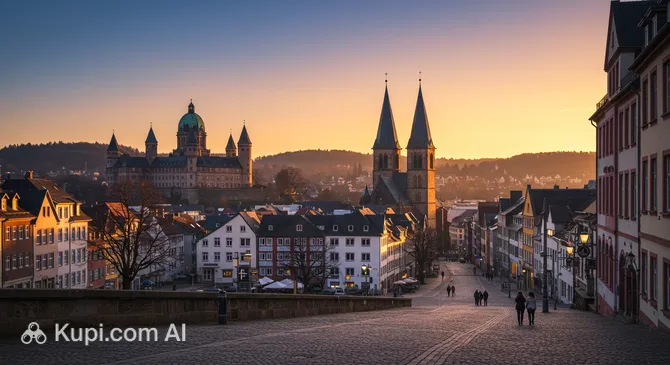
Siegen is a lively university city nestled in the picturesque Siegtal valley in North Rhine-Westphalia. Renowned as the birthplace of the great Flemish painter Peter Paul Rubens, the city harmoniously blends a rich cultural heritage, a modern urban environment, and an amazing proximity to nature.

Geographically, the city is located in one of the most forested regions that Germany is famous for. Due to its hilly landscape, Siegen is often called the "city on seven hills," which gives its streets a special charm and offers beautiful panoramic views. With a population of over 100,000, it is an important economic and educational center of the South Westphalia region, while maintaining a cozy and friendly atmosphere.

Siegen. Illustration.
Source: Kupi.com AI

The architectural landmark and symbol of the city is the gilded "Krönchen" (Little Crown), which adorns the spire of St. Nicholas Church. Siegen's centuries-old history comes to life within the walls of its two main castles: the Upper Castle (Oberes Schloss) with its magnificent park and the Siegerland Museum, which houses original paintings by Rubens, and the Lower Castle (Unteres Schloss), which today serves as a university campus.

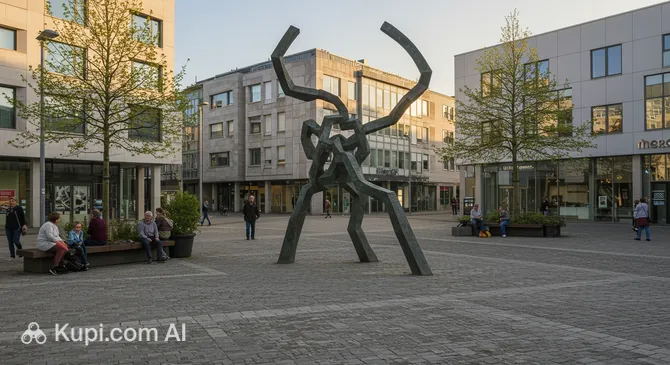
For those who enjoy leisurely strolls, the new city steps on the banks of the Sieg River are a real discovery — a popular meeting and relaxation spot right by the water. Siegen invites travelers to enjoy art, walk through green parks, and experience a unique rhythm of life where tradition meets modernity.

Weather Overview

The climate in this region is temperate, making travel comfortable at any time of year if you choose the right wardrobe. To ensure your visit goes perfectly, we recommend checking what the weather in Siegen will be like during your trip in advance.

Summers here are mild and pleasant, without exhausting heat. From June to August, the average temperature stays around 16–18°C, and on the warmest days, the air warms up to 21–22°C. However, an umbrella will not be a superfluous accessory: even in this season, it rains an average of 14–16 days per month.

Winters are cool but rarely severe. In January and February, the average temperature is between 1.2°C and 2.5°C, with light frosts around -1°C possible at night. This period is characterized by high humidity, and the number of days with precipitation can reach 19 per month.

Spring and autumn bring freshness: in May and September, average thermometer readings are in the 12–14°C range. Expect a warm summer with occasional rain and cool, damp winters.

Average monthly temperature

Average monthly precipitation

Interesting Facts

In addition to its main attractions, Siegen holds many fascinating secrets and unexpected records. Here are a few facts that will help you get to know the city better and see it from a new perspective.
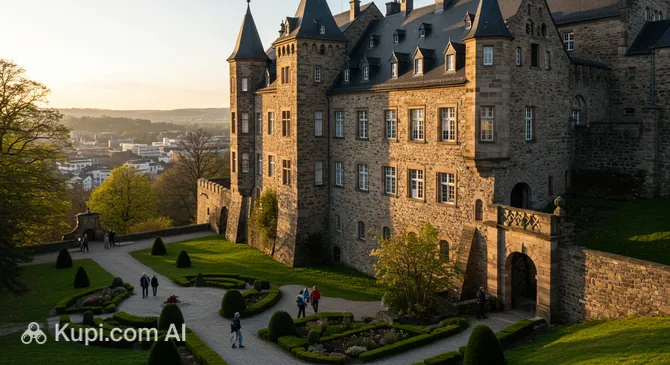
Upper Castle. Illustration.
Source: Kupi.com AI

Traveler photos:

  • The smallest Beatles museum. In the Geisweid district, there is a unique museum dedicated to the legendary Fab Four from Liverpool. Its area is only 27 square meters, which officially makes it the smallest Beatles museum in the world in the Guinness World Records.

  • The river that returned to the city. For a long time, the Sieg River in the city center was hidden under a massive concrete slab that served as a parking lot. Thanks to the ambitious architectural project Siegen – To New Shores, the river was "freed," and now the wide steps by the water are one of the most popular meeting spots.

  • The accidental birthplace of a genius. The great artist Peter Paul Rubens was born in Siegen by a twist of fate: his parents were in exile here. Today, the Upper Castle preserves the memory of this event, exhibiting original works by the master in the halls of the Siegerland Museum.

  • A princely gift. The famous golden "Krönchen" crown that tops the spire of St. Nicholas Church is more than just a religious symbol. It was gifted to the city in 1658 by Johann Moritz of Nassau-Siegen to celebrate his elevation to the title of Imperial Prince.

  • A green record-breaker. Siegen is rightfully considered one of the greenest cities in Germany. Forests cover more than 50% of the city's territory, creating a unique microclimate and opportunities for hiking right within the city limits.

How to Get There

When planning a trip to this cozy corner of North Rhine-Westphalia, it's worth thinking about logistics in advance. The city is conveniently located relative to the country's major transport hubs. You can find out all the ways to reach the city in more detail on a separate page, while below we look at the most popular options.

Siegen itself does not have its own airport, so travelers usually fly to nearby major cities and reach their destination by train, bus, or rental car. The closest and one of the most convenient options is Cologne/Bonn Airport (CGN), located in Cologne, approximately 63 km from Siegen. A car trip from here takes about an hour.

For international flights, travelers often choose Frankfurt Airport (FRA) — Germany's largest aviation hub. It is located in Frankfurt am Main, about 101 km away. The journey by taxi or transfer takes about 1 hour and 40 minutes. Düsseldorf International Airport (DUS) in Düsseldorf (about 98 km) also serves as a good alternative, from where it is convenient to reach by train or car.

For clarity, here is a summary of the main airports:

AirportPassenger trafficDistance
Cologne Bonn Airport10 mln63 km
Dortmund Airport3.1 mln76 km
Paderborn Lippstadt Airport818 37891 km
Dusseldorf International Airport20 mln98 km
Frankfurt Airport61.6 mln101 km

Rail travel is another popular way to reach the region. Although Siegen has its own railway station, when planning a route from abroad or distant parts of the country, tourists often look to major transfer hubs nearby. One of the key hubs is Cologne Central Station (IATA: QKL), located in Cologne, about 75 km from Siegen. Regional trains regularly depart from here towards Siegerland.

It is also worth noting Koblenz Hauptbahnhof in the city of Koblenz, which is 66.7 km away. This is an important transport hub connecting various railway lines, from where you can continue your journey to Siegen by local transport or taxi, which will take a little over an hour.

Below is information about the nearest major railway stations:

StationPassenger trafficDistance
Koblenz Hauptbahnhof14.6 mln67 km
Bonn Hauptbahnhof24.5 mln67 km
Messe/Deutz Station74 km
Leverkusen Mitte Station5.5 mln75 km
Cologne Central Station113.2 mln75 km

Main Attractions

Attractions:

To get to know the city, you should start by immersing yourself in its rich history and unique atmosphere. Siegen offers tourists a harmonious combination of medieval architecture, modern urban solutions, and lively shopping districts. Here are several key places that you should definitely include in your travel itinerary.

The undisputed dominant feature of the historical center is the majestic Upper Castle (Oberes Schloss), perched on Mount Siegberg. This fortress, with a history dating back to the 13th century, long served as the residence of the Catholic branch of the Princes of Nassau-Siegen. Today, behind the castle's powerful walls lie a picturesque park, perfect for walks, and the Siegerland Museum. The art collection, which includes original works by the city's most famous native, Peter Paul Rubens, is of particular value to tourists. A breathtaking panorama of the city's rooftops and surrounding hills opens up from the fortress walls.

Upper Castle. Illustration.
Source: Kupi.com AI

Traveler photos:

If you want to feel the modern pulse of Siegen, head to the banks of the Sieg River. Thanks to a large-scale urban development project called Siegen – To New Shores, the city center has been transformed beyond recognition. Long hidden under concrete, the river was reopened, and now a magnificent pedestrian area has been created with wide steps descending directly to the water. This is a favorite spot for locals and tourists alike to enjoy a sunny day, have a picnic, or simply watch the water flow surrounded by urban architecture.

Siegen – To New Shores. Illustration.
Source: Kupi.com AI

Traveler photos:

For those who cannot imagine a trip without quality shopping, the City-Gallery is a major draw. This modern shopping complex, located in the heart of the city, offers visitors over 100 shops, cafes, and restaurants under one roof. Here, you can not only update your wardrobe in boutiques of famous brands but also enjoy a pleasant time over a cup of coffee, watching the lively life of the central streets through the building's glass facades.

Local Cuisine

Siegen's gastronomic culture is a reflection of the Siegerland region's soul: hearty, honest, and substantial. The local cuisine was shaped by the mining past, so high-calorie dishes capable of restoring strength after a long day are valued here. In restaurants and taverns (Gasthaus), portions are usually generous, and the atmosphere is home-style cozy.

The main culinary symbol of the city that every tourist must try is the "Siegerländer Krüstchen". This hot dish consists of a juicy pork schnitzel placed on a slice of toasted rye bread or toast and topped with a fried egg. It is often served with potato salad or fried potatoes. Another unique feature of local baking is "Riewekooche", a special type of potato bread. Locals eat it with butter and jam alongside coffee or serve it as a hearty side dish to meat courses.

As for drinks, Siegen is undoubtedly a beer territory. The region is famous for its brewing traditions. In any bar, you will be offered a fresh pilsner from local producers, such as the world-famous Krombacher brewery (located in neighboring Kreuztal) or the local pride — the Erzquell brewery. Among non-alcoholic drinks, apple schorle is popular and excellent for quenching thirst in the summer.

The dining scene in the city is diverse, from traditional German beer halls to international cuisine. If you want to enjoy high-quality meat in a cozy setting, it's worth visiting El Rancho Steakhouse, which is popular with grill lovers. Those who prefer Mediterranean flavors will enjoy Little Eat Italy – Neapolitan Pizza and Bar, where you can try authentic pizza. And for evening relaxation with a cocktail or a glass of wine, Restaurant Estia is a perfect choice.

Travel Tips

Siegen is a city with a unique hilly landscape and changeable weather, so preparing for your trip requires attention to detail. These practical tips will help you feel confident and get the most out of your journey through this picturesque corner of South Westphalia.

  1. Clothing and Footwear. Siegen is called the "city on seven hills," and the elevation changes here are noticeable. Leave your high heels at home: comfortable sneakers or trekking shoes are ideal for pleasant walks on the cobblestones of the historical center and steep streets. The weather in the region is often rainy, so a waterproof jacket with a hood or a sturdy umbrella are essential wardrobe items in any season.

  2. Getting Around. Due to the challenging terrain, walking can quickly become tiring. We recommend actively using the buses of the local transport company VWS, which excellently connect the center (Tal) with the uphill districts (Berg). For planning routes and buying tickets, it's convenient to use the DB Navigator app or local transport apps.

  3. Money and Payments. The currency is the Euro (€). While cards are accepted everywhere in large shopping centers like City-Gallery, in small bakeries, kiosks, and some traditional pubs (Kneipe), payment might only be in cash. Always carry small bills and coins. It is customary to leave a tip of 5–10% of the bill or simply round up the amount.

  4. Safety and Health. Siegen is a quiet university city. Pharmacies are easy to recognize by the red letter "A"; they operate during standard shop hours. In case of emergencies (at night or on Sunday), look on the door of any pharmacy for the address of the duty point (Notdienst). Tap water is safe to drink — it is of excellent quality here.

  5. Communication and Language. The official language is German, but thanks to the large number of students, many residents, especially the youth and service staff, speak English well. Free Wi-Fi is available in the city center and on campus grounds (often the network is called Siegen-WLAN). For mobile communication, it's easiest to buy a prepaid SIM card in supermarkets, but remember that a passport is required for activation.

  6. Local Etiquette. When entering small shops or an elevator, it's customary to greet those present ("Hallo" or "Guten Tag"). Sunday in Germany is a day of silence and rest (Ruhetag): most shops are closed, and making noise on the street or in an apartment is not socially acceptable. Plan your shopping for Saturday.

  7. What to Avoid. Never walk on designated bicycle paths. In student-heavy Siegen, there are many cyclists who move fast, and stepping into their lane can lead to a collision or displeasure. Also, do not cross the road on a red light, even if the street is empty — it is considered bad form and a poor example for children.

  8. Student Lifehack. Since the city hosts a large university, there are many places with affordable prices. On weekdays, look for Mittagstisch (lunch menu) signs in cafes and restaurants — it's a great opportunity to try local dishes at a reduced price.

By following these simple recommendations, you can avoid minor inconveniences and focus on the main thing — enjoying the architecture, nature, and hospitality of Siegen. We wish you a smooth and memorable journey!

Entertainment & Nightlife

Nightlife in Siegen is inextricably linked to its status as a vibrant university city. You won't find the pretentiousness of a metropolis here; instead, there is a friendly and democratic atmosphere created by numerous students. Most of the fun is concentrated in the historical part of the city — the Oberstadt (Upper Town). The steep streets leading to the castle and the area around the Market Square (Marktplatz) are filled with cozy pubs, bars, and small clubs where you can spend time until late at night.

The so-called "pub mile" in the area of Alte Poststraße is particularly popular. It's common here to move from one establishment to another, enjoying local beer and lively conversation. The crowd is diverse, ranging from noisy groups of students to locals relaxing after work. There is no dress code in most places — a casual style is appropriate everywhere.

For the start of the evening or a pre-party, establishments that combine food with a bar menu are excellent. For example, Little Eat Italy – Neapolitan Pizza and Bar offers a relaxed setting where you can not only have a delicious dinner but also enjoy a few cocktails to good music. If you prefer a more tranquil yet stylish atmosphere for conversation, take a look at Restaurant Estia, which is also popular for evening relaxation.

In the warmer months, nightlife spills out into the streets. The main point of attraction is the city steps by the river — the Siegen – To New Shores location. In the evenings, hundreds of people gather here, sitting right on the steps by the water, chatting and enjoying the sunset. This is perhaps the most atmospheric and safe place for evening strolls in the city center.

Practical tips for party-goers:

Parties in Siegen usually start closer to 10:00 PM – 11:00 PM, although bars begin to fill up as early as 8:00 PM. Prices are quite reasonable, catering to a student budget: a glass of beer costs an average of 4–5 euros. The city is safe for night walks, especially in the well-lit center; however, as anywhere else, it's worth staying vigilant and avoiding unlit park areas alone.

Getting home at night is easy. On weekends (Friday to Saturday and Saturday to Sunday nights), special night buses (Nachtbus) operate, connecting the center with the outskirts. Taxis are also always on duty near the station and in the Oberstadt. Using taxi apps here is convenient and reliable.

If you are looking for daytime entertainment, Siegen offers great opportunities for shopping and cultural leisure. Shoppers should check out the Sieg Carré shopping center, located in the immediate vicinity of the station. In addition, there are cinemas and bowling centers in the city, and for art lovers, the doors of the Museum of Contemporary Art are open, often hosting interesting exhibitions.

Parks & Museums

Siegen amazingly combines an urban landscape with rich natural resources, living up to its reputation as one of the greenest cities in Germany. For tourists, this opens up excellent opportunities: after exploring artistic treasures, you can find yourself in the silence of ancient trees in just a few minutes. The city's cultural life is centered around its historical heritage and contemporary art, offering routes for both lovers of the classics and fans of the avant-garde.

The main green oasis in the heart of the city is the Palace Park (Schlosspark) surrounding the Upper Castle. This place is ideal for those who want to take a break from the urban bustle without traveling far from the center. Well-tended flower beds, shady alleys, and ancient fortress walls create a romantic atmosphere. In spring, thousands of tulips bloom here, and in summer, the park's lawns become a popular spot for picnics. Additionally, thanks to its location on Mount Siegberg, it offers perhaps the best panoramic views of the city and its surroundings.

For a deeper immersion in nature, it's worth visiting the Historic Tiergarten (Historischer Tiergarten). This forest area on the outskirts of the city was once the hunting grounds of the Princes of Nassau-Orange. Today, it is a magnificent area for hiking and walking with children. Here you can see fallow deer in their natural habitat, enjoy the silence of the dense forest, and walk along the "Experience Trail" that introduces the region's flora.

The cultural flagship of Siegen is the Siegerland Museum (Siegerlandmuseum), located within the walls of the Upper Castle. Its exhibition is a must-visit for two reasons. Firstly, it houses an impressive collection of works by Peter Paul Rubens — the city's great son. Secondly, the museum offers a unique attraction: a demonstration mine set up right in the castle's dungeons. This allows tourists to learn about the region's mining past without descending into actual deep shafts.

In contrast to the classics stands the Museum of Contemporary Art (Museum für Gegenwartskunst), located near the Lower Castle. This is a point of attraction for fans of current art practices: it regularly hosts rotating exhibitions of photography, installations, and paintings by contemporary European artists. The museum building itself is interesting for its architecture, which combines historical elements with modern design.

Among the architectural monuments, besides the castles, St. Nicholas Church (Nikolaikirche) deserves special attention for its famous golden crown on the spire. It is not just a religious building, but a symbol of the city's identity. History buffs will also find it interesting to look at the Lower Castle (Unteres Schloss), which, although occupied by the university, retains the grandeur of a princely residence with its spacious courtyard, where city festivals are often held.

Insider tip: If you find yourself at the Upper Castle, be sure to find the "Rubens Garden" — a small but very cozy part of the park. It is less crowded than the main observation deck, and you can take atmospheric photos against the backdrop of ancient walls without the crowds of tourists.

Getting Around

The transport system in Siegen differs from that of megacities: you won't find a metro or trams here. The main burden falls on an extensive network of bus routes managed by the local company VWS (Verkehrsbetriebe Westfalen-Süd). Buses connect the central station and the lower part of the city with residential areas on the hills and nearby university campuses. For trips to the suburbs, such as Weidenau or Geisweid, it's convenient to use regional trains, which run frequently and fast.

The unique local transport — the "Hübbelbummler" — deserves special attention. This is a yellow retro-style bus that runs between the central bus station (ZOB) and the Upper Town (Oberstadt). A trip on it is not just a way to reach the castle, but also an opportunity to take a small tour, enjoying the views of the ancient streets. This is an ideal option for tourists wishing to save energy before a walk through the historical center.

Siegen is part of the WestfalenTarif zone. This means that a single ticket is valid for all types of transport: buses and regional trains within the zone. For tourists, a day ticket (TagesTicket), which allows unlimited travel throughout the day, is often the most economical option. If you are planning a short trip (up to 4 stops), ask for a Kurzstrecke ticket — it will be cheaper.

Tickets can be purchased from machines at stations, from the bus driver (it's better to have change, as large notes might not be accepted), or via mobile apps such as DB Navigator or the WestfalenTarif app. An important nuance: in Siegen buses, it is customary to enter only through the front door and immediately show your ticket to the driver or scan it. If you bought a paper ticket without a date from a machine, don't forget to validate it before starting your trip.

As an alternative to public transport, taxi services operate in the city. They can be found at special stands near the station and in the center, or called by phone. Car sharing is not as widespread as in large cities, but it is available. For fans of two-wheeled transport, there are bicycle rental points. However, take the terrain of the "city on seven hills" into account: unless you are planning a serious workout, we highly recommend choosing electric bikes (e-bikes), which will help you easily overcome the steep climbs.

Accommodation

Siegen offers travelers a decent choice of accommodation that fully matches its status as a university and business center of the region. While it is hard to find enormous five-star resorts or pretentious luxury global chains here, the city possesses high-quality and diverse infrastructure for a comfortable stay. The mainstay of the hotel stock consists of reliable mid-range hotels, often geared towards business travelers, as well as cozy family guesthouses and modern apartments, which have been gaining popularity in recent years.

For most tourists, the most convenient area to stay is the Center (Siegen-Mitte) and its historical part — the Oberstadt. By staying here, you will be within walking distance of the main attractions, museums, and pedestrian zones with shops. This is also an optimal choice in terms of logistics: the central railway station and key bus hubs are nearby, making it easy to reach any point in the city. If the purpose of your visit is related to academic events or visiting student friends, you should consider the Weidenau district, where the main university campuses are located and a democratic, youthful atmosphere prevails.

We recommend booking your accommodation in advance. Although Siegen is not a mass tourist destination, during major university events, conferences, or city festivals (such as City Day), the demand for rooms in central hotels rises sharply, and finding a good option on short notice can be problematic.

Pricing in the city is quite reasonable, especially compared to neighboring metropolises like Cologne or Frankfurt. Budget travelers can count on affordable guesthouses (Gasthof) or hostels offering basic service and a homey feel. The mid-range segment is represented by comfortable city hotels with a standard set of services. You can book a room through popular international online platforms or directly on hotel websites, which sometimes allows you to get a better offer.

Nearby Cities

For those looking to explore the surroundings, Siegen serves as an excellent starting point for day trips to several interesting nearby places. Its location in the southern part of Westphalia allows quick access to both the picturesque natural sights of the Sauerland region and historical towns with half-timbered architecture.

One of the most popular destinations is Attendorn. This city is famous for the renowned Atta Cave (Atta-Höhle) — one of the largest and most beautiful stalactite caves in Germany, attracting tourists from all over the world. After an underground tour, you can head to Lake Biggesee to enjoy water sports or a peaceful boat trip.

History and architecture lovers should visit Dillenburg. This cozy city is closely linked to the history of the House of Orange-Nassau. The city's main symbol is the Wilhelmsturm tower, which offers a magnificent panorama of the old town with its colorful half-timbered houses. A walk through the historical center of Dillenburg will give you the feeling of traveling back in time.

If you are interested in a getaway by the water, pay attention to the city of Olpe, located on the shores of the Biggesee reservoir. It is an ideal spot for picnics, sailing, and long walks along the embankment surrounded by forested hills.

CityPopulationDistance
Netphen23 1307 km
Freudenberg17 73910 km
Wilnsdorf20 08810 km
Kreuztal31 18710 km
Hilchenbach14 90614 km

These nearby destinations offer insight into the diverse culture and landscapes of the region, making your stay in Siegen even more fulfilling.

Shopping & Souvenirs

Shopping:

Siegen is rightfully considered the shopping capital of South Westphalia. Thanks to its status as a regional center, the city attracts shopping enthusiasts not only from surrounding settlements but also from neighboring districts. Shopping here has its own unique character dictated by the landscape: the shopping areas are divided into the Lower Town (Unterstadt), where modern life hums, and the historical Upper Town (Oberstadt), offering a more intimate atmosphere. A special bus runs between them, but many prefer to walk along the sloped streets.

The heart of commercial life in the Lower Town is the Bahnhofstraße pedestrian zone and Kölner Tor square. These are busy arteries where shops of popular democratic brands of clothing, shoes, and cosmetics are concentrated, along with major department stores. Ascending towards the Upper Town via Kölner Straße, which is one of the steepest shopping streets in Germany, you will find more specialized shops. The Upper Town (Oberstadt) itself is famous for its boutiques, antique shops, bookstores, and jewelry salons tucked away in historical buildings.

For those who prefer comfortable shopping under one roof, there are two large shopping centers in Siegen. The most extensive and popular is the City-Gallery. This modern mall, located in the city center, houses about 100 shops, offering a huge choice of goods from electronics to high fashion. Thanks to its glass architecture and spacious atria, it's a pleasant place to spend time in any weather.

In the immediate vicinity of the railway station is another important shopping complex — Sieg Carré. It is more compact than its neighbor but very convenient for quick purchases and meetings. It also houses grocery supermarkets, pharmacies, and dining options, making it a great starting point for tourists who have just arrived in the city.

The special flavor of local trade can be felt at the markets. The traditional Weekly Market (Wochenmarkt) regularly unfolds in the city's squares (usually on Wednesdays and Saturdays). Here, local farmers offer the freshest vegetables, fruits, cheeses, meat delicacies, and flowers. This is the best place to try regional products and chat with residents. During the pre-Christmas period, the square by the Lower Castle turns into a fairytale market, which is considered one of the coziest in the region.

When choosing souvenirs, pay attention to items related to the city's symbols. Miniature copies of the "Krönchen" golden crown or souvenirs with the image of Rubens are popular. A gastronomic gift would be the famous Siegerland black bread (Siegerländer Schwarzbrot) or a bottle of local beer (Krombacher, Erzquell). Local mustard and meat specialties are also valued.

Shops in the center are typically open Monday through Saturday from 10:00 AM to 7:00 PM or 8:00 PM. Large shopping centers generally stay open until 8:00 PM. Sunday is a day of rest when everything is closed except for some bakeries and shops at the station. Cards (Visa, Mastercard) are accepted almost everywhere, but in small kiosks, at the market, or in tiny cafes, cash euros remain the preferred, and sometimes only, way to pay.

Tourists from non-EU countries can take advantage of the Tax Free system. When purchasing goods over 50 euros in one shop, look for the Global Blue logo or ask for a Tax Free Form at the checkout. You can reclaim part of the VAT when leaving the EU by presenting your receipts and goods at customs.
Reached the end of the page?

That means the route is fully explored