Support

Stendal

About

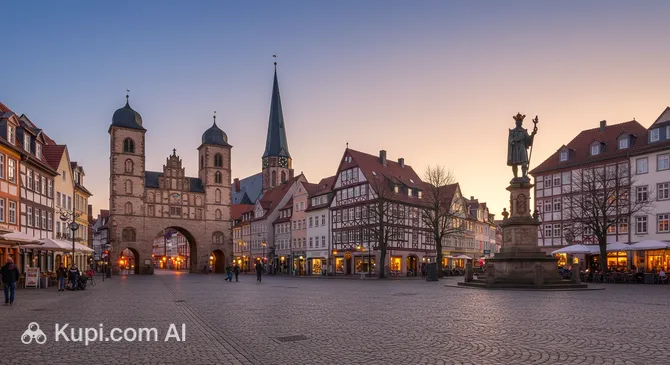
Stendal is a charming town in the northeast, located in the federal state of Saxony-Anhalt. It is situated just 120 kilometers from Berlin, making it a convenient stop for travelers exploring the northern part of such a country as Germany. The city is picturesquely spread across the banks of the Uchte River, offering guests a wonderful harmony between nature and a relaxed urban pace.

Stendal. Illustration.
Source: Kupi.com AI

Despite its compact size and a population of about 39,000, Stendal is a lively regional center. Here, ancient traditions coexist with modern amenities, and a well-developed infrastructure ensures a comfortable stay for tourists. The rich history of Stendal is felt at every step: the atmosphere of the city is permeated with the spirit of the Middle Ages, preserved in majestic old buildings, narrow streets, and cozy squares.

It is the perfect place for those who want to take a break from the hustle and bustle of megacities. The town is not overcrowded with tourists, allowing you to peacefully enjoy the authentic architecture and try local cuisine in one of the traditional restaurants. Nature lovers will appreciate the scenic parks and forests in the surrounding area, which feature routes for hiking and cycling. Visit Stendal to discover true German hospitality and the coziness of provincial Europe.

Weather Overview

The climate in Stendal can be described as temperate, favoring comfortable walks during the warm season. Summers here are usually mild: in July and August, the air warms up to a pleasant 20–24°C, creating ideal conditions for tourism. However, you should be prepared for the variability of the weather, as rain is possible even in the sunniest months.

Winters in the region are cool but not harsh. In January and February, the temperature averages around 3–4°C, rarely falling below zero during the day. Expect a warm summer with occasional precipitation and cool, fairly damp winters, when the number of rainy days can reach 14 per month.

Spring and early autumn are wonderful times for a visit, when nature comes alive or turns golden, and the average temperature in May and September is about 14–16°C. Before your trip, be sure to check what weather in Stendal is forecast for the coming days so you can pack correctly.

Average monthly temperature

Average monthly precipitation

Interesting Facts

In addition to the main attractions, Stendal keeps many fascinating secrets and legends that are revealed only to the most curious travelers. Here are some facts that will help you better understand the soul of this ancient city:

  • Slavic roots of the name. Interestingly, according to one version, the city's name comes from the Slavic word "stodol," meaning "barn" or "warehouse." This historical echo reminds us of the settlement's important trade significance, which for centuries served as a transit point on the routes between major cities.

  • Legends of the underground. Local folklore is rich with stories about mysterious underground passages supposedly connecting the city's old buildings. Residents love to tell legends about treasures hidden in the depths and ghosts that have guarded these tunnels, hidden from view, for centuries.

  • Literary heritage. Stendal is the birthplace of Johann Gottfried Schnabel, a famous 18th-century writer and playwright. It was here that the author of popular adventure novels spent his younger years, absorbing the atmosphere that perhaps influenced his work.

  • A landmark for travelers. St. Nicholas Cathedral stands out not only as a beautiful example of brick Gothic but also for its size. It is one of the tallest churches in the region, with a spire visible from afar that traditionally serves as a kind of beacon for guests approaching the city.

How to Get There

When planning a trip to this cozy German town, it is important to think through the logistics in advance, as there are no direct flights to the city itself. However, its favorable location in the heart of Europe allows for easy access via the major transport hubs of neighboring metropolises. You can find out more about how to get to Stendal by exploring all available routes and transport combinations.

Since Stendal does not have its own airport, most travelers choose to fly to Berlin Brandenburg (BER). This major international airport is located in Berlin, approximately 115 km from Stendal. Due to its proximity to the capital, it is convenient to reach your destination from there by rented car or public transport.

An alternative option is Leipzig/Halle Airport (LEJ), which is located in Leipzig (the distance is about 134 km). You could also consider flying into Hannover Airport (HAJ) in Hannover, located 147 km from the city. Both of these hubs offer good connections to various regions and can serve as a convenient starting point for your journey.

For clarity, here is a summary of the main airports convenient for traveling to the region:

AirportPassenger trafficDistance
Berlin Brandenburg25.5 mln115 km
Leipzig/Halle Airport2.2 mln134 km
Hannover Airport5.3 mln147 km
Laage Airport148 000149 km
Lübeck Blankensee82 550154 km

Railway connections in Germany are excellently developed, making a train journey a great alternative. It's worth noting that the largest interchange stations are in neighboring cities, from where regular connections to regional towns are established. For example, you can arrive at Berlin Hauptbahnhof in the city of Berlin. It is located about 103 km from Stendal, and from there it is easy to continue your journey on a regional express train.

Another convenient option is to travel via Leipzig Central Station in Leipzig (about 134 km from Stendal). This is one of the largest stations in Europe, offering numerous connections and transfer options to your destination.

Below is information about the nearest major railway hubs:

StationPassenger trafficDistance
Halle (Saale) Railway Station12.8 mln60 km
Berlin Zoologischer Garten Station36.5 mln101 km
Berlin Hauptbahnhof127.8 mln103 km
Berlin Ostbahnhof Station36.5 mln108 km
Leipzig Hauptbahnhof43.8 mln134 km

Main Attractions

Stendal is often called a gem of brick Gothic, and a walk through its streets is a true journey through time. The city carefully preserves its medieval heritage, offering tourists a unique opportunity to touch the history of the Hanseatic League. Here are some key places that are definitely worth including in your itinerary.

Uenglingen Gate (Uenglinger Tor) is not just a defensive structure but one of the most impressive examples of North German brick Gothic. Built in the 15th century, the tower stands nearly 28 meters high and is striking in its decoration: graceful arches, battlements, and corner turrets make it look like a fairy-tale castle. Climbing to the observation deck, you can enjoy a panoramic view of the city's tiled roofs and green surroundings.

St. Nicholas Cathedral (Dom St. Nikolaus) towers majestically over the city and serves as the spiritual heart of Stendal. This late Gothic temple is famous for its 22 medieval stained-glass windows, which are considered some of the most valuable in Northern Europe. Inside, an atmosphere of solemn tranquility prevails, and the light passing through the colored glass creates a wonderful play of colors on the ancient walls.

St. Mary's Church (Marienkirche), located near the market square, is another architectural masterpiece. It is famous for its magnificent high altar and unique 16th-century astronomical clock, which is still in working order. The church interiors are richly decorated, and its twin towers serve as an excellent landmark for walks around the old center.

On the Market Square, you will be greeted by the stone Roland—a symbol of city freedom and independence. The statue, standing nearly 8 meters tall and placed in front of the town hall, depicts a knight with a sword and is an exact copy of the 1525 original. The Stendal Roland is considered one of the most beautiful and significant monuments of its kind in Germany, serving as a reminder of the city's rich merchant past.

For lovers of culture and history, the doors of the Winckelmann Museum are open. It is located on the site of the house where Johann Joachim Winckelmann was born—the founder of modern archaeology and art history. The exhibition tells the story of his life and the ancient world he so passionately studied. In the museum garden stands the world's largest wooden Trojan Horse, which you can go inside—a particular hit with young travelers.

Local Cuisine

The gastronomic scene in Stendal is the embodiment of the coziness and traditions of provincial Germany. Local cuisine is famous for its heartiness and simplicity, emphasizing high-quality farm products. The menu is based on meat delicacies, with pork and beef dishes, generously seasoned with local herbs, holding a special place. A hallmark of the city is the classic roast pork, which is served here with boiled potatoes and traditional sauerkraut.

It is impossible to imagine a trip to this region without tasting meat products. Stendal is famous for its sausages prepared according to ancient recipes. Gourmets should definitely try the aromatic smoked sausages and the rich blood sausage. They are usually served simply but with taste: with fresh crusty bread and spicy mustard, making them an ideal choice for a hearty lunch in one of the local taverns.

For those with a sweet tooth and lovers of light snacks, there are small bakeries and cozy cafes in the city. The aroma of fresh pastries always lingers here, and local cinnamon rolls and homemade pies will be a great addition to your walk. If you find yourself in Stendal on a weekend, be sure to visit the farmers' market on the central square. This is the heart of gastronomic life, where you can buy fresh vegetables, fruits, and cheeses, and chat with the locals.

The drink culture here also has its own characteristics. Residents prefer beer from regional breweries, which is distinguished by high quality and a variety of styles. In the autumn period, apple cider becomes particularly popular, pairing perfectly with seasonal dishes. Autumn also hosts the harvest festival, when the city is filled with the aromas of the best farm products, offering tourists a unique gastronomic experience.

Travel Tips

A trip to Stendal promises to be calm and atmospheric, but a little preparation will make it even more pleasant. We have gathered some useful recommendations to help you feel confident and comfortable in this ancient Hanseatic city.

  1. Clothing and footwear. Since the historical center of the city is paved with old cobblestones, be sure to bring comfortable shoes with flat, stable soles. The climate here is temperate, so the principle of layering will be the best solution: even in summer, evenings can be cool. There is no strict dress code for visiting cathedrals, but it is recommended to choose modest attire.

  2. Transport. Stendal is a compact city, and its main beauties are best explored on foot. Public transport is represented by a bus network that connects the center with the outskirts and the station, but for tourist purposes, it may not be necessary. If you need to get somewhere quickly or with luggage, it's best to call a taxi or find one at the stand by the railway station.

  3. Money and payment. The official currency in Germany is the Euro. Although cards are accepted everywhere in supermarkets and hotels, in small bakeries, souvenir shops, or street kiosks, they may ask for cash. Always have small bills and coins with you. Tipping in cafes is welcome (about 5–10%); usually, the amount is simply rounded up when paying.

  4. Health and safety. The city is safe for tourists, and you can comfortably walk at any time of day while observing standard precautions. Pharmacies are easily recognized by the red letter "A" (Apotheke). If you need medicine at night or on a weekend, look for a notice on the door of any pharmacy with the address of the nearest duty point (Notdienst).

  5. Communication and language. The main language of communication is German. Staff in hotels and museums often speak English, but in ordinary shops or on the street, you may not be understood, so we recommend downloading an offline translator. Free Wi-Fi is available in many public places and cafes, and a local SIM card can be bought in supermarkets (a passport is required for registration).

  6. Local etiquette. Germans value politeness and personal space. When entering small shops, it is customary to greet the staff ("Guten Tag"). They also value quietness here: try not to make noise in public places and residential areas, especially after 22:00 and on Sundays.

  7. Things to avoid. Never walk on bicycle lanes—in Germany, these are high-risk zones, and local cyclists can be very unhappy if you block their path. Also, do not cross the road on a red light, even if there are no cars on the horizon—this is considered bad manners and a poor example for children.

  8. Store hours. Remember the "Sunday silence": on this day, almost all shops are closed, including grocery supermarkets and pharmacies (except for emergency ones). If you arrive for the weekend, buy everything you need on Saturday. On Sundays, only bakeries (usually until lunch), cafes, and gas station shops are open.

We hope these tips help you avoid minor troubles and focus on the main thing—enjoying the unique brick Gothic architecture and the coziness of Stendal. Have a pleasant stay!

Entertainment & Nightlife

Entertainment and nightlife:

The nightlife in Stendal is characterized by a steady pace and a cozy atmosphere typical of small German towns. You won't find massive nightclubs with thumping music until morning like in Berlin; however, the town offers excellent opportunities for a pleasant evening out. The main activity is concentrated in the historical center, particularly around the Market Square (Marktplatz) and the adjacent pedestrian streets. Evenings here are typically spent in the company of friends over a mug of local beer or a glass of wine, enjoying leisurely conversation.

The main center of the city's cultural life is undoubtedly the Theater der Altmark. This venue attracts not only theater-goers but everyone looking for high-quality leisure. The theater's repertoire ranges from classic dramas and operas to modern productions and symphonic concerts. Attending the theater here is considered an important social event, so if you plan a visit, it's worth taking care of tickets in advance and choosing appropriate attire, although there is no strict dress code.

For lovers of more casual relaxation, Stendal has numerous beer bars (Kneipe) and cozy restaurants. Many establishments are located in old half-timbered buildings, which adds a special charm to the evening. The crowd here is diverse: from local university students to elderly couples. The style of communication is friendly and open. If you want to watch the latest films, it's worth checking out the Uppstall Kinos cinema, which is popular among young people and offers comfortable halls for evening screenings.

Daytime entertainment in the city also deserves attention. Families with children and nature lovers should definitely visit the Stendal Zoo (Tiergarten Stendal). This is a picturesque park where animals live in spacious enclosures, and the peaceful environment is perfect for long walks. In the summer, Lake Stadtsee becomes a popular spot where you can go boating or have a picnic on the shore.

As for practical advice, Stendal is a safe city. Night walks through the well-lit center pose no threat; however, as anywhere, it is wise to exercise reasonable caution. Public transport is rare at night, so if you stay out late, it's better to call a taxi by phone. The average bill in bars and pubs here is noticeably lower than in the large tourist centers of Germany, making evening relaxation affordable and enjoyable.

Parks & Museums

Stendal offers travelers a harmonious blend of educational leisure and relaxation in nature. Although this city in Germany is primarily famous for its brick Gothic, its museums and park zones deserve no less attention, allowing for a deeper understanding of the history of the Altmark region and the enjoyment of peace away from the urban bustle.

The Green Belt (Wallanlagen) is a unique park area surrounding the historical city center. It was created on the site of former ramparts and now represents a picturesque promenade connecting the surviving medieval gates. A walk here is a journey through the centuries, surrounded by age-old trees, manicured lawns, and flower beds. It is an ideal place for a morning jog or a leisurely evening stroll, allowing you to view the old town from a new perspective.

Lake Stadtsee (Stadtsee) is a favorite relaxation spot for locals and a true natural oasis within the city limits. Convenient paths for pedestrians and cyclists are laid out around the water, and picnic areas are equipped on the shore. In summer, you can rent a boat or a catamaran here to enjoy the water surface, and city festivals are often held in the park next to the lake. This is a great location to catch your breath after excursions on the stone pavements.

The cultural program should begin with the Altmark Museum (Altmärkisches Museum), located in the building of the former St. Catherine's Monastery. The exhibition covers a vast span of time—from prehistoric archaeological finds to the history of the Hanseatic League. Of particular interest are the collections telling the story of the region's life and crafts. The atmosphere of the monastery complex itself, with its quiet inner courtyard, adds a special charm to the visit.

Another important point on the map is the State Fire Brigade Museum (Landesfeuerwehrmuseum). This place will be interesting not only for children but also for adults interested in technology. It houses an impressive collection of historical fire engines, pumps, and equipment, demonstrating the evolution of fire fighting over the centuries. The museum vividly shows how rescue technologies developed and allows you to see rare examples of machinery carefully restored by enthusiasts.

Speaking of cultural heritage, the architectural context must also be mentioned. Many of the city's museums and galleries are located in historical buildings that are exhibits in their own right. For example, former monastery buildings often serve as venues for temporary art exhibitions and concerts, combining medieval acoustics with modern art.

Insider Tip: If you find yourself in the area of the Altmark Museum, be sure to check out the monastery garden. This is a hidden gem tucked away from tourist eyes, where medicinal herbs and plants typical of medieval monastery gardens are grown. Incredible silence reigns here, and it is perhaps the best place in the city to read a book or just be alone with your thoughts.

Getting Around

Stendal's transport system is perfectly adapted to the measured pace of life in this small city. Since the historical center is quite compact, most attractions are within walking distance of each other. However, for trips to distant districts or to the railway station, the main form of public transport is buses. There is no metro, tram, or trolleybus system in the city, which is quite typical for settlements of this size.

The bus network is managed by a local company and covers all key points of the city, including residential areas and shopping zones. Service is organized strictly according to a schedule, which can be found at every stop. It is important to note that buses run regularly on weekdays, but on weekends and public holidays, intervals can increase significantly, and some routes may stop operating earlier than usual.

Stendal is part of the Marego (Magdeburger Regionalverkehrsverbund) transport association. This means that a unified fare system applies here, which is convenient for passengers. You can purchase a single ticket for one trip or a day pass, which is cost-effective if you plan to move around a lot during the day. There are also group tickets that allow travel groups to save money.

Tickets can be purchased in several ways. The simplest option for a tourist is to buy a ticket directly from the bus driver when boarding (it's best to have cash, preferably small bills or coins). Tickets are also sold at machines at the railway station and at customer service points. For route planning and purchasing electronic tickets, it's convenient to use the INSA or DB Navigator mobile apps, which show current schedules and prices.

If you bought a paper ticket from a machine or ticket office, don't forget to validate it (time-stamp it) immediately upon entering the bus; otherwise, it will be considered invalid, which may result in a fine. Tickets bought from the driver are usually already validated or have the date and time of sale, but it's better to clarify this at the time of purchase.

As an alternative to public transport, taxi services are popular in Stendal. Taxi stands are usually located at the main railway station and in the city center. It's worth remembering that "hailing" a car by hand on the street is not common here—it's more reliable to order a taxi by phone or through an app. Car sharing is not well-developed in the city, but bicycles are extremely popular. The flat terrain and the presence of bike lanes make two-wheeled transport an ideal way to get around during the warmer months.

Accommodation

The choice of accommodation in Stendal, as befits an old Hanseatic city, is characterized by coziness and a lack of bustle. Here you won't find huge five-star resorts or noisy chain giants. The hotel stock primarily consists of small hotels, family-run pensions (Gasthof), and comfortable apartments. This allows tourists to immerse themselves in the authentic atmosphere of the German province, enjoying peace and quality service.

The most popular and convenient area to stay is the historical center (Altstadt). By staying here, you will be within walking distance of the main attractions, such as St. Nicholas Cathedral and the Roland statue. Living in the heart of the city means having the opportunity to start your morning with a walk along the ancient streets and breakfast at a local bakery. Another convenient location is the area around the railway station. This is an ideal choice for those who plan to use Stendal as a base for trips around the Saxony-Anhalt region or are arriving on a late flight.

The price range in the city can be described as moderate. Most accommodation options belong to the budget and middle segments, making a trip here very affordable compared to the large metropolises of Germany. The room rate often includes a hearty German breakfast, which is a pleasant bonus for travelers.

Regarding booking, the golden rule applies: plan your trip in advance. Although Stendal is not overcrowded with tourists year-round, the best options are snapped up quickly during the summer season and local festivals. It is convenient to use popular online platforms to find accommodation; however, many small guest houses also accept bookings directly through their websites or by phone.

Nearby Cities

For those who want to explore the surroundings, Stendal serves as an excellent starting point for day trips to several interesting nearby locations:

Just an hour's drive away is Magdeburg—the capital of the state of Saxony-Anhalt and one of the oldest cities in the country. Here, travelers can see the first Gothic cathedral on German soil—the majestic Magdeburg Cathedral—as well as the amazing "Green Citadel" architectural complex, designed by Friedensreich Hundertwasser. It is an ideal place for those who want to combine historical immersion with modern art exploration.

Water lovers should head to Brandenburg an der Havel. This picturesque city is spread across several islands among the Havel River and lakes, offering guests beautiful embankments and a rich collection of medieval brick architecture. A walk through its historical center allows you to feel the atmosphere of the cradle of the Margraviate of Brandenburg.

Another attractive destination is Salzwedel, famous for its beautifully preserved half-timbered houses. Additionally, the city is known nationwide as the birthplace of the famous layered cake "Baumkuchen." A visit here is a great opportunity not only to enjoy the coziness of ancient streets but also to taste this unique local delicacy.

CityPopulationDistance
Tangermuende10 35010 km
Tangerhütte10 71819 km
Osterburg9 78221 km
Genthin13 98531 km
Gardelegen22 40232 km

These nearby destinations provide an insight into the diverse culture and landscapes of the region.

Shopping & Souvenirs

Shopping in Stendal is a calm and pleasant activity that perfectly complements an introduction to the architecture of the Hanseatic city. Here you won't find the hustle and bustle of huge metropolises or endless rows of luxury boutiques. Instead, the town offers a cozy atmosphere where modern retail outlets stand side-by-side with historical buildings. It is an ideal place to buy high-quality everyday goods, German brand clothing, and unique regional products.

The heart of the city's commercial life is the pedestrian zone on Breite Straße. This lively street stretches through the entire historical center and is literally dotted with shops to suit every taste. Here you'll find branches of well-known clothing and shoe chain brands, bookstores, pharmacies, and perfumeries. A walk along Breite Straße allows you to combine business with pleasure: while shopping, you can admire the beautiful facades of the old buildings.

For those who prefer to shop in one place, the Altmark-Forum shopping center operates in the city. It is located near the center and the railway station, making it convenient to visit. Under its roof are gathered electronics stores, clothing, household goods, and a large grocery supermarket. This is an excellent option for shopping in rainy weather or if you need to quickly buy everything you need before leaving.

To get a real taste of local life, be sure to visit the weekly market (Wochenmarkt) on Market Square (Marktplatz). Usually on Wednesdays and Saturdays, local farmers bring their produce here. On the stalls, you can find the freshest seasonal vegetables and fruits, homemade cheeses, honey, and meat delicacies from the Altmark region. The atmosphere here is always friendly, and it's the best place for gastronomic discoveries.

As souvenirs from Stendal, tourists often bring back items related to the city's history. Miniature figures of the knight Roland and ceramics with Hanseatic League symbols are popular. Those with a sweet tooth should look out for the famous Baumkuchen ("tree cake")—a traditional regional pastry that can be bought in local confectioneries in beautiful gift packaging. Local herbal liqueurs and sausage products are also highly valued.

When planning your shopping, take into account the traditional German operating hours. Most shops in the center are open Monday to Friday from 09:00–10:00 to 18:00–19:00. On Saturdays, many small shops close after lunch (around 14:00 or 16:00), although larger supermarkets stay open longer. On Sunday, all shops are closed, except for emergency pharmacies and small shops at the station or gas stations. The main currency is the Euro. Supermarkets accept cards, but in small souvenir shops and at the market, it's better to have cash with you.

Tourists permanently residing outside the European Union can take advantage of the Tax Free system. If you make a purchase in a store marked with the Global Blue sign (or similar) for an amount exceeding the established minimum (usually 50 euros), don't forget to ask for a special VAT refund form. The completed form, along with the receipt, must be presented at customs when leaving the EU.
Reached the end of the page?

That means the route is fully explored