Support

Salzwedel

About

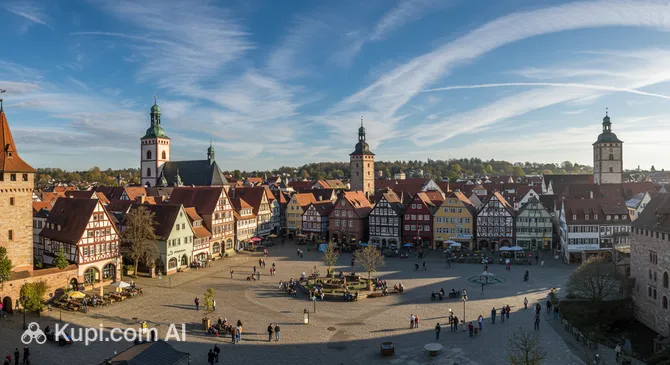
Salzwedel. Illustration.
Source: Kupi.com AI

Salzwedel is a charming Hanseatic city located in the north of the Altmark region in the state of Saxony-Anhalt. If your travel goal is Germany with its authentic atmosphere and medieval charm, then this place definitely deserves your attention. Stretching along the banks of the Jeetze River, the city of about 23,000 residents attracts travelers with its coziness and leisurely pace of life.

The rich history of Salzwedel is closely intertwined with the traditions of the Hanseatic League, which is vividly reflected in its architectural appearance. Strolling through the historic center, you will see beautifully preserved half-timbered houses with intricate carvings and majestic brick city gates that create a unique aura of antiquity.

However, the city is famous for more than just its architecture. Salzwedel is known worldwide as the birthplace of the famous Baumkuchen (literally "tree cake"). This unique delicacy, baked in thin layers over an open fire, has become a true culinary symbol of the region. Be sure to stop by the local bakeries to try this dessert and allow yourself to enjoy the hospitality of this picturesque corner of the country.

Weather Overview

The climate in this region can be described as moderate, without extreme temperature fluctuations, which makes visiting the city comfortable for tourists. Summer here is usually pleasant and warm: in July and August, the air warms up to an average of 19–20°C, with maximum daytime temperatures reaching 24°C. Winters are generally mild but cool, with average values around 3–4°C and night drops to 1–2°C.

Precipitation is distributed fairly evenly throughout the year, so an umbrella can come in handy in any season. Expect warm summers and cool winters with a high probability of precipitation, as the number of rainy days varies from 10 to 15 per month. To make your trip as comfortable as possible, we recommend checking in advance what the weather in Salzwedel is expected to be on your travel dates.

Average monthly temperature

Average monthly precipitation

Interesting Facts

In addition to its main attractions, Salzwedel holds many fascinating secrets and historical details that make a visit even more interesting.

  • Two cities in one. A curious historical fact: for a long time, Salzwedel consisted of two legally independent settlements — the Old Town and the New Town (Altstadt and Neustadt). They were separated by the Jeetze River, had their own fortress walls, separate town halls, and even competed with each other until their official unification in 1713.

  • Birthplace of Jenny von Westphalen. The city went down in history as the birthplace of Jenny von Westphalen, who later became the wife and companion of Karl Marx. She was born here in 1814 into the family of a local Landrat, and the building associated with her name has been preserved to this day.

  • A protected delicacy. The famous local "tree cake" is not just a sweet treat, but a brand with a Protected Geographical Indication in the EU. Authentic Salzwedeler Baumkuchen must be produced exactly here and baked over an open fire, which attracts foodies visiting Germany for gastronomic discoveries.

  • A name reflecting salt. The city's name speaks for itself ("Salz" means salt). In the Middle Ages, the city became wealthy and influential in the Hanseatic League due to its strategic position on the important "Salt Road" trade route from Lüneburg to Magdeburg.

How to Get There

When planning a trip to this cozy Hanseatic city, it is important to think through the logistics in advance, as there is no direct air connection. Salzwedel is located away from major metropolises, so the route is most often built through neighboring large transport hubs. You can find out more about how to get to Salzwedel by studying all available options, but most often tourists choose a combination of plane and train or a car rental.

Since Salzwedel itself does not have its own airport, travelers usually fly into one of the major cities nearby. One of the most convenient options is Hannover Airport (HAJ). It is located in the city of Hannover, about 108 km from Salzwedel. This is an international airport that receives many flights. The journey from here by car or taxi will take about 1.5–2 hours.

Another popular choice is Hamburg Airport (HAM), the oldest and one of the busiest in the country. It is located in the city of Hamburg, at a distance of about 116 km from the destination. Thanks to high passenger traffic, many international flights land here, giving tourists flexibility in planning. It is also worth considering Berlin Brandenburg Airport (BER) in Berlin (168 km) if you plan to combine your trip with a visit to the capital.

For clarity, here is a summary of the main airports through which you can reach the region:

AirportPassenger trafficDistance
Hannover Airport5.3 mln108 km
Lübeck Blankensee82 550110 km
Hamburg Airport13.6 mln117 km
Laage Airport148 000140 km
Bremen Airport1.8 mln160 km

Railway transport is an excellent alternative for completing the journey. Salzwedel has its own train station, but if you are coming from afar, your path will most likely lie through major transit hubs. The nearest major hub station is Hannover Hauptbahnhof, located in the city of Hannover (about 109 km from Salzwedel). Regional trains depart from here to take you to your destination.

Hamburg Hauptbahnhof in Hamburg (approximately 109 km) also serves as a convenient hub. This is one of the busiest stations in Europe, providing connections to almost every corner of the country. Arriving at one of these stations on a high-speed ICE train, you can transfer to a regional express (via Uelzen or a direct connection, if available) and comfortably reach Salzwedel in 1.5–2 hours.

Below is information about the nearest major railway hubs that can serve as a starting point for a trip to Salzwedel:

StationPassenger trafficDistance
Halle (Saale) Railway Station12.8 mln103 km
Messe Bahnhof (Messe-Bf) Station108 km
Hanover Main Station91.3 mln109 km
Hamburg Hauptbahnhof200.8 mln109 km
Rostock Hauptbahnhof6.6 mln151 km

Main Attractions

The city's hallmark and its "tastiest" attraction is the famous Salzwedeler Baumkuchen. This unique layered cake, baked over an open fire, has made the region famous throughout Germany. Travelers should not only try this dessert in local cafes but also visit one of the demonstration bakeries to see the laborious process of creating the "King of Cakes" with their own eyes.

For family vacations and leisurely walks, the Fairytale Park and Fragrance Garden (Märchenpark & Duftgarten) is ideal. This extensive green zone is where nature harmoniously intertwines with folklore: figures of characters from famous legends and fairy tales greet guests along well-kept alleys. A special charm is added by the garden with thousands of roses and herbs, which fills the air with a unique fragrance during the flowering period.

The historical heritage of the Hanseatic League is clearly represented by the preserved medieval fortifications, among which the City Gates — Neuperver Tor and Steintor — stand out. These powerful brick structures, which have survived through the centuries, serve as majestic entrances to the old town and allow tourists to feel the spirit of antiquity while admiring the skill of ancient architects.

Architecture lovers should visit St. Mary's Church (Marienkirche), a magnificent example of Brick Gothic. The church impresses with its size and high tower, which has become a dominant feature of the city skyline. Valuable historical artifacts have been preserved inside the church, including an ancient altar, making it an important point in the cultural program of any guest of the city.

Local Cuisine

The gastronomic scene of Salzwedel is the embodiment of the hearty and robust traditions of the Altmark region, where natural products and ancient recipes are valued. Local cuisine does not strive for excessive sophistication, focusing instead on the quality of ingredients and home comfort; however, the city has one culinary masterpiece known far beyond the country's borders.

The undisputed king of the local table is the famous Salzwedeler Baumkuchen. It is not just a dessert, but a true symbol of the city with a Protected Geographical Indication. The cake is baked on a rotating spit over an open fire, applying the batter layer by layer, so that when sliced, it resembles the annual rings of a tree. Tourists should definitely try the classic version in sugar glaze or the dark chocolate variation in one of the historic confectioneries in the center.

For those who prefer more filling dishes, the Altmark Wedding Soup (Altmärker Hochzeitssuppe) is worth noting. This is a thick and rich chicken broth with meatballs, asparagus, and egg garnish, traditionally served at festivals but now found on the menus of many restaurants. The region is also famous for game dishes: wild boar or venison roast with a side of red cabbage and potato dumplings is a frequent choice for dinner during the cold season.

As for drinks, classic German culture reigns supreme here. It is customary to order local or regional beer, most often a pilsner, with meat dishes. As a digestif after a heavy meal, you might be offered a herbal liqueur or schnapps. Meanwhile, a cup of strong coffee is the perfect accompaniment to the famous Baumkuchen, forming an integral part of the residents' daily ritual.

The dining culture in Salzwedel invites leisurely relaxation. Locals and tourists prefer to dine in cozy "Gasthäuser" (inns) located in old half-timbered houses. People rarely eat on the go here: the atmosphere of the old town encourages you to enjoy every bite, whether it's street food at the market square or a full dinner in a restaurant with a century of history.

Travel Tips

A trip to Salzwedel promises to be calm and atmospheric, but even in such a cozy city, there are nuances worth knowing in advance. To ensure your vacation in this picturesque corner of the Altmark region is flawless and leaves only pleasant memories, we have prepared a list of useful practical recommendations.

  1. Clothing and Footwear. The historic city center is paved with old cobblestones, so be sure to bring comfortable shoes with flat and stable soles; heels will be impractical and uncomfortable here. The weather in the region is changeable, so dress in layers and always carry a compact umbrella or raincoat, even if the sun is shining in the morning.
  2. Transport. Salzwedel is a compact city, and its attractions are best explored on foot. For trips to the picturesque surroundings, renting a bicycle is an ideal option—the region is famous for its cycling routes. It is better to call a taxi by phone or through an app, as "catching" a car on the street can be difficult.
  3. Finances. The official currency is the euro. Despite the widespread development of cashless payments, small traditional bakeries (where the famous Baumkuchen is sold), souvenir shops, and kiosks may only accept cash. We recommend always having small bills with you. It is customary to leave tips of 5–10% of the bill or simply round up the amount.
  4. Health and Safety. The city is characterized by a high level of safety; you can safely walk even in the evening. Pharmacies are easy to recognize by the sign with a red letter "A" (Apotheke). If you need medicine at night or on the weekend, look on the door of any pharmacy for the address of the 24-hour duty station (Notdienst).
  5. Communication. The main language of communication is German. In hotels and tourist offices, you will be understood in English, but older locals may not speak it. Learn a few phrases, such as "Guten Tag" (Good day) and "Danke" (Thank you)—this will win over your interlocutors. For navigation, it is better to download offline maps in advance, as free Wi-Fi is not available everywhere.
  6. Local Etiquette. When entering a small shop, cafe, or elevator, it is customary to greet those present. Germans highly value order and quiet: loud conversations on public transport or on the street late at night are considered bad form.
  7. What to Avoid. Never walk on dedicated cycle paths—this is a high-danger zone and the territory of cyclists, who may be very unhappy with pedestrians in their way. Also avoid crossing the street on a red light, even if the road is empty—this causes disapproval among locals.
  8. Important Note about Shops. When planning your shopping, remember "Sunday silence." In Germany, almost all supermarkets, shopping centers, and pharmacies are closed on Sundays. Only cafes, some bakeries (in the mornings), and gas station shops are open, so stock up on everything you need in advance.

Salzwedel will charm you with its hospitality and the measured pace of life that is so different from the hustle and bustle of metropolises. By following these simple tips, you can avoid minor troubles and fully immerse yourself in enjoying the architecture, history, and, of course, the taste of the local "King of Cakes."

Entertainment & Nightlife

Salzwedel's nightlife is characterized by a calm and measured pace, typical of small Hanseatic towns. Here you won't find huge neon signs or noisy mega-clubs open until dawn every day. Instead, the city offers the cozy atmosphere of traditional German "Kneipen" (pubs) and bars where locals gather to discuss the news over a glass of beer. Most activity is concentrated within the historic center (Altstadt), especially around the streets adjacent to the old city gates and the market square.

The epicenter of youth culture and alternative entertainment is Club Hanseat. This iconic local venue, located in a historic building, combines the functions of a nightclub, concert venue, and cultural center. Live performances by musical groups, themed parties, and discos are regularly held here. The crowd is diverse, and the dress code is completely casual — people come here to have fun, not to show off their outfits.

For those looking for a more soulful setting and good tunes, the Crazy World bar is a great fit. This establishment positions itself as a music pub (Musikkneipe), where the main focus is on live music and a great atmosphere. It is a wonderful place to spend an evening with friends, enjoying performances by local musicians and favorite drinks. If you want to spend time watching the latest movie releases, head to Filmpalast Salzwedel — a modern cinema that is an important part of the residents' evening leisure.

Practical tips for evening walks are simple. Most of the fun happens on Friday and Saturday; on weekdays, many establishments close quite early, around 10:00–11:00 PM. The average bill in Salzwedel's bars will pleasantly surprise tourists used to the prices of large metropolises: the cost of a glass of beer or a cocktail here is very reasonable. It is best to move between venues in the center on foot, as the distances are small. If you stay out late, it is better to call a taxi in advance, as catching a car "by hand" at night can be problematic.

From a safety perspective, Salzwedel is a very comfortable city. Night walks through the illuminated center, along half-timbered houses and ancient walls, pose no threat. However, as in any city, you should stick to general common sense and avoid unlit outskirts when alone.

As for daytime entertainment, the city's cultural program is equally interesting. History buffs should visit the Johann Friedrich Danneil Museum, which houses rich collections telling the story of the Altmark region's past and the history of the Hanseatic League. The city also frequently hosts exhibitions in local galleries and cultural centers, allowing you to get acquainted with the work of contemporary regional artists.

Parks & Museums

Salzwedel surprisingly combines medieval architecture with picturesque natural corners and rich museum collections. For travelers, this is an excellent opportunity to alternate educational excursions with relaxing walks in the fresh air, enjoying the peace and comfort of provincial Germany.

Among the city's green zones, the absolute favorite is the Fairytale Park and Fragrance Garden (Märchenpark & Duftgarten). This is a unique space where landscape design meets folklore: sculptural scenes from famous fairy tales await guests along well-kept alleys, which is especially popular with families with children. The Fragrance Garden, which is part of the complex, offers a sensory journey among hundreds of rose bushes, lavender, and herbs, creating a unique atmosphere of tranquility.

For those who prefer historical landscapes, the City Ramparts (Wallanlagen) are the perfect place. This green belt, encircling the old center on the site of former fortress fortifications, is planted with ancient trees. A walk here allows you to see the city from unusual angles, admiring the remains of medieval walls and the waters of the Jeetze River, which is harmoniously integrated into the urban landscape.

The Johann Friedrich Danneil Museum will help you dive into the cultural heritage of the region. Located in the ancient building of the former provost's residence, it houses an extensive collection of artifacts telling the story of Salzwedel's Hanseatic past and the history of the Altmark region. Tourists are attracted here by exhibitions of sacred art, archaeological finds, and detailed reconstructions of interiors from past eras.

A special place in the city's cultural life is occupied by the Jenny Marx House (Jenny-Marx-Haus). It was in this building in 1814 that Jenny von Westphalen, the future wife of Karl Marx, was born. The museum's exhibition is dedicated not only to her biography but also to the daily life of noble families in the 19th century, allowing for a better understanding of the social history of that time.

Contemporary art lovers should check out the Kunsthaus Salzwedel. This is a dynamic art venue that regularly hosts exhibitions by modern artists, concerts, and literary evenings. The building itself is an architectural monument, and its halls create an interesting contrast between historical walls and contemporary art.

If you want to see something special, pay attention to the city's surroundings where the "Green Belt" (Grünes Band) passes. This is a unique natural biotope that emerged on the site of the former border between East and West Germany. Today it is a protected area where nature has reclaimed its own, becoming home to rare species of plants and animals—an ideal place for eco-tourism and long bike rides.

Getting Around

The transport system of Salzwedel is simple and compact, perfectly matching the leisurely pace of life in this Hanseatic city. You won't find subways, trams, or trolleybuses here; the main and only form of public transport is buses. Since most historical attractions are concentrated in the center, many tourists prefer to get around on foot, but for trips to the outskirts or the train station, the bus network will be very useful.

Bus services are operated by the regional company PVGS. The route network connects key points of the city, including the main station and bus station, with residential areas and neighboring villages. An important feature of the local transport system is the use of the so-called Rufbus (on-call bus). On less busy routes or in the evening, regular services are replaced by minibuses that only run if a request is made. You must order such transport by phone or through an app at least one hour before your planned trip.

The fare payment system here is traditional and intuitive. Single tickets are easiest to purchase directly from the driver when boarding the bus. For this, it is strongly recommended to have cash, preferably small bills or coins, as card terminals are not available everywhere. The fare depends on the tariff zone, but for travel within the city, the price remains fixed and affordable. If you are traveling with the Deutschland-Ticket, which is popular in the region, it is also valid on local bus lines.

As an alternative to public transport, bicycles are extremely popular. Salzwedel and its surroundings are located on flat terrain, making cycling easy and pleasant even for unprepared tourists. There are rental points in the city, and many hotels provide bicycles for their guests. This is perhaps the most authentic way to see the ancient streets and picturesque green belts around the center.

If you need to use a taxi, it is worth remembering that in provincial towns it is not customary to "catch" a car on the street with a wave of your hand. Taxi stands are usually located at the train station, but it is most reliable to order a car by phone or ask your hotel receptionist to do it in advance. Ride-hailing apps (like Uber) may not be available here, or there may be very few cars, so a good old-fashioned phone call remains the surest method.

To plan routes, tourists are recommended to use the INSA app (Saxony-Anhalt transport information system) or the standard DB Navigator. They show up-to-date schedules, including connections with trains. Please note: on weekends, especially on Sunday, bus intervals increase significantly, and some routes may not run at all, so plan your trips in advance.

Accommodation

Accommodation in Salzwedel is not about faceless hotel chains or huge resort complexes, but about coziness and immersion in history. The city offers tourists a choice mainly of small family hotels, traditional German "Gasthäuser" (guest houses), and private apartments. Most accommodation options fall into the affordable price segment, providing comfort and a homely atmosphere without excessive luxury.

The most attractive area for tourists is certainly the Old Town (Altstadt). By staying here, you will be within walking distance of the main attractions, such as the city gates and ancient churches. Living in the historic center means waking up to views of half-timbered facades and cobbled streets. The area around the train station also offers accommodation options; this is convenient for logistics but less picturesque compared to the heart of the city.

A special feature of the local hotel stock is that many hotels are located in restored historic buildings. This gives you the unique opportunity to live in a house with centuries of history, where modern amenities are harmoniously combined with ancient beams and creaky stairs. If you are looking for a budget option, pay attention to small pensions (Pension) or apartment rentals from locals, which is becoming an increasingly popular way to feel the true spirit of the region.

The pricing policy in Salzwedel is quite reasonable compared to the major tourist centers of Germany. Here you can find an excellent room at a fair price even during high season. Popular international online platforms are convenient for booking, but many small family hotels also welcome direct booking through their websites or by phone, sometimes offering better terms or included breakfast.

Booking tip: Although the city is not overcrowded with tourists year-round, demand for accommodation in the center increases during the summer months and the Christmas holiday period. We recommend booking a room several weeks before your trip, especially if you plan a visit during local festivals or fairs, to guarantee the best view and the best value for money.

Nearby Cities

For those who want to explore the surroundings, Salzwedel serves as an excellent starting point for day trips to several interesting nearby locations. The city's location on the border of the states of Saxony-Anhalt and Lower Saxony allows tourists to easily reach both historical Hanseatic centers and modern industrial cities.

One of the most popular destinations is Wolfsburg. This city offers a sharp contrast to the ancient architecture of Salzwedel. It is worth coming here for the famous Autostadt—a huge museum and park complex of the Volkswagen Group—as well as to visit the Phaeno Science Center with its futuristic architecture. The trip takes about an hour but will transport you from the Middle Ages straight into the future.

If you prefer the spirit of antiquity, head to Stendal, the unofficial capital of the Altmark region. This is another glorious Hanseatic city where you can admire magnificent examples of Brick Gothic, see the majestic St. Nicholas Cathedral, and the Roland statue. Stendal is located about the same distance as Wolfsburg but offers a completely different, leisurely cultural program.

We also recommend visiting Uelzen. This small town is known worldwide for its unique attraction—the "Hundertwasser Station." The famous Austrian architect and artist transformed an ordinary station building into a fairytale palace with bright mosaics, golden domes, and an absence of straight lines. It is one of the most photogenic places in the area.

CityPopulationDistance
Lüchow9 60413 km
Klötze10 07725 km
Wittingen11 50331 km
Gardelegen22 40240 km
Osterburg9 78241 km

These nearby destinations provide an insight into the diverse culture and landscapes of the region, harmoniously complementing the impressions of visiting Salzwedel.

Shopping & Souvenirs

Shopping in Salzwedel is a calm and pleasant activity, devoid of the bustle of huge metropolises. The city does not claim to be a fashion capital but charms with its atmosphere: small private shops, family stores, and cozy boutiques located in historic buildings predominate here. Shopping here is often combined with sightseeing, making the process especially atmospheric.

Main shopping streets are concentrated in the historic city center. The main artery for shopping enthusiasts is Breite Straße and the Neuperverstraße that it flows into. This area is partly pedestrianized, allowing for comfortable movement between clothing and shoe stores, bookstores, and opticians. Here you will find both well-known German chain brands and unique shops owned by local residents for generations.

As for shopping centers, you won't find giant malls with hundreds of boutiques in Salzwedel. Large-scale retail here is represented rather by compact passages and supermarkets for daily needs. If your goal is large-scale shopping at global brand stores, locals usually head to neighboring major cities. In Salzwedel itself, retail outlets are more focused on coziness and quality of service than on a huge mass-market range.

Special attention should be paid to the markets, which are an important part of the urban culture. The weekly market (Wochenmarkt) usually unfolds on the market square in the center. Here, farmers from the Altmark region offer fresh vegetables, fruits, homemade cheeses, honey, and meat delicacies. This is the best place to feel the true taste of the region and buy products of the highest quality. In the run-up to Christmas, the city is transformed by the traditional Christmas market, where you can buy handmade crafts and festive decorations.

The main souvenir that you cannot leave the city without is, of course, the Salzwedeler Baumkuchen. This famous layered cake is sold in specialized confectioneries and bakeries throughout the city. You can buy it whole (in the form of a ring) or in small pieces (Spitzen) covered with chocolate or sugar glaze. Such a gift will be not only tasty but also authentic, as real Baumkuchen is baked only here. Local herbal liqueurs and products from local artisans are also popular.

Opening hours of shops in Salzwedel follow the traditional German schedule. Most outlets in the center are open Monday through Friday from 09:00 or 10:00 AM to 6:00 PM. On Saturday, many small shops close as early as 1:00 or 2:00 PM, although supermarkets stay open longer. It is important to remember that on Sunday, all shops, including grocery stores, are closed (except for some bakeries in the morning and gas station shops).

In terms of payment, Germany, and especially small towns like Salzwedel, still maintains a love for cash. Supermarkets and large stores accept cards (Visa, Mastercard, and especially local Girocards) without problems, but in small souvenir shops, bakeries, or at the market, there may be no terminal. Therefore, tourists are strongly recommended to always carry cash in euros, especially small bills.

For tourists from non-EU countries, the Tax Free system (VAT refund) is available. If you make a purchase over 50 euros in a store marked with a "Global Blue" or similar sign, don't forget to ask for a special form (Ausfuhrschein) at the checkout. By filling it out and presenting the goods at customs when flying out of the EU, you can get a partial refund.
Reached the end of the page?

That means the route is fully explored