Support

Wittenberge

About

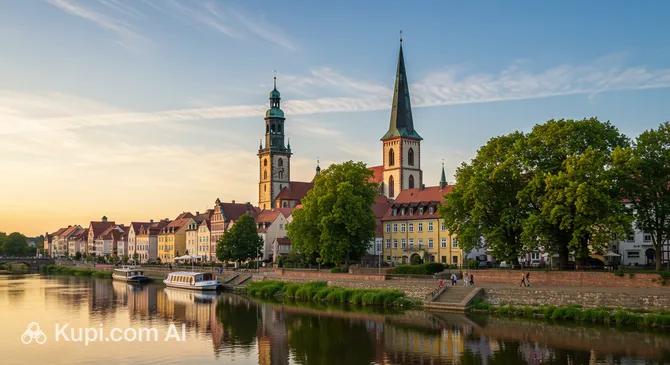
Wittenberge is a picturesque town located on the banks of the majestic Elbe River in the state of Brandenburg. This cozy corner, which Germany invites you to visit, attracts travelers with its calm atmosphere and a unique combination of natural beauty and industrial architecture. With a population of about 17,000, the town is often called the "Gateway to the Elbe Meadows," highlighting its fortunate location next to a biosphere reserve.

Wittenberge. Illustration.
Source: Kupi.com AI

The rich history of Wittenberge is inextricably linked with the era of industrialization. It was once home to the famous Singer sewing machine factory and a large oil mill. Today, this heritage is carefully preserved and reimagined: former industrial sites have been transformed into fascinating tourist locations, creating a unique and recognizable image for the town.

Among the main attractions, the famous Clock Tower (Uhrenturm) stands out as one of the largest free-standing clock towers in continental Europe. Travelers are also drawn to the "Old Oil Mill" complex, which has become a popular recreation area and cultural center, and the historic Stone Gate—the oldest surviving building in the town. Nature lovers will appreciate strolls along the promenade and the opportunity to explore the scenic Elbe floodplains.

Wittenberge is ideal for those who want to escape the hustle and bustle of big cities and enjoy a slower pace of life. Come here to see the harmony of history and modernity, breathe in the fresh river air, and discover the special charm of the German province.

Weather Overview

The climate in Wittenberge can be described as temperate, making the town an attractive destination, especially during the warmer months. Summer here is mild and comfortable: the warmest months are July and August, when the average temperature stays around 19–20°C, and daytime highs often reach a pleasant 23–24°C. This is a great time for excursions and outdoor recreation; however, an umbrella won't hurt, as rain is possible on average 10–11 days per month.

Winters in the region are cool and fairly damp. In January and December, average thermometer readings range from 3–4°C, with nighttime temperatures dropping to 1–2°C. During the winter months, the number of precipitation days reaches its peak—up to 15 days in January. Spring and early autumn offer a pleasant compromise: for example, in May and September, daytime maximums reach 18–20°C, creating excellent conditions for walking.

In general, expect a warm summer with occasional rain and a cool winter with frequent precipitation. To make your trip as comfortable as possible, we recommend checking the current weather in Wittenberge for your travel dates before packing.

Average monthly temperature

Average monthly precipitation

Interesting Facts

Beyond its main attractions, Wittenberge holds many fascinating secrets and unexpected records that only the most curious travelers discover.

  • Record-Breaking Clock Tower. The symbol of the city, the famous Clock Tower (Uhrenturm), holds a unique status: it is the largest free-standing clock tower in mainland Europe. Each of the four dials has a diameter of almost 5 meters, making this architectural structure a truly impressive landmark in the cityscape.

  • Diving in an Industrial Tank. The Old Oil Mill complex offers a completely unique attraction: an indoor diving center built right inside former giant oil storage tanks. Here, you can descend to the depths and explore artificial reefs in the unusual setting of an industrial past.

  • The Continent's Sewing Capital. In the early 20th century, the local branch of the American company Singer was the largest sewing machine factory in continental Europe. It was thanks to this enterprise that the town experienced rapid economic growth, and products with the Wittenberge stamp were known in millions of homes worldwide.

  • Imperial-Scale Station. The town's railway station looks disproportionately grand for such a small population. This is because Wittenberge historically served as a major transport hub between Berlin and Hamburg, and the Neoclassical station building was intended to emphasize its status as the main gateway to the Prignitz region.

How to Get There

Wittenberge occupies an exceptionally favorable strategic position exactly halfway between the country's two largest metropolises—Berlin and Hamburg. Thanks to this, the town is an important transport hub that is easy to reach by any means of transport. You can find out more details on how to get to Wittenberge to choose the best route for your trip.

Since there is no airport in Wittenberge itself, tourists usually fly into the international hubs of neighboring cities. One of the most convenient options is Berlin Brandenburg Airport (IATA: BER), located about 138 km from the town. The drive by car on the autobahn takes approximately 1.5–2 hours, which is much faster than it might seem at first glance. You can also reach the town from the airport by train with a transfer at Berlin Central Station.

An alternative option is Hamburg Airport (IATA: HAM), located about 137 km away. The travel time by car is also around 1.5–2 hours. Both airports offer a wide range of flights and excellent infrastructure. Given the distance, it is recommended to rent a car for the transfer or use the rail link, as a taxi ride for such distances may be economically impractical.

Below is a summary of the nearest airports:

AirportPassenger trafficDistance
Laage Airport148 000108 km
Lübeck Blankensee82 550113 km
Hamburg Airport13.6 mln137 km
Berlin Brandenburg25.5 mln138 km
Hannover Airport5.3 mln151 km

The railway is undoubtedly the fastest and most comfortable way to get to Wittenberge. The town is located directly on the Berlin-Hamburg high-speed rail line, so trains stop here frequently. From Berlin Hauptbahnhof (Berlin Hbf), high-speed trains (ICE) or regional expresses (RE) will take you to your destination in just 45–60 minutes.

The situation is similar from the Hamburg direction. From Hamburg Hauptbahnhof, the journey by train also takes about 1 hour. This makes Wittenberge an ideal destination for a weekend trip from both metropolises, eliminating the need to sit in traffic on the autobahns.

List of the nearest major railway hubs:

StationPassenger trafficDistance
Halle (Saale) Railway Station12.8 mln104 km
Berlin Zoologischer Garten Station36.5 mln120 km
Berlin Hauptbahnhof127.8 mln121 km
Rostock Hauptbahnhof6.6 mln123 km
Berlin Ostbahnhof Station36.5 mln126 km

Main Attractions

Wittenberge offers travelers a unique blend of industrial heritage and the natural beauty of the Elbe Valley. The town carefully preserves its history, masterfully transforming old industrial sites into modern cultural and leisure centers that are definitely worth seeing with your own eyes.

The undisputed landmark and symbol of the city is the Clock Tower (Uhrenturm). This majestic structure, a remnant of the famous sewing machine factory, is impressive in its scale. Tourists come here not only for the architecture but also for the spectacular observation deck. After climbing to the top, you can enjoy a breathtaking panorama of the town and scenic views of the river, making the tower an ideal starting point for your acquaintance with Wittenberge.

Another major draw is the Old Oil Mill (Alte Ölmühle) complex. It is a brilliant example of how industrial architecture can find a second life. Today, it houses a popular entertainment and hotel cluster. Travelers are attracted by the opportunity to dine in atmospheric interiors or visit a unique diving center equipped right inside former giant oil storage tanks—an attraction that is hard to find anywhere else.

To dive into the depths of the past, head to the Stone Gate (Steintor). This is the oldest building in Wittenberge, which once served as part of the medieval fortifications protecting the town. Currently, the gate houses the city museum, featuring exhibits that tell the story of the region's rich past. This site will be particularly interesting for history buffs and those who want to see how the town has evolved over the centuries.

Nature lovers and those seeking a quiet walk will certainly enjoy the Elbe Promenade. This picturesque walkway connects the urban environment with the wild nature of the biosphere reserve. It is a pleasant place for a stroll or a bike ride, where you can enjoy the fresh river air and harbor views. Sculptures decorating the promenade and cozy benches create a great atmosphere for relaxing after a busy day of sightseeing.

Local Cuisine

The gastronomic scene in Wittenberge is inextricably linked to the traditions of the Prignitz region and its proximity to the Elbe River. Local cuisine is characterized by heartiness and simplicity, with an emphasis on fresh seasonal products. Since the town is by the water, fish dishes take pride of place on many menus. Be sure to try the local zander or eel, which are prepared here in various ways: from fried to smoked, often served with boiled potatoes and a cream sauce.

The true culinary "calling card" of this area is Knieperkohl. This is a unique sauerkraut dish made with the addition of blue fodder cabbage leaves and grapes. Traditionally, it is served during the cold season with smoked meats, pork knuckle, or special Kohlwurst sausages. Also popular is a classic Brandenburg combination—jacket potatoes with tender quark and linseed oil, which has been produced here historically.

As for drinks, locals prefer quality German beer, which perfectly complements heavy meat dinners. In cafes and restaurants, you can also find regional fruit schnapps and infusions popular in the Brandenburg countryside. Non-alcoholic drink lovers will appreciate the tradition of afternoon coffee with homemade cakes (Kuchen), especially those featuring seasonal fruits or berries.

Dining culture in Wittenberge combines the coziness of traditional German Gasthauser with the unique atmosphere of reimagined industrial spaces. Tourists and locals alike often choose to dine in restaurants located in historic buildings, such as those within the Old Oil Mill complex. Here, you can not only enjoy fine cuisine but also dine surrounded by majestic industrial architecture, turning an ordinary meal into a memorable event.

Travel Tips

Wittenberge is a peaceful and welcoming town where travelers can easily feel comfortable by preparing for local characteristics in advance. To ensure your trip goes smoothly and leaves only positive impressions, we have compiled a list of useful practical recommendations.

  1. Clothing and Seasonality. Given the proximity to the Elbe River, the weather here can be changeable and windy. Even in summer, it is recommended to have a light windbreaker or cardigan for evening walks. Be sure to bring comfortable flat-soled shoes: the historic center and the "Old Oil Mill" area are paved with cobblestones, so heels will be inappropriate. In autumn and winter, don't forget a reliable umbrella or raincoat.

  2. Transport and Getting Around. Wittenberge is a compact town, and its center is best explored on foot. For longer distances or trips along the river, renting a bicycle is an ideal option—the town is integrated into the popular Elberadweg cycle route. Public transport consists of buses, but the schedule may not be very frequent, especially on weekends. To call a taxi, it is better to use the phone (ask for help at the hotel reception), as international apps may not work here.

  3. Finances and Payment. The currency is the Euro (EUR). Although supermarkets and hotels accept cards without problems, in Germany, and especially in small towns in Brandenburg, cash (Bargeld) still plays a major role. Small bakeries, kiosks, or souvenir shops may not have terminals. ATMs (Geldautomat) are available in the town center. Tipping is usually around 5–10% of the bill or simply rounding up the amount.

  4. Health and Safety. Wittenberge is a safe town with a low crime rate, but standard precautions are still wise. Pharmacies (Apotheke) are easily identified by a red letter "A", but only emergency pharmacies stay open 24/7 (information is usually posted on the door of any pharmacy). The emergency services number is 112.

  5. Language and Communication. The main language of communication is German. Staff in tourist areas and younger people often speak English, but the older generation may only speak their native language. Download an offline translator and learn a few phrases, such as "Guten Tag" (Good day) and "Danke" (Thank you)—this will win over the locals. SIM cards can be bought at large supermarkets or mobile stores; a passport is required for activation.

  6. Local Etiquette. Germans value punctuality and politeness. When entering a small shop, it is customary to greet the seller. Try not to be loud in public places, especially in the evening. If you plan to visit local saunas or spa complexes (for example, at the "Old Oil Mill"), check the rules: in Germany, sauna areas are often mixed-gender and imply being "textilfrei" (nude-only).

  7. What to Avoid. Never walk on bicycle paths! They are usually marked by color or lines on the sidewalk. For locals, this is a serious violation of the rules, and you risk a collision with a fast-moving cyclist or getting a reprimand. Also, avoid noise and loud music on Sunday—it is a day of silence and rest.

  8. Important Note About Shops. Remember Ruhetag (rest day). On Sunday, almost all shops, including grocery supermarkets and pharmacies, are closed. Only some bakeries (in the morning), cafes, and small shops at gas stations or the railway station are open. Plan your shopping for food and essentials in advance, preferably by Saturday afternoon.

Following these simple rules will help you quickly adapt to the rhythm of life in Wittenberge and enjoy its unique atmosphere without extra hassle. We wish you a pleasant and carefree journey!

Entertainment & Nightlife

Wittenberge is a town with a measured and calm rhythm of life, so do not look here for noisy nightclubs open until dawn or massive discos typical of metropolises like Berlin or Hamburg. Evening life here is permeated with coziness and a sense of "Gemütlichkeit"—that special German atmosphere of comfort. Most activity after sunset centers around gastronomy, cultural events, and social gatherings. The main focal points are the Elbe embankment area and the central Bahnstraße.

The undisputed center for evening leisure is the Old Oil Mill (Alte Ölmühle) complex. The historical interior houses the popular Brauhaus Alte Ölmühle restaurant and brewery. This is an ideal place to start the evening: here you can try fresh local craft beer and hearty regional dishes. The atmosphere combines industrial chic with the warmth of a traditional tavern. In the warmer months, there is a spacious beer garden (Biergarten) right by the river, often featuring live music. The crowd here is diverse—from groups of friends to couples—and the dress code is casual and relaxed.

For those who prefer cultural entertainment, the program at the Kultur- und Festspielhaus Wittenberge is worth checking. This majestic theater and concert hall is the heart of the town's cultural life. Evenings here feature symphonic concerts, theatrical productions, comedy shows, and touring artists. Visiting this venue is a wonderful reason to dress a bit more elegantly (smart casual) and spend an evening in a sophisticated atmosphere.

During the day, the entertainment program in Wittenberge is more varied and focused on educational leisure. Guests can visit the City Museum (Stadtmuseum) in the historic Stone Gate or take a tour of the Sewing Machine Museum to touch the industrial past of the region. For active recreation, walks through the parks or cycling trips along the Elbe are perfect.

Practical tips for evening outings:

  • Opening hours: Keep in mind that kitchens in most restaurants close fairly early, around 9:00 PM to 10:00 PM. Bars may stay open until midnight or until the last customer on weekends, but the town goes to sleep early on weekdays.
  • Safety: Wittenberge is a very safe town. The streets in the center and the embankment are well-lit, and nighttime walks carry no significant risks. However, basic precautions should always be observed.
  • Transport: Public transport is extremely rare or non-existent at night. If you stay out late, it is better to have a local taxi number ready, as popular international apps might not operate here or may not have available cars.
  • Prices: The cost of leisure here is lower than in the large cities of Germany. A glass of beer costs an average of 4–5 euros, and a cocktail is about 8–10 euros.

Parks & Museums

Wittenberge offers its guests a harmonious blend of natural wealth and a rich cultural program. Surrounded by picturesque river landscapes, the town carefully preserves the memory of its industrial past, transforming historical sites into fascinating museum spaces. Here you can spend a day studying exhibits within ancient walls and then enjoy the silence and fresh air in well-maintained green zones by the water.

The main natural treasure of the region is undoubtedly the Elbe River Landscape Biosphere Reserve (Biosphärenreservat Flusslandschaft Elbe). Wittenberge serves as an excellent starting point for exploring this unique ecosystem. Walks through the floodplain meadows offer chances to see rare birds and beavers and enjoy untouched nature that begins literally at the town's doorstep. No less popular is the Elbe Promenade (Elbpromenade)—a landscaped green area ideal for leisurely strolls. Here, the urban architecture flows smoothly into the river landscape, creating an atmosphere of peace and tranquility.

To dive into the town's history, visit the Wittenberge City Museum (Stadtmuseum), located in the "Old Castle" historic building complex and the famous Stone Gate (Steintor). The museum's exhibition tells the detailed story of the town's development from a medieval settlement to a major industrial center. Particular attention is paid to the daily life of citizens across different eras and the history of local river shipping. The Stone Gate building itself, being the oldest structure in the town, adds a special ambiance to the visit.

Another important point on the cultural map is the Historical Locomotive Depot (Historischer Lokschuppen). Wittenberge was a major railway hub for a long time, and this open-air museum preserves the memory of the "golden age" of steam locomotives. Here you can see an impressive collection of historical locomotives and railway equipment, which will be of interest not only to technology fans but also to families with children. The atmosphere of the old depot allows you to literally touch the history of transport, which is closely intertwined with the fate of all of Germany.

Among the architectural monuments, besides the already mentioned Stone Gate, the majestic Town Hall (Rathaus) stands out. Built in the Historicism style, it impresses with its monumental brick facade and rich decor, symbolizing the town's prosperity in the early 20th century. It is also impossible not to notice the complex of the former sewing machine factory with its famous Clock Tower, which today is a monument of industrial architecture of European significance.

As an insider tip, we recommend taking a walk to where the Stepenitz River flows into the Elbe at sunset. This quiet and incredibly scenic spot, hidden from the main tourist routes, is where you can take stunning photos and enjoy the silence while watching the barges pass by.

Getting Around

The public transport system in Wittenberge is characterized by its compactness and simplicity, which perfectly fits the measured pace of life in this small town. Given its modest size, there are no subways, trams, or trolleybuses here. The main and only form of municipal transport is the bus, which connects the railway station, the historic center, and outlying districts, as well as providing links to neighboring villages.

The town is part of the Berlin-Brandenburg transport association (VBB). This means that uniform fares and rules apply throughout the region. For tourists, this is convenient as the ticket system is standardized. You can purchase a single ticket (Einzelfahrausweis) for a short trip or a day pass (Tageskarte) if you plan to move around actively throughout the day. The fare within the town (Wittenberge tariff zone) is low and accessible for any budget.

Tickets can be purchased directly from the bus driver (it's better to have cash, as terminals are not available everywhere), at machines at the railway station, or through mobile apps such as "VBB Bus & Bahn" or "DB Navigator". An important note: if you bought a paper ticket without a specified start time, it must be validated in the machine immediately upon entering the bus; otherwise, the ride will be considered unpaid, which risks a heavy fine.

Travelers should take into account that buses in Wittenberge do not run as frequently as in metropolises. On weekdays, the intervals are comfortable, but on weekends, public holidays, and in the evenings, the number of services is significantly reduced. It is highly recommended to check the schedule at the stops or in online apps in advance to avoid wasting time waiting.

As an alternative to public transport, bicycles are extremely popular. Wittenberge is located on a plain and is integrated into the famous cycle route along the Elbe, so two-wheeled transport is king of the road here. There are rental points in town, and many hotels offer bicycles to their guests. This is perhaps the most pleasant and efficient way to see the sights, including the embankment and the "Old Oil Mill" district.

For trips when the bus schedule is not suitable, you can use taxi services. Taxi stands are usually located near the railway station. It's worth remembering that "hailing" a car on the street with a wave of the hand is not common here, and international taxi apps might not find available drivers. The most reliable way is to ask a hotel or restaurant employee to call a car for you via the local dispatch service.

Accommodation

Accommodation options in Wittenberge are surprisingly diverse and full of character, despite the town's relatively small size. You won't find massive, impersonal chain hotels here; instead, the hospitality of the Prignitz region is revealed through cozy family-run hotels, guesthouses (Gasthof), and apartments located in historic buildings. The focus is on middle-class comfort and atmospheric stays closely connected to the history and nature of the region.

When choosing an area to stay, it is best to consider the purpose of your visit. The most popular and scenic location is the area along the Elbe Promenade. Hotels here offer not only stunning views of the river and harbor but also quick access to walking areas and bike routes. If you are traveling by train or planning frequent trips to neighboring towns, it is convenient to consider options near the railway station and Bahnstraße. The town center is compact, so you can reach the main attractions from any point on foot within 10–15 minutes.

A unique feature of Wittenberge's hotel stock is the use of repurposed industrial sites. The most striking example is the complex on the grounds of the former oil mill. Here, tourists can stay in rooms where modern design blends harmoniously with 19th-century brickwork and industrial elements. Such accommodation allows you not just to spend the night, but to literally live inside an architectural monument while enjoying spa services and fine dining.

The price range in the town can be described as moderate. The cost of living here is generally lower than in large metropolises like Hamburg or Berlin, making Wittenberge an excellent option for a budget-friendly holiday. Most establishments offer great value for money, including a hearty German breakfast in the price.

Booking tip: while Germany is known for having available rooms in the off-season, Wittenberge is a popular stop on the Elbe Cycle Route. From May to September, as well as during town festivals, the demand for housing rises sharply. We recommend booking rooms 2–3 months before your trip, especially if you want a room with a river view. You can do this through popular online platforms or directly on the hotels' websites, which can sometimes be more cost-effective.

Nearby Cities

For those who want to explore the surroundings, Wittenberge serves as an excellent starting point for day trips to several interesting nearby places:

Just a few dozen kilometers away is Stendal—a historic Hanseatic city that is rightfully proud of its impressive Brick Gothic architecture. A walk through its center will allow you to see the majestic St. Nicholas Cathedral and the old city gates, as well as visit the museum dedicated to the famous archaeologist Johann Winckelmann.

Another attractive destination is Neuruppin, nestled on the shores of the picturesque Ruppiner See lake. This town is considered one of the most "Prussian" in spirit due to its strict Neoclassical architecture. Here, you can walk in the footsteps of the writer Theodor Fontane, enjoy the lake views, and visit the St. Trinitatis monastery church.

It is also worth visiting Salzwedel, known for its charming half-timbered houses that create a fairytale atmosphere. However, the town's main "highlight" is the famous layered cake known as Baumkuchen. Visiting one of the local bakeries, where this dessert is prepared over an open fire according to old recipes, will be a true culinary adventure.

CityPopulationDistance
Perleberg12 03512 km
Osterburg9 78223 km
Pritzwalk13 33633 km
Ludwigslust12 23340 km
Lüchow9 60441 km

These nearby destinations provide an insight into the diverse culture and landscapes of the region, complementing your experience of visiting Wittenberge.

Shopping & Souvenirs

Shopping in Wittenberge is a calm and leisurely activity that is fundamentally different from the hustle and bustle of large retail hubs. People come here not for high fashion or luxury brands, but for an atmosphere of coziness, everyday essentials, and unique regional products. The town's shopping scene is compact, allowing you to combine purchases with a walk through the historic center without spending time on long commutes.

The focal point for shopping enthusiasts is Bahnstraße. This is the town's main shopping artery, connecting the railway station with the Elbe embankment. Here, within historic buildings, you will find many small private shops. Tourists can find bookstores, clothing, shoe stores, opticians, and cozy pharmacies. A stroll along Bahnstraße allows you to feel the rhythm of local life and look into shop windows decorated with German precision.

If you need a wider range of goods in one place, look for the Wittenberger Einkaufszentrum (WEZ). This is a classic local shopping center where supermarkets, electronics stores, drugstores (for household goods and cosmetics), and mass-market clothing outlets are concentrated. It is a convenient place to restock on provisions or buy things you may have forgotten to pack.

For fresh produce and local flavor, the weekly market (Wochenmarkt) is a must. It usually takes place in the central squares, such as Bismarckplatz. Here, farmers from the Prignitz region offer seasonal vegetables, fruits, fresh bread, cheeses, and meat delicacies. This is the best place to get a "taste" of the real German province and chat with friendly sellers.

The choice of souvenirs in Wittenberge is closely linked to the town's history and culinary traditions. Here is what's worth bringing back:

  • Linseed oil and Alte Ölmühle products. Since the town is famous for its Old Oil Mill complex, a bottle of fresh linseed oil or other locally produced goods make for an excellent and useful gift.
  • Knieperkohl. This is a famous regional delicacy made from sauerkraut. It is often sold in beautiful glass jars, which are convenient for transport.
  • Singer/Veritas memorabilia. Given the town's industrial past as a sewing machine production center, you can find magnets, postcards, or miniatures dedicated to this theme in local shops or the museum.
  • Liqueurs and schnapps. Traditional herbal infusions from Brandenburg will warm you on winter evenings and remind you of your trip.

When planning your shopping, it is important to remember typical German opening hours. Most shops in the center are open from 9:00 AM or 10:00 AM until 6:00 PM on weekdays, and on Saturdays, the working day often ends earlier, around 1:00 PM or 4:00 PM. Sunday is the official day of rest (Ruhetag), when everything is closed except for some bakeries and shops at the station or gas stations.

Regarding payment, while supermarkets and large centers accept cards (Visa, Mastercard) without problems, Wittenberge remains a town where cash (Bargeld) is preferred. In small souvenir shops, at the market, or in cafes, cards may not be accepted at all, or only local German EC-Karten. Therefore, tourists are strongly advised to always have a small supply of Euro banknotes and coins.

The Tax Free system (VAT refund) is theoretically available for non-EU tourists when purchasing a certain amount on one receipt. However, given the small number of large brand stores in Wittenberge, the opportunity to obtain a Tax Free form is not common. Look for corresponding stickers in the windows or ask at the checkout before purchasing.
Reached the end of the page?

That means the route is fully explored