Support

Ludwigslust

About

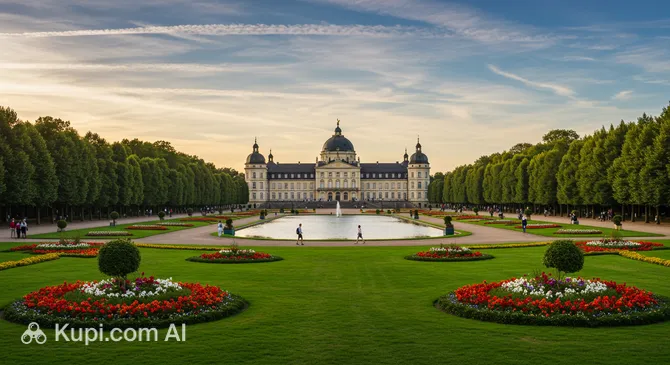
Ludwigslust. Illustration.
Source: Kupi.com AI

Ludwigslust is a charming town in the federal state of Mecklenburg-Vorpommern, often referred to as the "Mecklenburg Versailles." The former ducal residence located here lends this small town of just over 12,000 people a truly aristocratic charm and grandeur.

For many tourists, Germany is associated with major metropolises; however, it is precisely these cozy corners that reveal the country's soul. The town is distinguished by a pleasant atmosphere and an abundance of greenery, making it a wonderful place to relax. The fascinating history of Ludwigslust began as a simple hunting ground, which over time transformed into a magnificent palace ensemble that defined the entire architectural appearance of the town.

The heart of the town is the magnificent Ludwigslust Palace, built in the Late Baroque and Classical styles. It is surrounded by an extensive palace park — one of the most beautiful landscape parks in the north of the region, teeming with canals, cascades, and shaded alleys. Another important landmark is the City Church (Stadtkirche), whose monumental facade with a portico harmoniously complements the architectural ensemble of the central square.

A visit to Ludwigslust will give you the opportunity to enjoy peace, exquisite architecture, and leisurely walks in the fresh air. This is an ideal destination for travelers looking for inspiration and wanting to experience cultural heritage without the hustle and bustle of big cities.

Weather Overview

The climate in Ludwigslust can be described as moderate, with mild transitions between seasons, typical for the northern part of Germany. When planning your trip, be prepared for the fact that the weather in Ludwigslust can be changeable, and humidity is quite high throughout the year.

Summer here is the most pleasant time for a visit and long walks in the park. In the warmest months, July and August, the average temperature is about 18–19°C, with daytime highs comfortably reaching 22–23.5°C. However, even in the height of the season, rain is not uncommon: statistics show about 11–12 rainy days per month, so an umbrella or raincoat is worth taking along.

Winter is usually cool but without extreme frosts. In January and December, average temperatures stay around 3–3.5°C, while nighttime temperatures generally remain within 0–2°C. Spring arrives gradually: while it is still crisp in March (about 5°C), the town blooms by May with pleasant temperatures of 13–18°C.

In general, expect a moderately warm summer with occasional precipitation and cool, overcast winters.

Average monthly temperature

Average monthly precipitation

Interesting Facts

In addition to its architectural grandeur, Ludwigslust hides fascinating details that often escape the attention of hurried tourists. This town is a striking example of how inventive 18th-century Germany combined high art with engineering ingenuity.
  • The "Cardboard" Palace. The most striking fact about the castle's interior decoration lies in the material used. The luxurious gold moldings, statues, busts, and even candelabras in the famous Golden Hall are not made of plaster, wood, or bronze, but of papier-mâché, known as "Ludwigslust cardboard." This unique know-how allowed the dukes to create an appearance of incredible luxury while significantly saving funds.

  • A Telling Name. The town's name literally translates to "Ludwig's Joy" or "Ludwig's Delight." It was named in honor of Duke Christian Ludwig II, who was a passionate hunter. Initially, this place was just a modest hunting lodge where the ruler indulged in his favorite hobby, only later growing into a full-fledged residence.

  • An Engineering Wonder of the Park. The magnificent fountains and cascades in the palace park operate without a single electric pump, relying solely on gravity and elevation changes. To achieve this effect, a 28-kilometer-long canal was specially dug in the 18th century to bring water from a river, which was an outstanding hydraulic achievement for its time.

  • A Record-Breaking Canvas. In the City Church (Stadtkirche), there is an altar painting titled "The Annunciation to the Shepherds," which has colossal dimensions—about 350 square meters. For a long time, it was considered the largest oil painting on canvas in Europe. Interestingly, the church was originally planned to be decorated with a colonnade, but due to a lack of funds, it was decided to replace the architectural elements with this grandiose painting.

How to Get There

When planning your trip, it is helpful to think through your route in advance, as the town is located away from the largest international hubs. You can find out more about how to get to Ludwigslust by studying all available transport options, but most often tourists choose a combination of a flight and ground transfer.

Since there is no airport in Ludwigslust itself, it is most convenient for travelers to use the air gateways of neighboring large cities. The most optimal option is Hamburg Airport (HAM), located in the city of Hamburg. It is a major international hub receiving flights from all over the world. It is located approximately 106 km from Ludwigslust. The journey by car or taxi from there will take about 1 hour and 40 minutes, and there is also a convenient rail connection.

Another popular option is to fly into the capital. Berlin Brandenburg Airport (BER) in Berlin is located about 172 km from your destination. It is the region's largest airport with a massive passenger flow. The journey by car will take about 2–2.5 hours. If you are looking for a closer option, consider the regional Rostock-Laage Airport (RLG) in the city of Rostock (about 83 km away), though the number of flights there is significantly lower.

For clarity, here is a summary of the main airports:

AirportPassenger trafficDistance
Lübeck Blankensee82 55074 km
Laage Airport148 00083 km
Hamburg Airport13.6 mln106 km
Hannover Airport5.3 mln155 km
Berlin Brandenburg25.5 mln172 km

Rail connections in Germany are excellently developed, making it easy to combine modes of transport. Although Ludwigslust has its own station, many tourists first arrive at the main stations of major cities.

One of the key transit hubs is Hamburg Hauptbahnhof (Hamburg Central Station). It is located in the city of Hamburg, at a distance of about 102 km from Ludwigslust. It is one of Europe's busiest stations with a colossal passenger flow, from where many trains depart in a southern direction. Also important is Berlin Hauptbahnhof in Berlin (approximately 154 km from Ludwigslust), which connects the capital with almost all regions of the country. From these large stations, you can reach your final destination by regional train or rented car.

Below are the nearest major railway hubs:

StationPassenger trafficDistance
Rostock Hauptbahnhof6.6 mln94 km
Hamburg Hauptbahnhof200.8 mln102 km
Halle (Saale) Railway Station12.8 mln143 km
Berlin Zoologischer Garten Station36.5 mln153 km
Berlin Hauptbahnhof127.8 mln154 km

Main Attractions

Despite its compact size, this town boasts a surprising concentration of historical monuments. Most key sites are linked to the legacy of the Dukes of Mecklenburg-Schwerin, who transformed modest hunting grounds into a luxurious residence. A walk through the local attractions is a journey into the era of Baroque and Classicism, where architecture and nature merge into one.

The main gem of the town is undoubtedly Ludwigslust Palace. This majestic residence is often called the "Little Versailles" of Mecklenburg. The building impresses not only with its external scale but also with its unique interiors. Tourists find it particularly interesting to visit the Golden Hall, where the luxurious decor, including statues and chandeliers, is made of a special papier-mâché — the famous "Ludwigslust cardboard." Today, the palace houses a museum where you can immerse yourself in the atmosphere of court life from the 18th and 19th centuries.

Right behind the residence lies the vast Palace Park (Schlosspark), considered one of the largest and most beautiful landscape parks that Germany is famous for. It is an ideal place for leisurely strolls among centuries-old trees, canals, and artificial cascades. The park covers a huge area of 120 hectares and is adorned with many small architectural forms, from elegant bridges to romantic ruins, harmoniously integrated into the natural landscape.

Opposite the palace stands the monumental City Church (Stadtkirche). Built at the end of the 18th century, it draws attention with its unusually wide facade and Tuscan portico, which looks more like an ancient temple than a traditional church. Inside, a real surprise awaits visitors: instead of an altar, there is a giant canvas titled "The Annunciation to the Shepherds," occupying the entire eastern wall, making the church's interior completely unique.

Deep within the park, it is worth finding the Mausoleum of Elena Pavlovna. This elegant classical-style building was erected in memory of the Grand Duchess who became the Duchess of Mecklenburg-Schwerin. Surrounded by silence and greenery, the mausoleum is an important historical monument reflecting the dynastic ties of the past. Its strict lines and secluded location create a special atmosphere of peace.

Local Cuisine

The gastronomic scene of Ludwigslust is inextricably linked to the traditions of the Mecklenburg region: it is hearty, solid, and based on local products. Given the town's historical status as a hunting residence of the dukes, game dishes occupy a special place on the menu. In season, you must try the tender venison or wild boar roast at local establishments, traditionally served with red cabbage, forest mushrooms, and potato dumplings.

A true culinary hallmark of this part of the country, which can also be found in Ludwigslust, is the Mecklenburg rib roast (Mecklenburger Rippenbraten). This is a pork brisket stuffed with apples, prunes, and spices. The unusual combination of juicy meat and sweet fruit filling provides a unique taste characteristic of Northern German cuisine. Fresh lake fish dishes are also popular, such as zander or pike, often served with boiled potatoes and dill sauce.

Among beverages, the queen of the region is sea buckthorn (Sanddorn). This healthy berry is called the "lemon of the north" here. Tourists should try hot sea buckthorn juice in cool weather, refreshing fruit drinks in summer, or sweet sea buckthorn liqueur as a digestif. Beer lovers will appreciate the products of regional breweries, especially the light pilsner varieties, which pair perfectly with meat dishes.

The dining culture in the town is characterized by tranquility and coziness. There is no noisy street fast food found in metropolises; instead, life flows in the rhythm of the "Kaffee und Kuchen" (coffee and cake) tradition. After a walk in the park, it's customary to stop by a café to enjoy a cup of coffee with a piece of fresh cake—often with marzipan, cream, or fruit. The main restaurants and historic taverns are concentrated in the town center, offering guests the atmosphere of old Germany.

Travel Tips

A trip to Ludwigslust promises to be peaceful and inspiring, as this town is created for unhurried contemplation and relaxation. To ensure your journey to this "Mecklenburg Versailles" is as comfortable as possible, we have prepared some practical recommendations to help you avoid minor inconveniences.

  1. Clothing and Footwear. The main rule for visiting Ludwigslust is comfortable shoes. You will be walking a lot, especially through the massive Palace Park (120 hectares!) and across the cobblestones of the historic center. Given the region's changeable climate, dress in layers and be sure to bring a compact umbrella or raincoat, even if the sun is shining in the morning.
  2. Transport and Getting Around. The town is quite compact, and its historic center is best explored on foot. You can walk from the railway station to the castle in about 15–20 minutes. Renting a car within the town is not necessary, but if you want to explore the surroundings, a car will be useful. A great alternative is renting a bike—it's the most popular way to get around the park alleys.
  3. Finances and Payment. The official currency is the Euro. Although hotels, the palace museum, and supermarkets accept cards (Visa, Mastercard), Germany is famous for its love of cash. Small bakeries, souvenir shops, or cafes may only accept cash (Bargeld) or local EC-cards. Always carry small denomination banknotes. It is customary to leave a tip of 5–10% of the bill or simply round up the amount.
  4. Health and Safety. Ludwigslust is a very safe and quiet town. You can walk around peacefully even in the evening. Pharmacies are easily recognizable by the sign with a red letter "A" (Apotheke). Note that there are few 24-hour pharmacies here; they operate on a rotating duty schedule, which is usually posted on the door of any pharmacy.
  5. Communication and Language. The main language of communication is German. Staff in the castle and major hotels speak English, but you might not be understood in regular shops or on the street. We recommend learning a few polite phrases: "Guten Tag" (Good day) and "Danke" (Thank you). Free Wi-Fi is available in hotels and some cafes, but for stable connection on the street, it's better to buy a local prepaid SIM card at a supermarket.
  6. Local Etiquette. In this region, it is customary to say hello when entering small shops or elevators. In Northern Germany, people often use the universal greeting "Moin," which is appropriate at any time of day. Also, maintain silence: loud conversations in public places and on transport are considered poor form.
  7. Things to Avoid. Never walk on bicycle paths. In Germany, this is a serious violation of rules and etiquette that can cause sharp dissatisfaction among cyclists. Also, avoid making noise on Sundays (Ruhetag)—this is a day of rest when many shops are closed and locals value their peace.
  8. Planning Tip. If you arrive by train, don't rush straight to the palace. Pay attention to the station building itself and the adjacent streets—the town was built as a single ensemble, and many interesting architectural details are hidden on the way to the main square.

By following these simple tips, you will feel like a welcome guest rather than just a tourist in Ludwigslust. Enjoy the grandeur of the architecture, the fresh air of the park, and the cozy atmosphere of old Europe!

Entertainment & Nightlife

Nightlife and entertainment in Ludwigslust have their own special, intimate character. If you are looking for loud nightclubs with techno music until dawn or large-scale parties, this town might seem too quiet. However, for those who appreciate cozy evenings, delicious food, and heartfelt conversations over a glass of wine, Ludwigslust will be a pleasant discovery. Evening life here flows in the rhythm of "Gemütlichkeit" — a German concept meaning coziness and unhurriedness.

The epicenter of evening activity is the historic town center, especially Schloßstraße and its adjacent side streets. This is where most establishments are concentrated, where locals and tourists gather after the workday. In the warmer months, life spills out onto open terraces, offering views of the old town's cobblestones and Baroque architecture. In winter, guests move into the warm halls of restaurants and small pubs.

Among specific leisure spots, the Luna Filmtheater is worth highlighting. This is not just a cinema, but a historic cultural space where you can watch both new releases and classic films. For dinner or an evening cocktail, central venues like Italian restaurants or traditional German guesthouses (Gasthaus) located along the town's main axis are excellent. You can often meet groups of locals here playing cards or discussing the latest news, which creates a very authentic atmosphere.

The atmosphere in these venues is democratic and relaxed. There is no strict dress code: casual or smart casual is appropriate everywhere. The crowd is mostly adult and respectable, though you can find younger people on weekends. It is important to remember the operating hours: Ludwigslust is a town of "early birds." Kitchens in many restaurants close as early as 9:00 PM – 10:00 PM, and bars rarely stay open past midnight, except on Fridays and Saturdays.

In terms of safety, Ludwigslust is one of the quietest towns in the region. You can walk through the center even late at night without concern. The streets are well-lit, and the crime rate is extremely low. However, it is worth planning your transport in advance. Taxi services operate here, but there aren't as many cars as in big cities, so it's better to book a car back to your hotel in advance by phone or through restaurant staff. Public transport is rare at night.

Regarding daytime and cultural entertainment, they harmoniously complement the evening rest. In addition to the famous palace, it's worth visiting local museums or seasonal fairs at Alexandrinenplatz if your visit coincides with the holidays. Active leisure enthusiasts will enjoy the opportunity to rent a bike to explore the surroundings, returning in the evening with a pleasant tiredness to the comfort of one of the local restaurants.

Parks & Museums

Ludwigslust is a town where culture and nature are so closely intertwined that it is sometimes difficult to see where the park ends and the residential area begins. For tourists, this place reveals itself as a massive green oasis with an architectural gem shining at its center. Germany is proud of its garden and park ensembles, and the local landscapes are rightfully considered some of the most impressive in the north of the country.

The town's main natural treasure is the magnificent Palace Park (Schlosspark). Covering an area of about 120 hectares, it is a masterpiece of landscape design that evolved from strict French Baroque to the free English landscape style. It is an ideal place for long meditative walks: here you will find shaded avenues of centuries-old trees, romantic canals, and wide lawns. A special feature of the park is its complex hydraulic system with cascades and fountains, which, remarkably, operate solely through natural elevation changes without the use of pumps.

For those who want to delve deeper into wild nature, the town serves as a gateway to the Lewitz Landscape Reserve (Die Lewitz). This extensive protected area surrounding Ludwigslust is famous for its forests, meadows, and numerous fish ponds. It is a paradise for active recreation enthusiasts, with many cycling and hiking trails. In the Lewitz, you can observe rare birds and enjoy the silence, which contrasts so sharply with the noise of big cities.

The cultural heart of the town beats within the walls of the Ludwigslust Palace Museum. The exhibition, located in the former ducal residence, allows visitors to immerse themselves in the atmosphere of court life in the 18th and 19th centuries. The museum's main pride is the famous Golden Hall, shining with luxury, and a collection of artworks including paintings, furniture, and porcelain. Of particular interest is the unique technology of "Ludwigslust cardboard" (papier-mâché), from which a significant part of the decor is made, demonstrating the ingenuity of past masters.

Another informative spot is the Natureum, located in the immediate vicinity of the castle in the historic Old Guardhouse building. This museum is dedicated to the nature of the region and the history of hunting, which played a key role in the founding of the town itself. Here you can learn about the flora and fauna of Mecklenburg, see geological finds, and understand how humans have interacted with the local ecosystem over the centuries. This is especially engaging for families with children and biology enthusiasts.

The town's architectural appearance is completed by the monumental City Church (Stadtkirche). Its strict classical facade and unusual interior with a giant altar canvas make it an important point on the cultural agenda. The entire town center, with its straight streets and brick buildings, was designed as a single ensemble harmonizing with the palace, creating a sense of traveling back in time.

Insider Tip: While walking through the park, be sure to find the Catholic Church of St. Helena, hidden among the trees on an island. This Neo-Gothic building looks very romantic and secluded, and many tourists miss it by sticking only to the main paths near the palace.

Getting Around

Ludwigslust's transport infrastructure fully reflects its character—it is a compact and cozy town where there is no need for subways or trams. Distances here are small, so most attractions in the center can be comfortably explored on foot, enjoying views of historical buildings and the greenery of the streets.

The main means of public transport are buses. The local network, operated by a regional company (most often VLP), connects the railway station, the town center, and residential areas, and also provides links to surrounding villages. The buses are modern, but tourists should note that the intervals between runs are longer than in major cities. On weekdays, transport runs regularly, but in the evenings and on weekends, services are noticeably fewer, so it is recommended to check the schedule in advance via the DB Navigator app or at the bus stops.

The fare payment system is simple but has its nuances. Single trip tickets (Einzelfahrschein) are usually bought directly from the driver upon boarding. It is highly advisable to have cash, preferably coins, as card terminals in small-town buses might be absent. If you are using the "Deutschland-Ticket," popular in Germany, it is also valid on local lines, which saves you the hassle of buying separate tickets.

For more freedom of movement, a bicycle is an ideal choice. Ludwigslust is located on a plain, making cycling easy and pleasant even for inexperienced tourists. This is the best way to see the vast Palace Park, where cars are strictly prohibited. Rental points can be found near the station or by asking at your hotel reception.

Taxi services function in the town, but you are unlikely to catch a car just by waving your hand on the street. An official taxi stand is located right at the exit of the railway station. For trips from other points or at late hours, a car must be ordered by phone in advance. This is especially important to remember if you are staying late at a restaurant, as night bus routes are practically non-existent.

Travelers by car will find it comfortable: there are almost no traffic jams, and parking usually isn't a problem. There are many free parking spaces in the center, but they are often time-limited. To park in such zones, you will definitely need a blue parking disc (Parkscheibe), on which you must set your arrival time. You can buy one at any gas station, and it will save you from fines.

Accommodation

The choice of accommodation in Ludwigslust fully matches its intimate and aristocratic spirit. Here, you won't find huge chain skyscraper hotels or noisy resort complexes. The hotel stock primarily consists of small cozy hotels, often located in historical buildings, family-run inns (Gasthof), and guesthouses. For those who prefer more independence, a wide range of apartments and holiday homes (Ferienwohnung) is available, which are particularly popular in this region.

Regarding neighborhoods for staying, the town is quite compact, so almost any location will be convenient. However, the most popular area for tourists is the historic center (around Schloßstraße). By staying here, you will be within walking distance of the main attraction—the palace—as well as restaurants and the park. Another convenient option is the railway station area. This is a practical choice for those planning to travel around the area by train or arriving with heavy luggage, as the walk to the center takes no more than 15–20 minutes.

Booking Tip: Although Ludwigslust is not a mass tourist destination, the number of rooms is limited. During the summer season (May to September), as well as during major cultural festivals in the park, the best options are snapped up very quickly. It is recommended to book accommodation at least 1–2 months before your trip to guarantee comfortable placement at a reasonable price.

The price range in the town can be described as moderate, especially compared to neighboring Hamburg or Berlin. Most offers fall into the mid-range segment, providing excellent value for money. Budget travelers can find inexpensive rooms in private guesthouses, while comfort lovers can find more exquisite rooms in historical hotels, though the "luxury" category is hard to find here. You can book accommodation through popular international online platforms or directly on the websites of local hotels, which sometimes allows you to get a better deal or a complimentary breakfast.

Nearby Cities

For those who want to explore the surroundings, Ludwigslust serves as an excellent starting point for day trips to several interesting nearby places:

Just a few dozen kilometers away is Schwerin — the administrative center of the region and a true city of lakes. Its main jewel is the fairy-tale Schwerin Castle, standing on an island and surrounded by magnificent gardens. It is an ideal place for those who want to see the "Neuschwanstein of the North" and enjoy the romantic atmosphere of an old residence.

Fans of medieval architecture and the sea breeze should visit Wismar. This Hanseatic city, a UNESCO World Heritage site, charms with its monumental Brick Gothic churches and picturesque old harbor. A walk through its cobbled streets will transport you back to the heyday of the Hanseatic League.

Below is a list of cities that are easy to reach from Ludwigslust:

CityPopulationDistance
Hagenow12 14623 km
Parchim18 03726 km
Schwerin95 81835 km
Perleberg12 03536 km
Wittenberge17 20640 km

These nearby destinations offer an insight into the diverse culture and landscapes of the region, from the Mecklenburg lake districts to the Baltic coast.

Shopping & Souvenirs

General Overview: Shopping in Ludwigslust is characterized by a calm and steady pace, perfectly matching the atmosphere of this cozy town. Here, you won't find huge overcrowded malls or endless rows of luxury boutiques typical of metropolises. Instead, Germany reveals its more traditional side here: small owner-operated shops, bookstores, and cozy gourmet boutiques. It is an ideal place for those looking for high-quality regional products, books, or decor items while enjoying a stroll through historical streets.

Main Shopping Areas and Streets: The main shopping artery of the town is undoubtedly Schloßstraße. This magnificent street leading to the castle is lined with beautiful brick buildings, with most of the town's shops located on their ground floors. Here you can find clothing and shoe stores, pharmacies, opticians, and souvenir shops. A walk along Schloßstraße is not just about shopping but also an aesthetic pleasure from contemplating the Baroque architecture. It is also worth checking out the nearby Lindenstraße, where there are also interesting retail outlets.

Shopping Centers: Given the town's small population, there are no large shopping and entertainment complexes here. The basic needs of locals are covered by the Lindencenter. This is a compact shopping center housing supermarkets, drugstores, mass-market clothing stores, and service departments. If your goal is large-scale shopping at world-class brand stores, locals usually head to neighboring Schwerin (for example, to the Schlosspark-Center), which is about half an hour away.

Markets: Weekly markets add a special flavor to the town. On the central square, Alexandrinenplatz, fresh product trading regularly takes place. Here, farmers from the Mecklenburg region offer seasonal vegetables, fruits, homemade cheese, honey, and meat delicacies. It is the best place to get a real taste of the region and buy something for the table. During the pre-Christmas period, this square transforms, becoming home to a cozy Christmas Market with mulled wine and artisanal crafts.

Souvenirs: From Ludwigslust, it is worth bringing back items that reflect the spirit of the region. First and foremost, pay attention to sea buckthorn (Sanddorn) products—these can be jams, juices, liqueurs, or cosmetics, as this berry is very popular in the north of the country. Also, books about the history of the palace or small papier-mâché items, reminiscent of the famous "Ludwigslust cardboard," make excellent gifts. In local confectioneries, you can find beautifully packaged sets of marzipan or handmade chocolates.

Opening Hours and Payment: When planning your shopping, remember that shops in Ludwigslust follow a traditional German schedule. Most retail outlets are open from 9:00 AM or 10:00 AM to 6:00 PM on weekdays. On Saturdays, many shops, especially small boutiques in the center, close significantly earlier—around 1:00 PM or 2:00 PM (supermarkets may stay open longer). Sunday is a day of rest (Ruhetag), when everything is closed except for some bakeries and cafes. As for payment, although cards (especially EC-cards and Visa/Mastercard) are accepted in many places, cash euros remain the most reliable means of payment in small shops, at the market, or in kiosks.

Tax Free: Tourists residing permanently outside the European Union are entitled to a VAT refund (Tax Free) on purchases above a certain minimum (usually 50 euros) on one receipt. Look for the "Global Blue" logo in shop windows or ask staff for a Tax Free form (Ausfuhrbescheinigung). Given the scale of the town, not all shops provide this service, so clarify the information at the checkout in advance.
Reached the end of the page?

That means the route is fully explored