Support

Weeze

About

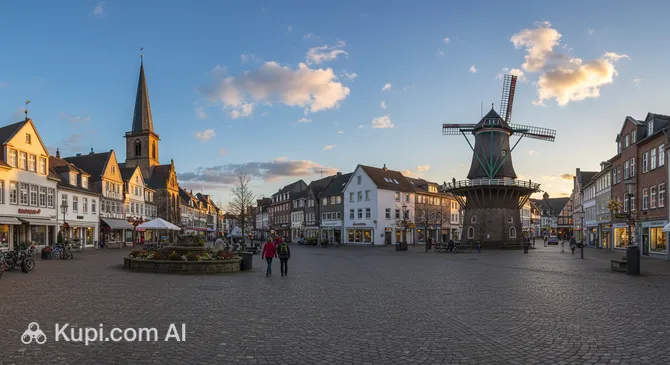
Weeze is a charming and cozy town located in the picturesque landscapes of the Lower Rhine. Situated in the far west of the country, just a few kilometers from the Dutch border, it offers travelers a unique opportunity to enjoy peace and natural beauty. Here, Germany reveals a new side: instead of the hustle and bustle of metropolises, green meadows, dense forests, and a leisurely pace of life await you.

Weeze. Illustration.
Source: Kupi.com AI

Despite its modest size and a population of about 11,900 people, Weeze plays an important role in the region's transport system. It is home to the well-known Weeze Airport, which serves many budget flights and makes the town a convenient starting point for traveling around Europe. At the same time, the town itself retains an atmosphere of old-world comfort, and the history of Weeze is harmoniously interwoven with modern convenience.

Outdoor enthusiasts will appreciate the excellent opportunities for cycling and walking in the surrounding area. The proximity to Düsseldorf and Dutch towns makes it easy to add variety to your travel itinerary. Weeze is an excellent choice for those seeking a balance between a genuine provincial idyll and the accessibility of modern infrastructure.

Weather Overview

The climate in this region is mild and temperate, making travel comfortable at almost any time of year. Summer in Weeze is usually pleasant without exhausting heat: in the warmest months, July and August, the average temperature stays around 18–19°C, and during the day, the air warms up to 23°C. This creates ideal conditions for walking and exploring the natural beauty of the Lower Rhine.

Winters here are cool but generally without severe frosts: in January and December, the thermometer fluctuates between 2°C and 6°C. Expect moderately warm summers and cool winters with regular precipitation throughout the year. Rain is a frequent occurrence here, with the number of rainy days varying from 11 to 17 per month, so an umbrella or raincoat will definitely not be superfluous. The current weather in Weeze will help you plan your travel dates more accurately and prepare a suitable wardrobe.

Average monthly temperature

Average monthly precipitation

Interesting Facts

Beyond its main attractions, Weeze holds many fascinating secrets and features that only reveal themselves to curious travelers. This small town amazingly combines a rich historical heritage with a modern pace of life.
  • The airport's military past. The famous Weeze Airport, from where budget flights now depart across Europe, was originally a military base. Now it serves as an important transport hub not only for Germans but also for residents of the neighboring Netherlands, often becoming the starting point for exploring the region.

  • Medieval roots. The town's history dates back to ancient times. For centuries, Weeze was famous as a center of trade and crafts, and while walking through the center, you can see old buildings that witnessed bygone eras and bustling fairs.

  • Living traditions. The town carefully preserves its culture: festivals and open-air folk celebrations are held regularly. At these events, you can meet locals in national costumes and try unique dishes prepared according to old recipes.

  • Castles in the surroundings. Several picturesque castles and estates are located around Weeze. A journey through these places allows you to feel like a character in a German fairy tale and touch the aristocratic history of the region.

  • A corner of wildlife. For those seeking union with nature and a quiet rest, the Weeze Zoo is open. This is a popular spot for both locals and tourists wishing to relax from the urban bustle surrounded by animals.

Weeze Zoo. Illustration.
Source: Kupi.com AI

Traveler photos:

How to Get There

When planning a trip to this cozy German town, it is worth thinking through your route in advance. Thanks to its convenient location on the border with the Netherlands and a well-developed transport network, travelers have several convenient options. You can find a full list of routes and tips on the how to get to Weeze page, and below we will look at the most popular ways to arrive via the nearest airports and railway hubs.

The most convenient option for tourists is certainly the local Weeze Airport (NRN). Although some booking systems may list it under the Düsseldorf transport hub, it is actually located just 4.6 km from the center of Weeze. It is a small but popular airport serving many budget flights. The journey to the town by taxi or transfer takes very little time—about 25–30 minutes including all wait times.

If there are no direct flights to Weeze, Düsseldorf International Airport (DUS) is an excellent alternative. It is a major international hub receiving planes from all over the world. It is located in the city of Düsseldorf, approximately 55.3 km from Weeze. The journey from here takes more time: a car trip or a combination of transport will take approximately 1 hour and 40 minutes.

You can also consider flying into the neighboring Netherlands, for example, to Eindhoven (EIN). This airport is located in the city of Eindhoven, at a distance of about 60.3 km from Weeze. This is a convenient option for those traveling around Europe with low-cost carriers. The travel time to the destination will be about 1 hour and 50 minutes.

For convenience, here is summary information on the main airports:

AirportPassenger trafficDistance
Weeze Airport2.0 mln5 km
Dusseldorf International Airport20 mln55 km
Eindhoven Airport6.8 mln60 km
Maastricht Aachen Airport230 93285 km
Dortmund Airport3.1 mln99 km

Traveling by train can also be comfortable, although there are no major international stations from the list below in the immediate vicinity of Weeze center, and a transfer to local transport will be required. One of the closest options is Venlo Station, located in the city of Venlo (Netherlands), approximately 29.2 km from Weeze. From here, you can reach your destination by taxi or bus in about 1 hour.

Another significant hub is Nijmegen Station in the city of Nijmegen. It is located 33.8 km from Weeze. This is a large station with high passenger traffic, providing good connections to other European cities. The travel time from the station to Weeze will be about 1 hour and 10 minutes.

Below is a table with the nearest railway stations for planning your route:

StationPassenger trafficDistance
Emmerich Railway Station23 km
Venlo Station2.8 mln29 km
Nijmegen Station10.4 mln34 km
Krefeld Station42 km
Ede-Wageningen Station9.1 mln57 km

Main Attractions

Attractions:

Despite its modest size, Weeze is capable of surprising travelers with a variety of interesting sites. Historical monuments, scenic natural spots, and unique museums telling the story of the region's past coexist harmoniously here. A stroll through the town and its surroundings will leave a lasting impression on those who value calm and informative leisure.

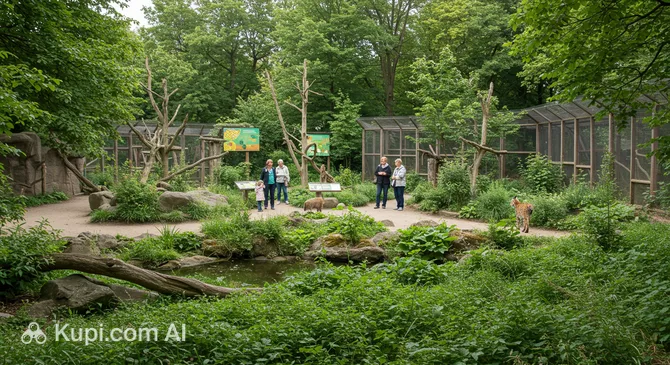
An absolute favorite among tourists, especially those traveling with children, is Weeze Zoo. This cozy animal park attracts visitors with its natural setting and closeness to nature. Here you can see more than 450 animals representing about 50 different species. A special feature of the zoo is the educational trail, which allows visitors not just to observe the inhabitants but also to learn many new things about their habits and habitat in an engaging way.

Weeze Zoo. Illustration.
Source: Kupi.com AI

Traveler photos:

Lovers of unusual architecture and romance should pay attention to Hertefeld Castle (Schloss Hertefeld). This unique complex consists of partially restored ruins. The owners have managed to preserve the historical spirit of the place, turning it into a residential castle and hotel. A walk through the surrounding park allows you to touch centuries of history and enjoy the silence of ancient alleys.

Aviation is an integral part of the town's history, and you can learn more about it at the Royal Air Force Museum Laarbruch. Located directly on the airport grounds, the museum is dedicated to the period when the British Air Force was based here. The exhibition includes actual aircraft, helicopters, and many artifacts telling the story of life at the base and the history of aviation in the region.

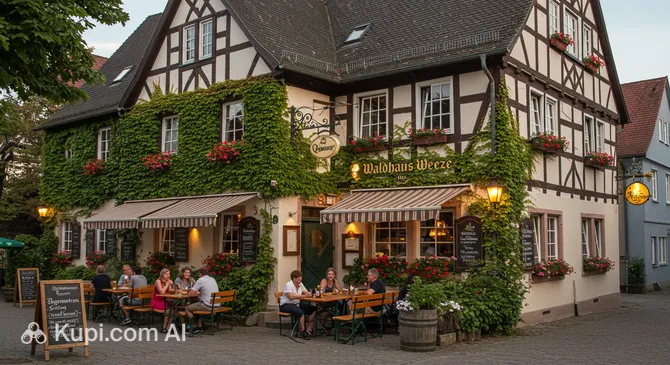
After a day of exploration, Waldhaus Weeze is an excellent place to relax. This establishment is not just a restaurant, but a true local landmark with a special atmosphere. Located in a scenic area, the "Forest House" offers guests the chance to enjoy traditional German hospitality and delicious cuisine, making it the perfect spot to end a day of sightseeing.

Waldhaus Weeze. Illustration.
Source: Kupi.com AI

Traveler photos:

Also worth visiting in the vicinity is Wissen Castle (Schloss Wissen). This is a magnificent example of a "water castle," surrounded by moats and greenery. Although it is a private estate, the architectural ensemble of the castle is considered one of the most beautiful in the Lower Rhine region, and its exterior will provide aesthetic pleasure to connoisseurs of antiquity.

Local Cuisine

The cuisine of Weeze is a vivid reflection of Lower Rhine traditions: hearty, substantial, and home-style. People here don't chase after pretentiousness, preferring quality ingredients and recipes tested over centuries. A hallmark of local gastronomy is "Sauerbraten"—tender beef that is marinated and then braised in a thick sweet and sour sauce. You should also definitely try the various sausages and smoked meats, which are typically served here with crusty rye bread and a portion of sauerkraut.

A particular pride of the region is fresh asparagus, the season for which locals eagerly await. In spring and early summer, this "royal vegetable" dominates restaurant menus and market stalls. During this time, you can enjoy farm delicacies straight from the field, prepared according to the best local recipes. Those with a sweet tooth will not be disappointed either: cafes serve magnificent strudels and pies with generous fillings of apples, cherries, or plums.

No lunch or dinner in Weeze is complete without traditional drinks. Small breweries operate in the surrounding area, brewing excellent craft beer, which is best enjoyed in open beer gardens during the warm season. In winter, the gastronomic scene transforms: at Christmas markets, the air is filled with the aromas of gingerbread and warming mulled wine (Glühwein).

To fully immerse yourself in the atmosphere of German hospitality, it's worth visiting the town's authentic establishments. For example, the Waldhaus Weeze restaurant is a wonderful place to get acquainted with regional cuisine in a picturesque setting. Here, you can enjoy a leisurely lunch, appreciating the taste of the real Germany away from the city bustle.

Travel Tips

A trip to Weeze promises to be calm and relaxed, but even in such a small town, there are nuances worth knowing in advance. To ensure your trip to Germany is as comfortable as possible and leaves only pleasant impressions, we have prepared a list of practical recommendations.

  1. Clothing and Weather. The climate of the Lower Rhine is changeable, and rain is a frequent occurrence. Even in summer, it's worth bringing a light waterproof jacket or umbrella. Since Weeze and its surroundings invite long walks in nature, be sure to bring comfortable shoes without heels. In winter, warm clothing and a scarf will come in handy as the winds from the plains can be piercing.

  2. Transport Logistics. Weeze itself is compact, and its historical center is easily explored on foot. However, if you are arriving at the local airport, note that it is 4.6 km from the center. The most budget-friendly way to get there is the shuttle bus (route SW1), which runs between the terminal and the railway station. It is better to call for a taxi in advance in this small town, especially for early morning flights, as "catching" a car on the street can be difficult.

  3. Finances and Cash. The currency is the Euro (EUR). Despite the development of cashless payments, the rule "Nur Bares ist Wahres" (only cash is true) is still relevant in small German towns like Weeze. Small bakeries, kiosks, or souvenir shops might not accept cards, so always have small denomination banknotes and coins with you. Tipping in restaurants is welcomed at around 5–10% of the bill.

  4. Health and Safety. Weeze is a very safe town with a low crime rate, where you can safely walk even in the evening. Pharmacies are marked with a red letter "A" (Apotheke). Note that on Sundays and at night, only duty pharmacies are open (the address of the nearest one is usually posted on the door of any closed pharmacy).

  5. Communication and Language. The official language is German, but thanks to the proximity to the border and the international airport, many locals understand English and even Dutch well. For navigation, it's best to download offline maps in advance. Free Wi-Fi is available at the airport and many hotels, but it may be absent in public areas of the town.

  6. Local Etiquette. Germans value punctuality and order. When entering a small shop, it is customary to greet the shopkeeper ("Guten Tag"). Maintain quiet in public places, especially in the evenings and on Sundays (Ruhezeit)—noisy behavior may draw disapproval from locals.

  7. What to Avoid. A major mistake for a tourist in Germany is walking on bicycle paths. They are often marked by color or lines on the sidewalk. Never stand or walk on them: cyclists ride fast and expect a clear path. Also, do not plan active shopping for Sunday—almost all shops and supermarkets are closed on this day.

  8. Extra Tip. Use Weeze's geographic position to your advantage. The town is literally a stone's throw from the Netherlands. If you have free time, you can rent a bike and take a short international trip to Dutch border villages or the De Maasduinen National Park.

Following these simple rules will help you feel confident and at ease in Weeze. Enjoy the coziness of the German province, delicious food, and the hospitality of the locals without being distracted by everyday trifles.

Entertainment & Nightlife

Nightlife in Weeze is not about noisy metropolises with neon signs, but the embodiment of German coziness and tranquility. As a small town with a population of about 12,000, Weeze offers tourists a relaxed evening format. There are no major nightclubs or 24-hour discos; instead, locals and visitors spend their evenings in traditional "Gaststätten" (guest houses) and cozy bars, where an atmosphere of friendliness and "Gemütlichkeit" prevails.

The evening hub is the area around the main square and adjacent streets, where most establishments are concentrated. The evening here typically begins with a hearty dinner that smoothly transitions into socializing over a glass of beer or wine. A great example of a place to spend a pleasant evening is Waldhaus Weeze. This venue combines a restaurant and a relaxation spot where both locals and tourists often gather to enjoy a country-house atmosphere. The dress code here is casual, and the crowd is geared toward relaxed conversation.

If you are looking for more active night entertainment, consider the region's geography. For dancing until dawn, young people usually head to neighboring larger cities or even Düsseldorf, which can be reached by train. In Weeze itself, establishments usually close around midnight or 1:00 AM, and slightly later on weekends. Prices here are moderate: a glass of beer costs an average of 3–5 euros, and cocktails start from 7–8 euros.

In terms of safety, Weeze is an ideal location. The crime rate is extremely low, and night walks here cause no concern. However, keep transportation in mind: public transport runs infrequently at night, and taxi services in a small town may not be available 24/7 on standby. It is recommended to save the number of a local taxi service in advance or arrange a transfer if you plan to stay out late.

During the day, the town offers a different entertainment format focused on nature and family leisure. The main attraction for tourists during daylight hours is Weeze Zoo. It is not just a place to see animals, but also an excellent park area for walking where you can rest from the hustle before an evening out. Cycling tours through the picturesque surroundings of the Lower Rhine are also popular, often ending with open-air picnics.

Parks & Museums

Weeze and its surroundings are a true find for those seeking harmony between nature and history away from noisy tourist routes. The town offers travelers picturesque green zones for leisurely walks and unique cultural sites that tell the story of the rich past of this corner of the Lower Rhine.

The main natural artery of the region is the Niers River Valley. This is an ideal spot for outdoor enthusiasts. Well-maintained cycling and walking paths run along the winding riverbed, passing through water meadows and shady groves. You can rent a canoe here and view the local beauty from the water, enjoying the silence and views of old estates hidden in the greenery.

For family holidays and getting to know the flora and fauna, Weeze Zoo is perfect. Although primarily known as home to many animals, its grounds are a magnificent landscape park. There is a nature discovery trail where visitors can learn about local plants and the region's ecosystem while strolling among ancient trees and well-kept enclosures.

Cultural life in Weeze is closely intertwined with the history of aviation. One of the key attractions is the Royal Air Force Museum Laarbruch, located on the airport grounds. This is the only museum of its kind in Germany documenting the history of the British presence in the region. The exhibition features decommissioned aircraft, helicopters, anti-aircraft guns, and many personal items belonging to pilots, allowing visitors to immerse themselves in the atmosphere of an aviation garrison from the second half of the 20th century.

Lovers of architecture and history should pay attention to Hertefeld Castle and its park area. This is a unique complex where historically significant ruins harmoniously coexist with restored residential buildings. A walk through the park around the castle, especially in autumn or spring, gives a sense of traveling back in time and allows you to appreciate the romance of a German noble estate.

Insider Tip: If you want to see something truly unusual, take a walk toward the Dutch border, which is very close by. In the vicinity of Weeze, there are hidden forest trails leading to the De Maasduinen National Park, where the landscape changes to sand dunes and heathlands—a scenery quite untypical for this region.

Getting Around

Weeze's transport system is compact and intuitive, perfectly matching its status as a small town. There is no metro, tram, or trolleybus system characteristic of metropolises. The core of public transport consists of regional trains and bus routes that connect the town center, the railway station, the airport, and neighboring settlements.

The main transport artery for tourists is the railway connection. The RE10 "Niers-Express" regional express line passes through Weeze Bahnhof. Trains run every 30 minutes on weekdays and once an hour on weekends, connecting Weeze with Kleve to the north and Düsseldorf to the south. This is the most reliable way to reach the region's major transit hubs.

The bus network is operated by the NIAG company. For travelers, a key route is the SW1 shuttle, which runs between the railway station and the airport terminal. The journey takes only about 10–15 minutes. There are also local buses (such as route 73) connecting Weeze with neighboring villages, but they run less frequently, so schedules should be checked in advance via the app.

Weeze is part of the VRR (Verkehrsverbund Rhein-Ruhr) transport association. This means that unified tickets for trains and buses apply here. The fare depends on the zone (Preisstufe). For a short trip within the town, a category A ticket is suitable, while a trip to Düsseldorf will require a category D ticket. Single fares start from 3–4 euros. The country-wide "Deutschland-Ticket" (a 49-euro pass) is also valid for all types of local transport.

Tickets can be purchased at red DB machines at the station (which accept cards and cash) or from the bus driver (it's best to have small change). The most convenient method for the modern tourist is to use the DB Navigator or VRR App. If you bought a paper ticket without a specified date and time, it must be stamped in a special validator (orange or yellow boxes on the platform or in the bus) before the journey begins, otherwise you face a substantial fine.

As an alternative to public transport, taxi services are popular in Weeze, especially for airport transfers early in the morning or late at night when buses aren't running. It is better to book a car in advance by phone, as catching one on the street is difficult, and apps like Uber work inconsistently here. Additionally, the Lower Rhine region is famous for its flat terrain, so renting a bicycle is an excellent option. Rental points (such as the NiederrheinRad system) are often located near stations and hotels.

Accommodation

Weeze is a small town, so the choice of accommodation matches its intimate atmosphere. Tourists should not expect an abundance of major international hotel chains or luxury five-star resorts. The basis of the local accommodation stock consists of cozy family-run hotels, traditional German guesthouses (Gasthof), and holiday apartments (Ferienwohnungen). This is a great opportunity to immerse yourself in the authentic lifestyle of the Lower Rhine region and enjoy the hospitality of the locals.

When choosing a place to stay, you should focus on the purpose of your trip. The Town Center (Innenstadt) and the area around the railway station are the best choices for those planning to explore the sights on foot and use trains for trips to the surrounding area. Here, cafes, shops, and historical buildings are within walking distance. Another popular location is the zone in the immediate vicinity of Weeze Airport. Hotels and hostels in this area are primarily geared toward transit passengers with early departures or late arrivals, offering functional comfort and quick access to the terminal.

For lovers of peace and nature, staying in the town's outskirts is an excellent option. In the countryside around Weeze, you can find converted farmhouses or small bed-and-breakfast hotels surrounded by greenery. This is an ideal choice for cycle tourists and those seeking solitude after a busy day.

Booking Tip: Although Weeze is not a mass tourist destination, the presence of a busy airport creates high demand for accommodation all year round. It is recommended to book your room in advance, especially if your trip coincides with the summer holiday season or the eve of public holidays. During peak periods, vacancies in the immediate vicinity of the town fill up very quickly.

The price range in Weeze can be described as budget and mid-range. The cost of living here is often lower than in neighboring Düsseldorf or major cities in the Netherlands. Most properties are available for booking through popular international online platforms; however, some small private guesthouses may prefer direct booking through their own website or by email.

Nearby Cities

For those who want to explore the surrounding area, Weeze serves as an excellent starting point for day trips to several interesting nearby locations. Its location in the Lower Rhine region allows tourists to quickly reach cities with rich history and picturesque landscapes.

One of the most attractive destinations is Kleve, located just 18 km away. This city is famous for its legendary Schwanenburg Castle ("Swan Castle"), from whose tower panoramic views of the surroundings open up, as well as its magnificent historical parks. Lovers of river landscapes should visit Wesel, situated at the confluence of the Lippe and Rhine rivers. Here, you can stroll along the embankment, see the majestic Willibrordi Cathedral, and immerse yourself in the atmosphere of an old Hanseatic city.

CityPopulationDistance
Kevelaer28 0216 km
Goch34 5937 km
Sonsbeck8 67513 km
Kalkar13 95314 km
Geldern33 83615 km

These nearby destinations provide insight into the diverse culture and landscapes of the region, making your trip even more fulfilling.

Shopping & Souvenirs

Shopping in Weeze is a calm and leisurely activity, free from the bustle of huge metropolises. You won't find multi-story shopping centers with luxury brands here, but you can enjoy the atmosphere of cozy private shops and stores where owners often know their customers by face. The town is geared toward the daily needs of locals and tourists, offering quality products, essential goods, and authentic regional items.

The main shopping life is concentrated in the town center (Innenstadt). The main arteries for shopping strolls are Kevelaerer Straße and Wasserstraße, along with their adjacent lanes. Small clothing boutiques, shoe stores, pharmacies, bookstores, and cozy bakeries are located here. A walk through this area will be a pleasure for those who appreciate the architecture of small German towns and a leisurely selection of goods.

There are no large shopping malls in the conventional sense within Weeze itself. For large-scale shopping, locals and tourists usually head to neighboring Kleve, Duisburg, or Düsseldorf. However, large chain supermarkets and discounters (such as Edeka, Aldi, Lidl) operate in the town and on its outskirts, where travelers can buy everything they need—from food and drinks to household chemicals and travel accessories—at affordable prices.

Local markets deserve special attention. A weekly market (Wochenmarkt) usually takes place in the central square. This is the best place to buy the freshest farm products of the Lower Rhine region: seasonal vegetables and fruits (especially the famous asparagus in spring), homemade cheeses, meat delicacies, and flowers. The atmosphere here is very friendly, and vendors often offer samples before you buy.

For souvenirs from Weeze, it's worth bringing home regional gastronomic specialties. Look for local herbal liqueurs, schnapps, or mustard produced in the Lower Rhine. If you plan to visit Weeze Zoo, be sure to stop by the local shop: you can buy soft toys, magnets, and other keepsakes that will particularly delight children. Ceramics or textiles from small craft shops in the center also make good gifts.

When planning your shopping, remember the opening hours. Most shops in the center are open from 9:00 AM to 6:00 PM or 7:00 PM on weekdays, and on Saturdays, the working day is often shortened to 2:00 PM or 4:00 PM. Sunday is a day off, when absolutely everything is closed except for some bakeries in the morning and shops at gas stations or the airport. Regarding payment, while supermarkets accept cards (Visa, Mastercard), small private shops, markets, and kiosks still prefer cash (Bargeld). Always carry small denomination banknotes with you.

A Tax Free system (VAT refund) is available for tourists from non-EU countries for purchases over 50 euros on a single receipt. However, given the nature of small businesses in Weeze, not all shops support this system. Look for "Global Blue" stickers in windows or ask vendors for a Tax Free Form in advance, but be prepared that this service is rare in a small town.
Reached the end of the page?

That means the route is fully explored