Support

Croix des Bouquets

About

Croix-des-Bouquets is a fascinating city located in the Ouest department of Haiti. As a northern suburb of the capital, Port-au-Prince, this area impresses with its energy and incredible population density, which is among the highest in the world. Here, amidst bustling residential neighborhoods, a unique form of art is born that has brought fame to the city far beyond the island's shores.

Geographically, the city is situated just 13 kilometers from the capital, making it a vital industrial and craft hub for the region. Founded in 1749, it has a rich history: originally located on the coast, the city was moved inland following a devastating earthquake in 1770. Today, it is home to nearly 285,000 residents whose lives are closely intertwined with tradition and craftsmanship.
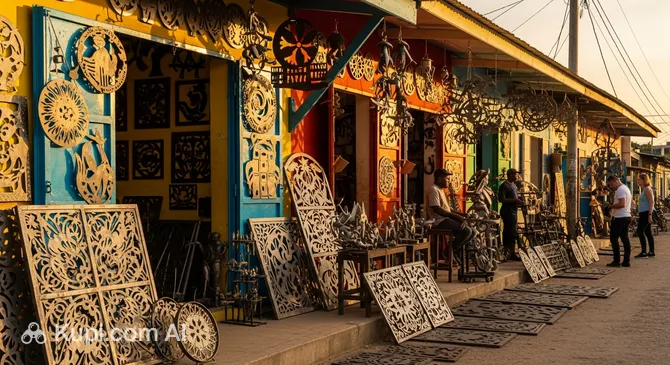
Croix des Bouquets. Illustration.
Source: Kupi.com AI

The main highlight of Croix-des-Bouquets that attracts culture enthusiasts is its tradition of artistic metal forging. In the famous village of Noailles, dozens of workshops are concentrated where artists transform old oil drums into exquisite sculptures. This place is unlike a typical tourist center; it is filled with an authentic atmosphere of creation and the resilience of the local people.

Visiting this city is an opportunity to see the real, unvarnished face of Haiti, touch its creative heritage, and take home a piece of unique metal art. We invite you to explore this dynamic suburb, where every turn of the street can open a door to an artist's workshop.

Weather Overview

The climate in Croix-des-Bouquets is typical for this region of Haiti—tropical, hot, and humid throughout the year. The average annual temperature stays around +25°C, with daily highs often reaching +30°C and above, especially in the summer months. The high building density combined with humidity can create a "heat island" effect, so the weather in the city often feels more exhausting than on the coast.

Precipitation is unevenly distributed: the wettest periods are considered to be spring (April–May) and late summer (August–September). During these times, heavy but brief downpours occur frequently. The winter months, from December to February, are drier and more pleasant for visiting, with comfortable night temperatures around +19°C. When planning your trip, keep in mind that humidity rises significantly during the rainy season, which can affect air quality in the industrial and craft districts.

Average monthly temperature

Average monthly precipitation

Interesting Facts

  • The name of the city, Croix-des-Bouquets, translates from French as "Cross of Bouquets." According to legend, Spaniards once left bouquets of flowers at the base of a large cross erected on the site where the city later grew.

  • The city was officially founded in 1749 by a French royal decree, but its modern layout was formed after 1770, when the settlement was moved further inland due to an earthquake.

  • Croix-des-Bouquets is considered one of the most densely populated places on the planet: the population density here reaches an incredible 52,000 people per square kilometer.

  • The village of Noailles, part of the commune, is a world-renowned center for metal art. Local masters skillfully use old oil barrels as the primary material for their sculptures.

  • The city's artistic tradition gained international recognition thanks to the influence of the legendary Haitian sculptor Georges Liautaud, who transformed utilitarian metalworking into high art.

How to Get There

The easiest way to reach Croix-des-Bouquets is from the capital of Haiti, Port-au-Prince, which is only about 13 kilometers away. Despite the short distance, travel time can vary significantly: from 30 minutes during off-peak hours to 2 hours during heavy traffic jams. Traveling by taxi or a rented car is the most comfortable way to avoid the complexities of local transport logistics.

The nearest and only international aviation hub is the Port-au-Prince airport. From there, you can reach Croix-des-Bouquets via a transfer or by booking a guided tour. There is no separate airport or railway station directly in the city, as the region's entire transport network is centered around the capital.

AirportPassenger trafficDistance
Toussaint Louverture International Airport1.9 mln6 km
Cap Haitien Airport236 000128 km
Les Cayes50 000168 km
Cibao International Airport2.2 mln194 km
La Union Airport880 091218 km

For more adventurous travelers, taptaps—brightly painted shared taxis—regularly run between the capital center and the suburbs. This is the cheapest but also the most extreme way to travel: the vehicles are often overcrowded, and the traffic is chaotic. There is no railway service in this region.

For safety and comfort, tourists are recommended to use organized transfer services or hire drivers through verified agencies. Roads around the city can be quite narrow and congested, so having an experienced local driver will greatly facilitate your trip to the workshops of Croix-des-Bouquets.

Main Attractions

The main point of attraction in Croix-des-Bouquets is undoubtedly the Village Artistique de Noailles. This is a unique cultural space where almost every house serves as a workshop or gallery. Local artisans have gained worldwide fame for their skill in creating detailed sculptures from recycled steel barrels. The themes of the works range from complex Vodou mythological subjects to elegant depictions of nature and animals.

While walking through the village, tourists can not only witness the process of creating masterpieces with their own eyes but also talk to the creators themselves. This continuity of generations began with the master Georges Liautaud, who was the first to see the potential for art in metal. Today, Noailles is a true open-air museum where creative energy literally hangs in the air, and every exhibit tells its own story.

For those who want to dive deeper into the social and cultural life of the city, visiting Papillon Enterprise is a rewarding experience. They offer introductory tours that explain how local communities' lives are improved through craftsmanship and the creation of jewelry from ceramics and recycled materials. It is a great opportunity to see a modern Haiti striving for development through creativity.

Although the city itself lacks major architectural ensembles, its local markets are a landmark in their own right. Here you can feel the true rhythm of life in Croix-des-Bouquets, see a variety of tropical fruits, and experience the flavor of everyday trade. Most travelers visit the city as part of a day trip from nearby Port-au-Prince to focus specifically on its unique craft heritage.

Local Cuisine

The gastronomic character of Croix-des-Bouquets is closely tied to the classic traditions of Haitian cuisine. The main dish you should definitely try is griots—succulent pieces of pork marinated in citrus sauce with herbs and fried until golden brown. It is traditionally served with rice and beans, as well as crispy fried plantain slices known as banan-peze.

Another local delicacy is diri ak djon djon, rice cooked with black mushrooms that give the dish a characteristic dark color and a unique earthy aroma. Along the roads and at local markets, you can often find street food stalls preparing lebrun (chicken with spicy rice) or offering freshly caught fish fried with hot peppers. Fresh fruits—mangoes, papayas, and pineapples—are abundant here and always of excellent quality.

As for drinks, the famous Barbancourt distillery is located near the city. This Haitian rum is considered one of the best in the world and is a must-have on any tasting itinerary. Among non-alcoholic drinks, freshly squeezed juices and traditional clairin (a local potent sugarcane spirit) are popular, though the latter is best tried in small quantities at trusted establishments.

The food culture in the city is simple and unpretentious. Most establishments are small family-run eateries where food is prepared according to home recipes. Tourists are often offered lunch right in the art workshops of Noailles village, allowing you to combine a meal with immersion into the local culture. Be sure to try the spicy pikliz salad—it is served with almost every dish and perfectly complements the flavor of fried meat.

Travel Tips

A visit to Croix-des-Bouquets will provide you with unforgettable impressions if you prepare for your trip in advance. Use these practical tips to make your journey comfortable and safe.

  1. Safety first: It is recommended to visit the city as part of organized tour groups or with a local licensed guide. Avoid walking alone, especially in unfamiliar residential neighborhoods.
  2. Plan your time: Try to finish all your business and return to your hotel before dark. Daytime is the most suitable time for visiting workshops.
  3. Finances: Bring enough cash with you (Haitian gourdes or small US dollar bills). ATMs in the city are rare, and international cards are only accepted at very large locations or in the capital.
  4. Clothing: Choose light clothing made from natural fabrics, as it can be very hot and humid in the city. Be sure to wear comfortable closed-toe shoes, as the roads can be uneven or dusty.
  5. Communication: The main language is Haitian Creole; many understand French, but English is not widely spoken. Learn a couple of basic phrases: "Bonjou" (hello/good morning) and "Mesi" (thank you)—this is highly appreciated by the locals.
  6. Photography: Always ask for permission before taking photos of local residents or their work in the workshops. Some masters may ask for a small fee for photos.
  7. Health: Drink only bottled water and use insect repellent. In high-density tropical environments, hand hygiene is of paramount importance.
  8. Etiquette: Haitians are friendly people but respect personal space. A polite greeting and a smile will help you quickly establish contact with the artisans in Noailles.

Following these simple rules will help you focus on the beauty of the art and the hospitality of the locals. Enjoy your introduction to the creative heart of Haiti!

Entertainment & Nightlife

The entertainment infrastructure in Croix-des-Bouquets is primarily geared toward local residents, so you won't find the abundance of nightclubs or neon bar signs typical of major resorts. Nightlife in the traditional sense is practically non-existent in the city. Most activity winds down after sunset, and locals usually head to the nearby capital for vibrant experiences, dancing, and music.

Daytime entertainment in the city is inextricably linked to its creative soul. Visiting the workshops in the village of Noailles is the main cultural event for any guest. Watching raw metal transform into intricate lace under the strikes of a hammer is as captivating as any theatrical performance. For those looking to relax in a quieter setting near the city, you can find spas like Botanik, offering a break from the urban bustle.

If you are looking for authentic evening leisure, it's worth checking out family gatherings in small local establishments where you might hear the rhythms of kompa or ragga. However, tourists are strongly advised to spend their evenings in secure areas or in Port-au-Prince. For travel after dark, it is best to arrange a ride with a trusted taxi driver in advance, as public transport operates mainly during daylight hours.

Parks & Museums

Due to the extremely high building density in Croix-des-Bouquets, there are almost no traditional parks or green zones. Urban blocks are tightly packed together, leaving little room for public gardens. However, the open areas of the art workshops serve as unique cultural oases, where the works of local sculptors are displayed among shady trees.

While there are no formal museums with tickets and curators in the city, the village of Noailles is effectively the country's largest open-air museum of decorative and applied arts. Every workshop is a small gallery where you can learn about the history of Haitian metal art. If you wish to visit a traditional museum, you should head to Port-au-Prince, where the famous Musée du Panthéon National is located, housing relics from the history of Haitian independence.

The environmental situation in the area is challenging, and local authorities are only just beginning to consider greening the suburbs. Nevertheless, the unique status of being a "city of artisans" allows Croix-des-Bouquets to maintain its appeal even without extensive park areas. The creative atmosphere and the chance to see living art in the process of its creation more than compensate for the lack of traditional museum halls.

Getting Around

The public transport system in Croix-des-Bouquets is primarily represented by private carriers. The most popular way to travel medium distances is via taptaps. These brightly painted pickups or small buses run on specific routes but without a fixed schedule. The fare is minimal, but be prepared for crowded and hot conditions, especially during peak hours when suburban residents commute to the capital for work.

For quick trips within the cramped neighborhoods, locals and tourists often use moto-taxis. This is the fastest way to bypass the endless traffic jams on the city's narrow streets, but it requires some courage and caution. You should always agree on the price of a moto-taxi ride in advance, before getting on the seat.

Classic taxi services with fixed rates are rare here. Most cars work on a "hail-from-the-curb" basis or via a pre-arranged call to known drivers. For tourists, the most reliable option remains hiring a car with a driver for the entire day, especially if you plan to visit several workshops or travel outside the commune. This will provide you with safety and a predictable route in the context of the suburb's chaotic traffic.

Accommodation

Accommodation options directly in Croix-des-Bouquets are quite limited. The city is not a typical resort center, so it is difficult to find large chain hotels here. The lodging available for visitors mainly consists of small guesthouses and apartments, which are often oriented toward long-term stays for volunteers, humanitarian mission staff, or expats.

Most tourists prefer to stay in hotels in nearby Port-au-Prince or the upscale Pétion-Ville district, where the choice of accommodation is much wider—ranging from cozy boutique hotels to mid-range hotels with swimming pools and secure grounds. From these areas, Croix-des-Bouquets is easily accessible as a day trip, eliminating the need to find overnight lodging within the suburb itself.

If you do decide to look for housing in the city, it is recommended to book in advance through international rental services or via personal recommendations from trusted guides. The price range here is usually lower than in the capital, but you should carefully read reviews regarding basic amenities and safety levels. When choosing apartments, give preference to those located in gated residential complexes.

Nearby Cities

Due to its location within the capital's metropolitan area, Croix-des-Bouquets is a convenient starting point for exploring the central part of the country. Just 8 kilometers away is Port-au-Prince—the main metropolis of Haiti. It houses key cultural sites, including the National Pantheon and the famous Iron Market, where life bustles from early morning until late evening.

Right next door is the city of Tabarre, which practically merges with Croix-des-Bouquets. For those looking for a calmer atmosphere and more developed infrastructure, it is worth heading to Pétion-Ville. This hillside suburb is known for its restaurants, art galleries, and milder climate. You can get there by taxi in about 30–40 minutes, enjoying views of the capital.

CityPopulationDistance
Tabarre130 2834 km
Port-au-Prince987 3108 km
Delmas284 0799 km
Petionville359 6159 km
Thomazeau52 01717 km

If you're interested in seeing a quieter, more rural side of the region, you can visit the small town of Thomazeau, located 17 kilometers away. A journey through the surroundings allows you to see the striking contrast between the densely populated working-class neighborhoods and the picturesque landscapes of the foothills. Exploring neighboring cities provides a complete picture of the many facets of life in the Ouest department.

Shopping & Souvenirs

Shopping in Croix-des-Bouquets is primarily a search for unique art pieces that cannot be found anywhere else in the world. The main souvenir that collectors come here for is metal sculptures cut from old 55-gallon drums. In the workshops of Noailles village, you will find everything from tiny figures of birds and animals to monumental wall panels with complex symbolism.

In addition to metal, local shops at the workshops offer hand-embroidered textiles and jewelry made from recycled materials. There are no Western-style shopping malls in the city, but this only adds authenticity to the shopping process. The entire trade takes place directly at the production sites, which guarantees you the best price and the opportunity to discuss the details of the work with the artist themselves.

To buy groceries and everyday goods, you should head to the local street markets. Here, the atmosphere of real Haiti reigns: noisy market rows, the aroma of spices, and a huge selection of tropical fruits. Payment everywhere is mostly made in cash in local currency (Haitian gourde), though art shops often accept US dollars as well. Don't forget that moderate bargaining in the workshops is part of the local culture and is welcomed.

Reached the end of the page?

That means the route is fully explored