Support

Hofn

About

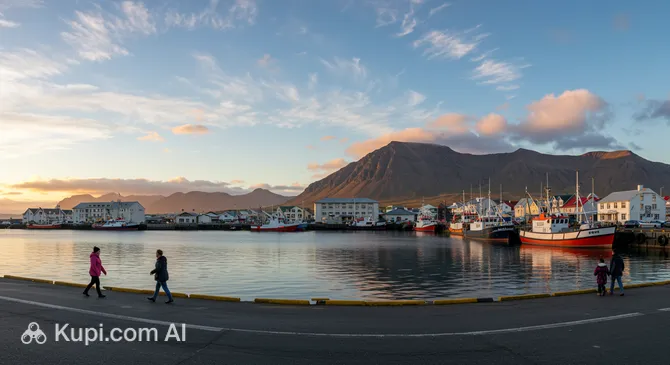
Höfn is a cozy and picturesque fishing town located on the southeastern coast, at the very foot of the majestic Vatnajökull glacier. Situated on a small peninsula, this settlement seems to jut into the Atlantic Ocean, offering guests incredible panoramas of fjords and lagoons. For many travelers, this is where the real, wild Iceland truly begins.

Hofn. Illustration.
Source: Kupi.com AI

Despite its modest size and population of just over two thousand people, Höfn is an important center for the Austurland region. The infrastructure is well-developed: travelers can find comfortable hotels, restaurants with views of the mountains' ice caps, and even its own thermal swimming pool. Höfn's history is closely intertwined with the fishing industry, and today the town harmoniously combines traditions of the past with modern comfort.

The main point of attraction here is, undoubtedly, the proximity to Vatnajökull, Europe's largest glacier. Höfn serves as an ideal base for glacial adventures, walks along black sand beaches, and observing the Northern Lights. It is a place to come for tranquility, a slow pace of life, and an amazing connection with the harsh but beautiful northern nature, far from the hustle and bustle of big cities.

Weather Overview

The climate in this part of Iceland is heavily influenced by the ocean and the nearby Vatnajökull glacier, making the weather changeable but mild for these latitudes. Summer here is cool and fresh: even in the warmest months, July and August, the average air temperature is around +7...+8°C, only occasionally rising above +10°C.

Winter arrives with moderate frosts, without extreme cold. In January and December, the thermometer usually stays at an average of -3...-4°C, though it can drop to -6°C at night. Precipitation is a frequent guest: on average, 14 to 19 days a month are rainy or snowy, so the current weather in Höfn is the first thing to check before packing your suitcase.

In general, expect a cool summer and a moderately frosty winter with a high probability of frequent, but usually not very heavy, precipitation at any time of year.

Average monthly temperature

Average monthly precipitation

Interesting Facts

Beyond its famous landscapes, Höfn hides fascinating details that make it a special place on the map of Iceland. Here are a few facts that will help you see this town in a new light:

  • A Literal Name. The town's name translates from Icelandic simply as "harbor." This is no coincidence: Höfn historically developed as one of the few safe ports on the south coast, and even today, life here is inextricably linked to the sea and the fishing industry.

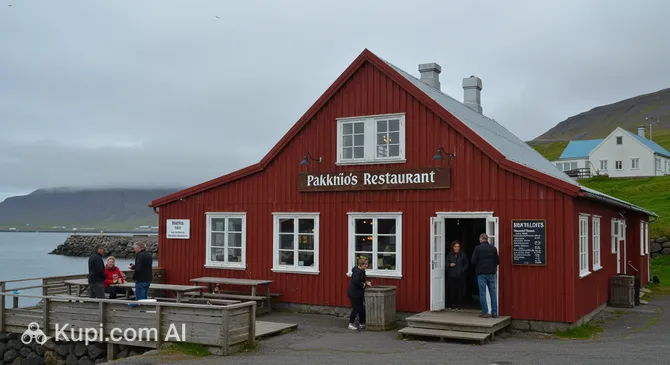
  • The Lobster Capital. The town holds the unofficial title of the region's gastronomic capital thanks to its langoustine (Icelandic lobster) harvest. An annual themed festival is held here, and local establishments, such as the popular Pakkhús Restaurant located in an old port warehouse, are famous for their dishes made from the freshest seafood.

  • The "Batman" Mountain. Not far from the town is Mount Vestrahorn, which photographers often call the "Batman Mountain" because of its sharp peaks that resemble bat wings. Combined with the black sands and shallow water that creates a perfect reflection, this place has become one of the region's most recognizable natural symbols.

  • The Bookcase Museum. Near Höfn is the Þórbergur Center, dedicated to the writer Þórbergur Þórðarson. The museum building itself is an art object: its facade is designed as a giant bookshelf with the spines of the author's books, which looks very unusual against the backdrop of the rugged Icelandic nature.

Pakkhús Restaurant. Illustration.
Source: Kupi.com AI

Traveler photos:

How to Get There

Höfn is located in a remote part of Iceland's southeastern coast, away from the busy tourist trails. There is no rail service on the island, so the main ways to get here are by car or a combination of air travel and ground transfer. Detailed information on routes and travel times can be found on the all ways to get to the city page.

There is no international airport in Höfn itself. Tourists usually fly into regional hubs and then rent a car or book a transfer. The nearest major hub is Egilsstaðir Airport (EGS). It is important to consider a geographical nuance: although the distance to it is about 121 km "as the crow flies," the actual road journey will take more than 3 hours due to the jagged coastline, fjords, and mountains. Egilsstaðir Airport handles regular domestic flights and serves as a gateway to East Iceland.

Another option is Akureyri Airport (AEY), located in the country's "northern capital." The straight-line distance to Höfn is about 207 km, but the complex terrain makes the ground journey much longer: a car trip will take at least 5.5 hours. Akureyri Airport serves a large flow of passengers, but it is only worth choosing if you are planning an extensive road trip through the north and east of the island.

Summary information for the nearest airports (please note: mileage is indicated in a straight line; the actual road path will be longer):

AirportPassenger trafficDistance
Egilsstadir Airport83 954121 km
Akureyri Airport200 000207 km

The most popular and scenic way to reach Höfn remains a car trip along the famous Ring Road (Route 1). The town is approximately 450 km from Reykjavik when driving along the south coast. This trip allows you to see many waterfalls, black beaches, and glaciers along the way.

Main Attractions

Despite its modest size, Höfn is a true gem of southeast Iceland. The main attractions here are linked to the region's unique nature and, of course, its status as the "lobster capital." Travelers should dedicate time both to walking through the picturesque surroundings and getting to know the local gastronomic culture.

Stokksnes Peninsula and Mount Vestrahorn
Just a 10-15 minute drive from the town lies one of the most impressive natural locations in the country. The black sand dunes of the Stokksnes peninsula combined with the sharp, jagged peaks of Mount Vestrahorn create an incredibly dramatic landscape. This place is a magnet for photographers and wildlife enthusiasts wanting to feel the power of the Atlantic and the raw beauty of the Icelandic mountains.

The Harbor and Pakkhús Restaurant
The heart of the town beats in its port, where you can watch fishing boats return. Located here in an old warehouse building is the famous Pakkhús Restaurant. This establishment has become a true symbol of Höfn: the interior preserves the harbor aesthetic, and the menu is famous for dishes made from the freshest langoustines. A visit here allows you not only to have a delicious dinner but also to touch the history of the fishing trade.

Antique Atmosphere at Óttó Matur & Drykkur
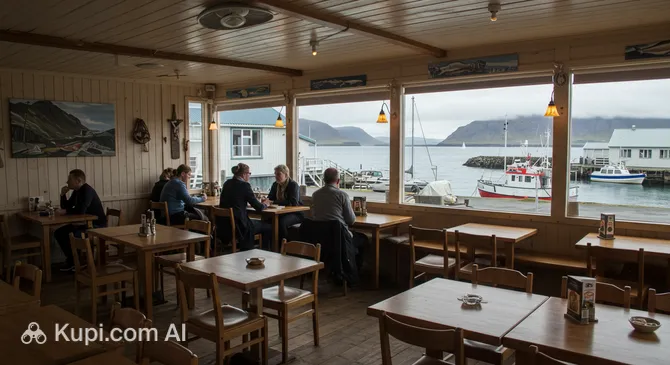
Another important gastronomic and cultural spot on the town map is Óttó Matur & Drykkur. The restaurant occupies a historical wooden building that was once used for fish processing. Today, it is a cozy space with a soulful atmosphere where tradition meets modern culinary art. Tourists love this place for its authenticity and the opportunity to try local cuisine in a 20th-century interior.

Otto Matur & Drykkur. Illustration.
Source: Kupi.com AI

Traveler photos:

The Promenade and Vatnajökull Views
A walk along Höfn's shoreline offers a unique opportunity to see several tongues of the majestic Vatnajökull glacier descending toward the land. A monument to sailors is installed on the promenade, paying tribute to those who dedicated their lives to the sea. This is an ideal location for quiet contemplation and evening walks with views of the mountains' ice caps.

Local Cuisine

The cuisine of Höfn is a true paradise for seafood lovers, as the town proudly holds the unofficial title of Iceland's "lobster capital." The main gastronomic hit here is the langoustine, or Norway lobster. Local chefs have reached perfection in its preparation: be sure to try the langoustine tails grilled with garlic butter or order a thick, creamy seafood soup, which is considered the region's signature dish. An annual themed festival is even held here, attracting foodies from all over the island.

In addition to ocean delicacies, local menus feature a wide range of traditional Icelandic dishes made from farm products. Tourists should try the hearty lamb soup (Kjötsúpa), tender scallops, and smoked fish. Local dairy products hold a special place, including the famous Icelandic butter and various cheeses, which are often served as an appetizer.

The food culture in Höfn combines harbor romance with the coziness of a home hearth. Many popular spots are located right by the harbor, guaranteeing the exceptional freshness of the catch. For example, the famous Pakkhús Restaurant offers guests not only exquisite langoustine dishes but also the atmospheric interior of an old warehouse. If you are looking for a more intimate setting and home cooking, it is worth stopping by Óttó Matur & Drykkur, where old recipes are honored.

For a quick snack, a street food culture is developing in the town. In small cafes and food trucks, you can find satisfying fish sandwiches or warm up with hot soup after a walk in the wind. Those with a sweet tooth will enjoy fresh cinnamon buns, which pair perfectly with strong coffee — Icelanders drink it in large quantities and highly value the quality of the beans.

As for drinks, the most popular and accessible option is ordinary tap water — in Iceland, it is pure and very tasty. For alcohol, travelers often try local craft beer brewed with glacial water or dare to taste "Brennivín" — a traditional caraway schnapps that locals sometimes call "Black Death."

Travel Tips

A trip to Höfn is an encounter with the raw beauty of northern nature, so proper preparation plays a key role in your comfort. To ensure your visit to the "lobster capital" goes smoothly and leaves only pleasant memories, we have gathered a list of the most important practical recommendations.

  1. Clothing and Gear. The weather in this region changes instantly. The main principle is layering. Even in summer, you will need thermal underwear, a fleece sweater, and a high-quality windproof and waterproof jacket (membrane). Be sure to bring trekking boots: walking on wet rocks and black sand in sneakers will be uncomfortable and cold. Don't forget a hat and gloves; the wind from the glacier can be biting.

  2. Transport. The town itself is very compact and pleasant to explore on foot. However, to reach Höfn and see the surroundings (Stokksnes cape, glacier lagoons), a rental car is critically necessary. Public transport here is poorly developed and not suitable for tourism, and taxis are hard to find and very expensive.

  3. Finances. The official currency is the Icelandic króna (ISK). Iceland is a country of triumphant cashless payments: bank cards (Visa, Mastercard) are accepted absolutely everywhere, from hotels to tiny food trucks. You will likely not need cash at all. Be prepared for the fact that prices for food and services here are high; plan your budget with a margin.

  4. Health and Safety. Höfn is a very safe place; the crime rate is near zero. The main danger comes from nature. On beaches (especially at Stokksnes), beware of "sneaker waves" that can suddenly surge far up the shore and pull a person into the ocean. Never turn your back to the water. There is a pharmacy (Apótek) in town, but it does not operate 24/7.

  5. Communication and Language. Locals speak Icelandic, but almost everyone is fluent in English. For navigation and communication, it is better to buy a local SIM card (Síminn or Nova) at a gas station or at the airport upon arrival — 4G coverage is excellent even in remote corners. Wi-Fi is available in almost all cafes and hotels.

  6. Local Etiquette. Icelanders are polite and reserved. The most important rule concerns visiting the town pool: before putting on your swimsuit and entering the water, you must wash thoroughly in the shower without clothes using soap. This is a matter of hygiene that locals take very seriously, and breaking this rule is considered rude.

  7. What to Avoid. Never buy bottled water in stores — it is a waste of money. The tap water in Höfn is pure glacial water and very tasty. It is also strictly forbidden to drive off-road: tires destroy unique moss that takes decades to recover. Fines for this are enormous.

  8. Useful Tip. Keep store opening hours in mind. Supermarkets (for example, Nettó) in Höfn close quite early, usually at 6:00 PM – 7:00 PM, and may work on a reduced schedule on weekends. If you plan a late dinner or a snack for the road, buy groceries in advance during the day.

By following these simple tips, you can avoid everyday troubles and fully concentrate on the main thing — enjoying the magnificent landscapes and the taste of the famous local delicacies. Höfn is a welcoming town that will reveal its best sides to you with proper respect for its rules and nature.

Entertainment & Nightlife

Nightlife in Höfn has its own unique northern character. You won't find noisy nightclubs with neon signs or all-night discos common in large metropolises. Evening leisure in this fishing town is primarily about cozy gastronomic gatherings, tasting local craft beer, and long conversations in warm company after a day spent on the glacier. Most evening activity is concentrated around the harbor, where old port buildings have been converted into atmospheric venues.

The center of gravity for both tourists and locals is the famous Pakkhús Restaurant. In the evening, the second floor of this historical warehouse comes alive: there is a bar with an excellent selection of Icelandic beers, including varieties brewed with glacial water. The interior, with its rugged wooden beams and views of ships swaying in the port, creates an ideal setting for relaxed rest. Another popular spot is Óttó Matur & Drykkur, which boasts a more intimate, almost homey atmosphere. This establishment is perfect for those who want to spend a quiet romantic evening over a glass of wine or a warming drink.

The atmosphere in Höfn's venues is very casual. There is no strict dress code: in the same room, you can meet guests in evening wear and travelers in fleece sweaters and trekking boots. The crowd is an international mix of tourists from all over the world and friendly local fishermen. Most kitchens close around 9:00 PM – 10:00 PM, but bars may stay open a bit longer, especially during the summer season or on Friday nights.

Prices for alcohol and evening entertainment in Iceland are traditionally high, and Höfn is no exception. A glass of beer or wine will be expensive, so many tourists take advantage of "Happy Hour" if the venue offers it. From a safety perspective, the town is impeccable: night walks here are absolutely peaceful, and street crime is non-existent. Taxis can be hard to find in such a small town, but there is no need for them — most hotels and guesthouses are a 10–15 minute walk from the harbor.

Daytime entertainment in Höfn also encourages a relaxed pace. Be sure to visit the town's thermal pool — it is a favorite pastime for Icelanders in any weather. For culture lovers, the doors of the Hornafjörður Art Museum, which exhibits works by contemporary Icelandic artists, and small private galleries are open. There are also interesting geological exhibitions in town where you can admire collections of stones and minerals found in the vicinity of the glacier.

Parks & Museums

Despite its modest size, Höfn offers travelers a surprisingly rich cultural program and picturesque walking areas. There are no large city parks in the traditional sense, as the town itself is surrounded by majestic wild nature that serves as the best place for relaxation, while local museums carefully preserve the region's history and unique geological treasures.

Ósland Nature Reserve
This is perhaps the most popular green area within the town, a small peninsula connected to the land by a rocky embankment. Ósland is an ideal place for light trekking: there are convenient wooden boardwalks and paths leading through thick vegetation to the shore. This spot is a paradise for birdwatchers, as many seabirds nest here, including Arctic terns. From the tip of the cape, you can find what is arguably the town's best panoramic view of the Vatnajökull glacier and the mountain range.

Promenade and Shoreline
A well-maintained walking area stretches along Höfn's shore, which locals use as a park. This space is perfect for contemplating the Atlantic's ebbs and flows. A monument to sailors is also located here, reminding visitors of the town's unbreakable link with the ocean. A walk along the promenade allows you to enjoy fresh sea air and silence, broken only by the cries of seagulls and the sound of waves.

The town's cultural life is centered in several unique museums that are definitely worth a visit to understand the spirit of this place:

Huldusteinn Stone Museum
This museum is a true treasure trove for geology enthusiasts. The collection is housed in a historic building dating back to 1864. It features rare minerals, crystals, and rocks found around Höfn and the glacier. Visitors can see unique Icelandic spars, jasper, and zeolites. The museum is interesting as it clearly demonstrates the island's volcanic origin and the richness of its soil.

Hornafjörður Art Museum
The gallery is named after Svavar Guðnason, a famous Icelandic abstract artist born in these parts. The exhibition is dedicated to his work, as well as the works of contemporary Icelandic artists. This place will be of interest to those who want to see how the harsh northern nature inspires artists to create bright and unusual canvases. The museum often serves as a venue for temporary exhibitions and regional cultural events.

Gamla-Búð
The historical "Old Store" building, moved to the harbor, now serves as a local history museum. Here you can learn about how people lived in this isolated region before the arrival of the Ring Road, and get acquainted with the history of fishing and the lives of the first settlers. This atmospheric place immerses you in the past and helps you better understand the character of the local residents.

For those seeking authentic experiences, we suggest paying attention to the bird nesting season in Ósland (usually early summer). Be careful: Arctic terns are very zealous in protecting their nests and may dive-bomb tourists. Locals often walk there with a stick or umbrella held high to keep the birds at a distance — it looks funny, but it works flawlessly.

Getting Around

The public transport system in Höfn has its own unique features, dictated by the town's size and location. Since it is a small settlement with a population of just over two thousand people, there is no metro, tram, or extensive network of city buses common in metropolises. The town is so compact that most locations in the center are within walking distance of each other.

The only type of bus service connecting Höfn with other regions is the yellow buses of the national company Strætó. Route #51 passes through the town, connecting the capital with the eastern part of the island. It's important to keep in mind that these buses do not run frequently (usually once a day), so using them for movement within the town itself is impractical. They are better suited for arriving in or departing from the town.

To pay for travel on Strætó buses, it is most convenient to use the Klappið mobile app. You can purchase single tickets or passes in it and then simply scan the QR code upon boarding. Drivers also accept bank cards and cash, but in the case of cash, you must have the exact amount, as change is not given on the buses. Always check the current schedule on the official carrier's website or in the app in advance.

The most popular and practical way of getting around for tourists remains renting a car. Rental points are located both at the small Hornafjörður Airport (located 5 km from the town) and in the very center of Höfn. Having a car is critical if you plan to visit natural attractions in the surroundings, such as Stokksnes beach or the glacier lagoons, where public transport does not go.

Taxi services operate in town, but they cannot be "hailed" on the street. A car must be ordered by phone in advance. The cost of a trip is quite high even for short distances, and rates may increase at night or on weekends. We recommend finding out the number of a local taxi service at your hotel's reception and saving it just in case.

During the summer season, a bicycle becomes an excellent alternative. The terrain in the town itself and along the promenade is fairly flat, making cycling comfortable and pleasant. Bicycle rentals are often offered by local guesthouses or the tourist information center. This is an eco-friendly way to explore the town, reach the Ósland cape, and enjoy views of the glacier without rushing.

For pedestrians, Höfn is extremely friendly: there are sidewalks on all main streets, and a walk from the harbor to the pool or main restaurants will take no more than 15–20 minutes. Given the changeable weather, be sure to have waterproof clothing and comfortable shoes for walking.

Accommodation

The choice of accommodation in Höfn, despite its modest size, is quite diverse and can satisfy the needs of different categories of travelers. The typical format for Iceland prevails here: cozy family guesthouses, small mid-range hotels, and well-equipped campsites. There are no large resort chains or luxury five-star hotels in the town, but the available options are clean, feature Scandinavian minimalism, and offer a high level of comfort.

In terms of location, the town can be roughly divided into two zones. The first is the harbor area and the center. Staying here means being within walking distance of the promenade and local infrastructure. This is especially convenient for those who don't want to get behind the wheel after dinner: from most central hotels, you can walk in a few minutes to popular spots like the famous Pakkhús Restaurant or the atmospheric Óttó Matur & Drykkur. The second zone is the outskirts and the town entrance, where more spacious hotels and cottages are located. Living there is preferable for those seeking silence and wanting to watch the Northern Lights right from their doorstep, away from city lights.

A vital booking tip: plan your trip in advance. Höfn is a key stopover for everyone traveling the Ring Road counter-clockwise or heading east. In high season (June to August), demand far exceeds supply, and the best rooms are sold out 4–6 months before arrival. If you travel in summer without a reservation, you risk not finding a free spot not only in the town but within a 100-kilometer radius.

The price range in Höfn varies from moderately high to high.

  • Budget segment: Camping (warm season only) or a bed in a hostel dorm.
  • Mid-range: A room in a guesthouse (often with a shared bathroom in the hallway) or small apartments.
  • Comfort/Luxury: Private hotel rooms with an en-suite bathroom and breakfast included.
It is most convenient to book accommodation through major international online aggregators, where you can read reviews and check availability. Some small farm cottages in the surroundings also accept bookings directly through their websites.

Nearby Cities

For those who want to explore the surroundings, Höfn serves as an excellent starting point for day trips to several interesting nearby locations:

One of the most scenic destinations for a short trip is a drive along the jagged coastline of the East Fjords to the town of Djúpivogur. This place, located about an hour's drive away, is known for its relaxed atmosphere and its membership in the international "Cittaslow" (Slow City) movement. The main local attraction is the "Eggin í Gleðivík" (The Eggs of Merry Bay) installation, consisting of 34 granite eggs representing the region's birds. The road there is an adventure in itself, with breathtaking views of the ocean and mountains.

If you are ready for a longer trip deeper into the region, it is worth paying attention to Borgarfjörður Eystri. Although the journey takes more time, this remote corner of Iceland will reward you with incredible landscapes of rhyolite mountains and the opportunity to see one of the largest puffin colonies (in the summer season). This place is ideal for hiking enthusiasts and those seeking solitude away from the main tourist routes.

Also in the vicinity of Höfn, you can visit the famous Jökulsárlón glacier lagoon, which is only an hour's drive to the west. Although it is a natural attraction rather than a town, the infrastructure around it allows you to spend a whole day there, riding amphibious boats between icebergs and watching seals.

CityPopulationDistance
Djupivogur45063 km
Fagurholsmyri82 km
Breiddalsvik45083 km
Faskrudsfjordur70095 km
Egilsstadir2 332119 km

These nearby destinations provide an insight into the region's diverse culture and landscapes.

Shopping & Souvenirs

General Shopping Overview
Shopping in Höfn has its own unique characteristics, dictated by the town's size and its distance from Iceland's capital. Don't expect to find large malls or high-fashion boutiques here. The town's retail sphere is focused on practicality and authenticity: you will find shops with high-quality outdoor gear necessary for the harsh climate, as well as cozy shops with items from local artisans. It is a great place to buy genuine souvenirs without the hustle and bustle of the capital.

Shopping Streets and Districts
All commercial life in compact Höfn is concentrated in the town center and the harbor area. A walk along the main street Hafnarbraut and its adjacent alleys will allow you to visit most of the interesting spots in a short time. This is where souvenir shops, small galleries, and clothing outlets are located. The proximity to the port adds atmosphere to your walk: after shopping, you can head straight to the promenade.

Supermarkets and Stores
There are no large shopping and entertainment centers in the traditional sense in Höfn. The main point for purchasing groceries and essential goods is the Nettó supermarket. This is an important location for tourists planning an independent journey along the Ring Road: here you can restock food supplies, buy snacks for the road, and even find basic clothing or household items. The selection is wide enough to satisfy a traveler's needs.

Markets and Crafts
You won't find classic open-air markets in town, but their role is played by craft workshops and souvenir shops operating on a "producer to buyer" principle. Special attention should be paid to the Handraðinn shop (if it's open for the season), where locals sell handmade items. This is a kind of community creativity center where you can find unique things created by the hands of craftswomen from Höfn and the surrounding area, rather than imported from abroad.

What to Bring Back: Souvenirs
The main souvenir from Höfn remains the lopapeysa — the famous wool sweater with its characteristic pattern. Local shops often sell sweaters hand-knitted by residents of the region, which guarantees the highest quality wool. Lava jewelry, fish skin products, and, of course, edible souvenirs like dried fish (harðfiskur), local herb salt, or licorice candy are also popular.

Opening Hours and Payment
When planning your shopping, keep in mind that shops in the provinces close earlier than in Reykjavik. Standard working hours are from 10:00 AM to 6:00 PM on weekdays. On Saturday, the working day is often shortened to 2:00 PM or 4:00 PM, and on Sunday, many non-grocery stores may be closed. Bank cards (Visa, Mastercard) are accepted everywhere in the country, even for small amounts. You will practically not need cash kronur.

Tax Free
As in the rest of the country, a Tax Free system operates in Höfn's stores for foreign tourists. If you make a purchase of more than 12,000 ISK on a single receipt, be sure to ask the seller for a special "Tax Free" form. By filling it out and presenting it along with the goods (unopened) at the refund point at the departure airport, you can get a refund of about 14% of the purchase price.
Reached the end of the page?

That means the route is fully explored