Support

Myvatn

About

Mývatn is not so much a city in the traditional sense as it is a vast and amazing region in northern Iceland, sprawling around the famous Lake Mývatn. It is a place where nature demonstrates its primal power and beauty, enchanting travelers with surreal volcanic landscapes, active geothermal zones, and a unique atmosphere of peace and wilderness.

Located in the Norðurland Eystra region, about 90 kilometers east of Akureyri, Mývatn is a collection of small settlements, farms, and guest houses concentrated around the lake. Lake Mývatn itself, the fourth largest in the country, is shallow and dotted with more than 50 islands and islets. Thanks to a constant influx of geothermal heat, its waters never completely freeze, creating a special microclimate and conditions for a rich ecosystem.
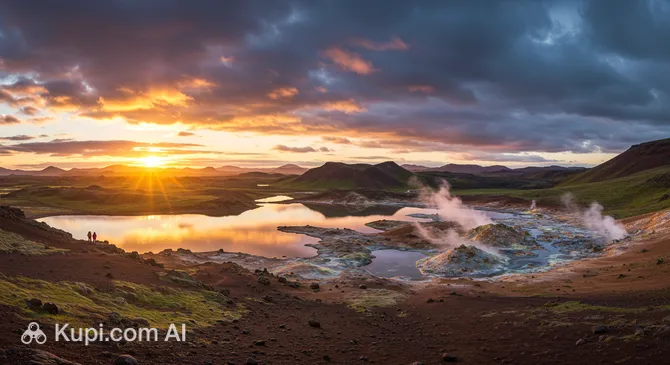
Myvatn. Illustration.
Source: Kupi.com AI

The Mývatn region is a true paradise for nature lovers and outdoor enthusiasts. Among the key attractions that draw tourists here are the bizarre Dimmuborgir lava formations, resembling the ruins of a mystical city, and the Hverir (Námafjall) geothermal area with its boiling mud pots and steaming fumaroles. Equally popular are the Mývatn Nature Baths, which offer a relaxing soak in geothermal water under the open sky. Additionally, Lake Mývatn is one of the best places in Europe for bird watching, especially for various species of ducks.

A visit to Mývatn is an immersion into a world where every landscape is breathtaking and every corner holds traces of volcanic activity. If you are looking for unique natural experiences and want to see Iceland in all its glory, this amazing region—where, by the way, some scenes of the famous TV series "Game of Thrones" were filmed—should definitely be on your itinerary.

You can find more interesting facts on the history of the town of Mývatn page.

Weather Overview

The weather in Mývatn is characterized by cool summers and cold winters. In the summer months, from June to August, the average air temperature ranges from +7.9°C to +10.2°C. In winter, especially from December to February, the thermometer averages between -6.1°C and -4.8°C, with minimum temperatures potentially dropping significantly lower.

Precipitation in Mývatn is low throughout the year (averaging 2-4 mm per month), however, days with precipitation are quite frequent (12-19 days per month). Expect a cool summer with frequent but light precipitation, and cold winters also characterized by frequent but light precipitation, primarily in the form of snow. You will find more detailed information on weather conditions and the forecast on the Mývatn Climate page.

Average monthly temperature

Average monthly precipitation

Interesting Facts

In addition to its famous geothermal wonders and volcanic landscapes, Lake Mývatn and its surroundings hold many amazing stories and facts that not all travelers know. Here are just a few of them:

  • The name "Mývatn" literally translates from Icelandic as "Midge Lake" ("mý" — midge, "vatn" — lake). This is not just a figure of speech: in summer, there really is a huge number of these small insects. However, don't worry—they don't bite and are an important part of the local ecosystem, serving as food for numerous bird species.

  • Lake Mývatn is a true paradise for ornithologists and is even considered a world record holder for the number of duck species nesting here. During certain seasons, you can find up to 13 different species, including the rare and beautiful Harlequin duck with its distinctive plumage.

  • In the 1960s, the unique Eldhraun lava fields, located near Mývatn, were chosen by NASA as a training ground for the Apollo 11 astronauts. It was believed that their surreal, almost extraterrestrial landscape was ideal for simulating lunar surface conditions before the historic flight.

  • One of the most mysterious and photogenic places in the Mývatn area is the Dimmuborgir lava formation, which means "Dark Castles" or "Dark Cities." According to Icelandic folklore, these bizarre rocks and caves are home to trolls, elves, and other mythical creatures. Legend also has it that this is where the Jólasveinar—the Icelandic Yule Lads (their version of Santa Claus)—reside.

How to Get There

When planning a trip to the unique volcanic landscapes of the north, it is important to consider logistics in advance, as the region is far from the capital. You can explore all the ways to reach the town and Lake Mývatn on a separate page, and below we will look at the main transport hubs.

There is no airport in the town of Mývatn itself, so travelers will need to take a combined route. The closest and most convenient option is Akureyri Airport (AEY), located in the city of Akureyri. It is only about 50 km from Mývatn. This is a regional hub that accepts domestic flights, and the journey from there by car or bus takes approximately 1 hour and 35 minutes.

Another option for those traveling through the eastern part of the country is Egilsstaðir Airport (EGS) in the town of Egilsstaðir. It is located about 125 km from Mývatn, and the transfer takes about 3.5 hours. It is also worth mentioning Reykjavík Airport (RKV), located in the capital city of Reykjavík (286 km in a straight line, but significantly further by road). This is the main hub for domestic flights, from where you can fly to Akureyri.

For clarity, here is a summary of the main airports:

AirportPassenger trafficDistance
Akureyri Airport200 00050 km
Egilsstadir Airport83 954126 km
Isafjordur Airport33 000285 km
Reykjavik Airport500 000286 km

There is no railway service in Iceland, so it is impossible to reach Mývatn by train. The main means of transport between towns remains road transport. Tourists usually rent cars and follow the Ring Road (Route 1), which passes directly through the Mývatn region, or use tourist bus services.

Main Attractions

Mývatn is more than just a lake; it is an entire region in North Iceland known for its unique volcanic landscapes, geothermal activity, and rich birdlife. Travelers are drawn here by the chance to see Martian-like landscapes, relax in natural hot springs, and explore amazing natural formations.

The Lake Mývatn itself is the jewel of the region. This shallow lake features numerous islands and pseudocraters formed by steam explosions when lava covered wetlands. In summer, the lake becomes home to a vast number of duck species and other waterfowl, making it a paradise for birdwatchers. Walks along the shore or boat excursions allow you to fully enjoy its beauty.

Near the lake lies Dimmuborgir, or the "Dark Castles"—a lava field with bizarre rock formations that resemble the ruins of an ancient castle. These formations were created when a lava lake partially solidified, and then the liquid lava drained out from under the crust, leaving behind pillars, arches, and caves. According to legends, this is where the Icelandic Yule Lads live, and the place is shrouded in a mystical atmosphere.

A must-see for many tourists is the Hverir geothermal area (also known as Námaskarð). It is a surreal landscape featuring boiling mud pots, steaming fumaroles, and bright sulfur deposits. The air here is thick with the smell of sulfur, and the ground is painted in incredible shades of yellow, red, and orange. A feeling of being on another planet is guaranteed here.

For lovers of panoramic views, it is worth climbing the Hverfjall (or Hverfell) volcano crater. This is a massive, perfectly shaped tuff ring crater formed about 2,500 years ago by a powerful eruption. The climb to the top is relatively easy and is rewarded with spectacular views of Lake Mývatn and the surrounding lava fields. The crater's diameter is about one kilometer, and walking along its rim is an unforgettable experience.

After a full day of exploration, there is nothing better than relaxing at the Mývatn Nature Baths. This geothermal spa complex is often called the "Blue Lagoon of the North." The water here is rich in minerals, possesses healing properties, and has a pleasant temperature. Bathing in the azure water under the open sky with views of the surrounding landscapes is the perfect way to end a day in the Mývatn region.

Local Cuisine

The gastronomy of Mývatn is a true immersion into Icelandic culinary traditions, where the main principles are the freshness and natural quality of the products. Local cuisine draws inspiration from the region's unique natural resources, offering tourists authentic and memorable flavors.

One of the most iconic dishes that you should definitely try in Mývatn is a fragrant soup made from freshly caught lake trout. Fishermen take pride in their catch, and local chefs masterfully turn it into a real delicacy. Another gastronomic highlight is the rye bread hverabrauð, which is baked in a unique way: the dough is placed in special containers and buried in the ground near geothermal springs, where it slowly bakes for 24 hours. This bread acquires a rich, slightly sweet taste and a dense texture. It is often served with smoked trout or fresh butter—a perfect treat after an active day.

In addition to these signature dishes, around Mývatn, you can taste homemade cheeses, fresh dairy products, and seasonal berries such as crowberries. In the summer, farmers' markets and small cafes will offer you rhubarb pies, local berry jams, and perhaps even goat's milk ice cream. For drinks, look for Icelandic beer brewed with the purest spring water, which perfectly complements any meal. You can also find traditional non-alcoholic drinks based on local herbs and berries.

The dining culture in Mývatn centers around small, cozy restaurants, cafes, and guest houses that serve dishes made from local ingredients. Some farms also offer tourists the chance to sample their products. While street food is not as common here as in larger cities, the emphasis is on quality and a homemade approach. The gastronomic scene of Mývatn attracts with its simplicity, authenticity, and the opportunity to try dishes prepared using the gifts of the region's unique nature.

Travel Tips

Welcome to Mývatn, a unique corner of Iceland! To ensure your journey through this amazing region, known for its geothermal wonders and rich birdlife, goes smoothly and leaves only the best impressions, we have prepared some practical tips.

  1. Wardrobe for Icelandic Weather and Essentials: The weather in Mývatn, as in all of Iceland, is very changeable. Dress in layers. Waterproof and windproof outerwear, a warm hat, gloves, and a scarf are essential, even in summer. Bring sturdy waterproof boots for walking on lava fields and uneven terrain. Don't forget your swimwear for visiting geothermal springs like the Mývatn Nature Baths. It is highly recommended to bring a head net for midges in the summer (Mývatn translates to "Midge Lake"). A European adapter (Type F) and a portable charger will also come in handy.

  2. Getting Around the Mývatn Region: To explore the surroundings of Lake Mývatn and its many attractions, renting a car is strongly recommended. This will give you the freedom to move and stop at places you like. Public transport in this area is very limited. Taxis are hard to find and will be expensive. Roads are generally good, but always check their condition, especially if you plan to go off the main highway or are traveling in winter.

  3. Financial Matters: The official currency is the Icelandic Króna (ISK). Bank cards (Visa, Mastercard) are accepted almost everywhere, including gas stations, hotels, and shops. Nonetheless, it's a good idea to have a small amount of cash for small purchases or emergencies. It is best to exchange currency upon arrival at Keflavík Airport or at banks in larger cities, as exchange options in Mývatn itself may be limited. Tipping in Iceland is not mandatory and is usually included in the bill.

  4. Health and Safety in Nature: The nearest pharmacies (apótek) and larger medical centers are located in the towns of Akureyri or Húsavík. In Reykjahlíð, the main settlement by Lake Mývatn, there is a small medical post. The emergency number is 112. The main dangers in Mývatn are related to nature: strictly stick to marked trails in geothermal zones, as the ground can be unstable, and steam and water can be very hot. Be careful on slippery rocks. Before hiking, check the weather forecast and road conditions on the `safetravel.is` website.

  5. Language and Connectivity: The official language is Icelandic. However, English is spoken by the vast majority of the population, especially in the tourism sector, so communication should not be an issue. Wi-Fi is available in most hotels, guest houses, and cafes. A local SIM card can be purchased at the airport or at communication stores in towns. A useful app for tracking weather is `vedur.is` (the website of the Icelandic Meteorological Office).

  6. Respect for Nature and Local Customs: Icelanders take great care of their unique nature. The main rule for tourists is to leave no trace: don't litter, don't pick plants, and don't disturb animals. When visiting geothermal pools and baths like the Mývatn Nature Baths, it is mandatory to shower without a swimsuit before entering the water—this is a strict hygiene rule.

  7. What to Watch Out For: Categorically avoid stepping off marked trails in active geothermal zones—this can be life-threatening. Do not underestimate the variability of Icelandic weather; always be prepared for sudden changes. Do not feed wild birds or other animals unless specifically allowed.

  8. The Mývatn Specialty – Midges and Planning: In summer, especially in June and July, Mývatn lives up to its name—there can be a lot of midges. They don't bite but can be annoying. Bring a head net. Also, given the popularity of the region and the limited number of accommodation options, it is strongly recommended to book housing and popular tours well in advance, especially if your trip falls during the high season (summer).

We hope these tips help you better prepare for your trip and fully enjoy the incredible nature and atmosphere of Mývatn. We wish you an unforgettable journey through this magical corner of Iceland!

Entertainment & Nightlife

Nightlife in Mývatn is fundamentally different from what you might find in major European capitals. Here, you won't find noisy nightclubs with DJs, neon signs, or red-light districts. "Nightlife" in this region is primarily about connecting with nature, cozy gatherings in local restaurants, and unique experiences that depend on the season: in summer, it's endless walks under the midnight sun, and in winter, it's hunting for the Northern Lights.

The center of evening activity can be considered the village of Reykjahlíð and its surroundings. Most hotels and guest houses are concentrated here, many of which have their own bars and restaurants. The atmosphere in these establishments is very relaxed and informal. The crowd consists mainly of tourists, hikers, and nature lovers from all over the world, dressed in comfortable fleece clothing and wool sweaters. The concept of a dress code does not exist here: it is perfectly normal to come to a restaurant in the same clothes you wore while walking across lava fields, as long as they are clean.

If you are looking for a place to spend a pleasant evening with a glass of local beer or dinner, several iconic locations are worth noting:

  • Vogafjós Farm Resort — this is perhaps the most colorful place in the area. The restaurant is located right inside a cowshed, separated from the animals by a glass wall. Here, you can enjoy the freshest farm products: homemade cheese, smoked trout, and the famous rye bread baked in geothermal ground. It is especially cozy here in the evening, but it's best to book a table in advance.

  • Gamli Bærinn — a cozy, rustic-style bar and restaurant located near Hotel Mývatn. This place resembles a classic pub, serving burgers, pizza, and good Icelandic beer. It is a great option for a casual evening with friends.

  • Mývatn Nature Baths — the main alternative to a nightclub in this region. The complex is open until late evening (often until 22:00–23:00 in summer, while hours may be shorter in winter). Here, you can relax in the milky-blue hot water with a glass of wine or beer purchased from the bar right at the edge of the pool. It is an ideal spot to watch the sunset or go stargazing.

Practical Tips: Keep in mind that restaurant kitchens close quite early, usually around 21:00 or 22:00, even if the bar stays open a bit longer. Alcohol prices in Iceland are high, and Mývatn is no exception. The average price for a glass of beer can range from 1,000 to 1,500 ISK. If you plan to move between venues, remember that taxis are extremely hard to find in rural areas, and there is no public transport at night. The best option is to choose a place within walking distance of your hotel or appoint a "designated driver" in your group, as the police strictly monitor drink-driving.

In terms of safety, Mývatn is one of the calmest places on the planet. You can walk around safely at any time of day. The only real threats are the weather conditions and unlit roads, so be sure to carry a flashlight and wear reflective elements during night walks.

Regarding daytime entertainment, it is inextricably linked to exploring the natural world. In addition to the natural wonders, you can visit Sigurgeir's Bird Museum, which houses an impressive collection of Iceland's feathered inhabitants, or browse small souvenir shops at local farms. However, the main "theaters" of Mývatn are its viewpoints, where a spectacle of light and shadow plays out every day against the backdrop of volcanic craters.

Parks & Museums

Mývatn, located in the heart of Iceland's unique geothermal region, offers travelers breathtaking natural landscapes and the opportunity to experience the distinctive local culture and rich heritage, rather than traditional urban parks.

The main natural gem and, in essence, a vast natural park is Lake Mývatn itself. This shallow eutrophic lake is known for its incredible biodiversity, especially the abundance of duck species, and the unique Skútustaðagígar pseudocraters on its southern shore. Walking or driving along the lake is a magnificent chance to observe rare birds in their natural habitat and enjoy surreal, almost lunar landscapes.

Not far from the lake lies the Dimmuborgir lava field, which translates to "Dark Castles" or "Dark Fortresses." It is a labyrinth of bizarre rock formations, pillars, and caves created by volcanic activity thousands of years ago. According to Icelandic legends, this is where trolls and other mythical creatures live. Dimmuborgir offers many hiking trails of varying difficulty, each opening up new, fantastic views and immersing you in the atmosphere of ancient sagas.

For those interested in active volcanology and geothermal processes, a visit to the Krafla volcano area is a must. Here you can see steaming fumaroles, boiling mud pots, colorful sulfur fields, and the impressive Víti crater, filled with deep turquoise water. This place clearly demonstrates the powerful forces of nature that continue to shape the Icelandic landscape.

While Mývatn is not famous for large museums in the classic sense, there are places where you can dive deeper into the unique specifics of the region. One such notable place is the Sigurgeir's Bird Museum (Sigurgeirs fuglasafn). This is an excellent private museum with an extensive and carefully assembled collection of specimens of almost all bird species found in Iceland, with a special emphasis on the feathered inhabitants of the Mývatn area. The museum will be of interest not only to professional ornithologists but to all nature lovers wishing to learn more about the local fauna.

The cultural heritage of the region is also reflected in the traditional way of life, which can be observed by visiting small farms scattered around the lake. Although these are not museums, getting to know the local lifestyle and traditions provides valuable insight into the history of these lands' settlement and human adaptation to the harsh but incredibly beautiful conditions of the North.

In the vicinity of Mývatn, you won't find grandiose castles or ancient ruins in the usual sense; however, the region's history is closely linked to the era of Iceland's settlement. An architectural feature worth noting is the traditional Icelandic farms, some of which retain elements of old buildings, such as the characteristic turf roofs that helped keep heat in and blended harmoniously into the surrounding landscape.

For a truly authentic experience and unforgettable impressions, try turning off the main tourist routes and exploring lesser-known hiking trails around the lake or deep within the lava fields—there, secluded corners and stunning views await you. And in the evening, after a busy day of exploration, there is nothing better than relaxing in one of the local geothermal springs. Mývatn Nature Baths offer healing waters and magnificent panoramic views, serving as a wonderful and often less crowded alternative to more famous spa complexes.

Getting Around

When planning your travels around the Lake Mývatn area, it is important to understand that this is not a town with an extensive public transport system in the traditional sense. The main emphasis here is on individual travel and tourist routes that allow you to enjoy the unique nature of this region.

The main form of public transport connecting Mývatn with other settlements is regional buses. For example, Strætó company routes may pass through this area, connecting it with major towns like Akureyri or Egilsstaðir. It's worth checking the schedule for these buses in advance, especially outside the peak tourist season, as the frequency of trips may be limited. Within the Mývatn area itself, there is generally no regular municipal transport between the main attractions. Some tour companies may offer shuttles or excursion buses, but these are commercial services.

The payment system for regional buses usually involves buying a ticket directly from the driver (often requiring cash, but it's best to check the possibility of card payment) or through the Strætó mobile app if it covers the route. Long-term passes aimed at tourists are unlikely for local travel within Mývatn. The fare depends on the distance.

Practical tips for tourists: always check the current bus schedule on the official Strætó website or at bus stops. Tickets for regional buses usually do not require prior validation if purchased from the driver. Keep in mind that buses may not run as frequently as in cities, so plan your trips well in advance.

The most popular and convenient alternative for exploring the Mývatn area is car rental. This provides maximum freedom of movement and allows you to visit all the natural sites of interest at your own pace. In summer, bicycle rental is also popular—a great way to see the attractions closest to the lake. Taxi services in this area can be limited and quite expensive, so they should not be relied upon as a primary means of transport.

Accommodation

In the Lake Mývatn area, travelers will find a variety of accommodation options to suit different preferences and budgets. A feature of the region is the prevalence of authentic local accommodation formats: cozy guest houses and traditional Icelandic farmsteads are widely represented, offering a unique opportunity to get a deeper look at the local culture and way of life. Alongside these, comfortable hotels are available, as well as apartments and cottages for those who value independence, and campsites for maximum connection with nature. Major international hotel chains are less common here, which gives staying in Mývatn a special, intimate atmosphere.

Most accommodation options are conveniently located around Lake Mývatn itself or in close proximity to key natural attractions such as geothermal zones, lava fields, and volcanic craters. The small village of Reykjahlíð on the northern shore of the lake is one of the main centers where various accommodation options, including hotels, guest houses, and basic services, are concentrated. The choice of a specific place to stay depends on your plans: whether you want to be closer to certain hiking trails, thermal springs, or enjoy seclusion away from the main tourist routes.

Mývatn is very popular, especially during the summer season (from June to August) and during periods favorable for observing the Northern Lights (from September to April). Therefore, it is strongly recommended to book accommodation well in advance, sometimes several months ahead, to guarantee a suitable option and avoid a lack of availability, especially if you are traveling during peak dates.

The price range for accommodation in Mývatn varies from relatively budget options in hostels and some guest houses to mid-range hotels and more expensive offers with improved amenities and views. Booking is easy to do through popular international online platforms for finding hotels and apartments, as well as directly on the websites of the hotels or guest houses themselves, which can sometimes offer better terms or special deals.

Nearby Cities

For those who want to explore the surroundings, Mývatn serves as an excellent starting point for day trips to several interesting nearby locations:

CityPopulationDistance
Akureyri18 92551 km
Húsavík2 30052 km
Kopasker12182 km
Olafsfjordur80092 km
Vopnafjordur700101 km

Among them, Akureyri stands out, known as the "Capital of North Iceland," located just 51 km away. This lively city attracts with its beautiful architecture, famous botanical garden, and whale-watching opportunities. You should also consider a trip to Egilsstaðir (126 km), the main town of East Iceland, which serves as a base for exploring the picturesque East Fjords and the mysterious Lake Lagarfljót. For lovers of nature and unique Icelandic landscapes, Borgarfjörður Eystri (118 km) offers an unforgettable experience thanks to its famous puffin colonies (in the summer season) and numerous hiking trails.

These and other nearby destinations allow for a deeper acquaintance with the diverse culture and breathtaking landscapes of the region.

Shopping & Souvenirs

Shopping in Mývatn offers tourists the opportunity to purchase unique local items and essentials rather than the wide range of shops typical of big cities. This region of Iceland is famous for its nature, and souvenir products often reflect exactly that. The main focus here is on handmade items, traditional Icelandic goods, and things that will remind you of the beauty of Lake Mývatn and its surroundings.

In Mývatn, there are no major shopping streets or districts as there are in metropolises. Small shops and souvenir stalls are usually located at tourist centers, hotels, guest houses, and some gas stations. This is where you can find basic souvenirs and products from local artisans. The range is generally not very wide but allows you to choose something to remember your trip by.

You won't find large shopping centers in the usual sense in Mývatn. For large-scale shopping with a wide selection of brands, you should head to larger cities in Iceland, such as Reykjavík or Akureyri. In Mývatn, shopping is more intimate and authentic.

Organized markets, whether food or flea markets, are not a characteristic feature of Mývatn. Occasionally, local craftsmen may display their products at small fairs or as part of local events, but this is the exception rather than the rule. Searching for souvenirs mainly involves visiting the small shops and stalls mentioned above.

Among the typical souvenirs worth bringing from Mývatn, Icelandic wool products stand out—the famous lopapeysa sweaters, hats, mittens, and scarves. Jewelry and crafts made from volcanic lava and other natural materials are also popular, as well as handmade ceramics, books about Icelandic nature and sagas, and postcards and magnets with views of the lake and its unique landscapes.

Shop opening hours in Mývatn can vary, especially depending on the season. During the tourist season (summer), they are usually open longer, while in winter, hours may be reduced. Many small stalls may close relatively early. Regarding payment, bank cards are accepted almost everywhere in Iceland, including Mývatn. Cash (Icelandic króna) is also accepted, but paying by card is often more convenient.

For tourists from countries outside the European Economic Area, Iceland has a Tax-Free system. This means that when purchasing goods for a certain amount (check the current threshold) in participating stores, you can apply for a VAT refund. Don't forget to ask for a special Tax-Free receipt in the shop and present it along with your purchases at customs at the airport before departure to receive your refund.

Reached the end of the page?

That means the route is fully explored