Support

Husavik

Attractions

About

Húsavík is a true northern gem, cozily nestled on the shores of the picturesque Skjálfandi Bay at the foot of the majestic Kinnarfjöll mountains. This charming town is known worldwide as the unofficial "whale capital," where rugged Arctic nature meets the warm hospitality of the locals.

Located in the north of the country, about 50 kilometers from the famous Lake Mývatn, the town is the administrative center of the region. Iceland is famous for its contrasting landscapes, and this is felt especially strongly here. Despite a modest population of about 2,300 people, the town comes alive in summer, filling with travelers eager for adventure and maritime romance.
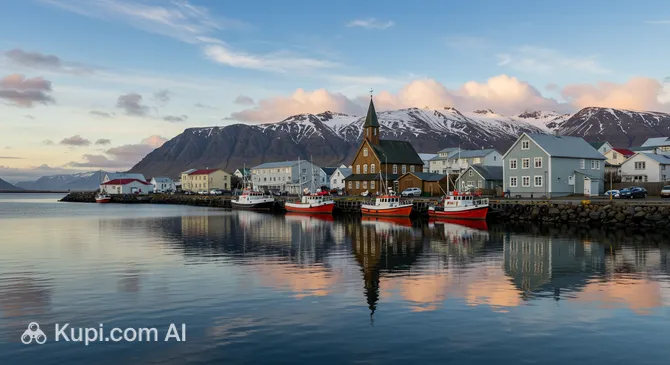
Húsavík. Illustration.
Source: Kupi.com AI

The atmosphere of Húsavík is unique: it organically combines old wooden houses, modern museums, and a slow pace of life. Walking through the streets, you can notice how carefully traditions are treated here. The fascinating history of Húsavík permeates the entire town, turning an ordinary walk into a journey through time, where every corner tells a story about the life of fishermen and northern explorers.

The main reason to visit this region is the opportunity to go on a sea expedition and see whales in their natural habitat. In addition, the town attracts fans of fishing on the Laxá River and those seeking solitude during walks along the shore, enjoying the fresh Arctic air.

Húsavík is worth visiting for its authenticity and incredible natural beauty. Here, every sunset turns into a breathtaking show, and the cozy setting allows you to forget the hustle and bustle and fully immerse yourself in the magic of the North.
Weather Overview

The climate of Húsavík is typical for the northern coast of Iceland: maritime coolness prevails, and the weather can be changeable. Summer is considered the most comfortable time to visit: in July and August, the average air temperature is about +9°C, rising to a maximum of +11°C. This is the ideal period for boat trips, although warm clothes will be needed even on the sunniest days.

Winter months bring frost and snow, but thanks to the ocean's influence, extremely low temperatures are a rarity. In January and February, the thermometer averages around -2.5°C... -2.6°C, sometimes dropping to -4.6°C. Precipitation occurs regularly throughout the year: the number of wet days varies from 13 in April to 20 in January and October.

Expect a cool summer with occasional rain and moderately cold, snowy winters. Given the capricious nature of local conditions, detailed weather in Húsavík by month will help you correctly plan your wardrobe and prepare for your trip.

Average monthly temperature

Average monthly precipitation

Interesting Facts

In addition to its main attractions, Húsavík holds many fascinating secrets, from space stories to ancient legends of the first settlers. This town can surprise even experienced travelers with unexpected facts from its biography that go far beyond whale watching.
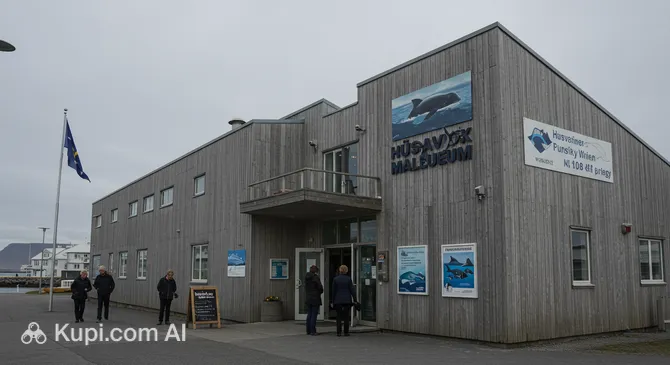
Húsavík Whale Museum. Illustration.
Source: Kupi.com AI

Traveler photos:

  • Training Base for the Moon. Few people know that the surroundings of Húsavík played a role in space exploration. In the 1960s, American astronauts of the Apollo missions, including Neil Armstrong, underwent geological training here. The local desolate lava fields were considered the most accurate Earth imitation of the lunar landscape, allowing researchers to prepare for landing on Earth's satellite.

  • "Bay of Houses." Húsavík is considered one of the oldest settlements in Iceland, and its name literally translates as "Bay of Houses." According to the sagas, it was here that the Swedish Viking Garðar Svavarsson built the first houses on the island to survive the winter. This happened even before the official start of Iceland's settlement, making the town a sort of cradle of local civilization.

  • A Unique Exhibit. The town is famous for its marine inhabitants, but the Húsavík Whale Museum possesses a truly rare treasure — a full blue whale skeleton. This is one of the few such exhibits in the world available for public viewing, emphasizing the town's status not only as a tourist center but also as a scientific one.

  • Architectural Gem. The town's main church, Húsavíkurkirkja, built in 1907, is unique to Icelandic architecture. It is constructed in a "Swiss chalet style," unusual for the island, using imported Norwegian timber. Thanks to its cross shape and the absence of traditional turf, the building resembles a fairy-tale gingerbread house against the backdrop of the rugged mountains.

  • Turf Houses. In the immediate vicinity of the town is the farm Grenjaðarstaður, where one of the largest complexes of traditional 19th-century turf houses has been preserved. These buildings, which seem to grow out of the earth, clearly demonstrate how Icelanders used natural materials for centuries to insulate their homes in a harsh climate.

How to Get There

When planning a trip to this picturesque corner in northern Iceland, it is worth thinking through the logistics in advance, as the town is far from the capital. You can find out all the details and consider various routes by following the link: more about how to get to Húsavík.

Húsavík itself does not have an airport that accepts regular passenger flights. The nearest and most convenient transport hub is Akureyri Airport (IATA: AEY), located in the city of Akureyri. The distance to Húsavík is about 55 km. This is the main airport in the northern part of the country, accepting domestic flights from Reykjavík and some international charters. A trip from the airport to Húsavík by taxi or rental car usually takes about 50–60 minutes; buses also run between the cities.

Another option is to use Egilsstaðir Airport (IATA: EGS), located in the town of Egilsstaðir in the east of the island. It is located significantly further away, about 160 km from Húsavík. This route is suitable for those planning a grand journey along Iceland's Ring Road. Travel time by car from this airport will be about 2–2.5 hours.

For convenience, here is a summary of the main airports:

AirportPassenger trafficDistance
Akureyri Airport200 00055 km
Egilsstadir Airport83 954160 km
Isafjordur Airport33 000262 km

There is no railway service in Iceland, so it is impossible to reach the town by train. The main ground transportation options are cars and buses. During the summer period, bus service is fairly regular, connecting Húsavík with Akureyri and other towns on the Ring Road. Many tourists prefer to rent a car to enjoy the picturesque landscapes of the "Diamond Circle" on the way to the town.

Main Attractions

Húsavík is not just a point on the map, but a place where nature and history intertwine in an amazing way. The main attractions of the town are connected to the sea, but there are also unique architectural monuments and modern places for relaxation that should not be missed.

The undisputed center of attraction for curious travelers is the Húsavík Whale Museum. This is one of the few museums in the world entirely dedicated to these marine giants. Here you can see real whale skeletons, including a massive blue whale skeleton, and learn many facts about the ocean ecosystem. This place is interesting not only for its exhibition but also for its educational value, allowing for a deeper understanding of the lives of northern water inhabitants.

Húsavík Whale Museum. Illustration.
Source: Kupi.com AI

Traveler photos:

For those seeking relaxation, the GeoSea Geothermal Sea Baths are a must-visit. Perched on the edge of a cliff, they offer a unique experience of bathing in warm mineral-rich seawater. From here, you can enjoy a fantastic view of Skjálfandi Bay and the snow-capped mountains, and in winter, it is the perfect location for watching the Northern Lights in warmth and comfort.

The heart of the town is graced by Húsavíkurkirkja — a picturesque wooden church built in 1907. Its unusual architectural style and bright coloring make it one of the most photographed churches in Iceland. The building looks like a fairy-tale house against the backdrop of harsh northern nature and serves as a symbol of the town.

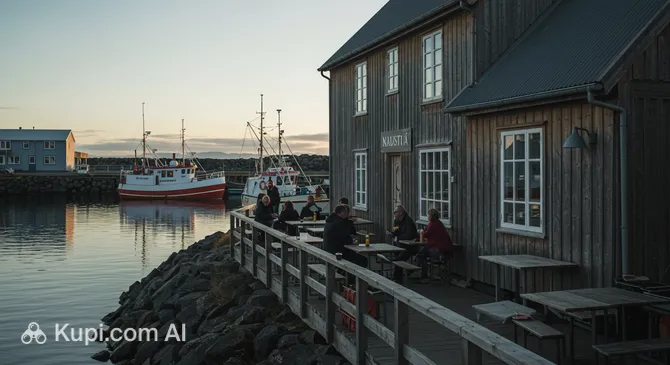
The historical buildings where life is in full swing today give Húsavík a special atmosphere. For example, Naustið is not just an establishment with delicious food, but also a place with history, located in a carefully preserved house where you can feel the spirit of an old fishing settlement. Another bright example is Salka Restaurant, housed in a former fish factory building. Visiting such places allows you to combine gastronomic pleasures with an immersion into the town's cultural heritage.

Local Cuisine

The gastronomy of Húsavík is a separate adventure for gourmets, where the proximity to the icy waters of the North Atlantic plays the leading role. The basis of the local menu is the freshest fish and seafood, which reach the table literally a few hours after being caught. Cod, halibut, salmon, mussels, and even sea urchins here have an incredibly rich flavor that is hard to find anywhere else.

Among the dishes definitely worth trying, plokkfiskur stands out — a delicate and hearty stew of fish mixed with potatoes and a thick creamy sauce. This is a true Icelandic classic that warms you up in cool weather. Thick fish soups and traditional meat broth kjötsúpa are also popular. For the bravest travelers, an exotic delicacy is offered: hákarl — fermented Greenland shark meat, which has a specific smell and taste.

To complement the bold flavors of local cuisine, Icelanders often offer Brennivín — a strong national alcoholic drink based on caraway, popularly called "Black Death." It is perfect for tasting the shark. If you prefer non-alcoholic drinks, local cafes will offer you excellent coffee, which is much loved here, or the purest Icelandic water, which can be drunk straight from the tap.

Naustið. Illustration.
Source: Kupi.com AI

Traveler photos:

The food culture in the town combines home comfort and high-quality products. Many establishments are located in historic buildings overlooking the harbor. For example, the restaurant Naustið is famous for its authentic atmosphere and magnificent seafood dishes. Equally well-known is Salka Restaurant, where you can enjoy dinner in the interiors of a former fish factory.

For a quick snack, local street food is excellent. In the port area, "fish and chips" made from fresh cod is very popular — a simple but incredibly delicious dish. It is also worth visiting farmers' markets where they sell homemade cheeses, berries, and pastries, or visiting the atmospheric Gamli Baukur cafe to have a cup of a hot drink while admiring the old schooners in the bay.

Travel Tips

Húsavík is an incredibly cozy and hospitable town, but the harsh northern character of nature is fully felt here. To ensure your trip to the "whale capital" is as comfortable as possible and without surprises, we have gathered several proven recommendations to help you prepare for your journey.

  1. Clothing and Gear. The main rule in Iceland is the principle of layering. Even in summer, the weather can change every 15 minutes: from bright sunshine to icy rain. Be sure to bring a windproof and waterproof jacket, thermal underwear, a warm hat, and gloves — they are vital during whale watching trips, where it is always colder on the water. Footwear should be comfortable, trekking-style, and preferably waterproof.

  2. Getting Around Town. Húsavík is very compact, and the best way to explore it is on foot. All main locations (the port, museums, restaurants) are within a 10–15 minute walk of each other. Public transport within the town is practically non-existent as it is unnecessary. A car rental will only be needed for trips around the "Diamond Circle," and a taxi should be booked in advance through your hotel, as it is difficult to "catch" a car on the street.

  3. Finances and Payment. The local currency is the Icelandic Króna (ISK), but you are unlikely to need cash. Bank cards and contactless payments (Apple Pay, Google Pay) are accepted everywhere: from museums to tiny hot dog stands. Iceland is an expensive country, so plan your budget with a cushion (lunch can cost from 2,500–3,500 ISK). Tipping is not expected and is usually already included in the bill, but rounding up the amount will be appreciated.

  4. Water and Health. Never buy bottled water in stores — it is considered bad form and a waste of money. The tap water here is crystal clear, tasty, and safe; you can refill your reusable bottle anywhere. There is a pharmacy (Apótek) in town, but it operates on a standard schedule (usually until 18:00 and closed on Sundays), so it is better to bring specific medications with you.

  5. Communication and Internet. There will be no problems with communication: almost all locals speak excellent English fluently. Free Wi-Fi is available in almost all cafes, hotels, and even on buses. If you need mobile internet, it is better to buy a SIM card from local operators (Síminn, Nova) right upon arrival at the airport or at large gas stations, as the choice in Húsavík itself may be limited.

  6. Bathing Etiquette. If you plan to visit the GeoSea Geothermal Sea Baths or the municipal swimming pool, remember the strict hygiene rule: before entering the water, you must shower completely without a swimsuit using soap. Ignoring this rule is considered a serious violation of local etiquette and may lead to comments from staff or other visitors.

  7. What to Avoid. Do not try to drive your car to the very edge of cliffs for a beautiful photo and under no circumstances drive off-road (off-road driving). This is not only illegal and punishable by huge fines but also causes irreparable damage to the fragile northern nature, especially the moss, which takes decades to recover.

  8. Local Tip. It is better to book whale watching tickets online in advance, especially during the high season (July–August), as boat spots fill up quickly. And don't forget motion sickness pills: even if you think you don't get seasick, the swell in the open ocean can be quite significant.

Húsavík is a place where you can slow down and feel a true connection with nature. By following these simple tips, you can avoid everyday troubles and fully focus on the main thing — the incredible landscapes and encountering the giants of the ocean.

Entertainment & Nightlife

Nightlife in Húsavík has its own special northern charm. You won't find loud nightclubs with neon signs or massive discos until morning here — the format of evening leisure in this town is quite different. It's about cozy pubs, live music, long conversations with local fishermen and travelers from all over the world, warmed by a glass of beer or something stronger after a day spent at sea.

The epicenter of evening activity is the harbor area. It is here, along the main waterfront, that the main establishments where life hums until late evening are concentrated. In summer, thanks to the phenomenon of the midnight sun, the concept of "nightlife" becomes quite relative: the sun barely dips below the horizon, creating an amazing atmosphere of eternal twilight that encourages long walks and gatherings on open terraces, weather permitting.

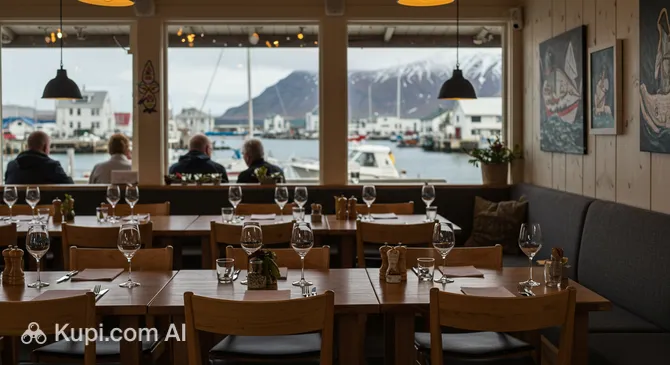
For a pleasant evening, Salka Restaurant is a great choice. It is located in a historic building that once housed a fishing cooperative. In the evenings, there is a lively but relaxed atmosphere: guests share their impressions of whale safaris, background music plays, and bartenders offer an excellent selection of local drinks. This place perfectly conveys the spirit of old Húsavík.

Salka Restaurant. Illustration.
Source: Kupi.com AI

Traveler photos:

Another point of attraction is the family restaurant Naustið. Although this place positions itself more as a dinner spot, many people gather here in the evenings to enjoy the famous fish soup and the cozy atmosphere. The interior, filled with maritime artifacts, creates the feeling that you are visiting an old sea dog. There is no loud music, but there is warmth and authenticity.

Practical Tips and Atmosphere:

The dress code in Húsavík's establishments is as casual as it gets. The "outdoor" style is the norm here: most visitors come straight in trekking boots and fleece jackets. The crowd is very diverse and friendly. Alcohol prices, as everywhere in Iceland, are quite high, so many tourists limit themselves to a couple of drinks. Happy Hours do occur, but it is better to check the schedule on-site.

Safety and Transport:

Húsavík is an exceptionally safe town. You can safely walk along the waterfront or return to your hotel at any time of the night. Given the town's compactness, you are unlikely to need a taxi — most hotels are within a 10–15 minute walk. If your accommodation is on the outskirts, it is better to order a taxi through the bar staff, as "catching" a car on the street at night is practically impossible.

During the day, the town offers calmer entertainment. In addition to boat trips, it is definitely worth visiting the Húsavík Whale Museum to learn more about the giants you might have seen in the bay, or browse local souvenir shops and art galleries.

Parks & Museums

Húsavík is a town where culture is closely intertwined with the harsh but beautiful northern nature. You won't find huge metropolitan parks here, but the picturesque surroundings and unique museums more than compensate for this, offering tourists a rich and educational holiday program.

For those who enjoy walking in the fresh air, it is worth heading to Lake Botnsvatn, located very close to the town limits. This scenic spot is surrounded by convenient walking trails and is ideal for light hiking or a picnic surrounded by blooming lupines in the summer season. Another pleasant green area is the Town Park (Skrúðgarðurinn). This is a small, cozy oasis through which the Búðará stream flows, creating an atmosphere of peace in the heart of the settlement, perfect for resting after excursions.

The town's museum scene is surprisingly rich for its size. The undisputed highlight is the Húsavík Whale Museum. This place is a must-visit, as you can see real life-size skeletons of marine mammals and learn everything about the lives of the ocean's giants. The exhibition not only entertains but also carries an important educational mission, perfectly complementing the impressions from sea tours.

No less fascinating is The Exploration Museum, dedicated to the history of human discovery — from Viking voyages to space missions. Special attention is given here to the training of Apollo program astronauts, who underwent geological training in nearby lava fields in the 1960s. It is also worth checking out the Húsavík Museum (Safnahúsið), a regional heritage center housing local history artifacts, maritime relics, and a famous stuffed polar bear.

Insider Tip: If you want to enjoy the silence and the best view of the sunset, walk to the yellow Húsavíkurviti lighthouse on the cape. This spot is rarely crowded with tourists and offers a stunning panorama of Skjálfandi Bay and the snow-capped mountain peaks on the horizon, making it an ideal point for photography.

Getting Around

The transport system in Húsavík has its own unique features dictated by the town's compact size. Here you won't find a metro, trams, or the usual city bus routes running through the streets every five minutes. The town is arranged so that the main and most convenient way of getting around is on foot. Distances between key sites — the harbor, museums, and hotels — are minimal, and the entire center can be leisurely explored in 15–20 minutes.

The only type of public transport a tourist might encounter is the intercity buses of the national Strætó network. Route No. 79 connects the town with Akureyri and is the main artery for those traveling without a car. The stop is usually located in the center, near the harbor. It is important to remember that these buses run on a schedule that can change depending on the day of the week and the season, so you should plan your trip in advance through the official website or app.

The payment system is as modern and convenient as possible. You won't need paper tickets or validators. You can pay for a trip on a Strætó bus with a bank card directly to the driver or through the Klappið mobile app, which allows you to buy tickets online and activate them when boarding. Using cash is not recommended as drivers often do not have change, and cards are accepted everywhere.

As an alternative to public transport, taxi services operate in the town. However, it should be noted that there are no standard taxi ranks where cars wait for passengers. A car must be called by phone or by asking the hotel receptionist to make a booking. Taxi rides are quite expensive, but it can be a lifesaver in bad weather or with heavy luggage.

To explore the surroundings and travel to remote natural attractions, most travelers choose to rent a car. This is the most flexible way to get around the region. In the summer season, bicycle rental is popular, allowing you to comfortably see the waterfront and immediate surroundings while enjoying the bay views without too much physical effort.

Accommodation

Despite its modest size, Húsavík offers travelers a variety of accommodation options, distinguished by a special northern coziness and hospitality. You won't find massive chain resorts or skyscrapers here; the town's hotel sector is mainly represented by small family-run hotels, atmospheric guesthouses, and comfortable apartments. Most places are decorated in a restrained Scandinavian style, where the main things are cleanliness, warmth, and functionality.

For those looking for maximum comfort, mid-range hotels and boutique hotels are available. They offer rooms with private bathrooms and often include breakfast. A more budget-friendly and popular option are guesthouses. This is a great way to save money and socialize with other travelers; facilities in such places are often shared on the floor, but the level of service remains high. Nature lovers and those seeking privacy should look at the wooden cottages on the outskirts of town, and for the most budget-conscious, a well-equipped campsite operates during the summer period.

Where it is best to stay:

The town is very compact, so the concept of an "inconvenient neighborhood" practically doesn't exist here. However, the most attractive location is considered the harbor area. Staying here, you will be in the epicenter of events: near the piers where boats depart and the main restaurants. This is especially convenient for early morning tours. Many popular accommodation options are literally a couple of minutes' walk from such an iconic attraction as the Húsavík Whale Museum, making it easy to find your way around.

Booking tips and prices:

When planning your trip, it is important to consider high demand. Summer is the peak season, when the town's population effectively doubles due to tourists. Therefore, the main tip: book accommodation in advance, preferably 3–6 months before the trip. If you arrive in July or August without a reservation, the chances of finding a free room will be near zero.

The price range in Húsavík corresponds to the general Icelandic level — above average by European standards.

  • Budget: Camping or a bed in a hostel (the most affordable option).
  • Mid-range: Guesthouses and small apartments (the most common segment).
  • Above average: Private rooms in hotels and individual cottages.
Booking is available through all major international online platforms, but some small guesthouses also take direct bookings through their websites or by email.

Nearby Cities

For those who want to explore the surroundings, Húsavík serves as an excellent starting point for day trips to several interesting nearby places. This region of Iceland is rich in both natural beauty and cultural attractions, all easily accessible by car.

Just 53 kilometers away is Akureyri — the largest city in the north of the country, often called the "northern capital." Here, a vibrant cultural life, a botanical garden, cozy cafes, and shops await you. A bit further, about a two-hour drive, is the town of Sauðárkrókur, known for its horse-breeding traditions and historical heritage. A trip to these cities will allow for a better understanding of the diversity of Icelandic life outside the capital region.

CityPopulationDistance
Kopasker12149 km
Myvatn52 km
Akureyri18 92553 km
Olafsfjordur80059 km
Grimsey6162 km

These nearby destinations allow for a more complete picture of the diverse culture and unique landscapes of the northern part of the island. Each trip will provide new impressions and complement your journey to this amazing corner of the world.

Shopping & Souvenirs

Shopping:

General Overview: Húsavík is a small and cozy town, so you shouldn't expect large-scale shopping or an abundance of global brand boutiques here. The main value of local shops lies in their authenticity and connection to the region's culture. Shopping here is more like a pleasant addition to walks: tourists can purchase unique handmade items, high-quality wool clothing, and themed souvenirs reminding them of their encounter with whales.

Main Shopping Areas/Streets: All the town's commercial life is concentrated in the harbor area and on the main street Garðarsbraut. It is here, within walking distance of each other, that the main souvenir shops, clothing stores, and grocery markets are located. A stroll through this area allows you to combine sightseeing with purchasing memorable gifts.

Shopping Centers: There are no large shopping centers or malls in the traditional sense in Húsavík. This is a town of small, independent shops. For groceries and basic necessities, there is a Krambúð supermarket where you can find everything you need for a picnic or a snack on the road.

Markets: There are no permanent markets in the town; however, small fairs of local artisans are sometimes held during the summer season. Here you can find knitted items, jewelry, and decor objects made by residents of the town and surrounding farms.

Souvenirs: The main souvenir from Iceland is the famous lopapeysa wool sweater, and in Húsavík, you can find excellent hand-knitted examples. Lava stone products, silver jewelry, and cosmetics based on local herbs are also popular. Be sure to check out the souvenir shop located in the building of the Húsavík Whale Museum. It offers a wide selection of books, toys, and maritime-themed accessories, the purchase of which often supports the museum's activities.

Opening Hours and Payment: Most shops are open from 10:00 to 18:00 on weekdays. On weekends, hours may be shorter, with shops often only open until 14:00 or 16:00. Supermarkets are usually open later, until 20:00 or 21:00. Bank cards (Visa, Mastercard) are accepted everywhere, even for small souvenir purchases, so having cash krona is not mandatory.

Tax Free: Iceland offers tourists a tax refund system (Tax Free). If you make a purchase in one store for more than 6,000 ISK, be sure to ask the salesperson for a special "Tax Free form" receipt. By filling it out, you can get a refund of part of the money spent (usually around 15%) at Keflavík Airport before departing the country.

Reached the end of the page?

That means the route is fully explored