Support

Gobindgarh Fort

About

Gobindgarh Fort is a majestic historic fortress located in the heart of Amritsar, India. This iconic structure, with a history spanning over 250 years, is an important cultural heritage site and attracts travelers with its rich past. Today, the fort serves as a living museum and a theme park dedicated to Punjabi history, featuring light shows and cultural events.
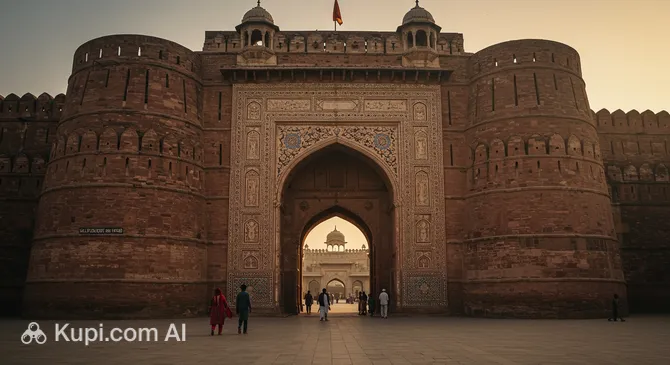
Gobindgarh Fort. Illustration.
Source: Kupi.com AI

Traveller photos:

The fortress was named after the tenth Sikh guru, Guru Gobind Singh, highlighting its deep cultural and spiritual significance for the region. Originally built in the 18th century as a mud fort by a local chieftain, it was significantly rebuilt and reinforced in the early 19th century under Maharaja Ranjit Singh. It was he who transformed it into a powerful military bastion that became a symbol of the Sikh Empire's strength.

Architecturally, the fort is a classic defensive structure that combines Sikh and European military styles. Its powerful walls surrounded by a moat, impressive gates, and bastions leave an indelible impression. Inside the complex, you can find fascinating objects such as the Toshakhana—a treasury where the famous Koh-i-Noor diamond was once kept—as well as museums dedicated to the military history and culture of Punjab.

Contacts

To get the most up-to-date information on opening hours, ticket prices, and special events, it is recommended to visit the official website or contact the fort administration directly. Gobindgarh Fort is located in the city center, making it easily accessible for tourists.

How to contactContact
AddressOld Cantt Road, Vijay Chowk, inside Lohgarh Chowk, Gobind Garh Fort, Amritsar, Punjab 143001, India
Phone+91 82890 21218
Websitewww.fortgobindgarh.com

What to Do

A visit to Gobindgarh Fort is a true immersion into history. Here, you can experience the rich heritage of the Sikh Empire firsthand and explore examples of 18th-19th century military architecture. Be sure to stop by various historic buildings, the most important of which is the Toshakhana, or the treasury. It was within these walls that the legendary Koh-i-Noor diamond was once kept, and supplies meant to maintain an army of 2,000 soldiers were stored.

Following a massive restoration, the fort has been transformed into a vibrant cultural center where history meets modern entertainment. It is now not just an open-air museum but a venue for a variety of events. Of particular note is the "Mayanagri" (City of Illusions) project—part of the renovated complex offering visitors fascinating shows and cultural programs that make a visit to Amritsar even more memorable.

Getting There

Thanks to Gobindgarh Fort's location in the heart of Amritsar, getting there is quite easy. It is a well-known landmark, so any taxi or auto-rickshaw driver will be able to take you to the site without any trouble. The simplest and fastest way is to use a taxi or auto-rickshaw, which are the most popular modes of transport in the city. A trip from most downtown hotels will take no more than 10–20 minutes. Ride-hailing apps also operate in the city, allowing you to check the cost and plan your route in advance.

For those who prefer public transport, city bus routes pass near the fort. However, it's worth noting that the system might not be the most convenient for tourists unfamiliar with the city. A great alternative is a walk if you are staying nearby. The fort is located very close to Amritsar Junction railway station, so those arriving by train can reach it on foot in just a few minutes. The distance from the Golden Temple, the city's main shrine, is only about 2-3 kilometers, which can be easily covered by rickshaw.

If you are arriving in Amritsar by air, your journey will begin at Sri Guru Ram Dass Jee International Airport (ATQ), located approximately 11-15 kilometers from the city center. The most convenient way to get from there to Gobindgarh Fort is to take a taxi at the airport or order a car through one of the apps. The trip will take about 20-30 minutes depending on traffic conditions.

Nearest city: Amritsar

History & Facts

The history of Gobindgarh Fort is closely intertwined with key events in the history of India and the rise of the Sikh Empire. It was originally a modest mud fortress built in the 18th century by the local chieftain Gujar Singh Bhangi. However, fundamental changes occurred in the early 19th century when the fort was captured and significantly expanded by the great Maharaja Ranjit Singh. It was he who transformed it into a powerful stronghold and renamed it in honor of the tenth Sikh guru, Gobind Singh, emphasizing its spiritual and strategic importance.

The main task assigned to the renovated fort by Maharaja Ranjit Singh was the protection of the sacred Harmandir Sahib (Golden Temple) and the city of Amritsar itself. In the 18th century, the city was often subjected to raids by invaders who used the famous Grand Trunk Road for predatory incursions. To turn the fort into an impregnable bastion, Ranjit Singh began a large-scale reconstruction in 1805, for which a French architect is believed to have been enlisted. As a result, a modern military fortress rose on the site of the mud structure, capable of withstanding new threats.

With the fall of the Sikh Empire in 1849, the fort came under British control, and they made significant changes to its structure. The new owners adapted the bastions and gates for the use of more advanced artillery. During this period, five powerful cannons were stationed within the fortress, including the two legendary Zamzama guns—famous pieces of ordnance that became symbols of military power at the time. These historical details make Gobindgarh Fort not just an architectural monument, but a true chronicle of the region's military history.

Time Needed

When planning a visit to Gobindgarh Fort, it's worth setting aside enough time to fully enjoy all its attractions. For a quick look at the main structures, a stroll around the grounds, and a visit to one or two museums, you will need about 1-2 hours. This is enough to get a general impression of the fort's scale and architecture.

However, to truly immerse yourself in the atmosphere of this historic site, it is recommended to plan for at least 3-4 hours. During this time, you can leisurely explore all the museums, including the War History Museum and the Toshakhana treasury, where the Koh-i-Noor diamond was once kept. You will also have time to watch live performances by artists performing traditional dances and visit the 7D show dedicated to the life of Maharaja Ranjit Singh.

If you want to see one of the fort's main highlights—the evening light and sound show "Whispering Walls" (Kanda Boldiyan Ne)—your visit will last until late evening. This spectacular show, telling the history of the fortress, starts after sunset. In this case, it is best to arrive at the fort in the afternoon to see the main exhibits before dark and then stay for the evening program. Thus, a full visit can take more than 4-5 hours.

Working Hours

Gobindgarh Fort is open to visitors year-round, making it accessible at any time. According to official information, the complex is open daily, including weekends and holidays, from 10:00 AM to 10:00 PM. This allows guests to be flexible when planning their visit, whether for a daytime museum tour or an evening cultural show. However, it is worth noting that some indoor exhibits, such as the Toshakhana treasury and the War History Museum, may have shorter hours and might be closed on Mondays.

While pre-booking tickets is not mandatory, it is recommended to purchase them online in advance, especially if you plan to visit the fort during peak season or on weekends. This will help avoid queues and guarantee access to all activities, including the popular evening light and sound shows. Since opening hours can change due to special events or other reasons, it is always useful to check for the latest information on the fort's official website before your visit.

10:00 – 22:00

Nearby

Visiting Gobindgarh Fort is an excellent start for exploring the rich history and culture of Amritsar. However, to get a complete picture of this amazing city, it is worth exploring other iconic sites, many of which are located very close by. Exploring the surroundings will allow you to immerse yourself deeper into the atmosphere of Punjab and see other gems of this region, which is sacred to the Sikhs.

Thanks to the fort's central location, reaching other key attractions is easy. It serves as an ideal starting point for further travel around the city, and many interesting sites are within a short drive or even a walk. Below is a list of some of them, along with their distance from the fort.

NameDistance
Akal Takht1.6 km
Golden Temple1.7 km
Gurdwara Ber Baba Buddha Sahib1.7 km
Ram Bagh1.7 km
Amritsar Heritage Walk and Golden Temple1.7 km
Shrine of Baba Deep Singh Ji Shaheed1.8 km
The Partition Museum1.8 km

Reached the bottom of the page?

Looks like you know this route inside out