Support

Jallianwala Bagh

About

Jallianwala Bagh is not just a public park, but a significant historical memorial located in the heart of Amritsar, in the state of Punjab. This site holds immense importance for all of India, serving as a symbol of the nation's resilience and its struggle for independence. A visit to this memorial leaves a lasting impression and helps one better understand key moments in the country's history.
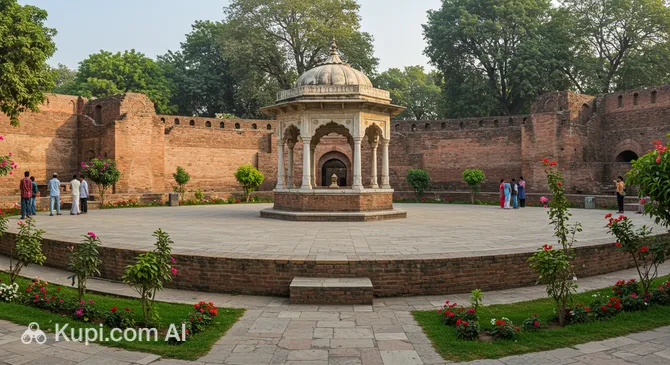
Jallianwala Bagh. Illustration.
Source: Kupi.com AI

Traveller photos:

The memorial is dedicated to one of the most tragic events in the country's history—the mass shooting of peaceful civilians on April 13, 1919. On this day, thousands gathered in the park for a peaceful protest but were trapped when British troops opened fire on them. Today, Jallianwala Bagh serves as a reminder of this tragedy and the sacrifices made on the road to freedom. Bullet marks can still be seen on some of the complex's walls, preserved as silent witnesses to those events.

Today, it is a well-maintained memorial complex with beautiful gardens, galleries, and several structures that tell the story of the tragedy. The centerpiece is a flame-shaped monument erected in memory of those who died. Also on the grounds is the "Martyrs' Well," into which many jumped while trying to escape the bullets. Visiting Jallianwala Bagh is an opportunity to touch an important page of the past and honor the memory of those who gave their lives in the struggle for the future of their country.

Contacts

Since Jallianwala Bagh is a public memorial park, it does not have a dedicated contact service for tourists. The most up-to-date information, including opening hours, is best confirmed on-site or at tourist centers in Amritsar. Getting to the memorial is very simple: it is located in the very heart of the city, just a few minutes' walk from the famous Golden Temple.

How to contactContact
AddressGolden Temple Rd, Jallan Wala Bagh, Katra Ahluwalia, Amritsar, Amritsar Cantt., Punjab 143006, India

What to Do

Visiting Jallianwala Bagh is an opportunity to immerse yourself in history and honor the memory of the victims of the tragic events. Guests can take a leisurely stroll along the well-kept paths of the memorial park and view the monuments dedicated to the fallen. A thoughtful exploration of the museum's exhibition, where photographs, historical documents, and personal belongings of the victims are collected, allows for a deeper understanding of the scale of what happened.

The preserved evidence of the 1919 tragedy makes a particularly strong impression on visitors. One of the main points of interest is the bullet-marked wall, which has remained untouched and serves as a silent witness. Nearby burns the Eternal Flame—a monument established in memory of the martyrs.

These powerful symbols create a unique atmosphere, prompting reflection on the value of peace and human life. For those who want to gain a more complete understanding of the significance of this site, guided tours are often available. Experienced guides provide detailed accounts of the events of that tragic day and the memorial's role in India's history. The park provides all the conditions for a peaceful visit: there are information stands and rest areas where you can process what you have seen in an atmosphere of respect and silence.

Getting There

Reaching the Jallianwala Bagh memorial is very easy, as it is located in the heart of Amritsar. This makes it accessible from anywhere in the city center. If you are nearby, for example, exploring the Golden Temple, the park can be reached on foot in just a few minutes—they are located very close to each other. For longer trips around the city, you can use a taxi or an auto-rickshaw, which will quickly take you to the entrance of the memorial complex.

For travelers arriving in Amritsar from other cities in India or from abroad, transport accessibility is also not an issue. The nearest airport to the city is Sri Guru Ram Dass Jee International Airport, which is approximately 11-13 kilometers from the center. From there, the memorial can be easily reached by taxi, with the ride taking about 15 minutes.

Another convenient way to get to the city is by using the rail network. Amritsar Junction Railway Station is well-connected to major cities across the country and is located near the central districts, about 2-3 kilometers from the attraction. From the station to Jallianwala Bagh, you can travel by public transport, taxi, or rickshaw, which will take no more than 10 minutes. Thanks to its convenient location, the journey to this iconic memorial will be simple and fast, regardless of how you arrive in the city.

Nearest city: Amritsar

History & Facts

The historical significance of Jallianwala Bagh is inextricably linked to the tragic events that unfolded here on April 13, 1919. This day, known as the Amritsar Massacre, became one of the darkest moments in India's colonial history. Previously, after the passage of the repressive Rowlatt Act, which significantly curtailed civil liberties, discontent had been growing across the country. In Amritsar, the situation was particularly tense. On this day, coinciding with the Sikh festival of Baisakhi, thousands of civilians, including women and children, gathered in Jallianwala Bagh for a peaceful protest.

The crowd was unaware that British Brigadier General Reginald Dyer viewed the gathering as a precursor to a rebellion. He ordered his troops to block the narrow exits of the park and opened fire on the unarmed crowd without warning. The firing continued for about ten minutes until the soldiers ran out of ammunition. As a result, hundreds of people were killed, and more than a thousand were injured, according to various estimates. This brutal massacre of peaceful citizens shocked the entire country and the world.

The aftermath of the Amritsar Massacre was monumental. This event sparked a wave of outrage throughout India and beyond, becoming a turning point in the struggle for independence. The cruelty of the colonial authorities dispelled the last illusions about the justice of British rule and united the nation in its quest for freedom. The mass shooting in Amritsar catalyzed the national liberation movement, which eventually led to the fall of the colonial regime. Today, Jallianwala Bagh is a sacred memorial site, serving as a reminder of the sacrifices made on the altar of independence.

Time Needed

For a complete visit to the Jallianwala Bagh memorial complex, 1–2 hours is usually sufficient for most tourists. This time is enough to leisurely see all the key sites, walk through the park, and feel the special atmosphere of this historical location in Amritsar.

Most of the time is spent viewing the main monuments, such as the Martyrs' Wall, where bullet marks are still visible, and the Martyrs' Well. It is also worth dedicating time to visiting the small gallery and museum on-site, which display photographs and documents telling the story of the tragic events of 1919. A peaceful stroll through the well-maintained paths of the park will allow you to fully contemplate the significance of this place for India's history.

Of course, if you have a deep interest in history and want to thoughtfully study all the information boards and exhibits, your visit may take a bit more time. However, for most travelers, two hours will be quite enough to form a complete impression of Jallianwala Bagh and pay tribute to those who lost their lives.

Working Hours

The Jallianwala Bagh memorial park is open to visitors year-round, and entry is generally free. Operating hours may vary slightly depending on the season. In summer, the park is usually open from 6:30 AM to 7:30 PM, while in winter, it may close slightly earlier, around 6:00 PM – 7:00 PM. The galleries and museum on the complex grounds operate on a shorter schedule, typically from 9:00 AM to 5:00 PM.

Special ticket bookings or registration for a visit are not required, as entry is free. However, given potential changes in the schedule, especially on national holidays, it is recommended to check the current opening hours on the official website or at local tourist information centers before your visit.

9:00 – 18:00

Nearby

A visit to the Jallianwala Bagh memorial complex is a deep and moving experience, but your acquaintance with Amritsar would be incomplete without exploring its surroundings. Thanks to the memorial's central location, it serves as an ideal starting point for exploring other iconic sites that are literally just a few steps away. A walk through the neighboring streets will allow you to dive deeper into the rich history and spiritual atmosphere of this unique city.

Exploring nearby attractions will enrich your impressions and help you form a complete picture of the cultural heritage of India and, in particular, the state of Punjab. Right next to the memorial, you will find both sacred pilgrimage sites and interesting museums, each telling its own part of the city's story. Below is a list of interesting sites located in the immediate vicinity of Jallianwala Bagh.

NameDistance
Jallianwala Bagh Museum0.1 km
Gurdwara Ber Baba Buddha Sahib0.3 km
Central Sikh Museum0.3 km
Prem Nath Kulche Wale0.3 km
Hop-On Hop-Off Bus Tour0.3 km
Golden Temple0.4 km
Shrine of Baba Deep Singh Ji Shaheed0.4 km

Reached the bottom of the page?

Looks like you know this route inside out