Support

Attari

About

Attari is a small but surprisingly vibrant settlement located in the far north of India, in the state of Punjab. Its uniqueness is largely defined by its geographical location: the town sits right on the border with Pakistan and is famous for its one-of-a-kind land crossing — the Wagah-Attari checkpoint. This point doesn't just connect two countries; it serves as an important transport and cultural bridge between the peoples of the region.
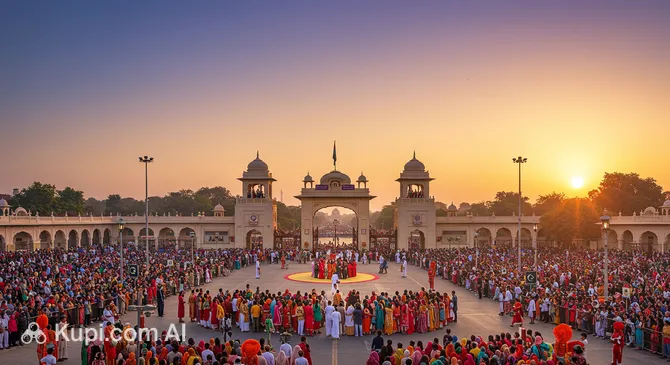
Attari. Illustration.
Source: Kupi.com AI

With a population of around 9,500 people, Attari maintains the charming atmosphere of a traditional Indian village while playing a significant role as a "window to the world" for the entire Punjab. There is no urban hustle and bustle here; instead, one feels the special spirit of border life mixed with the hospitality of local residents. Administratively, Attari belongs to the Amritsar district, which also underscores its importance given its proximity to this major religious and cultural center.

The main attraction drawing tourists from all over the world is, of course, the daily flag-lowering ceremony at the Wagah-Attari border. This colorful and patriotic spectacle leaves a lasting impression. Additionally, Attari offers the chance to immerse yourself in the authentic atmosphere of the Punjabi heartland, walk through picturesque surroundings, and get acquainted with local traditions. It is a place where different cultures and destinies meet, creating a unique character.

If you are looking for unusual experiences and want to see a different side of India, a trip to Attari will provide emotions you won't find anywhere else. This town is not just a gateway between countries, but a wonderful place with a rich atmosphere.

You can find more interesting facts on the Attari city history page.

Weather Overview

The weather in Attari is characterized by distinct seasons with hot summers and cool winters. Precipitation varies noticeably throughout the year, concentrating mainly in the summer months.

The summer period, especially from May to June, features high temperatures: average values fluctuate around 30-33°C, while maximums can rise to 38-39°C. Winters, from December to February, are significantly cooler, with average temperatures around 12-15°C. Overall, in Attari, expect very hot summers with the majority of rainfall occurring in July (about 7 mm) and August (about 4 mm), and cool, mostly dry winters, especially in December when precipitation is minimal. More detailed information on climatic conditions and weather by month can be found on the Attari Climate page.

Average monthly temperature

Average monthly precipitation

Interesting Facts

Beyond its worldwide fame due to the border ceremony, the small town of Attari in India hides many surprising details and lesser-known stories. Here are just a few of them:

  • Despite its modest size, Attari becomes a center of national attention every day thanks to the famous Wagah-Attari border closing ceremony. This breathtaking synchronized show by Indian and Pakistani border guards, featuring marching and theatrical performances, attracts thousands of spectators, turning the small village into an epicenter of patriotic spectacle.

  • Attari is the only official Indian-Pakistani border crossing point open to foreign nationals. This makes it a unique gateway between the two countries for travelers from around the world and an important site for researchers of cross-border relations.

  • Historically, Attari played a significant role as a point on ancient caravan routes. Legends say that busy trade routes passed through these lands as far back as the Mughal era, facilitating cultural exchange and trade between different regions.

  • In the vicinity of Attari, one can still find old farmsteads and traditional houses. Local residents proudly preserve centuries-old customs, hold vibrant folk festivals, and pass down unique family stories and legends associated with this land from generation to generation.

How to Get There

When planning your trip, it's important to know in advance all the ways to get to Attari. Since it is a small border town, direct transport links have their own characteristics, and the route is most often built through neighboring major hubs.

Attari does not have its own airport. The most convenient and popular option for tourists traveling in India is Sri Guru Ram Dass Jee International Airport (IATA: ATQ). It is located in the city of Amritsar, just 22.3 km from Attari. This is a major transport hub receiving many flights. A trip from the airport to the center of Attari by taxi or bus will take approximately 55 minutes. This is the main gateway for most travelers heading to the border.

Geographically, the closest is Allama Iqbal International Airport (IATA: LHE), located in the city of Lahore. It is about 20.6 km from Attari. However, keep in mind that this airport is located in Pakistan, and traveling through it involves crossing an international border. The estimated travel time, excluding border formalities, is about 50 minutes. Also operating in the region is Satwari Airport (IATA: IXJ) in the city of Jammu, but it is much further away — 123 km, and the journey from there will take more than 3 hours.

For clarity, here is summary information on the main airports in the region:

AirportPassenger trafficDistance
Allama Iqbal International Airport5.4 mln21 km
Sri Guru Ram Dass Jee International Airport3.5 mln22 km
Sialkot Airport800 000106 km
Satwari Airport1.6 mln123 km
Ludhiana (Halwara)136 km

Regarding rail links, Rawalpindi Railway Station (IATA: RWP) is mentioned in available data. It is located in the city of Rawalpindi, at a distance of 265.8 km from Attari. Given the significant distance, the travel time by car from this station will be over 7 hours. For tourists in India, the more common way is to take a train to neighboring Amritsar, from where Attari is easily reached by local transport.

Below is information about the nearest major station from the available list:

StationPassenger trafficDistance
Rawalpindi Railway Station5.5 mln266 km

Main Attractions

Attari, a small but strategically important town in the Indian state of Punjab, attracts tourists primarily for its unique border-town atmosphere and the chance to witness one of India's most vibrant spectacles. While Attari itself may not abound with numerous tourist sites, its main attractions leave an indelible impression.

The main and most famous attraction, for which thousands of people gather daily, is the Attari-Wagah border closing ceremony. This impressive and carefully choreographed military display takes place every evening before sunset at the India-Pakistan border. Soldiers of the Indian Border Security Force (BSF) and Pakistan Rangers demonstrate impeccable drill, synchronized movements, and martial fervor amidst loud patriotic cheers from spectators on both sides. The ceremony culminates in the simultaneous and rapid lowering of the national flags of India and Pakistan. This unique spectacle, full of energy and patriotism, allows visitors to feel the unusual atmosphere of this place and is a must-see for many travelers in Northern India.

Not far from the border itself, about 100 meters from the crossing point, lies the historical monument of Pul Kanjari. Built by Maharaja Ranjit Singh in the 19th century, this site is associated with the legend of his favorite dancer, Moran. The complex includes a small fortress, a baroque pool (sarovar), and the remains of a temple and a mosque, testifying to the syncretic culture of that era. Visiting Pul Kanjari allows you to touch the history of the Sikh Empire, appreciate the architecture of the period, and learn local legends. Its proximity to the border adds a special flavor to this historical site.

While Attari is primarily associated with the border, these two locations — the breathtaking ceremony and the historical corner of Pul Kanjari — make a visit here truly memorable, offering both vivid emotions and food for thought.

Local Cuisine

The cuisine of Attari is a true immersion into the gastronomic traditions of Punjab, famous for its rich flavors and aromatic spices. Fresh, local products are highly valued here, as the region is a literal breadbasket. If you want to experience authentic Indian food, Attari will not disappoint you.

Be sure to try iconic dishes like sarson da saag — a hearty dish made from mustard greens, traditionally served with makki di roti (cornbread) and a generous portion of ghee. Various types of curry are equally popular, such as aromatic chicken curry, as well as dal, a thick lentil soup. Of course, no meal is complete without freshly baked flatbreads — roti or naan, which perfectly complement the spicy dishes.

Among drinks, lassi stands out — a thick, refreshing yogurt-based drink that can be either sweet or salty. It is a perfect thirst quencher on a hot day. Also widely available is aromatic masala chai, prepared with milk and spices — an ideal start or end to the day.

The food culture in Attari is diverse. Locals and tourists alike can enjoy meals in small family restaurants or right on the street, where numerous vendors offer fresh snacks such as samosas (fried savory pastries) or sweet desserts like jalebi and gulab jamun. Farmers' markets also play an important role, offering an abundance of fresh vegetables, fruits, and spices, emphasizing the local cuisine's commitment to natural ingredients. Gastronomic festivals and family feasts are an integral part of life in the town, where food becomes the center of socializing and hospitality.

Travel Tips

Planning a trip to Attari? This small but significant town on the border of India offers unique experiences, especially thanks to the famous ceremony at the Wagah-Attari border. To ensure your trip goes smoothly and leaves only pleasant memories, we have prepared some practical tips.

  1. Clothing and Essentials: The climate in Punjab, where Attari is located, involves hot summers and cool winters. In summer (April-June), choose light cotton clothing, a hat, sunglasses, and sunscreen. In winter months (November-February), warm clothes and layering will be useful. Be sure to bring comfortable shoes, as you will likely have to walk or stand a lot, especially if you plan to attend the border closing ceremony. Don't forget a universal adapter for electronics (India uses type C, D, and M sockets). If you plan to visit Gurdwaras (Sikh temples), both men and women must cover their heads, and clothing should be modest, covering shoulders and knees.
  2. Transport in Attari: Attari itself is a small settlement. The main means of transportation here are auto-rickshaws and local taxis. For trips to/from the nearest large city, Amritsar (about 30 km away), you can use taxis or buses. Public transport within Attari itself is poorly developed. Renting a car is unlikely to be necessary if your plans are limited to visiting the border crossing and surroundings.
  3. Finance: The local currency is the Indian Rupee (INR). In Attari, currency exchange opportunities and the number of ATMs may be very limited. It is recommended to exchange money or withdraw cash in Amritsar before the trip. Credit and debit cards may be accepted in very few places, so cash will be your primary means of payment. International cards may work at ATMs of major banks in Amritsar. Tipping is not strictly mandatory but is appreciated for good service in restaurants (if available) or to drivers; a small amount (5-10%) is usually sufficient.
  4. Health and Safety: Attari may have small pharmacies with a basic set of medicines. For serious medical assistance, it is better to go to hospitals in Amritsar. It is recommended to carry a small first-aid kit with essential medicines. Attari, being a border town, has increased security measures and is generally safe. However, always observe standard precautions: watch your belongings, especially in crowded places, and follow the instructions of security personnel. Do not photograph military sites or personnel without permission.
  5. Communication: The main languages of communication are Punjabi and Hindi. English may be understood in tourist spots or among the youth, but don't count on widespread knowledge. Learn a few simple phrases: "Sat Sri Akal" (traditional Sikh greeting, very common in Punjab), "Namaste" (Hello), "Shukriya" or "Dhanyavad" (Thank you). It's best to buy a local SIM card in Amritsar; you'll need a passport and visa for this. Wi-Fi access in Attari is likely to be limited.
  6. Local Etiquette: People in Punjab are known for their hospitality. Greet people with a smile and "Sat Sri Akal" or "Namaste." Show respect for local customs and traditions. When visiting Gurdwaras or other religious sites, remove your shoes and cover your head. Avoid public displays of affection. If you are invited to a home, it is a sign of great respect.
  7. What to Avoid: Categorically avoid photographing border facilities, military personnel, and any activity that could be perceived as suspicious in a border area without special permission. Also, do not engage in arguments on political topics, especially those concerning relations between India and Pakistan. Show respect during the ceremony at the border.
  8. Special Tip – Border Ceremony: The main attraction of Attari is, of course, the daily flag-lowering ceremony at the Wagah-Attari border crossing. Arrive early (1-2 hours before the start) to get good seats, as many people gather. Check the current start time of the ceremony, as it may change slightly depending on the season. Be prepared for security checks and large crowds, especially on weekends and holidays.

We hope these tips help you better prepare for your trip to Attari and get the most out of this unique place. We wish you an unforgettable journey and vivid impressions from visiting the Indian border!

Entertainment & Nightlife

Attari, primarily known for its proximity to the border and its famous ceremony, offers a more peaceful and authentic evening experience compared to large metropolises. Nightlife here has its own special character, conducive to slow-paced relaxation and conversation, though it differs from the bustling entertainment districts of big cities.

Evening entertainment in Attari is mainly centered around local restaurants and eateries where you can enjoy traditional Punjabi cuisine. Some of these may stay open until late evening, offering guests a cozy atmosphere. Specialized nightclubs, noisy bars, or large concert venues typical of major tourist centers are unlikely to be found here. Instead, an evening can be spent at one of the local establishments, enjoying food and drinks in a more intimate setting. To find a suitable place for dinner or evening relaxation, it's best to rely on recommendations from locals or your hotel staff. Occasionally, local cultural events or festivals may take place in the town or its surroundings, which can also become part of your evening program.

The atmosphere of evening Attari is generally calm and friendly. The crowd is mostly local, but tourists staying over after the border ceremony can also find hospitality here. Establishments usually do not require a strict dress code; casual, comfortable clothing is perfectly appropriate. Given the town's size, most potentially interesting places will be within walking distance or a short distance from each other. It is recommended to check operating hours in advance, as places may close earlier than in larger cities. Prices for food and drinks are generally moderate and affordable.

In terms of safety, Attari is considered a relatively safe place, especially in the central areas where main activity may be concentrated. However, as with any trip, it's worth observing standard precautions during dark hours and keeping an eye on your belongings. For traveling longer distances or returning to your hotel late at night, you can use local taxis or auto-rickshaws. It is recommended to agree on the fare in advance or ask for help calling transport at your hotel or restaurant.

During the day, besides attending the famous Wagah-Attari border ceremony, which is a vivid spectacle in itself, you can explore the surroundings and get to know the local culture and way of life. Although Attari itself may not have large museums, theaters, or amusement parks, its unique location and border-town atmosphere are attractions in their own right. You might find small local temples or markets of interest for the curious traveler wishing to understand the life of this region of India more deeply.

Parks & Museums

Attari, a small town in the state of Punjab, offers its guests not only the unique experience of watching the famous border ceremony but also the opportunity to touch the local culture and history. Although Attari cannot boast an abundance of traditional parks and large museum complexes, its charm lies in its authentic atmosphere and significant historical sites.

Speaking of green zones, Attari is surrounded by the fertile fields of Punjab, which themselves create picturesque rural landscapes, especially pleasing to the eye during certain seasons. There may be few specialized large parks in the town itself; however, well-maintained areas and small gardens can be found near residential areas or public buildings. A walk through the surroundings will allow you to feel the tranquility of rural India and enjoy the fresh air.

The main cultural and historical magnet of Attari is certainly the Attari-Wagah border crossing. The daily flag-lowering ceremony is not just a ritual but a true performance, full of patriotism and carefully rehearsed choreography, attracting thousands of spectators. While there is no traditional museum with exhibits behind glass here, the very atmosphere of this place and its history related to the partition of India make it a living monument. Memorials or commemorative signs dedicated to the region's historical events can be found in the vicinity.

To dive deeper into the local atmosphere, it is worth paying attention to the small markets where you can see the daily life of the townspeople. For those planning to attend the border ceremony, it is recommended to arrive early to secure good seats. Also, don't miss the chance to try authentic Punjabi cuisine in local eateries — this is an important part of the cultural experience in Attari.

Getting Around

Public transport in Attari, given its size and its nature as a border settlement, is quite simple and focused on the basic needs of locals and visitors. The core of the transport system here consists of buses and auto-rickshaws.

Buses are the main means of communication with larger cities, primarily Amritsar, as well as other settlements in Punjab. These can be both government and private buses. Within Attari itself, bus service may not be very developed due to the town's compact size. Fares are usually paid in cash directly to the conductor or driver upon boarding. The cost of travel is generally low.

Auto-rickshaws (tuk-tuks) are the most popular and flexible type of transport for traveling short distances directly within Attari and its immediate surroundings. They are easily available, and it is customary to agree on the fare with the driver in advance, as meters are rarely used. This is a convenient way to reach a specific location not served by a bus.

Taxis are also available, especially for longer trips or for those who prefer more comfort. They can be found at makeshift stands or ordered by phone (if local services exist). The cost of a taxi ride will be higher than that of a bus or auto-rickshaw.

Regarding the payment system, cash payment prevails in Attari. Complex systems with travel cards or mobile apps typical of large metropolises are unlikely here. It is recommended to carry small bills for convenience.

Practical tips for tourists:

  • Find out bus routes and schedules at local small bus stations or from the drivers themselves.
  • Always agree on the cost of an auto-rickshaw or taxi ride before starting the journey.
  • Public transport is usually most active during the day. The number of trips may decrease in the evening.
  • Cycle-rickshaws may be found for very short distances, but auto-rickshaws are more common.

There are no unique types of transport, such as a historical metro or cable cars, in Attari. The transport system here is functional and meets the needs of a small town.

Accommodation

When planning a trip to Attari, you will find various accommodation options to suit the needs of most travelers. The range of housing here varies from modest budget guesthouses and small family-run hotels to more comfortable inns offering a good level of service. Given the town's specific role as an important border point, many options are geared toward transit tourists and those coming to see the famous ceremony at the border.

When choosing a place to stay in Attari, you should pay attention to areas located in the immediate vicinity of the Wagah-Attari border crossing. This is especially convenient if the primary purpose of your trip is to attend the daily border closing ceremony. Options along the main transport arteries are also convenient, as they facilitate movement around the town and its surroundings. Although Attari is a small town, choosing a strategically convenient location will help save time.

Local hotels and guesthouses are available in Attari, offering various levels of comfort. While there may not be large international hotel chains here, you can find decent options for your stay. It is recommended to check reviews and current offers on specialized travel portals before booking.

One of the key tips for travelers is to book accommodation in advance, especially if your trip coincides with peak tourist season or popular events, such as festivals or holidays that draw large crowds to the border. Early booking not only guarantees availability but often allows you to secure better rates.

The price range for accommodation in Attari is mainly focused on the budget and mid-range segments, making it accessible to a wide range of tourists. You can book accommodation through various means: via popular international and local online booking platforms, or in some cases, by contacting the hotel or guesthouse management directly.

Nearby Cities

For those looking to explore the surrounding area, Attari serves as an excellent starting point for day trips to several interesting nearby locations:

CityPopulationDistance
Kaonke14 6463 km
Wagah26 9004 km
Dara8 86715 km
Chabal Kalan12 47722 km
Lahore Cantonment374 87222 km

For example, a trip to Amritsar will allow you to see the world-famous Golden Temple, the main shrine of Sikhism and an architectural marvel. No less interesting is Tarn Taran Sahib, which is also an important pilgrimage center with a historical gurdwara. These cities offer a unique immersion into the culture and history of the region.

These nearby destinations provide an insight into the diverse culture and landscapes of the region.

Shopping & Souvenirs

Shopping in Attari offers tourists the chance to immerse themselves in the local atmosphere and purchase authentic goods typical of the Punjab region. The town is not a major commercial center with modern malls, but you can find interesting local shops and markets offering traditional crafts and products.

Main shopping spots in Attari are likely concentrated along the main streets or at the local bazaar. Here you will find small shops selling everyday essentials, clothing, and food products. The atmosphere in such places is usually lively, making it an excellent way to observe the daily life of the residents.

Large modern shopping centers familiar to big cities are likely not found in Attari. Shopping here is more oriented toward traditional formats, such as small private shops and street markets. This gives the purchasing process a special local flavor.

Markets play an important role in the commercial life of Attari. Here you can find fresh local produce, spices, and a variety of household goods. Visiting a local market is not just a shopping opportunity but also a chance to get acquainted with the local culture and culinary traditions. You might find unique handmade items or textiles here.

As souvenirs from Attari and the Punjab region, traditional items are worth looking for. Popular choices include Punjabi shawls (especially those with "Phulkari" embroidery), traditional "jutti" footwear, colorful fabrics, as well as local sweets and spices. Since Attari is located on the border, items reflecting cultural exchange may also be found.

Shops in Attari typically operate from morning until evening; however, keep in mind that in small towns, schedules can be flexible, and some shops may close for lunch. The primary method of payment, especially in markets and small shops, is cash. Some larger outlets may accept bank cards, and mobile payment systems (UPI) are widely used in India.

Tax Free shopping for tourists in India exists for certain categories of goods and under specific conditions, but for everyday purchases in a small town like Attari, this is generally not common practice. It is recommended to check for information on this matter in major authorized stores when making expensive purchases.

Reached the end of the page?

That means the route is fully explored