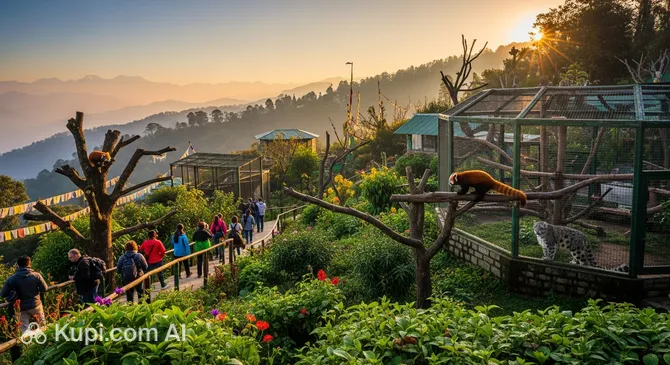
Nestled on majestic mountain slopes is the Padmaja Naidu Himalayan Zoological Park—a remarkable site widely considered the largest high-altitude zoo in India. Perched at an elevation of approximately 2,100 meters above sea level in Darjeeling, this park serves as a true home for animals perfectly adapted to harsh alpine conditions.
Spanning over 27 hectares, this zoological park is internationally renowned for its success in conserving endangered species. It is here that unique breeding programs for snow leopards and Tibetan wolves are implemented. Additionally, the park is a central hub for the protection of charming red pandas, which are a favorite among tourists.
For travelers, this is more than just a zoo; it is an opportunity to experience Himalayan wildlife without leaving the city limits. Thanks to its status and scientific contributions, the park is a member of the World Association of Zoos and Aquariums, welcoming hundreds of thousands of guests from around the world every year.
Contacts
If you need to clarify any details before your visit, you can refer to the official address. The Padmaja Naidu Himalayan Zoological Park is conveniently accessible for tourists visiting Darjeeling.
The main highlight here is observing the rare inhabitants of the Himalayas in conditions that closely mimic their natural habitat. You can spot graceful snow leopards, elusive Tibetan wolves, and Himalayan bears. The red pandas are a particular delight for visitors; watching them snack on bamboo shoots is one of the most memorable experiences.
Nature lovers and photographers should prepare for some fantastic shots—the enclosures are designed so that the animals feel comfortable amidst dense vegetation and rocks. Beyond mammals, the park boasts a rich variety of mountain birds and hardy goral (mountain goats).
A wonderful addition to your walk is a visit to the Himalayan Mountaineering Institute (HMI). Since the zoo ticket typically includes entry to the institute, you can combine discovering the animal world with learning about the history of conquering the world's highest peaks. This makes for an engaging and educational visit for the whole family.
Getting There
The Padmaja Naidu Himalayan Zoological Park is located on Jawahar Parbat hill, making it easily accessible for visitors to the city. The most pleasant way to reach it is a 20–30 minute walk from the central Chowrasta Mall. The path leads uphill, offering scenic mountain views along the way.
If you prefer transport, you can hire a taxi or rickshaw. The trip from the center takes only 5–10 minutes and costs approximately 100–200 Indian Rupees. Local shared jeeps also operate along the route as a budget-friendly option.
Since the zoo is adjacent to the Himalayan Mountaineering Institute, simply follow the signs for the institute—they will lead you exactly where you need to go. Combining these two attractions into one trip is the most popular choice among travelers.
Nearest city: Darjeeling
History & Facts
The history of this unique site began on August 14, 1958. The zoo was established in the picturesque Birch Hill area with the noble goal of studying and preserving the unique fauna of the Himalayas. Its first director was Dilip Kumar Dey of the Indian Forest Service, whose efforts laid the foundation for the institution's future success.
One of the most notable moments in the park's history occurred in 1960. Soviet Premier Nikita Khrushchev gifted the zoo a pair of Siberian (Ussuri) tigers, a significant event that brought international attention to the new scientific center.
The park continued to evolve in the following years: it was registered as a society in 1972 and came under the management of the West Bengal Department of Forests in 1993. Today, it is a globally recognized center specializing in the conservation of rare high-altitude species.
Time Needed
To leisurely explore all the enclosures and soak in the park's atmosphere, a typical visitor will need about 2–3 hours. This allows enough time to observe the rare animals closely and capture excellent photographs.
If you plan to also visit the Himalayan Mountaineering Institute, which is located on the same grounds, it is best to set aside half a day. The walk up to the top of Jawahar Parbat hill may take some extra time, but the views are worth every minute.
Working Hours
It is best to visit the park during the morning or early afternoon. The zoo is open to guests from 08:30 to 16:30. However, please keep one important detail in mind: the park is closed every Thursday for maintenance and to allow the animals to rest.
The schedule may change slightly depending on the season or local holidays. We recommend that tourists check the official website or confirm the current hours at their hotel before heading out to ensure a smooth visit.
Day
Working hours
Monday
08:30–16:30
Tuesday
08:30–16:30
Wednesday
08:30–16:30
Thursday
Закрыто
Friday
08:30–16:30
Saturday
08:30–16:30
Sunday
08:30–16:30
Nearby
Exploring the area surrounding the zoo can greatly enrich your trip. Iconic landmarks related to the history of mountaineering and regional culture are located just a stone's throw away.