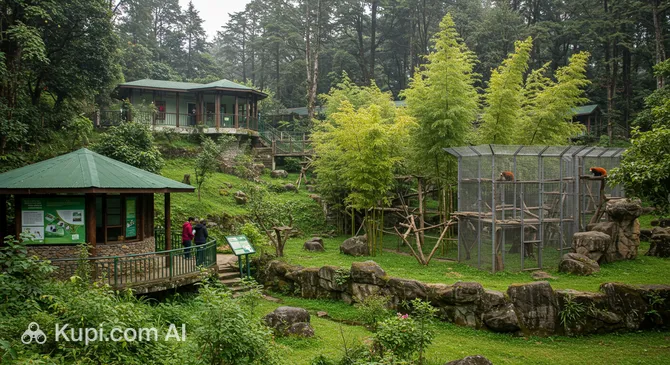
Imagine a stunning natural corner nestled on the slopes of majestic mountains. The Padmaja Naidu Himalayan Zoological Park is a unique high-altitude zoo located in the city of Darjeeling, India. This park, occupying territory in the picturesque Birch Hill area, is one of the main attractions of West Bengal state.
The park specializes in the conservation of rare and endangered animal species characteristic of Asia's high-altitude regions. Thanks to its conservation efforts, it has become an important international center for breeding fauna that are practically not found in other zoos around the world.
The main stars here are rightfully considered the charming red pandas, graceful snow leopards, and Tibetan wolves. A visit to this place offers a rare opportunity to see these amazing creatures in conditions as close as possible to their natural habitat.
Contacts
When planning a visit to this wonderful natural spot, it is useful to have up-to-date contact information for the administration. Below are the basic details that will help you find your way and clarify any visiting details before you set off.
A walk through the park is a real adventure for nature lovers and families with children. The main reason thousands of tourists come here is the opportunity to see the rarest inhabitants of the Himalayas up close. You can observe red pandas at play, the majestic calm of snow leopards, and the habits of Tibetan wolves, whose enclosures are integrated into the natural mountain landscape.
Beyond animal watching, the zoo provides many opportunities for self-education. Here, you can learn about species conservation programs, explore the unique Himalayan flora, and participate in educational tours. Information boards provide detailed descriptions of the region's ecosystems, making the walk not only pleasant but also very informative.
Theme exhibitions and environmental protection events are also regularly held on the park grounds. The atmosphere of tranquility and proximity to wildlife makes this place ideal for those who want to escape the city bustle for a while and immerse themselves in the spirit of the high mountains.
Getting There
The zoo is located in the picturesque Birch Hill area, just a couple of kilometers from the center of Darjeeling. The easiest and most comfortable way to get here is to use a local taxi, which will take you directly to the entrance in a matter of minutes.
Hiking enthusiasts can walk to the park from the city's main tourist streets. The 2–3 kilometer path passes through scenic hills, allowing you to enjoy mountain views and experience local flavor along the way.
The entrance to the zoo is well-marked with signs, and the facility is located in the immediate vicinity of the Himalayan Mountaineering Institute. Many tourists choose to combine a visit to these two iconic sites in one day, as they are located on almost the same grounds.
Nearest city: Darjeeling
History & Facts
The history of the Padmaja Naidu Himalayan Zoological Park began in 1958. It was named after Padmaja Naidu — an outstanding woman who was the first to hold the post of Governor of West Bengal and who was known throughout her life for her active environmental advocacy.
Since its opening, the zoo has pursued a noble goal: to become a sanctuary and a center for studying animal species whose survival in harsh high-altitude conditions was under threat. Over decades of work, it has evolved into one of India's leading institutions specializing in the conservation of Himalayan fauna.
Today, this place is internationally recognized as a unique scientific center. The zoo has achieved outstanding success in captive breeding programs for red pandas and snow leopards, making it a vital link in the global strategy for preserving the planet's biodiversity.
Time Needed
To stroll through the grounds without rushing and observe all the inhabitants, a typical visitor is recommended to set aside 2 to 3 hours. The park territory is quite extensive, and viewing the information boards along with animal watching takes a significant amount of time.
If you plan to see not only the animals but also visit the nearby Himalayan Mountaineering Institute or simply enjoy the mountain scenery, it's worth allocating half a day for the visit. This will allow you to move at a comfortable pace without missing anything interesting.
Working Hours
The zoo is ready to welcome guests in the morning and after lunch. The operating schedule is as follows: from Monday to Wednesday, and from Friday to Sunday, the park is open from 8:30 AM to 4:00 PM.
It is important to remember that the zoo is closed every Thursday for its weekly day off. It is recommended to come during the morning hours when the animals are most active and the lighting is perfect for photography.
Day
Working hours
Monday
8:30 – 16:00
Tuesday
8:30 – 16:00
Wednesday
8:30 – 16:00
Thursday
Closed
Friday
8:30 – 16:00
Saturday
8:30 – 16:00
Sunday
8:30 – 16:00
Nearby
The zoo's location in one of the city's most attraction-dense areas offers excellent opportunities for further exploration of the surroundings. Exploring the nearby monuments and natural sites will help you more fully experience the atmosphere of this mountain region.