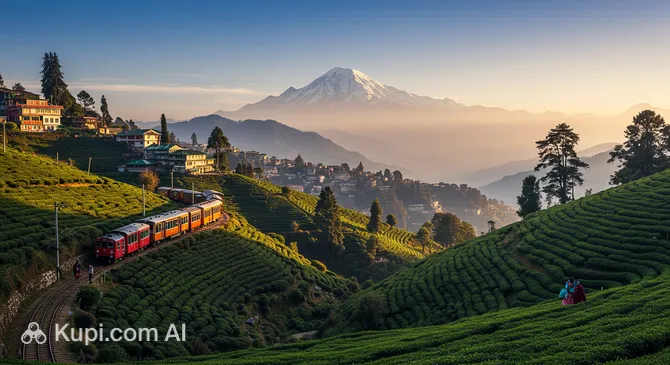
Darjeeling is a true gem of the Eastern Himalayas, a city that seems to float above the clouds. Situated at an altitude of about 2,185 meters above sea level in the northeast of the state of West Bengal, India, it is surrounded by majestic tea plantations and dense forests. On the horizon rises the legendary Mount Kangchenjunga, the third-highest peak in the world, creating breathtaking landscapes.
A special microclimate reigns here: morning mists, refreshing mountain air, and incredible views of snowy peaks grant an atmosphere of peace and inspiration. With a population of about 118,805 people, Darjeeling is a relatively small but very lively city that has long been an important administrative, cultural, and tourist center of the region.
Darjeeling. Illustration.
Source: Kupi.com AI
It is no coincidence that Darjeeling is called the "Queen of the Hills." Its unique location offers stunning panoramas, and its world-famous terraced tea plantations make the local landscapes truly magical. Among the iconic experiences the city offers are a ride on the historic Toy Train of the Darjeeling Himalayan Railway, watching the sunrise at Tiger Hill with a view of Kangchenjunga, and leisurely strolls along the bustling Mall Road.
Darjeeling is not only a paradise for nature lovers but also an amazing cultural crossroads where Indian, Nepalese, Tibetan, and British traditions harmoniously intertwine, left over from the times when the city was a summer residence for British colonizers. A visit to Darjeeling promises unforgettable impressions and complete immersion in its unique atmosphere.
The climate in Darjeeling is characterized by distinct seasonality. Winters (December-February) are cool, with average temperatures around 8.8-10.9°C (minimums can drop to 4.4°C) and little precipitation (about 1-4 mm per month). Spring (March-May) brings gradual warming: average temperatures rise from 13.6°C to 18.5°C; in spring, the amount of precipitation gradually increases, and May becomes the wettest month of this season, with 29 rainy days and 14 mm of precipitation. Summer (June-August) is the monsoon season; at this time, the average temperature is around 20.8-21.2°C (maximum values reach 23-24°C), accompanied by heavy rainfall (up to 28 mm in July) and almost daily rain. Autumn (September-November) features pleasant weather, with temperatures gradually decreasing from 20.5°C to 13.9°C and a reduction in rain intensity, especially by November (2 mm of precipitation). In general, expect a warm and very humid summer, especially during the monsoon period, and cool, drier winters. You can find more detailed information on our dedicated page: Darjeeling Climate.
Average monthly temperature
Average monthly precipitation
Interesting Facts
In addition to its famous tea plantations and breathtaking Himalayan scenery, Darjeeling holds many fascinating secrets and little-known details that can surprise even the experienced traveler.
Batasia Loop. Illustration.
Source: Kupi.com AI
Traveler photos:
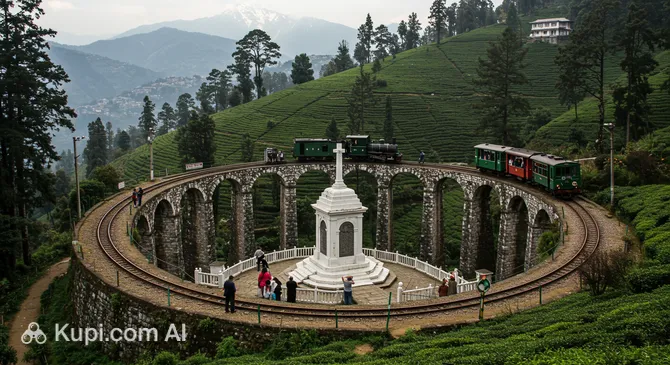
The symbol of the city is the Darjeeling Himalayan Railway, known as the "Toy Train." This narrow-gauge railway, built in 1881 and recognized as a UNESCO World Heritage site, offers passengers an unforgettable journey along picturesque mountain slopes, including the famous Batasia Loop, and reaches Ghoom Station, one of the highest railway stations in India.
Darjeeling is the birthplace of the legendary mountaineer Tenzing Norgay, who, along with Sir Edmund Hillary, was the first to summit Everest. In the city, you can visit the Himalayan Mountaineering Institute Museum, dedicated to the history of climbing and Norgay's memory, and see Tenzing Rock, where the pioneer himself used to train.
Although Darjeeling is world-famous for its tea today, the British originally chose this location in the 19th century not for tea plantations, but as a cool summer residence. It was this decision and the favorable climate that subsequently led to the cultivation of the famous Darjeeling tea, which is considered one of the best in the world. You can admire the tea estates from one of the many tea garden viewpoints.
How to Get There
Darjeeling is located in a high-altitude area, so traveling here is an adventure in itself, usually involving several modes of transport. Since there is no airport or large railway station in the city itself, tourists arrive at nearby transport hubs at the foot of the mountains and then climb up via picturesque serpentine roads. You can find more details on how to get to Darjeeling on our dedicated page, and below we will look at the main options.
The main air gateway for travelers heading to this region is Bagdogra Airport (IXB). It is important to note that it is not in Darjeeling itself, but in the city of Siliguri, at the foot of the Himalayas. The distance in a straight line is about 40 km, but due to the winding mountain roads, the journey by car or bus takes significantly longer — expect about 2.5–3 hours in transit. This is a major airport with a passenger traffic of over 3 million people a year, receiving flights from Delhi, Kolkata, and other metropolises.
An alternative, though less popular option, could be Pakyong Airport (PYG) in the city of Gangtok. It is geographically closer (about 38 km in a straight line) but is a small regional airport, and the journey from there will also take time due to the difficult terrain. There are also airports in neighboring countries (Nepal, Bhutan) in the region, but they are less frequently used for transit to Darjeeling by regular tourists.
For clarity, here is summary information on the main airports in the region:
Regarding rail travel, there is no station in Darjeeling itself that accepts high-speed long-distance trains. The nearest major rail hub is New Jalpaiguri (NJP) station, located in Siliguri. Trains from all over India arrive here. From New Jalpaiguri station, Darjeeling can be reached in two ways: by taxi/jeep (about 3 hours) or on the famous "Toy Train" of the Darjeeling Himalayan Railway. The train journey takes about 7 hours but offers unforgettable views.
If you prefer road transport, shared jeeps and private taxis regularly depart from Bagdogra Airport or New Jalpaiguri station. This is the most common and convenient way to cover the final stretch of the journey and ascend to the "Queen of the Hills."
Main Attractions
Darjeeling, nestled among the majestic Himalayas, offers tourists many unique attractions that combine natural beauty, cultural heritage, and breathtaking views. From picturesque tea plantations to ancient monasteries and colonial architecture, everyone will find something to their liking here.
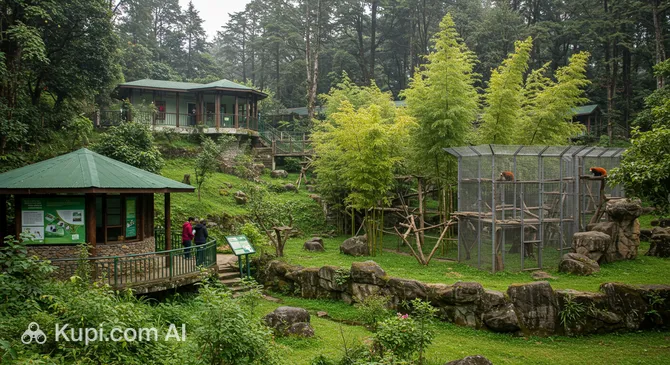
One of the most visited attractions is the Padmaja Naidu Himalayan Zoological Park. This is not just a zoo, but a breeding center for rare Himalayan animals such as the snow leopard, red panda, and Tibetan wolf. Visitors can see these amazing creatures in conditions as close as possible to their natural habitat. The zoo also plays a vital role in conserving endangered species.
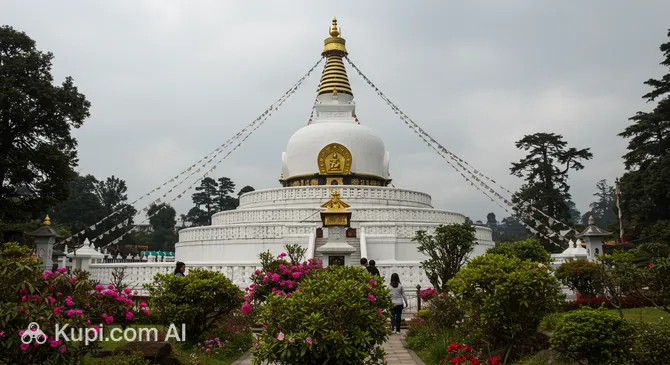
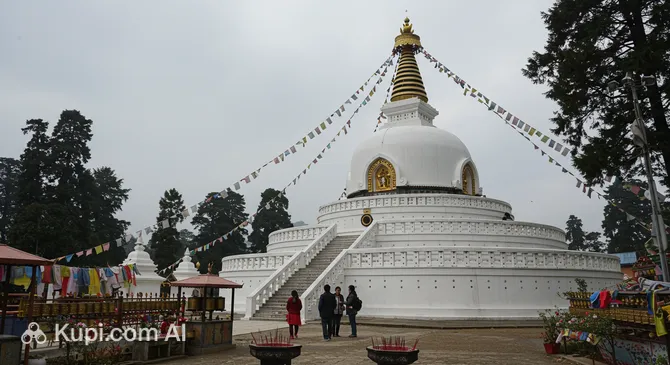
For those seeking peace and spiritual enlightenment, the Peace Pagoda (Japanese Peace Pagoda) is a must-visit. This snow-white stupa, built by Japanese Buddhists, symbolizes peace and harmony. It offers stunning panoramic views of the city and surrounding mountains, including Kangchenjunga on clear days. The atmosphere here is perfect for meditation and reflection.
Peace Pagoda. Illustration.
Source: Kupi.com AI
Traveler photos:
One cannot overlook the Batasia Loop — a unique engineering loop of the famous Darjeeling Himalayan Railway, a UNESCO World Heritage site. This spot not only showcases the skill of past engineers but also offers magnificent views of Darjeeling and Kangchenjunga. At the center of the loop is a war memorial dedicated to the Gorkha soldiers who died in various conflicts.
Batasia Loop. Illustration.
Source: Kupi.com AI
Traveler photos:
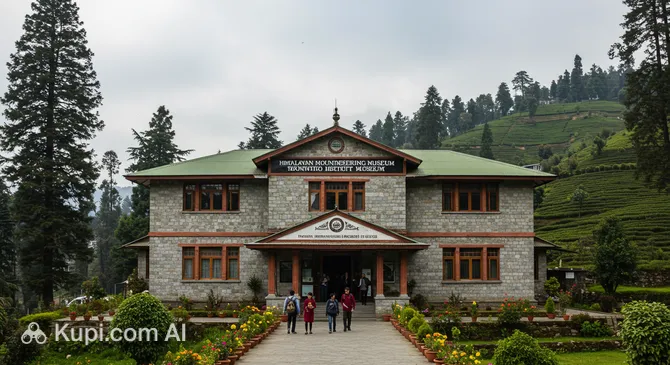
History and mountaineering buffs should visit the Himalayan Mountaineering Institute Museum. Founded by Tenzing Norgay, one of the first conquerors of Everest, the institute and its museum house a rich collection of exhibits telling the history of Himalayan exploration, mountaineering equipment, and Sherpa culture. It is an inspiring place that speaks to human courage and perseverance.
Himalayan Mountaineering Institute Museum. Illustration.
Source: Kupi.com AI
Traveler photos:
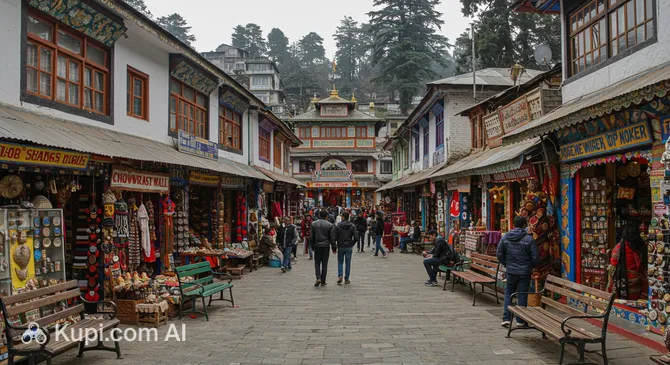
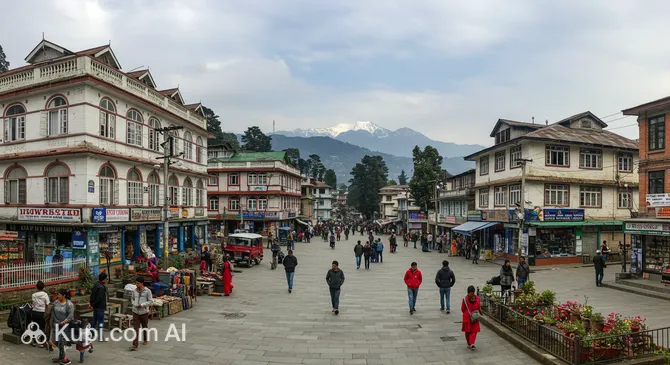
The center of Darjeeling's social life is Chowrasta (Darjeeling Mall). This lively square, surrounded by shops, cafes, and colonial buildings, is a favorite spot for strolls for both locals and tourists. Here you can relax on a bench, enjoy the mountain views, watch the daily life of the city, or buy souvenirs.
Local Cuisine
The gastronomy of Darjeeling is an amazing blend of Indian, Tibetan, and Nepalese culinary traditions, creating a unique kaleidoscope of flavors. The absolute star and symbol of the city is the world-famous Darjeeling tea, renowned for its delicate aroma and golden color. A trip here is unthinkable without tasting this noble beverage, which is rightfully considered one of the best in the world.
Among the dishes that are definitely worth trying in Darjeeling, momos stand out – appetizing steamed dumplings with a juicy filling of meat (chicken, pork) or vegetables, traditionally served with a spicy tomato or sesame sauce. No less popular is the thick and fragrant thukpa soup, prepared according to Tibetan recipes with noodles, fresh vegetables, and, optionally, pieces of meat. Also worth noting is the Nepalese dish dal bhat (rice with lentil soup, vegetable curry, and pickles) and various piquant snacks made from fermented vegetables.
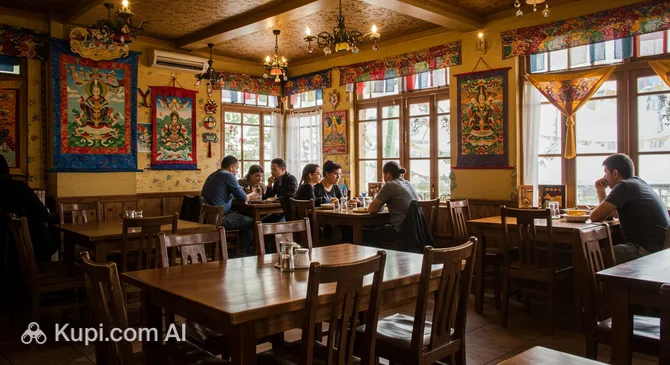
The food culture in Darjeeling is diverse and colorful. On the city's busy streets, especially in the Chowrasta (Darjeeling Mall) area, you can always find stalls with aromatic street food: try roasted corn, spicy samosas (pastries with vegetable or meat filling), fresh roti flatbreads, or aloo dum (potatoes in a spicy sauce). For a more thorough introduction to local cuisine, it is worth visiting one of the authentic restaurants, such as Noryang Tibetan Kitchen, where you can taste traditional Tibetan dishes in a cozy setting.
Noryang Tibetan Kitchen. Illustration.
Source: Kupi.com AI
Traveler photos:
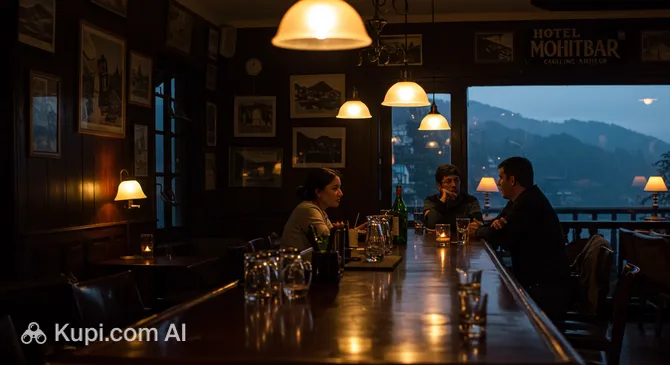
The main beverage, of course, is tea. Excursions to tea plantations, such as visiting a tea garden viewpoint with the opportunity to taste different varieties, are an integral part of the gastronomic experience in Darjeeling. Tea festivals are often held here, where you can not only enjoy the taste but also learn about brewing traditions and tea rituals raised to a true cult. Besides tea, you can try local fruit juices and lassi (a yogurt-based drink). For those who prefer something stronger, there are establishments in the city, such as the Bar at Hotel Mohit, offering various drinks.
Darjeeling's gastronomic scene offers a unique combination of flavors and aromas that can surprise even a sophisticated gourmet. From street food stalls to cozy restaurants, the city invites you on an exciting culinary journey where everyone will find something to their liking while enjoying magnificent views of the Himalayas.
Travel Tips
Planning a trip to picturesque Darjeeling? To ensure your journey goes smoothly and leaves only pleasant memories, we have prepared some practical tips to help you better navigate this charming mountain corner of India.
Clothing and Essentials: Darjeeling is located in the mountains, so the weather can be changeable even within a single day. The key to comfort is layering: bring T-shirts, a warm fleece or sweater, a light windbreaker, and a raincoat. Comfortable, broken-in shoes are a must for walking on hilly terrain. For visiting monasteries and temples, choose modest clothing that covers shoulders and knees. Don't forget sunscreen, a hat, and a universal power adapter.
Transport in the City: The primary way to get around Darjeeling and its surroundings is by shared jeeps (often called "Sumos") and taxis. Within the city itself, many points of interest are within walking distance, but be prepared for uphill and downhill walks. The famous "Toy Train" (Darjeeling Himalayan Railway) is more of an exciting tourist attraction than a regular mode of transport. Renting a private car is usually not necessary for tourists and can be difficult due to the nature of mountain roads.
Finances: The official currency is the Indian Rupee (INR). You can exchange currency at banks or authorized exchange offices. Credit and debit cards are accepted in most hotels, restaurants, and large stores, but it's always useful to carry some cash for small purchases in markets, shared jeep fares, and small eateries. ATMs are available in the city. Tipping is welcomed in restaurants (usually 5-10% of the bill) and for porters.
Health and Safety: There are pharmacies in Darjeeling where you can buy basic medications, but it's recommended to carry a small first-aid kit with familiar medicines. Drink only bottled or boiled water. The city is considered relatively safe for tourists, but standard precautions should be followed: watch your belongings and avoid walking alone in poorly lit areas after dark. Given the altitude, some tourists may need time to acclimatize.
Communication: The main languages spoken in Darjeeling are Nepali, Bengali, Hindi, and Tibetan. However, in the tourism sector, many locals speak English quite well. Learning a few simple Hindi phrases like "Namaste" (Hello/Goodbye) or "Dhanyavad" (Thank you) will be a pleasant gesture of courtesy. A local SIM card can be purchased at mobile shops upon presentation of a passport and visa. Wi-Fi is available in most hotels and many cafes.
Local Etiquette: Residents of Darjeeling are mostly friendly and hospitable. When visiting monasteries and temples, it is customary to remove shoes before entering and behave respectfully (do not speak loudly, do not take photos without permission, especially of monks). If you want to photograph locals, always ask for their permission. Be polite and smiling in your interactions.
What to Avoid: Try not to litter – Darjeeling is famous for its nature, and it's important to keep it clean. Also, don't bargain too aggressively, especially for small souvenirs from street vendors – respect their work. Avoid public displays of excessive affection or wearing overly revealing clothing, especially away from tourist areas.
Special Tip – Morning Magic: Try to wake up very early at least once and head to a viewpoint (like Tiger Hill) to watch the sunrise over the Kangchenjunga range. It's a truly breathtaking sight that will stay in your memory for a long time! And, of course, don't miss the chance to try authentic Darjeeling tea at one of the local tea plantations.
We hope these tips help you plan the perfect trip to Darjeeling. Enjoy the incredible views, unique culture, and hospitality of this amazing place!
Entertainment & Nightlife
Darjeeling, known for its tea plantations and views of the Himalayas, offers its guests a cozy, though not boisterous, nightlife. Instead of noisy night clubs, you will find atmospheric bars, restaurants with live music, and the opportunity to enjoy a quiet evening surrounded by mountain air.
The main evening activity is concentrated around the central square, Chowrasta (Darjeeling Mall), and adjacent streets like Nehru Road and Laden La Road. Many popular establishments are located here. The atmosphere is usually relaxed and friendly, drawing both local youth and tourists. Most bars and pubs close relatively early, usually by 10:00-11:00 PM, so plan your evening accordingly. There is generally no special dress code; casual style is welcomed.
Hotel Mohit Bar. Illustration.
Source: Kupi.com AI
Traveler photos:
Among specific places to spend the evening, the Bar at Hotel Mohit is worth noting, as it is popular for its selection of drinks and pleasant environment. You can also visit restaurants that offer not just dinner but an evening program. For example, Noryang Tibetan Kitchen offers authentic dishes in a lively atmosphere. Prices in Darjeeling establishments are generally moderate. In the late evening, it is better to get around the city by taxi, which can be ordered through your hotel or found at stands in the center. While Darjeeling is considered a relatively safe city, it is recommended to stick to well-lit and crowded streets after dark.
As for daytime entertainment, Darjeeling offers many interesting spots. You can visit the Padmaja Naidu Himalayan Zoological Park, home to rare animal species including the snow leopard and red panda. History and culture enthusiasts will be interested in the Bengal Natural History Museum and the Himalayan Mountaineering Institute Museum. For outdoor walks, Shrubbery Nightingale Park is excellent, offering picturesque views.
Parks & Museums
Darjeeling, snugly nestled among Himalayan peaks, offers its guests not only breathtaking landscapes but also a rich cultural heritage reflected in its parks, museums, and historical monuments. Here, everyone will find something for the soul: from quiet green corners to fascinating exhibitions telling the history and nature of this region of India.
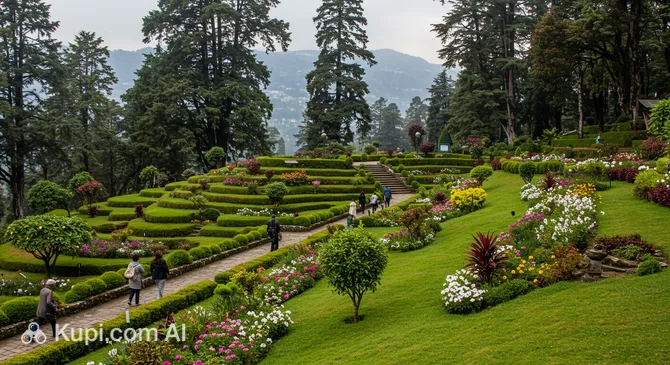
Among the city's green oases, Lloyd's Botanical Garden stands out, housing an impressive collection of Himalayan flora, including rare species of orchids and rhododendrons. It is a wonderful place for leisurely strolls and getting to know the plant world of the Eastern Himalayas.
Lloyd Botanical Garden. Illustration.
Source: Kupi.com AI
Traveler photos:
Another charming place is Shrubbery Nightingale Park. From its well-kept alleys, panoramic views of Kangchenjunga open up, and during the flowering season, it is filled with aromas and bright colors. It is an ideal place for evening walks and enjoying the sunset. No less interesting is the Rock Garden, a terraced garden with an artificial waterfall created around a natural rock formation in Ganga Maya Park. It is a great spot for relaxation and photos against the backdrop of picturesque compositions.
To gain a deeper understanding of the culture and history of Darjeeling, it is worth visiting its museums. The Himalayan Mountaineering Institute Museum is a must-visit for anyone interested in conquering peaks. It stores exhibits related to the history of mountaineering in the Himalayas, including equipment used by Tenzing Norgay and Edmund Hillary.
Himalayan Mountaineering Institute Museum. Illustration.
Source: Kupi.com AI
Traveler photos:
Adjacent to the mountaineering institute is the Padmaja Naidu Himalayan Zoological Park, one of India's best high-altitude zoos, where you can see rare Himalayan animals like the snow leopard, red panda, and Tibetan wolf in conditions as close as possible to their natural habitat.
Nature lovers will also enjoy the Bengal Natural History Museum, which showcases the region's rich biodiversity through an extensive collection of taxidermy birds, animals, and insects.
Darjeeling is also famous for its iconic structures. The majestic Japanese Peace Pagoda is a symbol of tranquility and harmony, built to spread the ideals of peace. Its grounds offer magnificent views of the city and Kangchenjunga.
Japanese Peace Pagoda. Illustration.
Source: Kupi.com AI
Traveler photos:
Another iconic spot is the Batasia Loop, the famous engineering loop of the Darjeeling Himalayan Railway. A war memorial in honor of Gorkha soldiers is located here, and the loop itself offers breathtaking panoramic views, especially when the "Toy Train" passes through it. Don't forget to visit the Mahakal Temple, located on Observatory Hill. This temple is a sacred site for both Hindus and Buddhists, and it is believed that a Buddhist monastery once stood here.
Batasia Loop. Illustration.
Source: Kupi.com AI
Traveler photos:
For a truly authentic experience away from the tourist crowds, take a walk through one of the many tea plantations surrounding Darjeeling. Many of them, such as the plantations near the tea garden viewpoint, offer the chance to not only enjoy the views but also learn about the production process of famous Darjeeling tea, and sometimes even taste it. Also, for a unique spiritual experience, visit lesser-known monasteries like the Dali Monastery or Ghoom Monastery (if it's not too crowded with tourists) to feel the atmosphere of peace and ancient traditions.
Getting Around
Getting around Darjeeling, given its mountainous terrain and narrow streets, can be done in several ways. Public transport here has its own specifics, and knowing them will help you save time and money.
The main mode of transport for locals and tourists alike is shared jeeps. This is the most common and budget-friendly way to reach various parts of the city and its surroundings. Jeeps run on fixed routes, departing as they fill up. Payment is made in cash to the driver; the cost depends on the distance but is usually quite affordable. Private taxis are also popular, offering more flexibility and comfort but at a higher price. It is common practice to agree on the price with the taxi driver in advance.
A special place in Darjeeling's transport system is held by the famous Darjeeling Himalayan Railway, also known as the "Toy Train." This is not only a tourist attraction listed as a UNESCO World Heritage site but also a functioning mode of transport connecting Darjeeling with some nearby stations. Rides on it, especially short "joy rides," are very popular. It is recommended to purchase tickets for the "Toy Train" in advance, especially during the tourist season; this can be done at railway stations or online via the Indian Railways website. Prices vary depending on the carriage class and type of trip.
Bus service within Darjeeling itself is poorly developed due to the terrain, but buses run between Darjeeling and other cities in the region, such as Siliguri. This is a more budget-friendly option for intercity travel compared to taxis.
Practical Tips for Tourists:
For shared jeep rides, confirm the route and price with the driver or other passengers before boarding. Be prepared for jeeps to be crowded.
It's best to book "Toy Train" tickets well in advance, especially for popular morning and afternoon trips.
Most transport payments are in cash, so carry enough small change.
The central part of Darjeeling, including the Chowrasta and Mall Road areas, is quite accessible for walking. This is a great way to enjoy the city's atmosphere.
Transport hours, especially for shared jeeps, may be limited in the evening. Plan your movements ahead of time.
Bicycle rental and car sharing are not common in Darjeeling due to the specifics of the terrain. Private taxis and walking remain the main alternatives to public transport.
Accommodation
In Darjeeling, a popular mountain resort, a wide range of accommodation options is available to satisfy the needs and budget of any traveler. You can find everything from budget guesthouses and hostels to comfortable mid-range hotels and charming boutique hotels, including historic colonial buildings with a rich past. Apartment rentals are also available for those who prefer more independence.
The most popular areas for tourists to stay are the surroundings of the central Chowrasta (Darjeeling Mall), also known as Mall Road. A multitude of hotels, restaurants, and shops are concentrated here, and magnificent mountain views open up. Staying in this area provides easy access to major attractions. For those seeking a more secluded atmosphere, hotels located a bit further from the bustling center offer peace and quiet among the tea plantations.
Chowrasta Mall. Illustration.
Source: Kupi.com AI
Traveler photos:
While specific famous hotels were not provided in the current list of attractions, there are many well-established hotels of various categories in Darjeeling. You will easily find budget options, mid-range hotels, and more luxurious offerings, often with panoramic views of Kangchenjunga. It is recommended to check reviews and photos before booking.
When planning a trip to Darjeeling, especially during the peak tourist season (spring and autumn), it is highly recommended to book accommodation in advance. During these times, demand for good options increases significantly. Accommodation prices range from budget to high, depending on the level of comfort, location, and season. You can book housing through popular online platforms, travel agencies, or by contacting the hotel directly.
Nearby Cities
For those who want to explore the surroundings, Darjeeling serves as an excellent starting point for day trips to several interesting nearby locations. Here are a few options to consider:
Kurseong, located just 18 km away, is often called the "Land of White Orchids." This charming town attracts with its picturesque tea gardens, well-preserved colonial architecture, and magnificent panoramic views of mountain peaks. Compared to Darjeeling, Kurseong offers a quieter atmosphere, ideal for leisurely walks and enjoying nature.
About 37 km to the south is Siliguri — a large and bustling city that is an important transport hub for the region. While Siliguri itself is more of a commercial center, it serves as a convenient "gateway" for travel to wildlife sanctuaries such as Mahananda, as well as for further trips to the state of Sikkim, Nepal, or Bhutan.
A little further, at a distance of about 47 km but in a different state, lies Gangtok, the capital of Sikkim. This colorful city is known for its many Buddhist monasteries, including the famous Rumtek Monastery, breathtaking views of Kangchenjunga, and unique local culture. A trip to Gangtok can take up most of the day, but the impression of its distinctiveness is worth it.
More detailed information about some nearby cities is presented in the table below:
City
Population
Distance
Sonada
11 635
9 km
Namchi
12 190
17 km
Kurseong
42 446
18 km
Mirik
11 513
19 km
Kalimpong
40 143
20 km
These nearby destinations allow for a deeper dive into the diverse culture, history, and natural landscapes of this amazing region of India, complementing the experience of staying in Darjeeling.
Shopping & Souvenirs
Darjeeling, known for its tea plantations and breathtaking Himalayan views, also offers unique shopping opportunities. The city is primarily famous for Darjeeling tea, which can be found everywhere from specialized boutiques to small shops. Besides tea, there is a wide range of Tibetan handicrafts, woolen items, and local souvenirs reflecting the region's rich culture.
The main hub for shopping enthusiasts in Darjeeling is the famous Chowrasta (Darjeeling Mall), also known as The Mall Road. This is a pedestrian zone surrounded by many shops, cafes, and stalls where you can find almost everything – from tea and souvenirs to clothes and books. A walk along this street is a pleasant activity in itself. Other important shopping arteries adjacent to Chowrasta are Nehru Road and Laden La Road, which also host many retail outlets.
Chowrasta. Illustration.
Source: Kupi.com AI
Traveler photos:
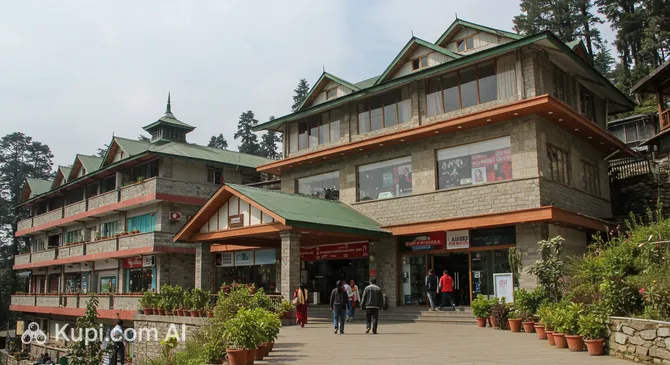
While Darjeeling is not a city of giant modern malls, there are a few shopping complexes offering a more organized shopping experience. One such place is the Rink Mall, located near The Mall Road. Here you can find clothing, electronics, and souvenir stores, as well as a food court. This is a convenient spot for those who prefer shopping in a more familiar mall environment.
Rink Mall. Illustration.
Source: Kupi.com AI
Traveler photos:
For a more authentic experience and the chance to bargain, visit the local markets. Chowk Bazaar (also known as the Lower Bazaar) is a bustling market where locals buy fresh produce, spices, clothing, and household items. Prices here are lower than in the tourist shops. Also interesting is the market at the Tibetan Refugee Self Help Centre, which sells high-quality Tibetan carpets, woodwork, thangkas (Buddhist paintings), and handmade woolen items. By buying here, you also support the Tibetan community.
A must-bring from Darjeeling is the famous Darjeeling tea – the "Champagne of Teas." It can be purchased in beautiful packaging, both loose-leaf and in bags. Tibetan souvenirs are also popular: prayer flags, Buddha figurines, singing bowls, thangkas, and jewelry made of silver and semi-precious stones. Don't forget about warm woolen products – shawls, sweaters, hats, and gloves, which are especially useful in Darjeeling's cool climate. You can also find interesting bamboo and wood crafts by local artisans.
Most shops in Darjeeling are open from approximately 10:00 AM to 7:00 PM or 8:00 PM; some may close earlier, especially in the low season. Markets usually start earlier in the morning. Regarding payment, cash (Indian Rupees) is widely used and necessary for purchases in markets and small stalls. Larger stores, hotels, and some restaurants accept credit and debit cards. Mobile payment systems like UPI are also becoming increasingly popular in India.
A VAT return (Tax Free) system for tourists similar to the European one is currently not widely available in India for most daily consumer goods purchased in regular shops. Therefore, you should not count on a tax refund for purchases in Darjeeling unless they are specialized export-oriented stores offering such services for large purchases (e.g., carpets or high-value jewelry).