Support

Rajaji National Park

About

Rajaji National Park is a majestic nature reserve nestled at the foot of the Himalayas near the city of Haridwar in India. Today, it officially holds the status of a Tiger Reserve and covers a vast area of over 820 square kilometers. The park was established in 1983 by merging three separate sanctuaries to preserve the unique ecosystem of the foothills. Its importance for India's nature conservation is immense, as it serves as a true biodiversity hotspot.
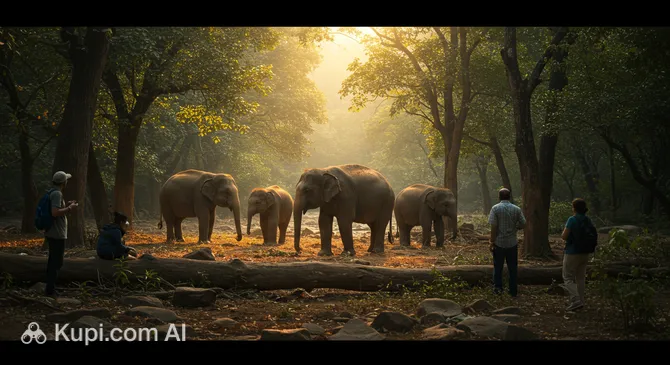
Rajaji National Park. Illustration.
Source: Kupi.com AI

Traveler photos:

The park's landscape is remarkably diverse, featuring dense tropical forests, wide grasslands, scrublands, and river valleys. The reserve's territory ranges in altitude from 300 to 1,000 meters above sea level, creating conditions for a wide variety of flora to thrive. This place is not just a beautiful natural area, but a vital ecological corridor that facilitates the migration of wildlife.

The park's greatest treasure is its rich fauna. Rajaji National Park is home to a large population of Asian elephants, numbering around 600 individuals. It is also inhabited by leopards, sloth bears, various species of deer, and, of course, Bengal tigers. Furthermore, over 300 species of birds have been recorded in the park, making it a paradise for ornithologists and anyone who appreciates the wild.

Contacts

To plan your visit to Rajaji National Park, check current regulations, and book a safari, it is recommended to use official sources. Specific contact details, such as phone numbers or a central website, may change, so it is best to consult verified authorities for the most accurate information.

A reliable way to get details about park hours, ticket prices, and entry conditions is to contact tourist information centers in Haridwar. Additionally, official information should be sought through the Uttarakhand Tourism Development Board, as they are responsible for the region's tourism infrastructure.

How to contactContact
AddressCheela Dam - Rishikesh Rd, Cheela Colony, Uttarakhand 249306, India
Websitewww.rajajinationalpark.co.in

What to Do

The main adventure for visitors to Rajaji National Park is the jeep safari, which offers a unique opportunity to observe wildlife in its natural state. While driving along the park's scenic routes, you may encounter herds of Asian elephants, graceful spotted deer (chital), and the largest of Indian deer—the sambar. While a tiger sighting is considered a stroke of great luck, there are high chances of seeing leopards, wild boars, and other jungle inhabitants.

Beyond the thrilling safari, the park offers other ways to enjoy its beauty. It is a true paradise for bird lovers, with over 300 species of birds living here. Birdwatching is a popular activity, allowing you to see rare and colorful species in their native habitat. Visitors can also explore the park's rich flora, which includes hundreds of plant species, including various orchids and ferns.

Rajaji National Park holds cultural as well as natural significance. Ancient temples are located within its territory, attracting pilgrims and adding a spiritual dimension to the trip. Visiting sites like the temple in the Chilla range allows you to touch the history and traditions of the region, combining wildlife exploration with cultural enrichment.

Getting There

Rajaji National Park is located in the state of Uttarakhand, and the main starting point for visiting is the sacred city of Haridwar. Reaching Haridwar is quite simple, as it has excellent rail and bus connections with major cities in India, including Delhi. This makes it a convenient transport hub for travelers heading to the Himalayan foothills.

From Haridwar, the park entrance—for example, the Chilla range—can be easily reached by taxi or rental car. The trip takes very little time, as the park is situated just east of the city. Buses also run from Haridwar to Chilla, departing from the GMOU Bus Stand. This is the most convenient way to plan your visit according to your own schedule.

It is important to remember that a special permit is required to enter Rajaji National Park. Additionally, it is highly recommended to hire a local guide. An experienced tracker will not only help you navigate the vast territory of the reserve but also significantly increase your chances of spotting wildlife, such as elephants, deer, and, with some luck, even a tiger. Guides can be found at the park entrance or arranged in advance through travel agencies in Haridwar.

Nearest city: Haridwar

History & Facts

The history of Rajaji National Park began in 1983, when three separate sanctuaries—Rajaji, Motichur, and Chilla—were merged into a single protected area. The park was named in honor of Chakravarti Rajagopalachari, a prominent leader of India's independence movement and its last Governor-General, affectionately known as Rajaji. This fact underscores the park's deep connection to the country's history.

A major milestone in the park's development occurred in 2015 when it was granted Tiger Reserve status. This decision significantly strengthened its role in conserving the Bengal tiger population and other rare animal species. The upgrade in status confirmed the park's exceptional importance for protecting the biodiversity of the entire region and solidified its position as one of the key wildlife conservation centers in India.

An interesting feature of the park is its centuries-old connection with local nomadic communities. The Van Gujjar tribe traditionally brings their buffaloes here to graze during the winter months. While park management today seeks to regulate this practice to preserve the fragile ecosystem, the presence of the nomads adds a unique cultural dimension to the life of this remarkable corner of nature.

Time Needed

When planning a visit to Rajaji National Park, it is important to budget your time correctly. For a basic introduction to the park and a jeep safari, which lasts about 2–3 hours, it is recommended to set aside at least half a day or one full day. This will be enough to get a general impression of the reserve's scale, see its diverse landscapes, and perhaps encounter some of its inhabitants.

For a deeper and more leisurely exploration of the park, it is better to plan for 2–3 days. Given the reserve's vast territory, which exceeds 820 square kilometers, spending several days allows you to visit different zones, such as Chilla or Motichur, significantly increasing your chances of wildlife sightings. Such a paced visit will especially appeal to nature lovers, photographers, and birdwatchers, as they will have more time to immerse themselves in the unique ecosystem of the Himalayan foothills.

Working Hours

When planning a visit to Rajaji National Park, it is important to consider its seasonal schedule. The park is open to tourists from November 15 to June 15. During the rest of the year, specifically during the monsoon season, it closes to preserve the unique ecosystem and ensure visitor safety. The entry fee is 600 rupees per person, with additional charges for vehicle or jeep entry.

Jeep safaris are conducted twice a day: in the morning and in the evening. The exact schedule may vary depending on the season, so it is recommended to check in advance. Since the number of jeeps is limited and demand is high, it is strongly recommended to book your safari well ahead of time, especially during peak tourist season. For the most up-to-date information on hours and bookings, it is best to visit the park's official website or tourist centers in Haridwar.

6:00 – 9:00, 3:00 – 18:00

Nearby

A visit to Rajaji National Park is an unforgettable adventure on its own, but exploring its surroundings can make your journey even richer and more multifaceted. The sacred city of Haridwar, at whose doorstep the reserve lies, and its environs offer a unique blend of spiritual, cultural, and natural treasures that are definitely worth your attention.

Exploring nearby attractions will allow you to dive deeper into the atmosphere of this amazing part of India. Just a few kilometers from the park, you will find ancient temples, sacred ghats on the banks of the Ganges, and other iconic sites that harmoniously complement the wildlife experience.

NameDistance
Shantikunj, Gayatri Parivar4.6 km
Bharat Mata Temple5.1 km
Mansa Devi Temple, Haridwar6.5 km
Har Ki Pauri6.8 km
Shri Ganesh Ghat8 km
Ranipur Gate, Rajaji Tiger Reserve8.4 km
Chandi Devi Temple9.5 km

Have you reached the end of the page?

So the route has been studied inside and out