Support

Amar Mahal Museum and Library

About

The Amar Mahal Museum and Library is a magnificent building that once served as a palace and has now been converted into a fascinating museum. Located in Jammu, in northern India, this architectural masterpiece was originally the summer residence of the last Maharajas of the princely state of Jammu and Kashmir. Its red brick walls and distinctive European-style towers stand out against the surrounding landscape, drawing the attention of history and architecture enthusiasts.
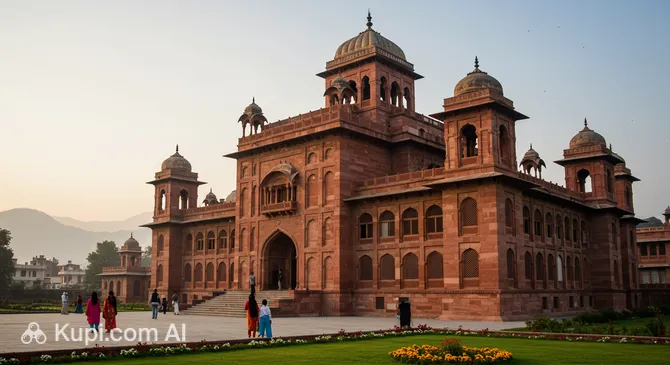
Amar Mahal Museum and Library. Illustration.
Source: Kupi.com AI

Traveller photos:

The palace was built in the 19th century for Raja Amar Singh, a prominent figure of his time. After the passing of Maharani Tara Devi, the wife of the last ruling Maharaja Hari Singh, in 1967, their son Dr. Karan Singh and his wife Yasho Rajya Lakshmi decided to turn the family home into a cultural center. Thus, the Amar Mahal palace found a new life as a museum intended to preserve and present rare books and valuable works of art to the public.

Today, Amar Mahal is one of the key attractions in Jammu. Inside its halls, visitors can see an impressive collection of royal artifacts, the highlight of which is a magnificent golden throne weighing approximately 120 kg. The exhibition also includes a collection of paintings, featuring works by renowned artists, and a library with thousands of rare volumes. The museum is managed by the Hari-Tara Charitable Trust, established by the family of the last Maharaja, ensuring the preservation of this unique heritage for future generations.

Contacts

For up-to-date contact information for the Amar Mahal Museum and Library, including phone numbers, email addresses, and opening hours, we recommend visiting the attraction's official website, if available. You can also find useful information at local tourist information centers in Jammu or on India's tourism portals.

How to contactContact
AddressPVXC+3WM, Palace Rd, Karan Nagar, Jammu, 180001

What to Do

Visiting the Amar Mahal Museum and Library in Jammu is a unique opportunity to touch the history of the region. The main exhibition is dedicated to the last Maharaja of Jammu and Kashmir, Hari Singh. Here, you can see an impressive collection of royal artifacts, awards, personal belongings, and photographs belonging to the Maharaja and his family, providing a deeper understanding of his life and era.

Of particular note is the outstanding collection of Dogra-Pahari school paintings. These works of art, created in the second half of the 18th century in Jammu and Himachal Pradesh, are executed in the exquisite Kangra school style. As Karan Singh, the son of the last Maharaja, noted, the goal of the exhibition is to "transport the visitor into a fascinating miniature world with its own aura and ethos," and indeed, these paintings fascinate with their detail and atmosphere.

In addition to viewing the permanent exhibitions, the Amar Mahal Museum and Library offers its guests various cultural activities. The trust that manages the museum regularly organizes guided tours to help visitors better understand the exhibits, as well as book readings, lectures, film screenings, and engaging workshops. This makes the visit not just educational but interactive.

Furthermore, the museum actively functions as a living cultural center for Jammu. It regularly hosts scholarly exchanges, seminars, and temporary exhibitions, attracting both specialists and the general public interested in the history and art of India.

Getting There

The Amar Mahal Museum and Library is located in the city of Jammu and can be reached in several ways. As one of the city's prominent attractions, transport links to it are usually well-established, making it easily accessible for visitors.

One of the most common options is using public transport. In Jammu, as in many Indian cities, local buses likely operate in the area. Some routes may pass directly by the museum or have stops within walking distance. It is recommended to check the current route numbers and schedules locally, for example, at your hotel or with residents, to plan your trip.

A more comfortable and faster way to reach the Amar Mahal Museum and Library is by taxi or auto-rickshaw—a popular and widespread mode of transport in India. A taxi ride from the center of Jammu or from your hotel will likely not take long. It is best to agree on the fare for a taxi or auto-rickshaw with the driver in advance or ensure that a meter is used. In some cases, ride-hailing mobile apps may be available.

If you prefer walking and are located relatively close, for example, in the central part of Jammu or other key city points, you might consider walking to the museum. This will allow you to get to know the city better. Before setting off, be sure to check the exact location of the Amar Mahal Museum and Library on a map to plan the most convenient and safe route.

Nearest city: Jammu

History & Facts

The Amar Mahal Museum and Library in Jammu, India, is more than just an architectural structure; it is a living page of the region's history. Designed by a French architect in 1862, the palace was finally completed in the 1890s. It initially served as the residence for the royal family of Jammu and Kashmir and was named after Raja Amar Singh. Its majestic appearance and unique design still capture the attention of visitors, serving as a reminder of past splendor.

The history of the palace is closely linked to Maharaja Hari Singh, the last ruling monarch of the princely state. He was known for his progressive views and reforms while remaining committed to monarchical traditions. During the complex period of the Partition of British India, Maharaja Hari Singh faced a difficult choice, eventually deciding to accede the region to India. This historical milestone left a deep mark on the fate of Amar Mahal.

After the death of the Maharaja's wife, Maharani Tara Devi, in 1967, their son Karan Singh made a noble decision. He renounced the privileges paid to him by the Indian government as a former ruler and directed those funds toward establishing a museum in the palace in memory of his parents. Thus began a new chapter in the history of Amar Mahal, transforming it from a royal residence into a cultural center.

The grand opening of the museum took place on April 13, 1975, with the participation of Indian Prime Minister Indira Gandhi. Since then, the Amar Mahal Museum and Library has functioned as an important cultural and educational institution, carefully preserving and promoting the art and history of the Jammu and Kashmir region. The museum's exhibits tell the story of this land's rich heritage, attracting both locals and tourists from around the world.

Time Needed

When planning a visit to the Amar Mahal Museum and Library in Jammu, India, you should aim for 2-3 hours. This time is generally sufficient to leisurely explore the museum's main exhibits dedicated to the region's history and culture, as well as to admire the unique architecture of the Amar Mahal palace itself.

If you are particularly interested in Indian art, history, or the rare editions kept in the library, your immersion in the museum's atmosphere could take longer—perhaps up to half a day. A detailed study of the art gallery, which features works by Indian artists, or exploring the collection of antique books will require extra attention and time. Some visitors also take time for quiet contemplation of the architectural details and the grounds surrounding the palace.

On the other hand, if your time is limited, 1.5-2 hours might be enough for a general overview of the palace, its most significant exhibits, and its exterior. In any case, the Amar Mahal Museum and Library offers a rich cultural experience, the duration of which can easily be adapted to your interests and travel schedule in India.

Working Hours

Precise information regarding the opening hours of the Amar Mahal Museum and Library in Jammu is unfortunately currently unavailable. To plan your visit, it is recommended to check the attraction's official website or contact local tourist information centers for the most up-to-date information on the schedule, as well as any requirements for pre-booking tickets or tours.

It is also worth confirming whether the museum is open year-round or if its operation is seasonal. Such information is usually published on official resources or can be provided upon request by the tourism services in Jammu.

DayOpening hours
MondayClosed
Tuesday10:00 – 13:00, 2:00 – 18:00
Wednesday10:00 – 13:00, 2:00 – 18:00
Thursday10:00 – 13:00, 2:00 – 18:00
Friday10:00 – 13:00, 2:00 – 18:00
Saturday10:00 – 13:00, 2:00 – 18:00
Sunday10:00 – 13:00, 2:00 – 18:00

Nearby

A visit to the Amar Mahal Museum and Library in Jammu will undoubtedly be a highlight of your trip to India. However, to make your journey even more fulfilling and memorable, it is worth paying attention to the attractions located nearby. Exploring the surroundings will allow you to dive deeper into the city's atmosphere, discover new interesting places, and gain a more complete understanding of its culture and history.

Near the Amar Mahal Museum and Library, there are several notable sites that may interest you. Below is a list of some of them, including distances, to help you plan your itinerary.

NameDistance
Heritage Homestay0.8 km
Mubarak Mandi Palace1 km
Gown, Saree, Suit and Bridal Lehenga Shop1.5 km
Ranbireshwar Temple1.6 km
Jammu Resort Hotel2.2 km
Bagh-e-Bahu Aquarium2.4 km
Bahu Fort2.4 km

Reached the bottom of the page?

Looks like you know this route inside out