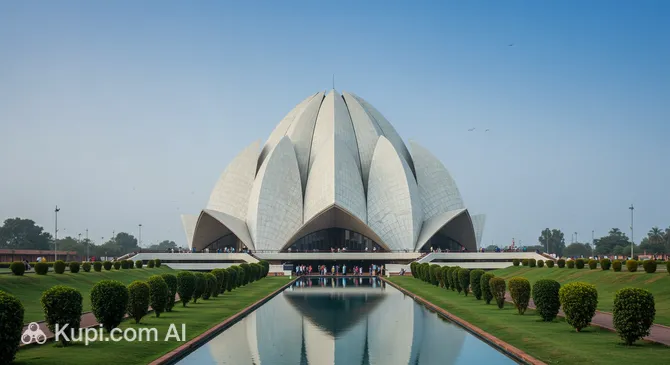
The Lotus Temple is one of the most recognizable and impressive architectural structures not only in Kalkaji but in all of India. Located in the bustling capital, this Baháʼí House of Worship serves as a symbol of unity, purity, and peace, attracting visitors from all over the world. Its unique shape, resembling a giant, half-open lotus flower, makes it a true masterpiece of modern architecture and one of the world's most visited attractions.
Traveller photos:
Designed in the style of structural expressionism, the temple building consists of 27 "petals" clad in snow-white Greek marble—the same used in the construction of the famous Parthenon in Athens. These petals are grouped in threes, forming nine sides of the temple. The entire structure is surrounded by nine pools of water, creating the illusion that the giant flower is resting on the water's surface. There are absolutely no straight lines in the temple's architecture, giving it a special elegance and harmony.
The interior of the Lotus Temple is striking in its simplicity and tranquility. In accordance with Baháʼí tenets, there are no altars, icons, or sculptures, as the temple is open to followers of all religions for quiet prayer and meditation. The central hall, standing over 30 meters tall, can accommodate up to 1,300 people. Nine entrances lead into this vast space filled with natural light filtering through openings in the dome structure. This is a place where architecture and spirituality merge, offering visitors a unique experience of peace and contemplation.