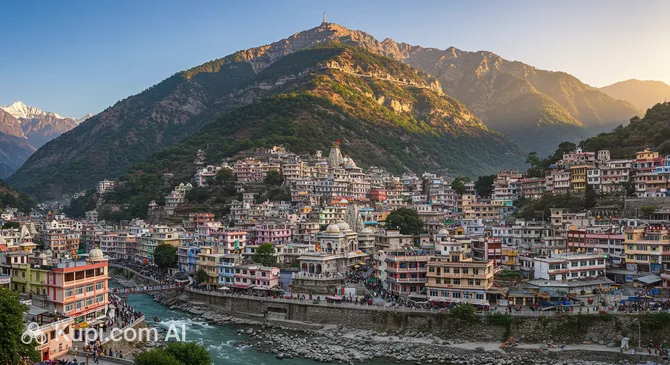
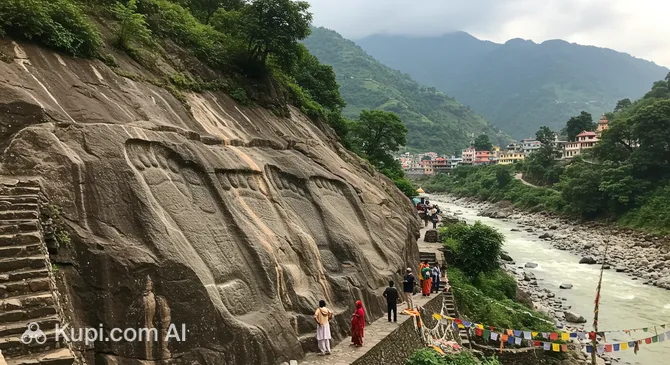
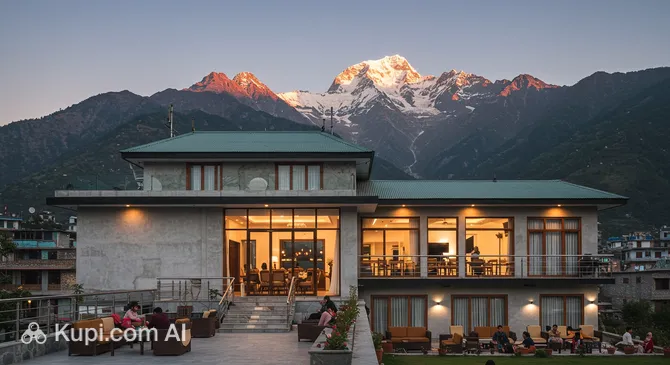
Katra is a small but highly significant town in India, nestled at the foot of the Trikuta Mountains in the state of Jammu and Kashmir. With a population of about 10,669 people, this town is primarily known as the starting point for one of the most revered pilgrimages in Hinduism. The climate here is typical of foothill regions: summers can be quite hot, while winters are cool, which is important to consider when planning a trip, especially for the trek to the shrine itself.
Katra. Illustration.
Source: Kupi.com AI
The main reason millions of pilgrims and tourists are drawn here every year is the sacred cave and temple of Vaishno Devi, dedicated to the Mother Goddess. Katra serves as the base camp for the multi-kilometer trek to the temple, which is a significant part of the spiritual experience in itself, passing through picturesque mountain trails. The town's atmosphere is permeated with devotion and the anticipation of a miracle.
In addition to its main spiritual mission, Katra offers visitors the opportunity to enjoy the beauty of the Himalayan foothills and get acquainted with the unique local culture centered around the needs of pilgrims. Here you will find many hotels, restaurants, and shops offering everything necessary for the journey as well as memorable souvenirs. If you are looking for a place where spirituality is deeply intertwined with natural beauty and a special atmosphere, Katra will undoubtedly leave a lasting impression.
You can find more interesting facts on the history of Katra page.
Weather Overview
In Katra, you can expect weather with clearly defined seasons. Anticipate hot summers, especially from May to June, when average temperatures rise to 24-27°C, and maximums can reach 33.2°C (in June). Summer is also characterized by monsoon rains, which peak in July (about 12 mm of precipitation and up to 27 rainy days) and August. Winters in Katra are cool and predominantly dry. For instance, in January, the average temperature is about 8.8°C, dropping to 2.9°C at night, while precipitation is minimal, especially from October to December (around 1 mm). Spring and autumn are pleasant transitional periods with moderate temperatures. For a more detailed look at the monthly weather conditions, visit the Katra Climate page.
Average monthly temperature
Average monthly precipitation
Interesting Facts
In addition to its main role as the gateway to the Vaishno Devi shrine, Katra hides several interesting features that not all pilgrims and travelers are aware of.
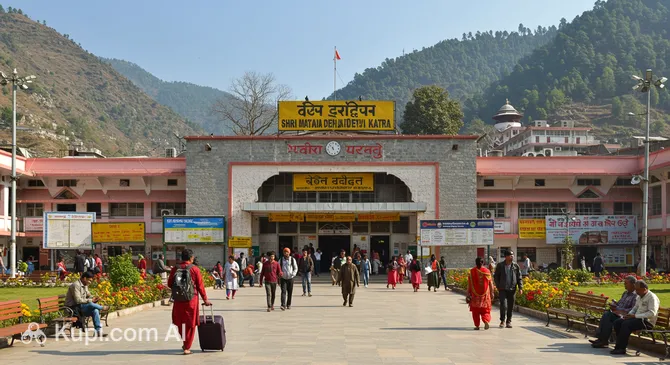
Shri Mata Vaishno Devi Katra Railway Station. Illustration.
Source: Kupi.com AI
Traveler photos:
A City of Vegetarians: Due to its special religious status, Katra is a predominantly vegetarian town. Finding meat dishes in local restaurants and cafes is virtually impossible, which emphasizes the atmosphere of sanctity and purity that pilgrims and locals strive to maintain.
The Sacred Ardhkuwari Cave: Halfway to the main shrine is the iconic Ardhkuwari cave, next to which the Ardhkuwari Viewpoint is now located. According to legend, it was in this narrow cave that Goddess Vaishno Devi meditated for nine months before revealing herself to the world. Passing through this cave is considered an important stage of the pilgrimage.
Modern "Gateways" to the Shrine: The Shri Mata Vaishno Devi Katra Railway Station is not just a transport hub, but one of the most modern and well-equipped stations in foothill India, opened in 2014. Its appearance significantly simplified logistics for the millions of pilgrims arriving in Katra.
Aerial Pilgrimage: For those who, due to health reasons or lack of time, cannot make the long trek to the Vaishno Devi Temple, a regular helicopter service is organized from Katra to the Sanjichhat helipad (near the shrine). This makes the holy site accessible to a wider circle of believers.
How to Get There
As an important pilgrimage center, Katra enjoys well-developed transport accessibility. Most travelers arrive here via the neighboring city of Jammu, which serves as the region's main transit hub. You can find out more about how to get to Katra by choosing the route that best suits you.
There is no airport in Katra itself, but you can fly into Jammu Airport (IXJ), located about 35 km from Katra. This is the closest and most convenient air hub for tourists. A trip from the airport to the town by taxi or bus takes about 1 hour and 15 minutes. The airport serves many domestic flights and has a moderate passenger flow, making it quite comfortable for arrivals.
Another option, especially for those looking for more international connections, is Sri Guru Ram Dass Jee International Airport (ATQ) in Amritsar. It is located significantly further away, about 143 km from Katra. The travel time by car from there is approximately 4 hours. This is a major transport hub with a large number of flights, which may be convenient if you plan to visit other cities in the region as well.
For your convenience, here is a summary of the main airports:
Railway service is one of the most popular and budget-friendly ways to reach the town. Katra has its own modern railway station—Shri Mata Vaishno Devi Katra (SVDK), opened specifically for the convenience of pilgrims. Direct trains from Delhi, including the high-speed Vande Bharat Express, as well as from other major Indian cities, arrive here. If tickets to Katra itself are unavailable, you can travel to the major junction station of Jammu Tawi in Jammu and cover the remaining 50 km by bus or taxi.
Katra can also be reached by car or bus via national highways. Regular bus services connect the town with Jammu, Delhi, Amritsar, and other settlements in Northern India. The road from Jammu is very scenic but full of hairpin bends, so be prepared for mountain driving conditions.
Main Attractions
As the gateway to one of the most important Hindu shrines, Katra offers pilgrims and tourists a number of iconic sites steeped in spirituality and history. A journey through these attractions is not just sightseeing, but a deep immersion into an atmosphere of faith and devotion.
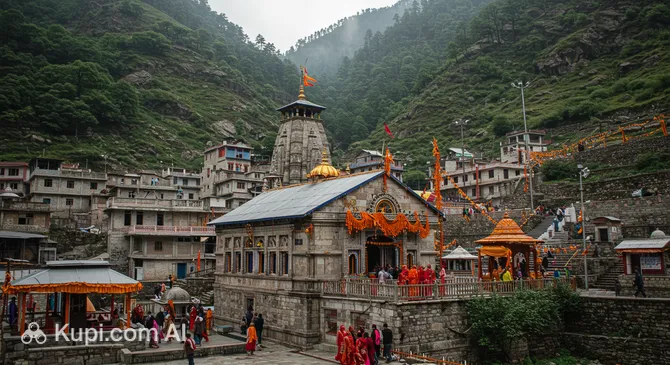
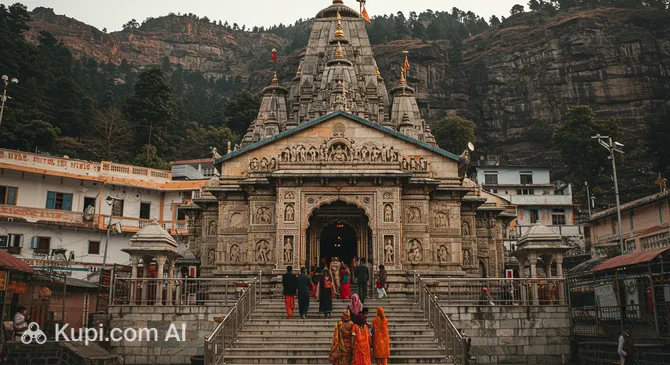
The crown jewel and primary goal of any pilgrimage to Katra is undoubtedly the Vaishno Devi Temple. Located in a sacred cave high in the Trikuta Mountains, this temple is dedicated to the Mother Goddess Vaishno. Millions of believers make the multi-kilometer climb every year to receive her blessing. The path to the temple is a spiritual practice and a test of endurance in itself, and the darshan (glimpse) of the deity is believed to fulfill one's deepest wishes. This is a place of incredible energy and profound faith.
Vaishno Devi Temple. Illustration.
Source: Kupi.com AI
Traveler photos:
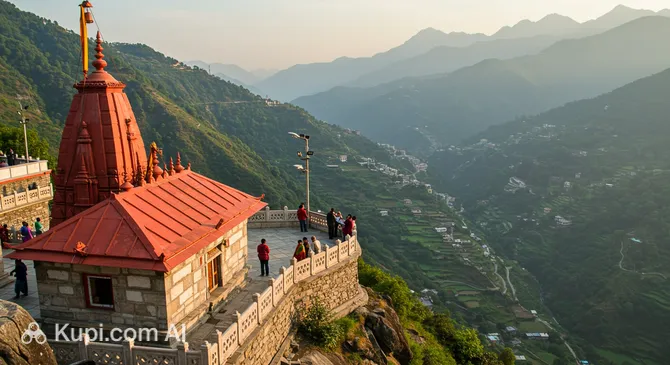
An important stop on the way to the main shrine is the Ardhkuwari Viewpoint, located near the cave of the same name. It is believed that in this narrow cave (Garbh Joon), Goddess Vaishno meditated for nine months while hiding from the demon Bhairav Nath. Passing through the cave is a significant ritual for pilgrims, symbolizing a new birth. The viewpoint offers picturesque vistas of the surrounding mountains, providing an opportunity to rest and enjoy the beauty of nature.
Ardhkuwari Hill Viewpoint. Illustration.
Source: Kupi.com AI
Traveler photos:
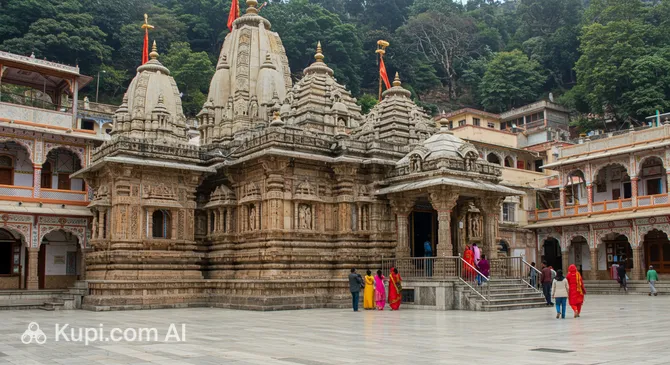
A pilgrimage to Vaishno Devi is considered incomplete without visiting the Bhairon Baba Temple. This temple, dedicated to Bhairav Nath, is located even higher than the main Vaishno Devi shrine. According to legend, after the Goddess beheaded Bhairav, his head fell at this spot, and he repented. The Goddess forgave him and granted a blessing that every pilgrim who visits her shrine must also visit Bhairon's temple for their pilgrimage to be complete. The climb here requires extra effort but is rewarded with panoramic views and a sense of spiritual fulfillment.
Bhairon Baba Temple. Illustration.
Source: Kupi.com AI
Traveler photos:
The starting point for many pilgrims setting out on the trek to the shrine is the Banganga Temple. This site is linked to the legend that Goddess Vaishno, on her way to her cave abode, shot an arrow into the ground, causing a spring to gush forth (Ban – arrow, Ganga – sacred river). The waters of this spring are considered holy, and many pilgrims perform an ablution here before starting their ascent. The temple and its surrounding area create an atmosphere of preparation for an important spiritual journey.
Banganga Temple. Illustration.
Source: Kupi.com AI
Traveler photos:
Local Cuisine
The culinary scene in Katra is inextricably linked to its spiritual purpose as one of the main pilgrimage centers in India. The cuisine here is predominantly purely vegetarian (Sattvic Bhojan), reflecting the traditions and needs of numerous pilgrims striving for purity of mind and body. Simple yet delicious and nutritious food, prepared with heart, awaits you.
Among the dishes you must try in Katra are classic North Indian specialties. Be sure to order Rajma Chawal—a fragrant red kidney bean curry served with rice—or the hearty Chole Bhature—spicy chickpeas with fluffy deep-fried bread. A local highlight is Kalari Kulcha—fried, stretchy Kalari cheese (traditional to the Jammu region), often served inside a kulcha flatbread. Also popular are various types of dal (lentil stews), paneer (Indian cottage cheese) dishes, and freshly baked breads like roti and naan.
For drinks, refreshing lassi is offered everywhere—a yogurt-based drink that can be sweet, salty, or flavored with fruit (like mango lassi). An ever-present companion to any meal or break is aromatic masala chai—black tea with milk and warming spices. It is important to note that due to the town's religious significance, alcoholic beverages are virtually non-existent here.
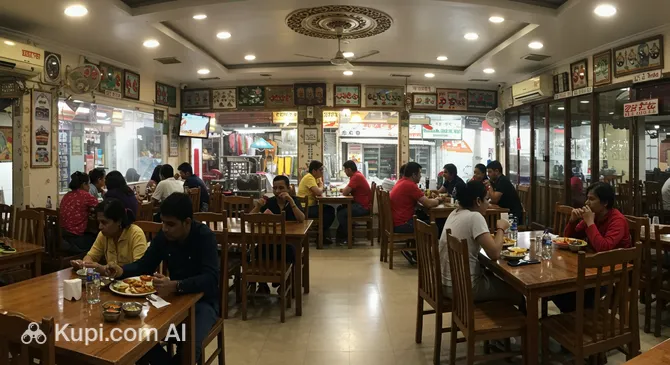
You can eat in Katra at numerous small eateries known as bhojanalayas, which specialize in traditional vegetarian cuisine for pilgrims. Dhabas—simple roadside cafes offering authentic and inexpensive meals—are also popular. Many hotels also have their own restaurants with a good selection of local food. If you are looking for a place with a more varied menu in a comfortable setting, you might consider establishments like Jewel's Restaurant. Street food consists mainly of light snacks like roasted corn or fresh fruit.
Jewel's Restaurant. Illustration.
Source: Kupi.com AI
Traveler photos:
Overall, the gastronomic experience in Katra is more than just satisfying hunger. It is an opportunity to touch a culture where food is seen as a source of energy for both body and spirit, supporting pilgrims on their way to the shrine. Simplicity, purity, and the freshness of ingredients are the main characteristics of the local cuisine.
Travel Tips
Welcome to Katra! To ensure your pilgrimage and stay in this holy town at the foot of the Trikuta Mountains are as comfortable and memorable as possible, we have prepared some practical tips. They will help you navigate better and avoid potential difficulties.
Clothing and Essentials:
The climate in Katra changes depending on the season: summer (May-June) is hot, and winter (December-February) is cool, especially at night. Bring light, breathable clothing for summer and warm layers for winter. Extremely important is comfortable walking shoes, as the main path to the Vaishno Devi shrine is a trek. Don't forget sunscreen, a hat, and sunglasses. For visiting temples and holy sites, choose modest clothing that covers shoulders and knees. A universal power adapter for electronics will also be useful.
Transport in and around Katra:
Katra itself is a small town, and its center is easy to explore on foot. For the pilgrimage to the Vaishno Devi temple, besides the trek, pony services, palanquins (stretchers), and helicopter services to Sanjichhat (near the temple) are available. Auto-rickshaws operate in the town for short trips. Taxis can be hired for trips to/from Jammu or other nearby points. Renting a car is usually not necessary, given the town's nature and the pilgrimage route.
Finances: Currency, Cards, and Tipping:
The local currency is the Indian Rupee (INR). You can exchange currency at banks or authorized exchange points in Katra, but it's better to have some cash on hand, especially for small expenses and on the pilgrimage route. Credit and debit cards are accepted in most hotels and large stores, but small shops and cafes prefer cash. ATMs are available, but queues are possible during peak season. A rough daily budget depends heavily on your preferences, but Katra has many budget options for accommodation and dining. Tipping is not mandatory but appreciated for good service (5-10% in restaurants, small amounts for porters).
Health and Safety:
There are pharmacies in Katra where you can purchase basic medications. It's recommended to have a basic first-aid kit with remedies for stomach upsets, painkillers, and antiseptics. Medical points are available both in the town itself and along the trail to the Vaishno Devi shrine, organized by the Shri Mata Vaishno Devi Shrine Board. For serious cases, it is better to seek medical care at hospitals in India in Jammu. Katra is considered a safe town, especially for pilgrims. Nevertheless, always keep an eye on your belongings, particularly in crowded places. Drink bottled water and avoid raw food from street stalls if you're not sure of its quality.
Communication and Connection:
The main languages of communication are Hindi and Dogri. English is quite common in the tourism sector—in hotels, restaurants, and among those serving pilgrims. Learning a few phrases in Hindi, such as "Namaste" (Hello/Goodbye) and "Dhanyavad" (Thank you), will be helpful. A SIM card from a local operator (e.g., Airtel, Jio) can be purchased by presenting a passport and visa. Wi-Fi is available in many hotels, but mobile internet can be unstable in mountain areas.
Local Etiquette and Traditions:
The residents of Katra and the pilgrims are very religious. Show respect for local customs and traditions. You must remove your shoes when entering temples and holy places. The greeting "Namaste" with palms joined at the chest is always appropriate. Taking photos inside some temples may be prohibited—pay attention to signs. Since Katra is a holy place, a modest style of dress and behavior is expected here.
What to Avoid:
Katra is a completely vegetarian town. Categorically avoid consuming or even carrying meat products and alcohol—this can be seen as a serious offense. Also, try not to litter, especially on the pilgrimage trail, to help maintain the purity and sanctity of the place.
An Additional Important Tip:
Before starting the climb to the Vaishno Devi shrine, you must obtain a Yatra Parchi—a free registration slip. This can be issued online on the official website of the Shri Mata Vaishno Devi Shrine Board or at special registration points in Katra (for example, at the bus stop or near the railway station). You will not be allowed on the route without this slip.
We hope these tips make your journey to Katra more meaningful and pleasant. We wish you a blessed pilgrimage and unforgettable impressions of this amazing corner of India!
Entertainment & Nightlife
In the evening, Katra offers a calm and peaceful atmosphere, which perfectly matches its status as an important spiritual center. Here you will not find noisy nightclubs, bars with loud music, or busy nightlife districts in the traditional sense. The town's atmosphere is permeated with spirituality, and the evening hours are more suitable for leisurely walks, dinner with family or fellow travelers, and preparation for the upcoming climb to the shrines.
The main evening activity in Katra is visiting the numerous restaurants and cafes, which primarily offer vegetarian cuisine. The choice of establishments is quite wide: from traditional eateries to places with more familiar international cuisine, albeit adapted to local vegetarian traditions. Prices in most places are very reasonable, ranging from budget to mid-range, making dinner accessible to most visitors. For example, you can dine at Jewel's Restaurant, known for its diverse menu, or stop by Burger King for familiar flavors (in a vegetarian version). Evening activity is usually concentrated along the main road leading to the start of the pilgrimage route, as well as near the bus station and around major hotels.
For those who wish to do some shopping or just browse the stores in the evening, you can visit the AMR Mall, which features various goods from souvenirs to essentials. However, it should be noted that most establishments in Katra, including shops and markets, close relatively early, usually by 9:00-10:00 PM. The street atmosphere is quiet and conducive to resting after a busy day.
AMR Mall. Illustration.
Source: Kupi.com AI
Traveler photos:
Regarding practical matters, auto-rickshaws are the most common way to get around the town in the evening. They can be easily found on the streets, especially in busy areas, or hired at special stands near hotels and the bus station. The fare is usually negotiated in advance. Taxis are less common for short trips within the town but can be ordered through your hotel if you need a transfer. There is no special dress code for evening outings, but given the unique character of the town, it is recommended to stick to a modest style of dress. Katra is generally considered a safe town for evening walks, especially in the central and well-lit areas. Nevertheless, it is always worth taking standard precautions and keeping an eye on your belongings.
Daytime entertainment in Katra, like the evening activities, is mainly related to its primary purpose. This includes visiting the Vaishno Devi Temple and other significant sites such as the Banganga Temple or the Ardhkuwari Viewpoint. There are no specialized theaters, large museums, or amusement parks in the traditional sense, as the town's focus is on the spiritual experience of visitors and enjoying the natural beauty of the foothills.
Parks & Museums
As a primarily sacred pilgrimage center, Katra offers its guests a unique combination of spiritual heritage and natural beauty that replaces traditional city parks and museums. Here, the "green zones" are the majestic slopes of the Trikuta Mountains and the path to the shrines itself, while the "museums" are ancient temples that preserve centuries-old legends and cultural traditions.
The main natural attraction and essentially the vast "park" of Katra is the Trikuta Mountains themselves, through which the multi-kilometer pilgrimage route passes. A journey to the Vaishno Devi Temple is not only a spiritual feat but also an opportunity to enjoy fresh mountain air, picturesque landscapes, and the rich flora of the Himalayan foothills. The trail is equipped with rest areas offering breathtaking views, allowing travelers to connect with nature.
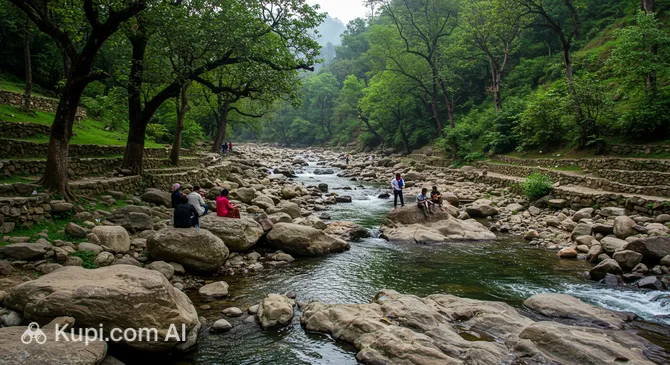
For those looking for a more secluded place to relax in nature near the town, the Jhajar Kotli Picnic Spot is an excellent choice. This is a popular recreation area located on the banks of the Jhajar stream, about 15 km from Katra. People come here to have a picnic and enjoy the cool water and the tranquility of the surrounding nature. It is a great place for a family holiday or just to relax away from the hustle and bustle of the pilgrimage route.
Jhajjar Kotli Picnic Spot. Illustration.
Source: Kupi.com AI
Traveler photos:
There are no museums in Katra in the classic sense of the word, with collections of artifacts behind glass. Instead, the role of guardians of history and culture is fulfilled by the numerous temples and shrines. Each of them is a living page of history, telling of legends, faith, and the traditions of the region. Visiting these places provides much more than just looking at exhibits; it is an immersion into a spiritual atmosphere that has been shaped for centuries.
One such significant site on the pilgrimage route is the Charan Paduka Temple. According to tradition, it was here that Goddess Vaishno Devi left her footprints (Charan Paduka) when she looked back to see the demon Bhairav Nath pursuing her. This small but highly revered shrine attracts pilgrims who wish to touch the sacred footprints and receive a blessing. The temple is located at an altitude of about 1,030 meters and is an important stop on the way to the main shrine.
Charan Paduka Temple. Illustration.
Source: Kupi.com AI
Traveler photos:
Of course, the central "exhibits" of this natural and spiritual museum are the Vaishno Devi Temple itself, as well as the Banganga Temple, where the ascent begins, and the Bhairon Baba Temple, which concludes the pilgrimage. These shrines are not just places of worship, but also striking examples of temple architecture and centers of living traditions and rituals passed down from generation to generation. Their visit allows for a deep feeling of the cultural and spiritual heart of Katra and all of India.
For a more authentic experience, try to set aside time not only for the main shrines but also for lesser-known small temples and ashrams located in the vicinity of Katra and along the pilgrimage trail. Often, it is in such secluded places that one can more deeply feel the atmosphere of devotion and tranquility, as well as talk with local sadhus and pilgrims to learn more about the region's living spiritual culture.
Getting Around
Getting around Katra and its surroundings has its own unique characteristics due to the town's status as an important pilgrimage center. Public transport as understood in large metropolises (metro, trams, trolleybuses) is absent here. However, the movement system is well-adapted to the needs of the millions of pilgrims arriving here annually.
The main mode of transport for short trips within Katra itself—for example, from a hotel to the bus station or to the start of the walking trail (Banganga)—is auto-rickshaws. They are numerous and easily accessible. Taxis are also popular and can be hired for trips within the town as well as for longer routes, such as to Jammu. Sometimes you can find shared jeeps or minivans (similar to route taxis) running on fixed routes, especially between the bus station and key points in the town.
For the pilgrimage to the Vaishno Devi temple itself, in addition to the trek on foot, there are alternative ways of moving that are an integral part of the transport infrastructure:
Ponies and mules: Available for hire on certain sections of the path. This is a traditional way of moving along the mountain trail.
Palanquins (doli/palki): Stretchers on which pilgrims are carried by specialized porters. This option is suitable for those who cannot move independently.
Helicopter service: Helicopters run from Katra (Katra Helipad) to Sanjichhat (near the Bhawan—the main shrine). This is the fastest, but also the most expensive way to reach the top. It is recommended to book helicopter tickets in advance via the official website of the Shri Mata Vaishno Devi Shrine Board.
The payment system is mainly cash-based, especially for auto-rickshaws and private taxis. It is recommended to always have small denominations of Indian Rupees with you. The cost of a trip by auto-rickshaw or taxi is best negotiated in advance, before the trip starts, as meters are not always used. Fares for pony, palanquin, and helicopter services are fixed and set by the Shrine Board. You can pay for them at official ticket counters or during online booking (for helicopters).
Practical tips for tourists:
Helicopter tickets and Yatra (pilgrimage) registration are best handled online well in advance, especially during peak season.
Pony and palanquin hire points are located along the pilgrimage route. Use only official service providers to avoid inflated prices.
Public transport and related services operate from early morning until late evening, adjusting to the flow of pilgrims. However, the number of auto-rickshaws may be limited at night.
Regarding alternative options, apart from taxis, car-sharing or city bike rental systems have not become widespread in Katra due to the terrain and the focus on pilgrimage tourism. The main emphasis is on ensuring the accessibility of the primary route to the Vaishno Devi shrine.
Accommodation
In Katra, as an important pilgrimage center, there is a wide range of accommodation options to satisfy the needs of diverse travelers. Here you will find budget guesthouses and dharmashalas (free or inexpensive pilgrim shelters), as well as comfortable mid-range hotels. In recent years, more modern hotels offering improved amenities have also appeared. Apartment rentals are less common but can be found if you search well in advance.
Most housing options in Katra are concentrated in areas convenient for pilgrims and tourists. Places located near the bus station, the Shri Mata Vaishno Devi Katra railway station, and the start of the walking route to the Vaishno Devi temple (Banganga) are particularly popular. Staying in these areas provides easy access to transport, Yatra registration points, and the town's main infrastructure.
Among the many hotels, you can find options with different levels of service. For a comfortable stay, for example, you might consider options such as Hotel Katra, which offers guests comfortable rooms and good service. It is important to note that many hotels in Katra are geared towards pilgrims and may offer special services, such as organizing transfers to the start of the trail.
Hotel Katra. Illustration.
Source: Kupi.com AI
Traveler photos:
When planning a trip to Katra, especially during the peak pilgrimage season (usually the summer months and major Hindu festival periods like Navratri), it is strongly recommended to book accommodation in advance. During these times, demand for rooms increases significantly, and finding a suitable option on the spot can be difficult. Advance booking will help ensure a comfortable stay and avoid unnecessary hassle.
The price range for accommodation in Katra varies from very budget-friendly to mid-range and moderately high. Luxury hotels are less common here, as the primary focus is on accessibility and comfort for pilgrims. You can book accommodation through popular online booking platforms, as well as directly via hotel websites or by phone. Some guesthouses and dharmashalas may not have an online presence, and it is better to inquire about them on-site or through local tourist offices.
Nearby Cities
For those who want to explore the surrounding area, Katra serves as an excellent starting point for day trips to several interesting nearby locations:
These nearby destinations offer a glimpse into the diverse culture and landscapes of the region. Each of these trips can be a fascinating addition to your pilgrimage or visit to Katra, revealing new facets of this amazing corner of India.
Shopping & Souvenirs
Shopping in Katra is closely tied to its primary purpose—the pilgrimage to the Vaishno Devi shrine. Therefore, you should not expect large European-style shopping malls or global brand boutiques here. Instead, the town offers many shops and stalls catering to the needs of pilgrims and tourists looking for souvenirs and religious items. The main assortment includes religious paraphernalia, warm clothing, dry fruits, and local snacks.
The main shopping area of Katra is the Main Bazaar, which stretches along the main road leading to the start of the walking route in Banganga, as well as in the area of the bus station. This is a busy place where most of the shops are concentrated. Here you will find rows of stalls selling everything from religious images and figurines to shawls, bags, and essentials for the climb.
For more organized shopping, you can visit the AMR Mall. This is a relatively modern complex where various shops offering clothing and souvenirs are gathered under one roof, and there is also a food court. It is a good place if you prefer to shop in a quieter environment than the bustling bazaar.
AMR Mall. Illustration.
Source: Kupi.com AI
Traveler photos:
In addition to the main bazaar, there are many small markets and individual stalls in Katra, especially near the temples and along the pilgrimage trail. Here you can buy fresh fruit, local sweets, drinks, and small souvenirs. These markets are more focused on everyday needs and quick purchases.
As souvenirs from Katra, tourists most often bring back:
Religious paraphernalia: images and figurines of Goddess Vaishno Devi, Shiva, and other deities, prayer beads (malas), and sacred texts.
Prasad: blessed sweets and dry fruits offered at the temple.
Shawls and woolen products: Kashmir is famous for its high-quality shawls, and you can find a good selection in Katra, though you should be mindful of the quality. Woolen socks, hats, and sweaters, useful for the cool mountain climate, are also popular.
Dry fruits and nuts: especially walnuts, almonds, and apricots, which are characteristic of this region.
Local handicrafts: sometimes interesting wooden crafts or embroidered items can be found.
Shops in Katra usually open around 10:00 AM and work until 8:00-9:00 PM, while some stalls in the main bazaar may stay open longer, especially during the peak pilgrimage season. As for payment, cash (Indian Rupees) is the preferred method, especially in small shops and markets. Large stores and hotels may accept credit and debit cards, but it is always better to have a sufficient amount of cash with you.
The possibility of Tax Free shopping for foreign tourists in Katra is unlikely or not widespread, as the bulk of visitors are domestic pilgrims, and the town is not a major center for international shopping. It is recommended to clarify this issue in specific large stores if you are making a significant purchase, but do not count on it too much.