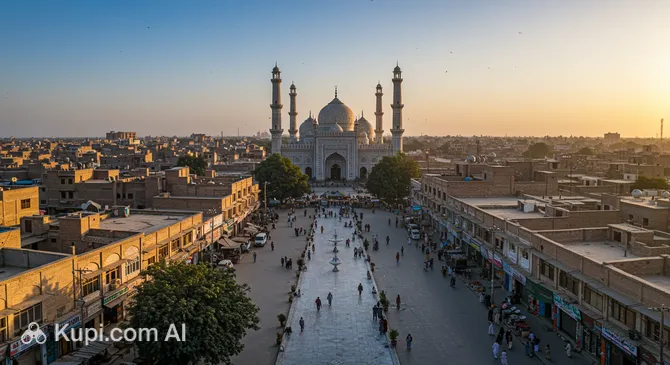
Gujrat is a dynamic industrial and administrative hub located in the heart of the Punjab province in Pakistan. While the city does not aim to be a tourist mecca, its unique atmosphere of business activity and everyday Punjabi life attracts those who want to see the real, unpolished Pakistan. With a population of around 390,000, the city serves as an important link between Lahore and Islamabad.
Gujrat. Illustration.
Source: Kupi.com AI
Geographically, the city stretches across the fertile plains between the Jhelum and Chenab rivers. Gujrat's history as a significant settlement began to develop actively in the 19th century when British authorities turned it into an important railway outpost. Today, it is the region's "ceramics capital," home to hundreds of factories producing tiles and textiles, giving the city an industrial yet lively and bustling character.
For the traveler, the city is primarily interesting for its authentic markets and the opportunity to peek behind the scenes of Pakistani industry. There are no majestic UNESCO monuments here, but there is the spirit of hardworking Punjab, expressed in the chaotic movement of rickshaws, the aromas of street food, and the hospitality of the locals. A visit here is a chance to get to know the utilitarian and practical side of the country, hidden from the eyes of typical tourists.
Weather Overview
The climate in Gujrat is classified as subtropical continental, which means pronounced seasonal contrasts. Summer in the city arrives early and is characterized by extreme heat: in May and June, the thermometer often reaches +45°C. During this period, the air becomes dry and dusty, which travelers with sensitivity to air quality should take into account.
The winter months, conversely, bring long-awaited coolness and mild sun. From December to February, the average temperature ranges from +7°C at night to +20°C during the day, creating ideal conditions for walking. However, it is during this time that the city can be shrouded in thick smog, typical of the industrial areas of Punjab. Before your trip, it is recommended to check the current weather in Gujrat to choose your wardrobe correctly.
An important feature of the region is the monsoon season, which falls in July and August. At this time, the city is hit by heavy downpours (up to 220 mm of precipitation per month), which bring relief from the heat but can cause short-term flooding on the roads. If you are planning a visit, the best times are October, November, or early spring, when the air temperature is most comfortable for a traveler.
Average monthly temperature
Average monthly precipitation
Interesting Facts
Gujrat is Pakistan's national leader in the production of ceramic tiles and sanitary ware, actively exporting these products to countries in the Middle East and Asia.
The city is located on the historically significant Jhelum River, which for centuries served as the main artery for trade and land irrigation in the Punjab region.
The textile industry is well-developed in the city, with local cotton processing factories making a significant contribution to the country's economy.
Despite having its own airport (IATA: GRT), it is used almost exclusively for freight traffic and private charter flights.
The city saw its most active development in the 19th century as a strategic British outpost, becoming a key hub thanks to the construction of the railway.
How to Get There
Gujrat enjoys good transport links with the country's largest cities, making it a convenient transit hub. You can get to the city in several ways; however, most travelers prefer road or rail transport due to the frequency of trips and accessibility.
Although the city has its own small airport, GRT, it rarely handles regular passenger flights. The nearest major international air hub is Lahore's Allama Iqbal International Airport. From there, the city center can be reached by taxi or bus in about 3-4 hours. Another popular option is flying to Islamabad, which is 180 kilometers away from the city.
Rail travel is one of the most reliable ways to reach the city. Gujrat Railway Station is located on the main line connecting Lahore and Rawalpindi. Trains run several times a day, and the journey from Lahore takes about 2-3 hours. It is worth noting that tickets for comfortable carriages should be purchased in advance, as this route is in high demand.
Station
Passenger traffic
Distance
Gujrat railway station
5
4 km
Gujranwala railway station
6
42 km
Sialkot Junction railway station
3
42 km
Jammu Tawi railway station
11
75 km
Lahore Junction Railway Station
12
113 km
Amritsar railway station
10
127 km
For those who prefer buses, modern express coaches and private minibuses ("hi-aces") run regularly from Lahore and Islamabad. Traveling via the M-2 motorway is the most comfortable and fastest option. Within the region, transport via rickshaws and taxis from neighboring cities like Sialkot or Jhelum is also well-developed.
Main Attractions
Although Gujrat is not a classic tourist center, it offers several interesting spots for those seeking an authentic cultural experience. One of the few surviving historical landmarks is the Sheeshianwala Gate (Sheeshianwala Darwaza)—the remains of ancient fortifications that once protected the city. They serve as a reminder of the region's colonial and pre-colonial past and are a popular spot for history enthusiasts to walk around.
The central point of attraction in the city is the square around the Clock Tower, where major trade routes intersect. This is the heart of the urban bustle, surrounded by noisy bazaars such as Rail Bazar and Kotwali Bazaar. Here, you can not only buy the famous local ceramics but also witness the daily life of the townspeople in all its diversity. Another architectural landmark is the Jamia Masjid, a typical example of Punjabi religious architecture with vibrant decorative elements.
To take a break from the city noise, locals often choose the banks of the Jhelum River. It is an excellent place to watch the sunset or have a small picnic while admiring the flowing water. Although infrastructure here is minimal, it is precisely these places that allow you to feel the true rhythm of life in the Punjab province, away from the industrial quarters.
Local Cuisine
The culinary identity of Gujrat is steeped in rich Punjabi traditions. Local cuisine is famous for its rich, aromatic, and quite hearty dishes. The diet is based on meat curries made from chicken or goat, served with hot naan bread or long-grain basmati rice. Be sure to try saag—a spicy greens dish—and dal—a thick lentil soup, which has its own unique secret recipe in every local establishment.
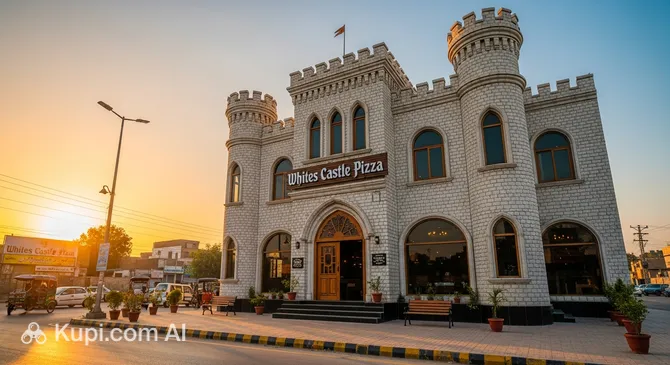
Street food culture thrives in the city. At markets and along the roads, you will find stalls with crispy samosas and the famous bun kebabs (Pakistani burgers). For those who prefer more familiar formats, modern establishments like Whites Castle Pizza operate in the city, offering quality pizza and snacks in a comfortable setting. The city's gastronomic scene is constantly evolving, combining traditional recipes with modern trends.
Whites Castle Pizza. Illustration.
Source: Kupi.com AI
Traveler photos:
Among drinks, lassi remains a favorite—a refreshing yogurt-based drink that can be either sweet or salty. Strong green tea and freshly squeezed sugarcane juice are also consumed everywhere. It is important to remember that alcohol is completely banned in the city, so the focus in restaurants is on non-alcoholic cocktails and fresh fruit juices, especially during mango season.
The best place to experience authentic cuisine is Food Street in the Grand Trunk Road area. Dozens of cafes open here in the evenings, offering dishes freshly prepared over charcoal. Prices in such places are very reasonable, and the atmosphere allows for full immersion in local culture, though one should be prepared for the fact that dishes can be quite spicy for the uninitiated tourist.
Travel Tips
A visit to Gujrat will provide many vivid impressions if you prepare in advance for the specifics of life in the Pakistani province. These practical tips will help make your trip comfortable and safe.
Clothing and Dress Code: Choose modest clothing made of natural fabrics that covers shoulders and knees. Women are recommended to carry a light scarf (dupatta) for visiting mosques or traditional neighborhoods. In summer months, sunglasses and a hat are essential.
Transport: To move around the city, it is best to use the Uber or Careem apps—this avoids the need to haggle with rickshaw drivers. During peak hours (7-10 AM and 5-8 PM), city roads are heavily congested; allow extra time for travel.
Finance: The main currency is the Pakistani Rupee (PKR). In Gujrat, cards are only accepted in large shopping centers and hotels, so always carry a sufficient supply of cash. ATMs are available in the center, but they do not always accept foreign cards.
Health: Drink only bottled water and avoid ice in drinks on the street. It is recommended to have hand sanitizer with you. Before the trip, it is advisable to update vaccinations for hepatitis and typhoid.
Connectivity: You can buy a local SIM card (e.g., Jazz or Telenor) at branded communication stores by presenting your passport. Wi-Fi is available in hotels, but its speed can be unstable.
Local Etiquette: Greet people with your right hand. If you want to photograph locals, especially women, always ask for permission—it is a sign of respect for privacy.
What to Avoid: Do not discuss politics or religious issues with strangers. Also, avoid walking alone in industrial outskirts after dark due to poor lighting.
Dining Tip: If you are not used to spicy food, always specify "no spicy" when ordering at a cafe—though for locals, this may still mean the presence of some spices.
Following these simple rules will allow you to enjoy Punjabi hospitality and bring back only pleasant memories from Gujrat!
Entertainment & Nightlife
Entertainment in Gujrat is conservative in nature and centered around family leisure and gastronomy. There are no traditional nightclubs or bars here, as the country has strict rules regarding alcohol. The city's evening life thrives in "tea houses"—dhabas—where men gather over a cup of strong milk tea to discuss the latest news or play cricket on nearby floodlit grounds.
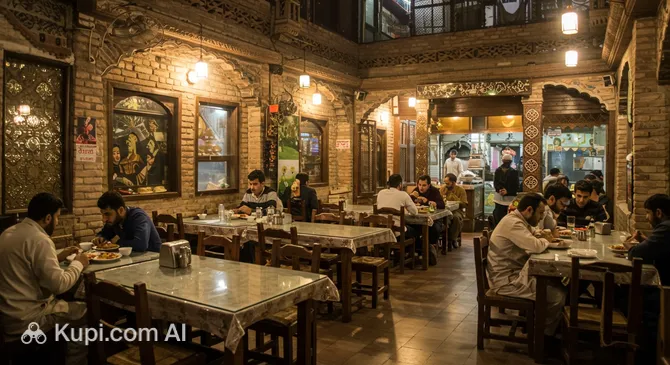
Markets and food courts become the main centers for evening strolls. Popular spots include Papa Pizza Gujrat, where youth and families gather to enjoy a fusion of Western fast food and local flavors. The atmosphere in such establishments is friendly and lively, with peak activity occurring after sunset when the heat subsides and the streets fill with people.
Papa's Pizza Gujrat. Illustration.
Source: Kupi.com AI
Traveler photos:
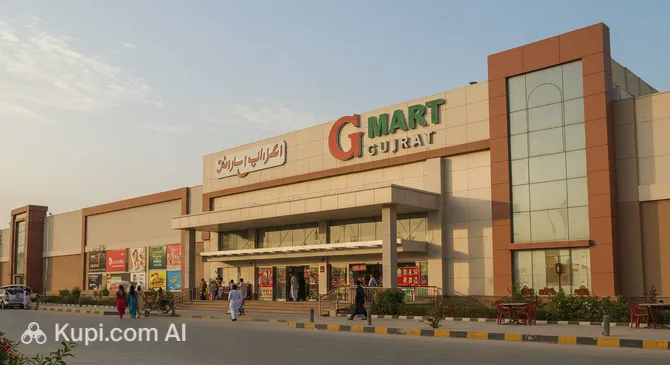
For fans of shopping and quiet pastimes, modern shopping areas like G Mart are available. Here you can find not only clothing stores but also play areas for children, making the complex a great place for daytime and evening leisure. If you're looking for larger-scale entertainment—such as cinemas with global premieres or concert halls—locals usually recommend heading to neighboring Lahore, which is about a three-hour drive away.
Parks & Museums
Gujrat is primarily a city of factories and trade, so there are few classic museums or large landscaped parks. Nevertheless, locals find comfort in small green zones scattered throughout the city. The most famous leisure spot is Company Bagh—a historical square in the city center. Although small in size, it serves as an important "green oasis" where citizens can take a break from the hustle and bustle of industrial quarters.
G Mart. Illustration.
Source: Kupi.com AI
Traveler photos:
Special attention should be given to the walking areas along the banks of the Jhelum River. This is a natural attraction that draws lovers of fresh air in the evening. There is no museum heritage in the classical sense in the city; however, this role is filled by old bazaars and surviving architectural fragments, such as the Sheeshianwala Gate. These sites tell the history of the region more eloquently than any exhibition.
Overall, a shortage of large parks is typical for the densely populated cities of Punjab. Residents compensate for this with trips to the river or by visiting private gardens on the outskirts. Travelers should view the city itself as a kind of "open-air museum," where the main exhibits are traditional crafts, especially the production of unique ceramics, the secrets of which are passed down from generation to generation.
Getting Around
The transport system in Gujrat is typical of large Punjabi cities: it is noisy, fast, and at times chaotic. The main mode of travel around the city is three-wheeled rickshaws, known as qingqi. They run along all major streets and are the cheapest way to get from one point to another (the cost of a ride is usually 10–50 PKR). It is a great way to feel the local rhythm of life, though you should be prepared for noise and the lack of air conditioning.
For travel between districts or to the suburbs, brightly painted buses and "hi-ace" minibuses are used. They do not have strict schedules and depart as they fill up, so tourists are better off confirming the destination with the driver or locals. The city's railway station connects it with key regions of the country, but there is no urban rail transport like a metro or tram system within the city.
As a more comfortable alternative to rickshaws, travelers can use taxis or ride-hailing apps like Uber or Careem. This ensures a fixed price and a higher level of safety, especially in the evening. Bicycle rental is not developed in the city due to high traffic intensity, so walking is best limited to central shopping areas where traffic is slightly less aggressive.
Accommodation
The accommodation market in Gujrat is primarily geared toward business travelers, transit passengers, and specialists working in the industrial sector. There are no luxury five-star hotels in the city, but there is a decent selection of mid-range hotels and budget guest houses. The main concentration of hotels is found along the main Grand Trunk Road and in central districts, providing easy access to transport hubs.
Typical accommodation options include clean and functional 2-3 star hotels. Room prices start at approximately 2,000 Pakistani Rupees per night. Popular choices include places like Hotel Grand Islamabad (located in Gujrat) and similar establishments offering basic amenities: air conditioning, Wi-Fi, and breakfast. For those planning a long-term stay, apartments or furnished rooms in the private sector are often available.
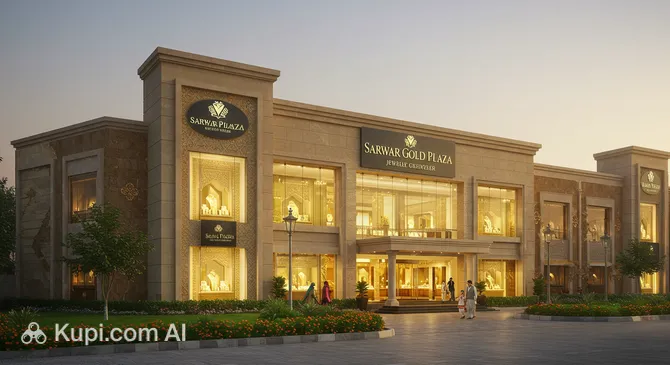
Sarwar Gold Plaza. Illustration.
Source: Kupi.com AI
Traveler photos:
It is recommended to book accommodation in advance, especially if your visit coincides with major industrial exhibitions or public holidays. While hotel rooms are usually available, booking ahead through international or local services ensures the availability of air conditioning, which is critical during the hot summer months. Payment is most often made in cash, although larger hotels are beginning to accept international cards.
Nearby Cities
Gujrat occupies a strategic position in Punjab, making it an excellent starting point for exploring nearby historical and industrial centers. Just thirteen kilometers away is Jalalpur Jattan, a small town known for its textile traditions and authentic rural atmosphere.
For a broader exploration of the region, head to Sialkot, located 41 kilometers away. It is a major industrial hub, world-famous for its production of sporting goods and surgical instruments. Another interesting destination is Kharian, often called "Little Norway" due to its large number of expats, which gives the city a unique modern look.
Traveling around the vicinity allows you to see the diversity of the Pakistani province: from ancient irrigation systems and the banks of the Jhelum River to modern industrial zones. A developed road network and frequent intercity bus services make it easy to plan a day trip to any of these cities and return by evening.
Shopping & Souvenirs
Shopping in Gujrat is primarily a hunt for unique local products. The city is world-renowned for its ceramics and sanitary ware, so you can find stunning handmade tableware and decorative items at very attractive prices. Most commercial activity is concentrated in Kotwali Bazaar and Sialkot Road, where rows of shops offer everything from vibrant Punjabi scarves to spices and household electronics.
For those who prefer a more modern shopping format, there are several shopping centers in the city. G Mart is one of the popular spots where you can buy clothing from famous Pakistani brands and essential goods in a comfortable, air-conditioned environment. Another notable point on the shopping map is Sarwar Gold Plaza, specializing in jewelry and luxury items.
Sarwar Gold Plaza. Illustration.
Source: Kupi.com AI
Traveler photos:
As souvenirs from the city, it is worth bringing back traditional textiles, cotton products, and, of course, small ceramic figurines or tea sets. Shops usually operate from 10 AM to 8–9 PM, and Friday may be a shorter day due to prayers. Moderate bargaining is welcomed almost everywhere in the markets, and payment is primarily made in cash (Pakistani Rupees), as card terminals in small shops are rare.