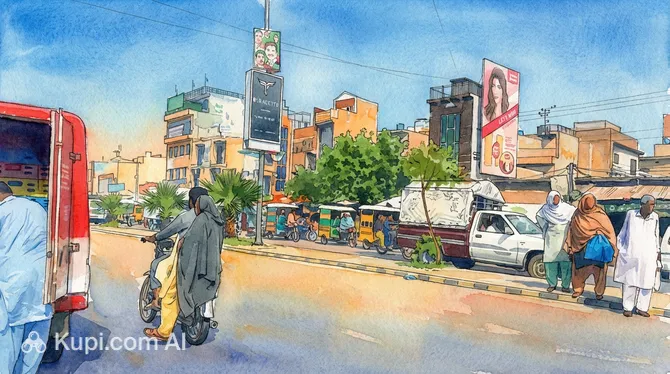
Sarai Alamgir is a vibrant hub in the heart of the Punjab province, located in Pakistan. The city possesses a unique atmosphere where the modern pace of life intertwines with a deep historical heritage. Founded during the Mughal era, it served as an important stopover for caravans and armies, which is reflected in its name: "sarai" means an inn or a resting place.
Geographically, the city occupies a strategic position on the eastern bank of the Jhelum River, situated at an altitude of about 232 meters above sea level. According to recent data, the city's population is approximately 74,000 people. It is a major transit center through which the famous Grand Trunk Road (N5) passes, connecting the country's key regions.
Sarai Alamgir. Illustration.
Source: Kupi.com AI
For travelers, Sarai Alamgir is primarily interesting for its authenticity. You can immerse yourself in exploring the rich history of the city, take a stroll along the riverbanks, or visit the Military College Jhelum, whose campus is a point of local pride. Although the city is not considered a classic tourist resort, its sincere hospitality and role as an important crossroads make it well worth a visit for those who want to see the real, non-touristy Pakistan.
Weather Overview
The climate in Sarai Alamgir is characterized as subtropical monsoon, which promises travelers a vibrant change of seasons. The hottest period occurs in May and June, when daytime temperatures often reach +38°C...+41°C. During this time, the air becomes dry and scorching, typical of the Punjab plains.
In winter, especially in December and January, the city experiences mild and pleasant weather. During the day, the thermometer stays around +17°C...+20°C, but at night it can cool down to +5°C. Precipitation is unevenly distributed: most of the rain falls in July and August during the monsoons. By studying the city's climate in more detail, you can choose the most comfortable time for your trip.
The optimal time for a visit is considered to be from October to March, when the skies are clear and humidity is moderate. If your trip falls during the summer months, be prepared for high humidity in August and dust storms in June. In any case, the proximity of the Jhelum River slightly tempers the extreme heat, creating conditions for evening coolness.
Average monthly temperature
Average monthly precipitation
Interesting Facts
The city was founded by the Mughal Emperor Aurangzeb Alamgir and was originally intended to house his army during campaigns, which gave the settlement its name.
Military College Jhelum, one of the oldest and most respected military educational institutions in the country, is actually located within the territory of Sarai Alamgir, not Jhelum itself.
Over the last fifty years, the city's population has grown more than 28 times—from 2,600 people in 1972 to nearly 74,000 in 2023.
Sarai Alamgir is a key point on the Grand Trunk Road, one of Asia's oldest and longest roads, which for centuries connected the Indian subcontinent with Central Asia.
In 1947, during the partition of British India, the city became an important point for migration flows that defined the modern demographic face of the region.
How to Get There
Sarai Alamgir is one of the most accessible cities in the region thanks to its location on the country's main transport artery. The main flow of travelers arrives via the N5 highway (Grand Trunk Road), which connects the city with major metropolises. You can find more details on how to get to the city by various means of transport while planning your route in advance.
For air travelers, the nearest points of arrival are international airports in major neighboring cities. Sialkot Airport is about 90 km away, and a trip from Islamabad International Airport (about 127 km) will take 2–3 hours by car. These hubs handle both domestic and international flights, providing reliable connections to the rest of the world.
Railway communication is another convenient way to reach the city. Sarai Alamgir Railway Station is located on the main line connecting Karachi and Peshawar. Many regional trains stop here, making the trip from Lahore or Rawalpindi quick and economical. From the station, any point in the city is easily reachable by rickshaw.
Although Sarai Alamgir is mainly known as a transit hub, there are several local landmarks in and around the city that deserve attention. One of the most significant sites is Military College Jhelum. This is a prestigious educational institution with an impressive campus that plays an important role in the regional educational and cultural life. While access to the interior may be limited, the presence of such a center shapes the character of the northern part of the city.
A natural attraction of the city is the Jhelum River. A walk along its banks, especially at sunset, allows you to feel the scale and tranquility of this water artery. The river separates the city from its larger neighbor, and the bridge over the Jhelum is not only an engineering feat but also an excellent vantage point for those who want to see the panorama of both cities at once.
For those who appreciate the everyday life of the East, the local markets along the Grand Trunk Road are a major draw. This is a living open-air museum where trade doesn't stop from morning till night. Here you can find everything from traditional textiles to local spices, and the bustle of the roadside stalls creates that very Punjab atmosphere that is impossible to put into words but definitely worth seeing in person.
Local Cuisine
The culinary traditions of Sarai Alamgir are a true feast of flavor for lovers of spicy and hearty Punjabi cuisine. The basis of the local diet consists of meat dishes, rice, and freshly baked flatbreads. Be sure to try the local biryani—fragrant rice with spices and chicken—as well as tender mutton curry. Traditional naan and chapati flatbreads, cooked in clay ovens (tandoors), are served with almost every meal and perfectly complement the meat dishes.
Street food in the city deserves special attention. Along the main roads and in the markets, you will find many stalls preparing crispy potato samosas, vegetable pakoras, and sweet falooda. As a drink, locals prefer traditional tea with milk and spices or refreshing lassi—a yogurt drink that can be either sweet or salty. Lassi is especially good on hot summer days as it quenches thirst perfectly.
The city's gastronomic scene is mainly represented by affordable establishments known as dhabas. These are roadside cafes where the food is always fresh and portions are generous. An informal atmosphere prevails here, and the aromas of grilled meat and spices attract both truck drivers and traveling tourists. Despite the absence of high-end restaurants, the authenticity and taste of local dishes will leave you with the most pleasant impressions.
Travel Tips
Sarai Alamgir is a friendly and welcoming place, but knowing a few practical nuances will help make your trip as comfortable and safe as possible.
Clothing and Dress Code: Choose modest and covered clothing made from natural fabrics, which aligns with local traditions. Women are recommended to have a light scarf with them. In summer months, a hat and sunglasses are essential.
Transport: Use rickshaws to get around the city—it's the fastest and cheapest way. Be sure to haggle and agree on the fare before getting into the vehicle.
Finances: The main currency is the Pakistani Rupee (PKR). Cards are rarely accepted, so always carry cash. ATMs can be found in the center and at large gas stations along the highway.
Health: Drink only bottled water and avoid ice in drinks at street cafes. Pharmacies can be found in the central markets, but it's better to bring specific medications with you.
Communication: The main languages are Punjabi and Urdu. English is understood in official institutions and among the youth, but learning a few phrases in Urdu for greetings will be a great gesture of courtesy.
Local Etiquette: Always remove your shoes when entering homes or religious sites. Greet people with your right hand and show respect to elders—this is the foundation of local interaction.
What to Avoid: Do not photograph government buildings, military facilities, or locals without their explicit consent. Avoid walking alone in unfamiliar outlying areas after dark.
Connectivity: Buy a local SIM card at one of the operator offices on GT Road—this will ensure you have stable internet, as public Wi-Fi is almost non-existent here.
Your journey to this authentic corner of Pakistan is sure to leave warm memories if you are open to communication and respectful of the local way of life.
Entertainment & Nightlife
Nightlife in Sarai Alamgir is traditional and calm, which is typical for provincial towns in Punjab. You won't find noisy clubs or bars here; however, after sunset, the city transforms in its own way. The main centers of evening activity are the tea houses and cafes located along the GT Road. Here, locals gather over a cup of hot tea to discuss the day's news in a cozy and relaxed atmosphere.
For those seeking cultural leisure during the day, visiting the local markets, which stay open until late evening, can be interesting. The atmosphere of the evening bazaars is full of bright colors and the aromas of street food. If you're looking for more active entertainment, such as modern cinemas or large shopping malls, locals recommend heading to the neighboring city of Jhelum, which is just a few minutes' drive across the river.
Safety in the city is maintained at a good level, especially in the central areas. For traveling in the evening, it is best to use taxi services or motor rickshaws that wait near major transport hubs. Remember that life here winds down fairly early, so plan your walks for the pre-sunset hours when the heat subsides and the streets fill with soft light and bustle.
Parks & Museums
The park infrastructure of Sarai Alamgir is still developing, and the city retains the appearance of a cozy provincial center. The main place for informal outdoor recreation for locals and guests is the shoreline of the Jhelum River. Although there are no classic landscaped parks with rides here, the natural landscapes by the water attract those who want to take a break from the bustle of the Grand Trunk Road and enjoy the silence.
In the city itself, you can find small squares and green zones in modern residential neighborhoods, such as New Metro City. These areas are designed with the residents' need for rest in mind, so neat walking paths and family leisure spots are appearing there. History buffs might consider a walk through the grounds of the Military College, which is an architectural and disciplinary monument in itself, though visits should be coordinated in advance.
As for museums, they are virtually non-existent in Sarai Alamgir, as the city has always been oriented toward trade and transit. However, the architecture of the old buildings and the layout of the ancient "sarai" can serve as a kind of open-air museum. If you are looking for more traditional exhibits, it is recommended to visit neighboring large cities where the region's historical heritage is represented on a larger scale.
Getting Around
The transport system of Sarai Alamgir is simple and efficient, perfectly meeting the needs of a transit city. The main means of transportation within the city and between neighboring settlements are auto- and motor-rickshaws. They are maneuverable, affordable, and allow you to quickly reach any point, whether it's a market or a residential area. You should always agree on the fare with the driver in advance, as meters are practically not used here.
Numerous buses and minibuses ply along the main GT Road. This is the primary way to connect with major cities such as Islamabad, Lahore, and Peshawar. Intercity buses depart regularly, and tickets can be purchased right on the spot. Keep in mind that traffic on the highway can be heavy, especially during peak hours, so plan your trips with extra time.
For longer journeys, the railway is an excellent alternative. Sarai Alamgir station serves trains connecting the north and south of the country. If you prefer maximum comfort, you can use private taxi services or ride-hailing apps, although they are less common in the city itself than in metropolises. Overall, due to the city's compactness, most trips within it do not take more than 15–20 minutes.
Accommodation
Accommodation in Sarai Alamgir is primarily geared toward transit travelers and business people. Cozy guesthouses and small mid-range hotels located along the main road predominate here. This is an ideal option for those making a stop during a long journey across the country. Such establishments usually offer a basic set of services, clean rooms, and traditional Punjabi hospitality.
For those planning to stay in the city longer or traveling in a large group, renting apartments or villas is an interesting option. In new developing areas like New Metro City, you can find modern houses with several bedrooms that offer a level of comfort close to international standards. This is an excellent choice for expats and tourists who value privacy and modern infrastructure.
When choosing accommodation, it is recommended to focus on proximity to the GT Road for ease of movement or on the new residential quarters for a more peaceful stay. Since the city is not a mass tourist destination, it is usually possible to book a spot in a guesthouse shortly before arrival; however, during national holidays, it is better to take care of housing in advance through international booking services or directly.
Nearby Cities
Sarai Alamgir occupies a strategic position, making it an excellent starting point for exploring northern Punjab. Just a few kilometers away, right across the Jhelum River, is the city of Jhelum. It is a major cultural and commercial center where you can visit historic mosques, modern shopping areas, and enjoy walks along the waterfront.
If you decide to drive a bit further southeast, you will reach Kharian—a city known for its close ties to the overseas diaspora, which is reflected in its architecture and services. It is also worth considering a trip to New Mirpur, located in a picturesque area, or visiting Lala Musa. All these cities are easily reachable by car or train within a day.
City
Population
Distance
Jhelum
190 425
5 km
Kharian
85 765
15 km
New Mirpur
124 352
27 km
Lala Musa
67 283
29 km
Mandi Bahauddin
157 352
46 km
Exploring the surroundings will allow you to see the diversity of the Pakistani province: from bustling bazaars to peaceful rural landscapes. A well-developed road network and regular bus services make it easy to plan short trips and return to Sarai Alamgir by evening.
Shopping & Souvenirs
Shopping in Sarai Alamgir is primarily about getting to know the colorful local bazaars. The main commercial activity is concentrated along the Grand Trunk Road, where rows of stalls offer almost everything you need. This is the perfect place to feel the rhythm of Punjabi trade: here you will find the freshest vegetables and fruits, bags of aromatic spices, and a huge selection of everyday textiles.
While the city lacks massive Western-style shopping and entertainment centers, the local markets are famous for their handmade products. Special attention should be paid to traditional clothing and fabrics. Embroidered shawls and high-quality cotton make excellent purchases. Leather goods and local ceramics are also frequently found in the markets and can serve as unique souvenirs from this region.
Shops usually operate from morning until late evening, though many stalls close for a short break during the midday heat. Most outlets accept only cash (Pakistani rupees), so it is better to have an adequate amount with you. For larger-scale shopping in modern boutiques and brand stores, locals usually head to neighboring Jhelum or Gujrat.