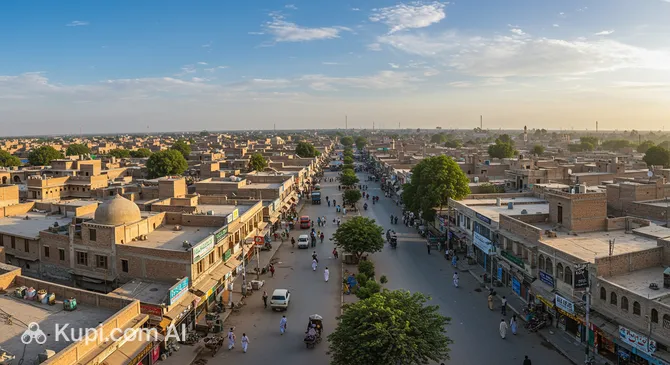
Chakwal is a colorful administrative center in the Punjab province, situated on the scenic Potohar Plateau in Pakistan. The city is famous for its peaceful atmosphere, where traditional rural charm harmoniously blends with the leisurely rhythm of provincial life. As the 48th most populous city in the country, Chakwal is home to nearly 300,000 people, while the entire district of the same name has over a million residents.
The city's geographical location defines its unique landscape, consisting of rolling hills and fertile plains. This region is primarily known for its agriculture, and in recent years, Chakwal has gained fame as the country's "olive capital" thanks to its vast plantations. Active mining also takes place here, making the city an important economic hub for the region.
Chakwal. Illustration.
Source: Kupi.com AI
The rich historical heritage of this land dates back to the ancient Indus Valley civilizations. Chakwal takes pride in its traditions and contribution to Punjabi culture: the city is known for its high literacy rate and a particularly patriotic atmosphere. Travelers are drawn here not only by the bustling Eastern bazaars but also by the proximity to unique shrines, such as the Katas Raj Temples.
Visiting Chakwal is a wonderful opportunity to see authentic Pakistani provincial life, meet hospitable locals, and enjoy the natural beauty of the Potohar Plateau. The city is ideal for those seeking tranquility and wanting to step off the beaten tourist path.
Weather Overview
The climate of Chakwal can be described as subtropical continental. The weather in the city is characterized by pronounced seasonality: summers here are very hot and sweltering, while winters on the Potohar Plateau are mild and predominantly dry.
During the hottest period, which falls in June, daytime temperatures often rise to +37°C...+40°C. In July and August, the monsoon season arrives, bringing heavy rains (up to 160 mm of precipitation per month), which refresh the air but increase humidity. The winter months, from December to February, offer pleasant daytime warmth (around +16°C...+18°C), but at night the temperature can drop to +5°C, so a light jacket will be useful.
Expect dry weather for most of the year with infrequent but intense rainfall in the spring and summer periods. The most comfortable time to visit Chakwal is considered to be the period from October to March, when the weather is mild and clear, making it ideal for walks and excursions.
Average monthly temperature
Average monthly precipitation
Interesting Facts
The city's name has deep roots: it is derived from the word "Chak," which in the local dialect means "village," and "Wal," denoting the residents of that settlement.
Chakwal officially became the center of a separate district only in 1985, having been carved out of the territories of the neighboring Jhelum and Attock districts.
The city is proud that Manmohan Singh, a prominent economist and former Prime Minister of India, was born here in the nearby village of Gah.
Chakwal District is a leader in Pakistan for olive tree cultivation, which has earned the region the unofficial status of the country's "Olive Valley."
The literacy rate in Chakwal is nearly 78%, which is one of the highest in the Punjab province.
How to Get There
Chakwal is conveniently located on the country's transport map, making it easily accessible for travelers. The main link to major metropolises is the modern M-2 motorway. Getting to the city is easiest from Islamabad, which is located about 90 km to the northeast. Regular buses and shuttle vans depart from Rawalpindi stations, and travel time is usually about 2–2.5 hours.
If you plan to arrive in the region by plane, the nearest international hub is Islamabad International Airport (ISB). From there, you can reach Chakwal by taxi or by booking a transfer. Another option is Lahore Airport, though it is located much further away—about 270 km—which will require 4–5 hours of driving.
There is no direct railway connection to the city. Those who prefer to travel by train should head to the nearest railway stations in Rawalpindi or Jhelum. From these stations, the center of Chakwal can be reached by local transport or taxi in 1–2 hours, while enjoying views of the hilly Potohar Plateau.
While Chakwal itself is primarily an administrative center, its surroundings and city streets hide many interesting places. A discovery of the city should begin with its central bazaars, where the air is filled with the scent of spices and stalls are overflowing with vibrant fabrics and local crafts. A historical landmark is the ancient Mughal-era Chakwal Fort, which serves as a reminder of the settlement's strategic importance in past centuries.
One of the popular modern attractions in the city is Miss Ash Pizzeria. This establishment is loved by both locals and visitors for its cozy atmosphere and the chance to try familiar dishes with an original twist. It is a great place to take a break after a long walk around the city.
For those who want to experience the gastronomic traditions of the region, a visit to National Sweets and Bakers is a must. This place is famous for its traditional desserts, which are considered some of the best in the district. Tasting the local sweets means truly experiencing the flavor of Chakwal.
The city's immediate surroundings host true gems of Pakistani history. Tourists often use Chakwal as a base for trips to the ancient Hindu temples of Katas Raj and Malot. These architectural monuments, nestled among the hills of the Potohar Plateau, are striking in their monumentality and are steeped in many legends dating back centuries.
Local Cuisine
Chakwal's local cuisine is a vibrant reflection of Punjabi culinary traditions, where meat, grains, and an abundance of aromatic spices are the main ingredients. The city's gastronomic scene is infused with the aromas of freshly baked naan and chapati, which are served with almost every dish. A characteristic feature of the local table is the wide use of goat and mutton products.
Among the dishes that are definitely worth trying is haleem—a thick stew of meat and lentils—and saag, which is traditionally prepared from spinach with the addition of cornmeal. Rice lovers will enjoy the local biryani. If you crave something more familiar, Miss Ash Pizzeria offers popular pizza options with a local flair.
Those with a sweet tooth will find a true paradise at National Sweets and Bakers. Here you can taste the famous gulab jamun and other traditional Pakistani desserts, which pair perfectly with strong milk tea. The culture of tea consumption is ubiquitous here, and tea houses serve as the main places for socializing.
Street food is another important part of city life. In the markets, you can always find stalls with fresh snacks and sweets. Since alcohol is not common in Chakwal, the primary drinks are refreshing yogurt-based lassi and various types of local tea, which help people cope with the daytime heat more easily.
Travel Tips
Visiting Chakwal will be a pleasant and memorable experience if you take into account a few important features of local life. These practical tips will help you feel confident in the heart of the Punjab province.
Clothing and Essentials: Choose lightweight clothing made from natural materials to better cope with the heat. A conservative style is encouraged in Chakwal: shoulders and knees should be covered, especially when visiting mosques or temples in the area.
Transport: Within the city, it is most convenient to move around by motorickshaw. Agree on the fare before getting into the vehicle. For longer trips, use intercity buses from well-known companies.
Finances: The main currency is the Pakistani Rupee. ATMs are available in the center, but international cards are not accepted everywhere. Always have a sufficient supply of cash for purchases at markets.
Health and Safety: The city is considered peaceful and safe for tourists. However, drink only bottled water and avoid food from stalls that do not inspire confidence.
Communication: The main languages are Urdu and Punjabi. English is understood by bank employees and educated youth. Buy a local SIM card at the airport or in the city center for internet access.
Local Etiquette: Greet locals with the phrase "As-salamu alaykum." Be sure to remove your shoes when entering homes or religious sites.
What to Avoid: Do not photograph women without their explicit permission and avoid filming government or military objects—this could cause problems with the police.
Additional Tip: Try to visit the local markets early in the morning when the heat is not yet intense and the selection of fresh products and crafts is at its peak.
May your journey to Chakwal be filled only with positive emotions and amazing discoveries in this hospitable land!
Entertainment & Nightlife
Entertainment in Chakwal is calm and traditional, reflecting the city's provincial status and the locals' commitment to conservative values. Nightlife in the Western sense—with loud clubs and bars—is absent here. The main centers of evening activity are the city bazaars and cozy tea houses, where life hums until late in the evening.
Locals prefer to spend their free time with family or having leisurely conversations in establishments like Miss Ash Pizzeria. Such places become gathering spots for young people, attracting visitors with a pleasant environment and delicious food. If you are looking for a place for evening tea with sweets, be sure to stop by National Sweets and Bakers, which always has a lively atmosphere.
Safety in the city is high, and walking through the evening streets in central districts does not cause concern. For getting around after dark, it is best to use the services of motorickshaws, which wait near the main markets. Daytime leisure in Chakwal can be varied by visiting local fairs and festivals, which are often held during religious holidays and are accompanied by folk music and dancing.
Parks & Museums
Parks and recreation areas in Chakwal are modest in scale, but they provide residents and visitors with much-needed coolness amidst the hilly terrain of the Potohar Plateau. The primary green zones here are often the natural landscapes—picturesque olive groves and plains surrounding the city. Small squares in the center of Chakwal, located near administrative buildings, are popular spots for leisurely strolls.
Museum culture in the city is not highly developed, and there are no large galleries. However, the role of "living museums" is performed by the historical monuments in the district. Visiting nearby shrines and ancient ruins, such as the Katas Raj Temples, allows you to feel the depth of this region's history better than any exhibition hall. To balance the historical program with modern leisure, tourists often stop by Miss Ash Pizzeria, which serves as a sort of hub for modern urban culture.
For those seeking larger park complexes, an ideal option would be a trip toward neighboring Rawalpindi, where the famous Ayub National Park is located. Nevertheless, Chakwal itself and its National Sweets and Bakers, with their authentic atmosphere, allow you to feel the spirit of the real Punjab, where history and tradition are found at every turn.
Getting Around
Public transport in Chakwal is represented mainly by simple and affordable modes of transport, ideally suited for navigating narrow streets and busy bazaars. There is no metro or trams in the city, but an extensive network of routes allows for easy travel to any part of the central district.
The most popular way to get around for both tourists and locals is by motorickshaw. This is a fast and colorful mode of transport, and the cost of the trip should always be discussed with the driver in advance. Also, small vans and buses ply the main arteries of the city, connecting Chakwal with nearby settlements.
Fares are paid in cash directly to the driver or conductor. There are no transit cards or unified tickets, so always have small change in the local currency with you. Taxis can be called by phone, but familiar international apps (such as Uber or Careem) work inconsistently here and are more often available for trips from large cities like Islamabad.
To explore attractions located outside the city, it is best to hire a private car with a driver for the whole day. This ensures comfort and independence from public transport schedules. In the very center of the city, many points of interest are within walking distance of each other, allowing you to enjoy the atmosphere of Chakwal during a stroll.
Accommodation
The hotel stock in Chakwal is primarily oriented toward transit travelers and business people visiting the administrative center. Guesthouses and mid-range budget hotels predominate here, offering the necessary minimum of amenities for a comfortable overnight stay. There are no luxury resorts in the city itself, which emphasizes its quiet, provincial status.
The most convenient accommodation options are located along the main roads and near the central bazaars, providing quick access to transport hubs. If you are looking for a place to relax after sightseeing, you can look into popular dining spots like Miss Ash Pizzeria or National Sweets and Bakers, around which urban activity is often concentrated.
For those planning to stay in the region for a longer period, it is possible to rent private houses in quiet residential areas. It is recommended to book accommodation in advance through international online services, though it should be noted that not all local guesthouses are listed there. The price range in Chakwal remains very affordable, making it an excellent choice for budget travelers.
Nearby Cities
Chakwal is an ideal starting point for those who want to explore the unique region of Punjab and the Potohar Plateau. From here, convenient routes open up to major historical and cultural centers of the country, making it easy to plan exciting day trips.
Just 72 km to the north is Rawalpindi—a massive metropolis with bustling bazaars and a rich military history. For those who enjoy quiet walks by the water, it is worth heading to Jhelum, situated on the banks of the river of the same name. Also of interest is the city of Mandi Bahauddin, where you can see traditional Pakistani agrarian life in all its glory.
Exploring the surroundings of Chakwal will grant you many discoveries: from ancient fortresses to modern shopping centers. Proximity to major highways makes such trips comfortable and fast, allowing you to return to the cozy atmosphere of Chakwal by evening.
Shopping & Souvenirs
Shopping in Chakwal is primarily an immersion into the atmosphere of traditional Eastern bazaars. You won't find massive shopping malls with global brands here, but you will be able to purchase truly unique items. The city is famous for its high-quality fabrics brought from all over the Punjab province and its skillful handicrafts.
The main commercial activity is concentrated on the city's central streets, where rows of shops offer everything from fresh spices and aromatic oils to handmade clothing. Be sure to look for leather and copper products, for which local craftsmen are renowned. If you get hungry while shopping, stop by Miss Ash Pizzeria to recharge before your next round of browsing.
The main souvenir to bring home from Chakwal is undoubtedly the local sweets. The best selection is found at National Sweets and Bakers. Locally produced olive oil—the pride of the region—is also an excellent gift. Shops usually operate from 10 AM until late evening, and at the markets, bargaining is always appropriate and even encouraged, making the shopping process even more engaging.