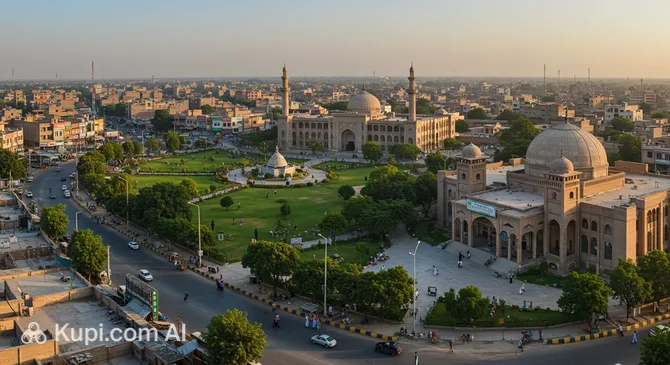
Located in the heart of the Punjab province, Sargodha is a dynamic hub often referred to as the "City of Eagles." The city earned this honorable nickname for being home to one of the largest airbases in Pakistan—the Mushaf Airbase. Sargodha is a city with a unique atmosphere, where the industrial rhythm harmoniously coexists with vast agricultural lands that fill the air with the scent of citrus.
Founded by the British in 1903 as a canal colony, Sargodha is one of the country's few meticulously planned cities. Sargodha. Illustration.
Source: Kupi.com AI
The history of foundation is closely linked to the development of irrigation systems, which transformed this arid region into a thriving agrarian oasis. Today, the city's population exceeds 600,000, making it one of the largest and fastest-growing settlements in the province.
For the traveler, Sargodha offers a chance to see the real Pakistan, free from the crowds of mass tourism. The city is famous for its hospitality, bustling bazaars, and its status as the "Citrus Capital." Visiting here provides an opportunity to experience authentic Punjabi culture, see historical landmarks, and enjoy a relaxed pace of life surrounded by famous orange groves. We invite you to discover this distinctive corner where traditions of the past meet the energy of the future.
Weather Overview
The climate in Sargodha is subtropical continental, which means distinct seasonal changes. Summers here can be truly sweltering: from May to June, average highs often reach 38–40°C. During this time, the city moves at a slow pace, with most activity shifting to early morning or evening hours. If you are planning a trip, be sure to consider the current climate of Sargodha.
Winter, by contrast, brings long-awaited coolness and is considered the most comfortable time to visit. From December to February, daytime temperatures hover around a pleasant 18–22°C, though they can drop to 6–9°C at night. July and August are monsoon months, when the region experiences heavy but often brief downpours that bring freshness and turn the surrounding fields into an emerald sea.
The best time for a visit is from October to March. During these months, the sky is usually clear, and the weather is ideal for strolling through bazaars and visiting citrus orchards. Rainfall is minimal during this period, and the mild sun allows you to enjoy all the sights without the exhausting heat.
Average monthly temperature
Average monthly precipitation
Interesting Facts
Sargodha is often called the "California of Pakistan" because the region is a global leader in the production of high-quality Kinnow mandarins.
The city bears the official nickname "City of Eagles", highlighting its strategic role and the heroism of the Pakistan Air Force based here.
In 1966, Sargodha was awarded the Hilal-E-Istaqlal medal for the courage shown by its residents in defending the country's borders.
Sargodha is among a small list of fully planned cities in Pakistan, along with Islamabad and Faisalabad, which is reflected in the clear structure of its central streets.
The city was founded by the British administration in the early 20th century specifically as a "canal colony" to develop agriculture in the region.
How to Get There
Sargodha is conveniently located in the central part of the Punjab province, ensuring good transport links with the country's largest metropolises. The city is approximately 187 kilometers from Lahore and 241 kilometers from the capital, Islamabad. The region's main artery is the modern M-2 motorway, with interchanges located just 48 kilometers from the city center. You can find more details about logistics and routes on the page describing how to get to the city.
While the city has its own airport, Sargodha (SGI), travelers should note that it is primarily used for military purposes, and regular commercial flights are quite rare. Most travelers prefer to fly into the international airports of Lahore or Islamabad and then continue their journey by taxi or intercity bus.
The railway is another reliable way to reach Sargodha. The city's station receives trains from Lahore, Faisalabad, and other key cities in Punjab. Rail travel remains a popular and budget-friendly mode of transport, allowing passengers to view the region's picturesque agricultural landscapes from their window.
Station
Passenger traffic
Distance
Faisalabad Railway Station
6
83 km
Gujrat railway station
5
141 km
Gujranwala railway station
6
142 km
Okara Cantonment railway station
5
159 km
Lahore Junction Railway Station
12
166 km
Main Attractions
As an important agricultural and military center, Sargodha offers attractions closely tied to its history and sporting fame. One of the main architectural landmarks is Jinnah Hall. Built in 1949 in honor of the nation's founder, Muhammad Ali Jinnah, this historical hall originally served as the town hall. Today, it houses an exhibition space and a library, and the building itself, surrounded by greenery, is considered an important cultural symbol.
Those interested in spiritual architecture should visit the Shahpur Mosque. This majestic structure, built in the finest traditions of the Mughal style, impresses with its proportions and exquisite details. The mosque serves not only as a place of worship but also as an important landmark, reflecting the region's deep historical roots and religious heritage.
To feel the vibrant energy of the city, a visit to the Mela Mandi Ground is a must. This is not just a sports field for cricket and football, but the true heart of public life. It is especially interesting during the spring season when large-scale competitions are held, attracting spectators from all over the country and turning sports matches into colorful folk festivals.
Local Cuisine
A culinary journey to Sargodha is, first and foremost, an introduction to rich and hearty Punjabi cuisine. Thanks to its status as an agricultural center, the city is always supplied with the freshest products. The region's main specialty is citrus: Kinnow mandarins here are incredibly juicy and sweet. Be sure to try the freshly squeezed juice sold on every corner—it is the true taste of the city.
In local restaurants and street stalls, you should order classic meat dishes such as Chicken Karahi (chicken cooked in a special wok-like pan with tomatoes and spices) or juicy Seekh Kebabs. Dishes are usually served with hot Naan or Roti flatbreads, which are baked in a tandoor right before your eyes.
Food culture in Sargodha is closely tied to street food. At local markets, you can find an endless variety of snacks: from crispy Samosas to spicy Chana Chaat (chickpea salad). It is customary to end a meal with traditional Pakistani tea—Doodh Patti, brewed with milk, plenty of sugar, and cardamom. This is not just a drink, but an important social ritual for the locals.
Travel Tips
Sargodha is a city of deep traditions, and knowing a few practical points will make your trip more comfortable and rewarding. Here are the main tips for those planning a visit:
Clothing: Choose light clothing made of natural fabrics, but remember to dress modestly. In Pakistan, it is customary to cover shoulders and knees; women are advised to carry a light scarf. During the winter months (December-January), evenings can be chilly, so bring a sweater.
Transport: The most convenient way to get around is by auto-rickshaws. For long-distance trips, it is better to use a taxi booked via an app. Be prepared for chaotic traffic on the roads.
Finance: The local currency is the Pakistani Rupee (PKR). There are many ATMs in the city, but cards are only accepted in large hotels and shopping malls. Always carry a supply of small-denomination cash.
Health: Drink only bottled water and avoid ice in street drinks. From May to June, air quality can decrease due to agricultural activities, so allergy sufferers should be cautious.
Language: Locals speak Urdu and Punjabi. English is understood in banks, large shops, and among the youth. Learning a few phrases in Urdu will earn you sincere appreciation from the people around you.
Etiquette: Always remove your shoes before entering a home or a mosque. It is not customary to take photos of people (especially women) without their permission, nor of military sites and the airbase.
What to avoid: Do not engage in discussions on political or religious topics. Try not to walk alone in unfamiliar, remote areas after dark.
Remember that Sargodha is a city of genuine people. A simple smile and respect for local customs will open many doors and make your visit truly heartwarming.
Entertainment & Nightlife
Entertainment in Sargodha has its own unique flavor, centered around the traditional Pakistani lifestyle. You won't find conventional Western-style nightclubs here; instead, the city's evening life thrives in local tea houses and small cafes. These are perfect places to immerse yourself in the "bazaar" culture: locals gather here after sunset to discuss the news over a cup of hot milk tea and traditional sweets.
The main source of excitement for the residents is sports. If your visit coincides with regional cricket or field hockey tournaments (especially at the Astroturf stadium), you will witness an incredible intensity of passion. Fans in Sargodha are very emotional, and attending such a match will be an unforgettable cultural experience.
For more relaxed recreation, locals choose shopping malls and modern cinemas, which become centers of attraction on weekends. If you are looking for a high-end nightlife scene with fine-dining restaurants and entertainment complexes, consider planning a trip to nearby metropolises like Lahore or Faisalabad, which are just a few hours' drive away.
Parks & Museums
The green heart of the city and a favorite place for locals to stroll is Company Bagh park. It is a spacious area where you can escape the city bustle under the shade of ancient trees. The historical Jinnah Hall building is located here, which now serves as a library and cultural center. In the park, you can often see families on picnics and young people playing football on specially equipped grounds.
Sargodha's museum scene is still developing, and Jinnah Hall takes on the role of the main historical repository. Temporary exhibitions dedicated to the history of the region and the founding of Pakistan are held within its walls. For those interested in military history, displays and memorials related to the Mushaf Airbase may be of interest, though tourist access to the base itself is restricted.
The lack of numerous traditional museums is more than compensated for by the atmosphere of the city streets themselves, which are a kind of "living museum." Walking through the old quarters, where elements of the early 20th-century layout are preserved, or visiting traditional craft shops will give you a much better understanding of Punjabi culture than many indoor galleries.
Getting Around
The transport system in Sargodha is typical of large Pakistani cities: it is dynamic and relies heavily on private operators. The main and most popular modes of transport here are rickshaws and auto-rickshaws. They are an ideal way to move quickly through narrow bazaar streets and reach any point in the city. It is always best to agree on the fare in advance, as meters are rarely used.
Public buses and minibuses connect Sargodha with the suburbs and other districts of the province. However, for a tourist, this type of transport may seem challenging due to the lack of clear schedules in English and high congestion. A more comfortable alternative is using taxis or ride-hailing apps, which operate in the city and allow you to see the trip cost beforehand.
As Sargodha is an important transport hub, it is easy to travel to other cities using comfortable intercity coaches from major national carriers. Bus terminals are usually located on the outskirts or along main roads. If you plan to travel by train, it is better to purchase tickets at the station in advance, especially during holidays when demand for travel increases sharply.
Accommodation
Sargodha's hotel infrastructure is primarily geared toward business travelers, traders, and those visiting for work. You won't find massive five-star international chains here, but there is an abundance of high-quality mid-range hotels and cozy guest houses offering a decent level of comfort and traditional Punjabi hospitality.
Most popular accommodation options are concentrated in the central districts and near the main shopping areas. This is convenient for those who want to be within walking distance of bazaars and restaurants. When choosing accommodation, check for air conditioning, as summer temperatures in the region can be very high.
Since Sargodha is an important economic hub, it is recommended to book rooms in advance, especially if your trip coincides with the citrus harvest season or major sporting events. Accommodation prices here are quite affordable, and the main booking methods remain online services and direct contact with hotel administrations.
Nearby Cities
Sargodha enjoys a favorable location, making it an excellent starting point for exploring central Punjab. Surrounding small towns and settlements allow you to see the slow-paced provincial life and get acquainted with the unique crafts and traditions of this region.
Just 30 kilometers away is the town of Lalian, and the same distance in the other direction is Bhalwal, which is also famous for its orange plantations. If you are interested in history and architecture, head to Chiniot. This city is world-famous for its incredible wood carving, elite furniture production, and the majestic Omar Hayat Palace. A trip there takes no more than an hour but will leave a lasting impression of local craftsmanship.
For those ready for slightly longer journeys, the paths to modern Jauharabad and historical Khushab are open. Exploring these places will help you better understand the multifaceted character of the Punjab province, where an interesting story hides behind every bend in the road.
Shopping & Souvenirs
Shopping in Sargodha is an adventure for those who love the atmosphere of traditional oriental bazaars. The main commodity that has made the city famous is citrus. During the harvest season, local markets are literally overflowing with golden Kinnow fruits, considered the best in the country. Many tourists buy not only the fruit but also locally produced preserves, jams, and natural juices.
The city's central bazaars offer a huge selection of textiles and ready-made clothing. Punjab is famous for its fabrics, and Sargodha is no exception. Here you can find high-quality cotton, traditional embroidered shawls, and national Shalwar Kameez outfits. Look out for handmade leather footwear—Pakistani Khussa are known for their elegant design and durability.
Most shops and stalls operate from morning until late evening, though it is worth remembering that many establishments close for Friday afternoon prayers. In small shops and markets, it is customary to pay in cash (Pakistani Rupees), and the ability to bargain politely is welcomed—it is an essential part of the local trade culture. Modern shopping centers are also present in the city, offering a more familiar shopping format with fixed prices.