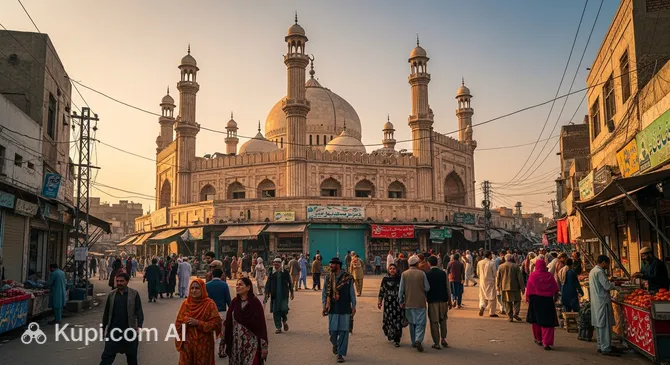
Okara is a rapidly developing industrial and agricultural hub in the Punjab province, located in northeastern Pakistan. The city offers an authentic glimpse into the country's provincial life, where modern manufacturing rhythms intertwine with deep-rooted agricultural traditions. The city's name has a unique origin, derived from the local "Okaan" tree, which once grew in abundance in these parts.
With a population of approximately 232,000 people, Okara ranks as the 23rd largest city in the country. Although the city is relatively young and its active development began during the British Raj era, it has managed to secure an important place in the region's economy. The history of the city's formation is closely linked to the development of irrigation systems and transport routes that transformed arid lands into fertile fields.
Okara. Illustration.
Source: Kupi.com AI
Today, Okara is known far beyond the region as the "cotton capital" and the breeding center for the famous Sahiwal cattle breed. The city's atmosphere is filled with business bustle, featuring textile mills and markets humming with trade. A visit to Okara is a chance to see the real Pakistan, free from tourist gloss, where the main attractions are the hospitality of the locals and the vibrant daily life of Punjab.
Weather Overview
The climate of Okara is classified as subtropical continental, which is typical for most of Punjab. The city greets travelers with extreme contrasts: summers are very hot, with temperatures often reaching +40...+45°C in May and June. Winters, on the other hand, are mild and pleasant, with average temperatures around +12...+15°C, although it can get quite cool at night.
A special time of year is the monsoon season, which occurs in July and August. During this period, the bulk of the annual rainfall occurs, bringing long-awaited freshness but sometimes making city travel difficult due to heavy downpours. If you are planning a trip, be sure to check the current weather in Okara to choose the right wardrobe.
The most comfortable time to visit the city is from October to March. During this period, the weather is dry and sunny, perfect for strolling through local markets and exploring the surroundings. In the dry season, the air in the city can be dusty due to proximity to farmland and cotton mills, so travelers with respiratory sensitivities should keep this in mind.
Average monthly temperature
Average monthly precipitation
Interesting Facts
The name Okara comes from "Okaan"—the name of a specific type of tree that once densely covered the territory of the modern city.
The city is the pride of Pakistani livestock farming: it is home to the breeding center for the Sahiwal breed, valued for its endurance and high milk yields.
Okara is a relatively young city; its active construction and infrastructure development only began during the period of British colonial rule.
The district centered around the city covers an impressive area of 4,377 square kilometers, most of which is used for highly productive farmland.
The city's telephone code is 442, and life here follows the UTC+5 time zone, which should be considered when planning calls and trips.
How to Get There
Okara is a major transport hub in Punjab, located on the main highway connecting the country's large metropolises. The most common way to reach the city is by road. From Lahore, a trip by bus or taxi is about 120 km and takes between 2 to 4 hours, depending on traffic. Its convenient location on the highway makes traveling to Okara simple and accessible.
The city does not have its own airport. The nearest major air gateway is Allama Iqbal International Airport in Lahore, located approximately 130 km away. From there, Okara can be reached by comfortable intercity buses or a rented car.
Railway communication is another reliable option. Okara Station receives trains running on the key Lahore–Karachi route. A train ride from Lahore usually takes about 2–3 hours, making this mode of transport popular among those who value a predictable schedule.
Station
Passenger traffic
Distance
Okara Cantonment railway station
5
14 km
Faisalabad Railway Station
6
75 km
Bahawalnagar Junction railway station
5
92 km
Lahore Junction Railway Station
12
119 km
Bathinda railway station
7
157 km
Amritsar railway station
10
162 km
Main Attractions
Since Okara is primarily an industrial and agricultural hub, there are few classic architectural monuments; however, the city offers a unique perspective on Punjab's industrial heritage. One of the main points of interest is the Okara Railway Station. Built during the colonial period, this building serves not only as an important transport node on the Lahore–Karachi line but also as a symbol of the city's founding.
Of particular interest to visitors are the local cotton mills and textile enterprises. Okara is one of the largest centers of the textile industry in the country, and observing the cotton processing cycle allows one to understand the economic pulse of the region. City markets, such as the Central Bazaar, are a kaleidoscope of sounds and colors, where you can see the fruits of the labor of local farmers and artisans.
Agrotourism enthusiasts will find it interesting to visit the surrounding livestock farms. Okara is famous for breeding the elite Sahiwal cattle. While there are no specialized tours, many farmers are happy to show their operations to interested travelers. This is an excellent opportunity to see the rural life of Punjab in its original form.
Local Cuisine
The cuisine of Okara is a celebration of traditional Punjabi flavors. The diet is based on hearty dishes made from meat, grains, and the freshest dairy products. Be sure to try saag (slow-cooked spiced spinach), which is usually served with makki di roti (cornbread). Thanks to the well-developed livestock industry, you can always find excellent meat in the city: kebabs and fragrant biryani are prepared here with special skill.
Dairy products are an essential part of local gastronomy. Okara is famous for its lassi—a refreshing yogurt drink that can be either sweet or salty. Spiced tea with plenty of milk is also ubiquitous; in Punjab, it is not just a drink but an important social ritual.
The food culture in Okara is closely tied to street food and traditional tea houses—dhabas. There are no pretentious restaurants, but in the local markets, you can find the most authentic and fresh food. Locals prefer simple establishments where food is cooked according to home recipes, with an emphasis on seasonal vegetables and generous use of spices.
Travel Tips
A journey to Okara will give you a unique experience of authentic Pakistani hospitality. To ensure your trip is comfortable and safe, use these practical tips.
Clothing and Dress Code: Modesty is valued in Okara and throughout Punjab. Both women and men are recommended to wear modest clothing that covers shoulders and knees. Lightweight cotton is the ideal choice for the hot climate.
Getting Around Town: The best way to travel is by rickshaw. Always negotiate the price before the trip starts, as there are no fixed tariffs for tourists.
Finances: Be sure to carry a sufficient supply of cash in Pakistani Rupees. Cards are accepted only in very rare places, and ATMs may not always work with international cards.
Safety and Health: Drink only bottled water and avoid ice in drinks. In the evenings, it is better to stay in busy central areas and avoid industrial outskirts.
Communication: The primary languages are Punjabi and Urdu. English is understood in hotels and large institutions, but knowing a few simple phrases in Urdu (for example, "Assalam-o-Alaikum" for greeting) will go a long way with the locals.
Local Etiquette: Always remove your shoes when entering private homes or religious sites. Remember that the right hand is considered "clean"—it is customary to use it for handshakes and eating.
What to Avoid: You should not photograph military sites or government buildings. Also, always ask for permission before taking photos of local people, especially women.
Connectivity: For stable internet, it is best to buy a local SIM card (such as Jazz or Zong) at one of the official service centers in the city center by presenting your passport.
Okara is a city of hardworking people and living traditions. Show respect for local customs, and you will discover an incredibly warm and friendly Pakistan!
Entertainment & Nightlife
The entertainment scene in Okara is predominantly traditional and low-key. There are no noisy nightclubs or bars, which is typical for the conservative provincial cities of Punjab. The city's evening life centers around tea houses (dhabas) and street cafes, where locals gather for long conversations over cups of strong milk tea.
Daytime leisure often involves visiting local bazaars, which become even more lively toward evening. These are the heart of the city's social life, where you can not only shop but also immerse yourself in the atmosphere of an Eastern market. During the cotton harvest season, local fairs and festivals are sometimes held in Okara and its surroundings, accompanied by folk dances and musical performances.
For those looking for more modern entertainment formats, such as cinemas or large amusement parks, residents of Okara usually head to neighboring Sahiwal or the regional cultural capital, Lahore. Nevertheless, a stroll through the city's central blocks allows you to feel the dynamic culture of Punjab and see Pakistan "from the inside."
Parks & Museums
Okara is a young and industrial city, so classic museum exhibitions are virtually non-existent here. The city's primary "museum" space is its living streets, where colonial-period architecture at the railway station and old quarters tell the story of the region's development better than any display cases.
There are few green areas for relaxation within the city limits, as Okara is surrounded by endless agricultural land. The role of parks is often filled by small squares in the central part and open spaces near administrative buildings. Locals value these islands of shade and cool, using them as places for meetings and escaping the city bustle.
For those looking for a full nature retreat, the best option is a trip to one of the surrounding farms or a walk along the irrigation canals that crisscross the region. These agricultural landscapes, with cotton fields and pastures, create a unique rural charm characteristic of the fertile lands of Punjab.
Getting Around
The public transport system in Okara is typical for most Pakistani cities, consisting mainly of auto-rickshaws, buses, and minibuses, which locals call "vans." This is the most budget-friendly and fastest way to move around the city, although traffic may seem chaotic to the unaccustomed tourist. A rickshaw ride within the city usually takes between 10 to 30 minutes.
There is no metro or tram system in Okara, so all logistics rely on ground transport. During rush hours—morning and evening—traffic jams often occur on the main roads and near the markets. Tourists are recommended to use the services of auto-rickshaws, agreeing on the fare in advance, as meters are practically never used here.
For intercity travel, modern bus lines like Daewoo Express are best, as their terminals provide comfort and safety. Within the city itself, fares are paid only in cash, so always keep small Rupee notes on hand.
Accommodation
The hotel infrastructure in Okara is primarily geared toward business travelers and transit visitors, so the choice of accommodation consists mainly of budget options and guest houses. There are no luxury five-star hotels in the city itself; however, available hotels offer the necessary minimum of amenities for a comfortable overnight stay.
For tourists, the most convenient areas to stay are the blocks near the city center and the railway station, providing quick access to markets and transport hubs. If you are looking for a higher level of service, it is worth considering accommodation in neighboring Sahiwal, where the selection of mid-range hotels is somewhat wider.
It is recommended to book accommodation in Okara in advance, especially if your trip coincides with major agricultural exhibitions or holidays. Most local hotels only accept cash in Rupees, so you should take care of currency exchange beforehand.
Nearby Cities
Thanks to its strategic location in the heart of the Punjab province, Okara serves as an excellent starting point for exploring the surrounding cities, each with its own unique character. Proximity to major transport arteries allows for easy planning of short day trips.
Just 37 km from the city is Sahiwal—an important administrative and economic center known for its rich history and bustling shopping districts. Another interesting destination is the ancient city of Deepalpur, which is famous for its historical heritage. It is also worth visiting Hujra Shah Muqeem, known for its spiritual shrines and religious significance.
Exploring these nearby locations will allow you to get deeper acquainted with the culture and traditions of Punjab, discovering new facets of this hospitable land. The region around Okara is rich in hidden gems waiting for curious travelers.
Shopping & Souvenirs
Shopping in Okara is primarily about visiting traditional markets where trade follows age-old customs. The city does not have modern shopping malls with international brands, but it is famous for its cotton fabrics. Be sure to stop by the Central Bazaar, where you can purchase high-quality cotton products directly from manufacturers at very attractive prices.
In addition to textiles, Okara is renowned for its agricultural products. In the local markets, look for fresh spices, dried fruits, and traditional Pakistani sweets. If you are looking for a unique souvenir, look out for handmade items from local artisans, who often sell their goods at small stalls along the main shopping streets.
Most shops and stalls in Okara operate from morning until late evening, closing during the afternoon heat and prayer times. It is important to remember that in this region, cash remains the primary method of payment—credit cards are very rarely accepted. Do not hesitate to bargain in the markets: in Pakistan, it is not just a way to save money, but also a part of the social culture between the buyer and the seller.