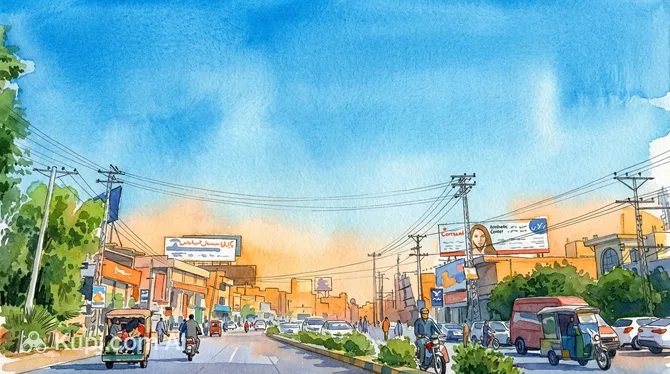
Mandi Burewala is a dynamically developing city in the Punjab province, located in the heart of the fertile plains of Pakistan. It owes its name to a local leader named Bura, who founded a settlement here during the British colonial era. Today, the city, with a population of over 200,000, serves as a crucial agricultural and commercial hub for the region.
Mandi Burewala. Illustration.
Source: Kupi.com AI
The atmosphere of Mandi Burewala is infused with a spirit of entrepreneurship and traditional Pakistani hospitality. It is a place where rural life meets urban activity: the city is famous for its large-scale markets selling cotton, grain, and juicy tropical fruits like mangoes and guavas. A careful study of the city's historical heritage allows for a better understanding of how former jungles were transformed into a thriving industrial and agricultural hub through the development of irrigation systems.
While Mandi Burewala is not a typical tourist destination, it attracts travelers with its authenticity and reputation as a "city of education" due to its abundance of educational institutions. It is an excellent spot for those who want to see the real, off-the-beaten-path Pakistan, get to know the daily lives of local farmers, and enjoy the leisurely pace of provincial life. We invite you to discover this welcoming corner of Punjab!
Weather Overview
A hot semi-arid climate prevails in Mandi Burewala, dictating the rules of life in this region. Summers here can be truly sweltering: from May to June, the thermometer often rises to +40°C and above. During this time, the city is enveloped in dry heat, and dusty winds serve as a reminder of the proximity to the open plains.
In contrast, winter in the city is very mild and pleasant. In January, the average temperature is around +13°C, creating ideal conditions for walking and exploring the city. However, it is worth noting that nights can be quite chilly. By carefully studying the city's climate, you can choose the most comfortable time for your trip.
Special attention should be paid to the monsoon season, which falls in July and August. During this period, the highest amount of precipitation occurs (up to 82 mm in July), bringing long-awaited freshness but also potentially causing short-term difficulties with travel on unpaved roads. During the rest of the year, rain is a rare phenomenon, and the weather remains predominantly dry and sunny.
Average monthly temperature
Average monthly precipitation
Interesting Facts
The city's name literally means "Burewala Market," highlighting its historical role as a trade center founded by a local chieftain named Bura.
Mandi Burewala is the 27th most populous city in Pakistan, showing incredible growth: from 15,000 residents in the mid-20th century to over 360,000 today.
The city is the birthplace of legendary sportsman Waqar Younis, one of the greatest bowlers in the history of world cricket, whom fans nicknamed the "Burewala Express."
Major Tufail Mohammad, who was awarded Pakistan's highest military honor—the Nishan-e-Haider—for his heroism, was born here.
Due to its high concentration of schools and colleges, Mandi Burewala unofficially holds the honorary title of the "City of Education."
How to Get There
The accessibility of Mandi Burewala is largely defined by its favorable position on a major highway. The city is located on the Delhi-Multan Road, making it a convenient stop for those traveling by land. From Lahore, the journey by bus or private car takes about 4–6 hours, while from Multan, it can be reached in just 2–3 hours. Detailed information on routes and travel times can be found in the section describing how to get to the city.
There is no airport directly in the city. The nearest large air hubs are located in Lahore and Multan. The most popular choice for international travelers is Allama Iqbal International Airport in Lahore, from where comfortable intercity buses operated by Daewoo and Faisal Movers regularly run to Mandi Burewala.
Railway connections to Mandi Burewala itself are currently limited. Travelers who prefer trains are recommended to travel to major stations in neighboring cities, such as Vehari or Multan, and then take a taxi or local bus to complete their journey.
Station
Passenger traffic
Distance
Bahawalnagar Junction railway station
5
57 km
Okara Cantonment railway station
5
90 km
Multan Cantonment railway station
5
120 km
Bahawalpur railway station
4
131 km
Faisalabad Railway Station
6
145 km
Main Attractions
While Mandi Burewala lacks classic world-class tourist sites, the city is interesting for its unique local attractions that reflect its agricultural spirit. Life centers around the traditional markets (mandis) for cotton and grain. A walk through these bustling trading floors allows you to witness the trade of Punjab's "white gold" and feel the true rhythm of the city's commercial heart.
Among the architectural landmarks, the city's central mosques are noteworthy, serving not only as religious sites but also as important community spaces. Their simple yet expressive architecture stands out against the urban backdrop, and their interiors offer peace and coolness on hot days.
In the city's surroundings, about 18 kilometers away, lies a significant spiritual site — the shrine of the Sufi saint Hazrat Baba Haji Sher Dewan. This pilgrimage site attracts believers and history buffs from across the region. It is believed that the saint lived here as early as the 7th century, and the atmosphere of the ancient sanctuary leaves a deep impression. Historical sources also mention Shah Garh Fort, built by the legendary ruler Sher Shah Suri, which makes for an excellent addition to exploring the area.
Local Cuisine
The gastronomic identity of Mandi Burewala is inextricably linked to the rich culinary traditions of Punjab. The local cuisine will delight lovers of hearty and aromatic dishes. You should definitely try the classic biryani — spiced rice with meat — as well as tender kebabs and freshly baked naan bread. Charcoal-grilled meat dishes are particularly popular and are often served in local open-air eateries.
Thanks to its status as an agricultural center, the city is famous for its fresh produce. In season, you can enjoy magnificent mangoes and guavas straight from local orchards. Among drinks, the favorite remains traditional Pakistani tea (chai) with milk and spices, as well as cooling lassi — a yogurt drink that is the perfect remedy for the summer heat.
The food culture here is simple and democratic. Locals prefer to have lunch and dinner at street stalls or small establishments like popular tikka spots. The food scene is concentrated around the markets, where meals are prepared quickly using fresh ingredients. Travelers are advised to choose places with high turnover and consume only bottled water for a comfortable introduction to local flavors.
Travel Tips
A visit to Mandi Burewala will be a unique experience of getting to know the heart of Punjab, and these practical tips will help make your trip as comfortable as possible.
Clothing and Dress Code: Choose light clothing made of natural fabrics, as it can be very hot in the region. Given the conservative nature of the city, it is recommended to wear modest clothing that covers shoulders and knees, especially when visiting mosques and markets.
Transport: Use motor rickshaws to move around the city. For intercity travel, choose reputable bus operators. If possible, use the Careem app to call for transport.
Finances: The main method of payment is cash (Pakistani rupees). Cards are rarely accepted, so always carry a sufficient supply of cash. ATMs can be found in the city center, but international cards do not work in all machines.
Health: Drink only bottled water. Avoid ice in drinks at street cafes. It is recommended to carry a basic first-aid kit and sunscreen.
Communication: The primary languages are Urdu and Punjabi. English is understood mainly by staff in banks and large institutions. Knowing a few phrases in Urdu will significantly simplify communication at the market.
Local Etiquette: Greet people with the traditional "Assalamu Alaikum." Pakistanis are very hospitable; don't be surprised if you are invited for tea — it is a sign of genuine goodwill.
What to Avoid: It is not recommended to walk alone on the outskirts of the city after dark due to poor lighting. Avoid discussing political topics and show respect for local religious customs.
Best Time to Visit: Try to plan your trip for the winter months (November to February), when the air temperature is most pleasant for walking.
We hope these tips help you enjoy the hospitality of Mandi Burewala and discover the true atmosphere of Pakistan. Have a great trip!
Entertainment & Nightlife
Nightlife in Mandi Burewala is quiet and conservative, which is typical for the agricultural centers of Punjab. You won't find noisy nightclubs or bars here, as the city's social life revolves around family values and traditional gatherings. The main evening entertainment for locals is visiting tea shops near the markets, where leisurely conversations about business and news take place over cups of hot "chai."
During the day, the city offers more active leisure. The residents of Mandi Burewala are passionate sports fans, especially of cricket. You can often see exciting matches on city grounds, as this is the birthplace of the famous cricketer Waqar Younis, known worldwide as the "Burewala Express." Watching a game at the local stadium is a great way to feel the excitement and energy of the city.
For more vibrant entertainment, such as modern cinemas or large shopping malls, residents often head to nearby major cities like Multan or Lahore. However, for those seeking a quiet escape into nature, picnics on the banks of the Sutlej River or along irrigation canals are popular options for enjoying the peace away from the market bustle.
Parks & Museums
The park infrastructure of Mandi Burewala is currently in a stage of development. The main recreation spots for citizens are small public squares and green zones within residential neighborhoods. Due to the flat terrain and the dominance of agriculture in the region, there are no large forests, making even modest city parks important oases of coolness during the hot season.
While there are no classic museums or art galleries in the city itself, the role of history keepers is played by local educational institutions and historical markets. The cultural heritage of Mandi Burewala is passed down through craft traditions and stories of the city's prominent residents. Travelers interested in history should pay attention to the architecture of the old trading rows, which remember the times the settlement was founded.
For those seeking natural tranquility, the banks of the Sutlej River in nearby areas such as Kachi Pakki or Jamlera can be attractive. Despite the lack of formal development, these wild recreation areas offer picturesque river views and an opportunity to see traditional Punjabi rural life in its original form.
Getting Around
The transportation system in Mandi Burewala reflects the dynamic and slightly chaotic rhythm of life in this agricultural hub. The most popular and convenient way to get around the city streets is by motor rickshaws. They are maneuverable, affordable, and can take you anywhere in the city. It is best to agree on the fare with the rickshaw driver in advance, as meters are rarely used here.
For trips between neighborhoods and to nearby suburbs, locals often use minibuses and vans ("van-riders"). This is a budget-friendly but often overcrowded mode of transport that requires some getting used to the cramped and noisy conditions. Intercity connections are provided by a network of buses that regularly depart from bus terminals toward Lahore, Multan, and other major cities along the Delhi-Multan Road.
Walking is possible in the central part of the city and within the bazaar areas, but be mindful of the heavy traffic and dusty roads. Modern ride-hailing apps like Careem are gradually starting to cover the region, offering a more comfortable alternative to traditional rickshaws. During peak hours (morning and evening), traffic jams can occur on main roads and near markets, so plan your trips with a bit of extra time.
Accommodation
The choice of accommodation in Mandi Burewala is primarily geared toward business travelers, agricultural traders, and those passing through the city. Budget hotels and private guesthouses offering basic comfort predominate here. There are no luxury five-star resorts in the city, but local hotels provide everything necessary for a good rest after a busy day.
The most convenient areas to stay are near the central markets and along main transport arteries like Delhi-Multan Road. This ensures quick access to transport hubs and the city's main trading points. For those planning an extended stay in Mandi Burewala, apartment rental options are available in residential quarters.
When planning your trip, keep in mind that demand for accommodation increases during harvest periods or major agricultural exhibitions, so it is recommended to book rooms in advance. Payment in most local guesthouses is made in cash, although some more modern establishments are beginning to accept electronic payments. The price range remains very affordable compared to Pakistan's major metropolises.
Nearby Cities
Mandi Burewala serves as an excellent starting point for exploring the nearby regions of Punjab, offering travelers the chance to get to know neighboring cities and their unique features. Just 36 kilometers away is Vehari — the district headquarters, where you can see larger government buildings and modern market complexes.
Another interesting destination for a day trip is Arifwala, which takes about an hour to reach. It is also worth visiting Chishtian and Mian Channu. These cities, while similar in their agricultural lifestyle, have their own unique local markets and shrines. For a longer journey, Multan is an excellent choice, known for its ancient tombs and historical architecture.
City
Population
Distance
Vihari
128 034
36 km
Arifwala
95 655
39 km
Chishtian
101 659
43 km
Mian Channu
82 586
45 km
Hasilpur
99 171
53 km
Exploring the surroundings of Mandi Burewala by bus or taxi will allow you to dive deeper into the atmosphere of provincial Pakistan and see how the landscape changes from endless cotton fields to the bustling commercial centers of neighboring districts.
Shopping & Souvenirs
Shopping in Mandi Burewala is primarily about visiting colorful traditional bazaars, which are the soul of this commercial city. There are no huge, glittering malls with global brands here, but there is an opportunity to immerse yourself in the atmosphere of an authentic Eastern market. The main shopping areas are concentrated in the city center, where narrow streets are lined with shops selling clothes, shoes, and household items.
The city is rightly famous for its agricultural products. If you are looking for a unique and useful souvenir, look for local cotton and fabrics. Fruits also make an excellent gift: Mandi Burewala is known for its fragrant mangoes and guavas, which can be bought fresh or processed. Traditional Pakistani fabrics with hand embroidery are also in high demand among visitors.
Shops and stalls in the bazaars usually operate from early morning until late evening, with breaks for prayers. Payment for goods is mostly made in cash in the local currency (Pakistani rupees), so tourists should ensure they have small change ready. Bargaining at the markets is not only appropriate but is an important part of the local social culture — don't hesitate to discuss the price with a smile!