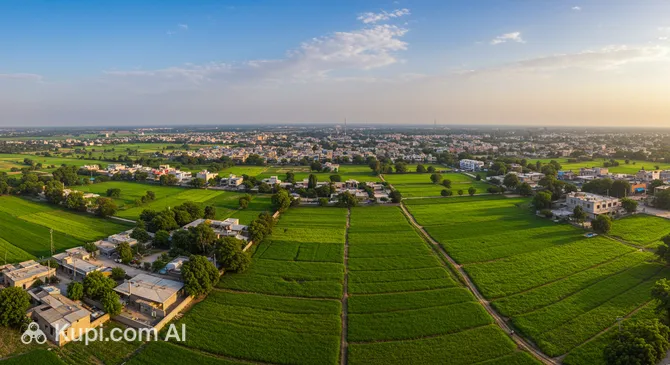
Sahiwal is a dynamically developing industrial and agricultural hub located in the heart of the Punjab province in Pakistan. The city is spread across the fertile plains between the Sutlej and Ravi rivers, occupying a strategic position between metropolises like Lahore and Multan. With a population of approximately 250,000, Sahiwal retains the atmosphere of a traditional Pakistani city, where economic activity is closely intertwined with deep regional roots.
Founded in 1865 as an important railway station, the city was long known as Montgomery, named after a British governor. It was only in 1969 that it received its current name. If you wish to delve into the details of the history of this region, you will learn how Sahiwal transformed from a small communication node into a vital center for the cotton-processing and textile industries.
Sahiwal. Illustration.
Source: Kupi.com AI
For tourists, Sahiwal is primarily valuable as the "gateway" to one of the world's oldest archaeological treasures—Harappa. Although the city itself is oriented toward business and the agricultural sector, its bustling bazaars, colonial architecture, and the genuine hospitality of the locals create a unique flavor characteristic of central Punjab. Visiting this city is an excellent opportunity to see the authentic, non-touristic Pakistan and touch the origins of ancient civilizations.
Weather Overview
The climate in Sahiwal is characterized as hot continental, which dictates its own rules for travelers. Summer in this region arrives early and brings extremely high temperatures, which in May and June can regularly exceed +40°C. During this time, the city turns into a veritable "island of heat," and daytime walks can be physically exhausting.
In July and August, the monsoon season arrives, bringing long-awaited moisture and a significant amount of rainfall; however, the high humidity combined with the heat creates specific conditions. Winter in Sahiwal, by contrast, is very pleasant and mild: the average temperature in January is about +12°C, and the days are dry and sunny. This is the ideal time for sightseeing and trips to archaeological sites.
When planning your visit, be sure to study detailed information about the weather in Sahiwal to choose the most suitable time. Overall, the most comfortable conditions for tourism are observed from November to March, when the heat recedes and the sky remains clear.
Average monthly temperature
Average monthly precipitation
Interesting Facts
Sahiwal hides many amazing stories that make a visit truly special for the inquisitive traveler.
The city is the closest transport hub to Harappa—one of the key sites of the Indus Valley Civilization, considered one of the oldest urban cultures in human history.
Just 45 kilometers from here, near Kamalia, lie the ruins of the ancient city of Malli, which was conquered by the army of Alexander the Great in 325 BC.
Sahiwal holds the title of the most important cotton-growing center in Punjab; the local industry covers the full cycle—from cotton ginning to the production of exquisite carpets and textiles.
It is home to one of the country's oldest and largest prisons, which has been in continuous operation since 1873, witnessing over a century and a half of the region's history.
The vast majority of residents (about 94%) communicate in the Punjabi language, allowing tourists to get acquainted with the living traditions and dialects of this unique province.
How to Get There
Sahiwal occupies a favorable position on the map of Punjab, located at the intersection of important transport routes. The city sits on the main N-5 national highway, which connects Lahore and Multan. A car journey from Lahore takes about 4 hours, and from Multan, just under 3.5 hours. Despite the heavy traffic, this is the most common way to reach the city. To better plan your route, we recommend checking the detailed transport section.
Sahiwal does not have its own airport, so air travelers usually arrive at nearby major international hubs. The airports in Lahore or Multan are most frequently used, from where Sahiwal can be reached by comfortable intercity bus or a rented car.
For those who prefer ground transport, Sahiwal Railway Station receives trains running on the Karachi–Lahore line. Although the train journey may take longer due to stops, it is an excellent way to see Pakistan's picturesque agricultural landscapes from the carriage window. Within the city, nimble rickshaws and taxis remain the primary means of transport.
Station
Passenger traffic
Distance
Okara Cantonment railway station
5
23 km
Bahawalnagar Junction railway station
5
75 km
Faisalabad Railway Station
6
83 km
Lahore Junction Railway Station
12
154 km
Multan Cantonment railway station
5
169 km
Main Attractions
Although Sahiwal is primarily an industrial hub, travelers will find several interesting sites reflecting the region's rich heritage. One of the main stops should be the Sahiwal Museum. This small but noteworthy institution houses collections of ancient coins, pottery, and rare manuscripts. The museum's exhibits allow you to trace the development of Punjab from ancient times to the present day.
History and architecture buffs will enjoy walking past colonial-era buildings. Among them, the Town Hall, built in 1867, stands out. This austere yet elegant structure is a reminder of the British period in the city's history. Although most administrative buildings from that time are not official tourist sites, their facades still preserve the spirit of a bygone era.
The main reason tourists from all over the world come to Sahiwal is its proximity to the legendary Harappa. Located just 35 kilometers from the city, it consists of the ruins of one of the largest centers of the Indus Valley Civilization. Sahiwal serves as an ideal base for those planning to explore this UNESCO World Heritage site in detail before traveling further across the country.
Local Cuisine
The gastronomy of Sahiwal is the quintessence of Punjabi culinary traditions. Local cuisine is based on products grown in these fertile lands: wheat, fresh vegetables, and high-quality meat. Be sure to try biryani—fragrant rice with spices and meat—as well as meat curries, which are prepared here with special care. Dishes are always served with freshly baked flatbreads—chapati or naan.
Dairy products, for which the region is famous, hold a special place in the residents' diet. Sahiwal is known for its sweets, such as laddu and gulab jamun, which are made from milk and sugar. Among drinks, the absolute leader is lassi—a refreshing yogurt drink that can be either sweet or salty. Strong tea with milk and plenty of sugar is also universally popular, drunk here at any time of day.
The food culture in the city is centered around lively street markets and small family restaurants. Street food, such as pakoras (deep-fried vegetables) and various kebabs, is extremely popular. Tourists should choose establishments with high turnover, where the food is prepared right in front of you. Despite the absence of international restaurant chains, the authentic flavors of local dishes will leave a vivid impression of your gastronomic journey through Punjab.
Travel Tips
A trip to Sahiwal will give you plenty of impressions if you prepare in advance for the specifics of life in central Pakistan. Here are some practical tips to help make your journey comfortable and safe.
Clothing and Essentials: Choose light clothing made from natural fabrics (cotton, linen), as it can be extremely hot in the region. Follow the dress code: shoulders and knees should be covered, especially when visiting holy sites. Comfortable closed shoes are essential for walking through dusty streets and markets.
Transport: To move around the city, it is best to use rickshaws, but always negotiate the price before the start of the trip. For longer trips, such as to Harappa, it is more reliable to hire a car with a driver through your hotel.
Finance: The Pakistani rupee is used in Sahiwal. Have a sufficient supply of cash in small denominations, as international cards are rarely accepted, and ATMs may not work with foreign banks.
Health: Drink only bottled water and avoid ice in drinks. In summer, try to stay in the shade from 12:00 to 16:00 to avoid heatstroke.
Communication: The main language is Punjabi, but many understand Urdu. English is common in administrative offices and among the youth. Learn a few phrases in Urdu—it always builds rapport with the locals.
Local Etiquette: Pakistanis are very hospitable. Always ask for permission before taking photos of people. Greet locals with a slight nod of the head or the phrase "Assalamu Alaikum."
What to Avoid: Do not discuss political topics or show signs of affection toward the opposite sex in public—this can be perceived as disrespect for local norms.
Connectivity: Buy a local SIM card at an official operator's office (e.g., Zong or Telenor), as hotel Wi-Fi can be unstable.
Following these simple rules will help you focus on the beauty of Punjab and enjoy the hospitality of Sahiwal!
Entertainment & Nightlife
Nightlife in Sahiwal differs significantly from Western concepts and follows the traditional way of life in Punjab. The city quiets down quite early, and you won't find noisy nightclubs or bars here. Instead, local tea houses, known as "chai-puri," become the center of evening activity. These are places where men gather in large groups to discuss the latest news, drink strong tea, and watch broadcasts of cricket matches—the region's primary sporting passion.
For those seeking more modern entertainment, such as cinemas or large shopping malls, locals recommend heading to Lahore, which is a few hours' drive away. However, interesting daytime activities can also be found in Sahiwal itself. The city comes alive during traditional Punjabi festivals, such as Lohri or Baisakhi, which are accompanied by music, dancing, and folk celebrations, offering a deep immersion into the local culture.
Safety in the evening in the central areas of the city is generally good, but tourists are advised to avoid walking alone in poorly lit outskirts. The most reliable way to get around after sunset is by pre-booked taxi. If you want to feel the atmosphere of the evening city, it is best to head to one of the central markets, where trade continues until late evening and the air is filled with the aromas of street food and spices.
Parks & Museums
The green zones of Sahiwal provide local residents and the occasional tourist with a necessary respite from the city's hustle and bustle. While the city parks may not boast immense scales, they are important islands of coolness. A walk through local squares will allow you to see how Pakistani families spend their leisure time, and the irrigation canals of the Bari Doab system, which permeate the region, create picturesque backdrops for countryside trips.
The Sahiwal Museum remains the city's main cultural site. Despite its modest size, it possesses a valuable collection that includes artifacts found in the surrounding areas, including pottery and ancient coins. This place will be of particular interest to those wishing to prepare for a visit to Harappa, as the museum's display provides a general overview of the scale and significance of the ancient Indus Valley cultures.
For more extensive outdoor walks and visits to large museum complexes, tourists often travel outside the city. Nevertheless, Sahiwal itself, with its quiet streets and small museum, offers a cozy and thoughtful experience of getting to know Punjabi history, which is difficult to find in noisy metropolises.
Getting Around
The transport system in Sahiwal is typical of a Pakistani provincial city and requires a certain amount of patience and spirit of adventure from the traveler. The main means of getting around the narrow streets are motorized rickshaws—three-wheeled carriages that will take you anywhere in the city. You should always agree on the price of the trip in advance, as meters are a rarity here.
For travel between neighborhoods, locals use minibuses and small city buses. Their routes often lack clear markings in English, and stops are determined more by passenger habit than by official signs. During rush hours in the morning and evening, transport can be very overcrowded, so tourists are better off planning their movements for the daytime or using taxi services.
The payment system for public transport in Sahiwal is exclusively cash-based. Bus tickets are bought from the conductor, and in rickshaws, money is handed directly to the driver. If you value comfort and predictability, it is recommended to use private taxi services or mobile ride-hailing apps, which are gradually beginning to enter the region, ensuring a fixed cost and a higher level of safety.
Accommodation
The hotel infrastructure in Sahiwal is primarily oriented toward business travelers and specialists arriving in the region for the agricultural and textile sectors. Several mid-range hotels can be found in the city, offering a basic set of amenities: clean rooms, air conditioning, and breakfast. There are no luxury five-star complexes here, so you should expect functional and simple service.
The city center and areas adjacent to the main transport arteries are considered the most convenient neighborhoods for staying, providing quick access to markets and the exit toward archaeological zones. Due to the limited number of high-quality accommodation options, tourists are strongly encouraged to book rooms in advance, especially if the trip is planned during festival seasons or major fairs.
Many travelers who value a high level of comfort prefer to stay in Lahore, choosing Sahiwal for a day trip. However, if your goal is a deep study of Harappa or immersion in local life, staying overnight in one of the city's hotels will save you travel time and allow you to feel the rhythm of provincial Pakistan. Booking is most often done directly through the hotel administration or local services.
Nearby Cities
Thanks to its location in a densely populated part of Punjab, Sahiwal is an excellent starting point for exploring neighboring cities and historical locations. Each direction allows for a new perspective on the culture and life of central Pakistan, whether through spiritual shrines or bustling trade centers.
Just 37 kilometers away is the city of Okara, known for its agricultural prowess and colorful rural landscapes. Another interesting destination is Pakpattan, home to the famous shrine of the Sufi saint Fariduddin Ganjshakar. This pilgrimage site attracts thousands of people and possesses a special mystical atmosphere once described by the great traveler Ibn Battuta.
If you are interested in the history of Alexander the Great, it is worth visiting the city of Kamalia. Additionally, within a short drive are Arifwala and Samundri—typical Punjabi towns where you can observe the traditional way of life.
Exploring the surroundings of Sahiwal will offer many discoveries: from the ancient ruins of Harappa to modern farming estates. The region is literally steeped in history, and every trip to a neighboring city will add new colors to your journey through the province.
Shopping & Souvenirs
Shopping in Sahiwal is primarily about visiting traditional bazaars where time seems to have stood still. The city is famous for its textiles and cotton fabrics, which can be purchased here at very attractive prices. Central markets are filled with rolls of bright fabrics, ready-made clothing, and products from local artisans, making the city an important regional trade hub.
Unique souvenirs worth special attention are lacquered wooden products. Local craftsmen produce stunning furniture and decorative items covered with intricate painting and lacquer. These items make for a truly authentic gift from the heart of Punjab. Modern shopping centers are virtually non-existent here, so the entire shopping process turns into an engaging interaction with local traders at open stalls.
Most shops and stalls in Sahiwal operate from morning until late evening, closing only during prayer times or during the hottest hours of the day. When paying, you should rely exclusively on cash, as bank cards are only accepted in very rare and large establishments. Don't forget that bargaining is expected in the markets—it's not just a way to save money, but also part of the local social culture.