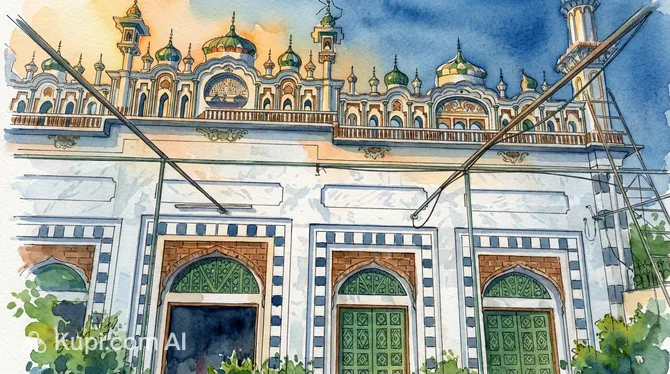
Bhawana is the colorful administrative center of the namesake tehsil in the Chiniot district, located in the heart of the Punjab province in Pakistan. This region is steeped in the atmosphere of a traditional rural lifestyle, where life flows at a measured pace against a backdrop of endless agricultural lands. The city serves as an important hub for the surrounding villages, combining the functions of a commercial and residential center.
Bhawana. Illustration.
Source: Kupi.com AI
Situated at an altitude of about 157 meters above sea level, the city is characterized by the typical climate of this region and a significant population exceeding 370,000 people (including rural areas). Exploring the history of this region allows for a better understanding of how the unique character of the local community, closely tied to the land and Punjabi cultural traditions, was formed.
Although Bhawana is not a major tourist or industrial hub, it attracts visitors with its authenticity. Here, you can see the real Pakistan: bustling local bazaars, traditional mosque architecture, and hospitable residents. Visiting this city is an excellent opportunity to escape the hustle and bustle of megacities and immerse yourself in the calm atmosphere of the Pakistani province.
Weather Overview
The climate in Bhawana is typical of the Punjab plains and is characterized by distinct seasonality. Summers here can be extremely hot: from May to June, the thermometer often crosses the +40°C mark. During this time, the air becomes dry and dusty, which is typical for agricultural regions ahead of the monsoons.
Winter months, by contrast, bring a pleasant chill. In January, the average temperature is about +12°C, while nights can be quite cold (down to +6°C), and days are sunny and mild. Rainfall is uneven: the rainiest period is July and August, when the region comes under the influence of monsoons, bringing long-awaited moisture for the fields.
When planning a trip, keep in mind that the most comfortable weather in Bhawana occurs from November to March. Expect a sunny and dry start to the year, and if your visit falls in the summer, be prepared for intense heat and pack light, modest clothing made of natural fabrics.
Average monthly temperature
Average monthly precipitation
Interesting Facts
22nd Largest by Population: According to the 2017 census, Bhawana holds a fairly high position on the list of Pakistan's populated areas, ahead of many more well-known cities.
Rural Majority: Nearly 91% of the residents of Bhawana Tehsil live in rural areas, making this district one of the most agrarian in the Punjab province.
Name Etymology: The city's name has deep roots in the Punjabi and Urdu languages, reflecting the cultural heritage of local tribes.
Geographical Point: The city is located at a strategically important altitude of 157 meters above sea level, which is typical for the Punjab plains but provides good soil drainage for agriculture.
Unique Identifiers: The city has its own postal code, 35350, and a telephone prefix, 047, which distinguishes it as an independent administrative unit within the district structure.
How to Get There
The easiest way to reach Bhawana is by road, as the city is located on a key regional highway connecting Jhang and Chiniot. Most travelers arrive here by bus or private car from major provincial hubs. A trip from Faisalabad (about 100 km) takes approximately 2–3 hours, while the journey from Lahore (about 200 km) will take 4 to 5 hours depending on traffic conditions.
Bhawana does not have its own airport, so air travelers should look to international terminals in neighboring cities. You can check detailed information about routes in advance to plan your transfers as conveniently as possible.
There is no direct rail connection to the city. The nearest significant stations are in Chiniot and Jhang, from where Bhawana can be reached by taxi or local buses. Within the tehsil, motor rickshaws and vans actively circulate, providing links between the urban center and surrounding villages.
Station
Passenger traffic
Distance
Faisalabad Railway Station
6
46 km
Okara Cantonment railway station
5
112 km
Lahore Junction Railway Station
12
161 km
Gujranwala railway station
6
161 km
Gujrat railway station
5
174 km
Main Attractions
The city of Bhawana is primarily an administrative and agricultural center, so there are few classic world-class tourist sites here. Nevertheless, tourists will find it interesting to observe the life of the local Central Bazaar, which is the heart of daily activity and allows one to feel the true spirit of Punjab.
Among the significant architectural sites are the local mosques and administrative buildings, which reflect the typical style of provincial Pakistan. These places are not always oriented towards external tourists, but that is precisely where their special value lies for those seeking authentic experiences and wanting to see the country's life from the inside without embellishment.
For those craving a more intensive excursion program, Bhawana serves as a convenient base for trips to neighboring cities. Just a few dozen kilometers away are the historical attractions of Chiniot, famous for its wood carving and magnificent architecture, making a stay in the region more diverse.
Local Cuisine
The culinary traditions of Bhawana are inextricably linked to the fertile lands of Punjab, so the local cuisine is hearty and abundant in natural products. The diet is based on grains, fresh vegetables, and meat. You should definitely try the traditional naan and roti flatbreads, which are baked in clay tandoor ovens and served hot with almost any dish.
Among the popular meat dishes are spicy chicken curry and tender mutton prepared using local spices. Dal—a thick and aromatic lentil soup—is very popular, as is saag, made from leafy greens (usually mustard) with the addition of clarified ghee butter. These dishes perfectly reflect the homestyle character of local gastronomy.
As for beverages, no visit is complete without a cup of traditional tea (chai), prepared here with milk, sugar, and fragrant cardamom. On hot summer days, locals cool off with refreshing lassi—a yogurt-based drink that can be either sweet or salty. Most establishments in the city are small street cafes and tea houses where food is prepared right in front of you using the freshest ingredients.
Travel Tips
A trip to Bhawana promises to be an interesting experience of immersion into authentic Pakistan. To ensure your visit goes smoothly and leaves only pleasant memories, follow our practical advice.
Clothing and Dress Code: Choose modest and closed clothing made from natural fabrics. Women are recommended to wear loose dresses or tunics and carry a scarf (dupatta) to cover their heads when visiting religious sites. In summer months, a hat and sunglasses are essential.
Finances: International cards are practically not accepted in Bhawana. Be sure to carry a sufficient supply of cash in Pakistani rupees. It is better to exchange currency in advance in large cities or at the airport, as finding an exchange office with a good rate in the tehsil itself can be difficult.
Health: Drink only bottled water and avoid ice in drinks at street cafes. It is recommended to carry a basic first-aid kit and insect repellent, as they can be active in rural areas.
Transport: Rickshaws are the most convenient way to move around the city. Always agree on the price of the trip in advance. For long-distance travel, choose buses from well-known companies departing from neighboring major hubs.
Communication: The primary languages of communication are Punjabi and Urdu. Not everyone understands English, so learn a few basic phrases: "Assalamu Alaikum" (hello) and "Shukriya" (thank you). An offline translator is useful.
Etiquette: Always remove your shoes when entering a home or mosque. Greet people and pass items using only your right hand. Locals are very friendly, but always ask for permission before taking a photo of someone.
What to Avoid: Do not walk alone after dark on the outskirts of the city. Also, refrain from discussing political or sensitive religious topics in public places to avoid misunderstandings.
Connectivity: Wi-Fi in hotels can be unstable. It is better to purchase a local SIM card (e.g., Zong or Jazz) in a large city, as a foreigner needs a passport and some time to register it.
May your journey to Bhawana be a vibrant discovery, full of warm encounters and amazing findings in the heart of Punjab!
Entertainment & Nightlife
Entertainment in Bhawana is of a quiet and traditional nature, due to the region's rural status and conservative traditions. You won't find the usual nightclubs or bars here, as the city's social life is centered around family values and socializing in tea houses (chai-khanas). It is in these small establishments that locals gather in the evenings to discuss the news over a cup of strong milk tea.
During the day, the main activity is concentrated in the markets and squares, where local fairs timed to religious or folk holidays sometimes take place. During such periods, the atmosphere in the city becomes especially festive, with street performers and mobile stalls selling sweets appearing.
For more active recreation, visits to cinemas, or modern cafes, travelers usually head to neighboring major centers such as Faisalabad. In Bhawana itself, it is worth taking the time for leisurely walks through the central streets, observing the colorful daily life and enjoying the tranquility of the Pakistani province, which becomes especially peaceful in the evening.
Parks & Museums
There are virtually no classic museums in Bhawana, as the city is not positioned as a cultural center for mass tourism. The main "museum" here is the life of the tehsil itself, where you can see crafts and traditions that haven't changed for decades in the markets and workshops. The history of the region lives here not in glass-cased exhibits, but in the architecture of old houses and the stories of local elders.
Park infrastructure in the city is also minimally developed. Given the high building density and intensive agriculture, the vast agricultural fields surrounding the city serve as green zones. For local residents, common outdoor relaxation spots are the squares in front of mosques or small landscaped areas near administrative buildings.
Nevertheless, nature lovers will find charm in the surrounding landscapes. A walk along the irrigation canals or on the outskirts of the city during sunset hours allows you to enjoy the picturesque rural landscapes of Punjab. If you require well-maintained gardens and parks with attractions, you should head to larger neighboring cities.
Getting Around
The public transport system in Bhawana is adapted to the needs of the local population and is characterized by simplicity. The main way to get around the city streets is by motor rickshaws (tuk-tuks), which are maneuverable and allow you to quickly reach any point. This is the most affordable and popular form of transport, with the fare usually negotiated in advance.
Mini-buses and specially equipped vans, known locally as "Hiaces," are used to connect the urban center with the numerous villages of the tehsil. They run on specific routes but do not have a strict schedule, departing as they fill up. Traffic jams in the city are rare, occurring mostly during peak hours around the central market.
Intercity connections are provided by buses traveling to Chiniot, Jhang, and other nearby cities. Fares are always paid in cash to the conductor or driver. Tourists are advised to carry small denominations. Despite the absence of modern ride-hailing apps, finding a car or rickshaw is easy—they wait in abundance in central squares and at the city exits.
Accommodation
Accommodation options in Bhawana are quite limited, as the city is not a mainstream tourist destination. It mainly features modest guest houses and apartments catering to visiting specialists or those arriving for long-term agribusiness purposes.
In the central part of the city, you can find several simple hotels where the cost of a night's stay ranges between 1,000 and 2,000 Pakistani rupees. Conditions in such establishments are basic: a clean bed, a fan, and a shared or private bathroom. The availability of air conditioning and hot water should be checked in advance, as these are not standard for the budget segment in rural areas.
Travelers are advised to book accommodation in advance, especially if the visit coincides with major holidays or the harvest season when the number of visitors increases. If you are looking for a higher level of comfort, consider staying in neighboring major cities like Faisalabad and visiting Bhawana as a day trip.
Nearby Cities
Bhawana is an excellent starting point for exploring central Punjab, offering access to several interesting cities in the region. Thanks to its convenient location, it is easy to plan day trips to the architectural and cultural monuments of neighboring districts.
Just 37 kilometers away is the city of Chiniot, which is rightfully considered a jewel of the region. It is famous for its unique wood carvings, the magnificent Omar Hayat Mahal palace, and picturesque views of the Chenab River. Another important destination is Jhang (44 km), an ancient city with a rich history and traditional bazaars. If you miss the city rhythm, the large industrial center of Faisalabad is 48 kilometers away, offering ample opportunities for shopping and visiting modern restaurants.
Exploring the surroundings of Bhawana will allow you to see the diversity of the Pakistani province—from quiet agrarian settlements to bustling commercial metropolises. Each of these destinations has its own unique character and is worth your time.
Shopping & Souvenirs
Shopping in Bhawana is primarily an immersion into the atmosphere of an oriental bazaar. There are no large shopping malls with international brands in the city, but there is an abundance of shops selling daily necessities, fabrics, and spices. The central market is the heart of the city's commercial life, where you can find everything from traditional shalwar kameez clothing to handmade copper and iron products.
Special attention should be paid to local textiles. Punjab is famous for its cotton fabrics and embroidery, so purchasing a piece of high-quality cloth or a ready-made shawl makes an excellent souvenir. The markets also offer a wide selection of spices and local products, such as nuts and dried fruits, which are of high quality and reasonably priced.
Shops and stalls generally operate from morning until late evening, though many close for Friday prayers. Payments are made predominantly in cash (Pakistani rupees), as bank cards are rarely accepted in rural areas. Don't forget that bargaining is appropriate and even expected in local markets—it is an integral part of the communication culture.