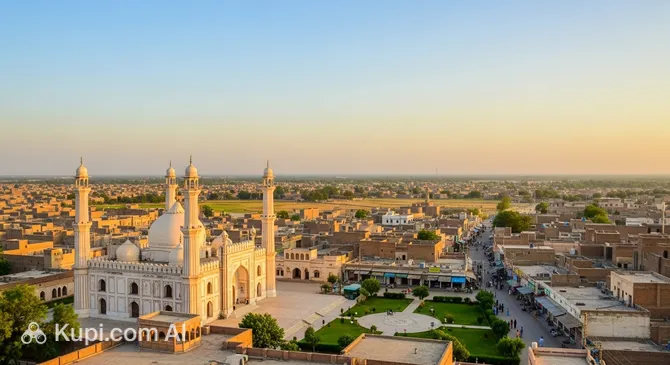
Hafizabad is a vibrant administrative and commercial hub located in the heart of the Punjab province in Pakistan. Spread across fertile plains, the city is rightfully known as the "land of wisdom and rice," serving as one of the region's most important agricultural centers. With a population of approximately 245,784, Hafizabad harmoniously combines the features of an ancient settlement with those of a modern trading city.
The city's geographical location in central Punjab, near the majestic Chenab River, has largely shaped its historical destiny and economic prosperity. Founded in the 16th century during the Mughal era, the city has preserved its old-world spirit in its narrow streets and traditional bazaars, which remain the focal point of daily life for locals.
Hafizabad. Illustration.
Source: Kupi.com AI
For tourists, Hafizabad is primarily attractive for its authentic atmosphere and unique architectural heritage, such as the ancient Akbari Gate and historical mosques. It is a place where you can see the real, non-touristic Pakistan, get acquainted with the traditional lifestyle of farmers and traders, and enjoy endless views of emerald rice fields. A visit to this city is an excellent choice for those seeking depth and authenticity in their travels.
Weather Overview
The climate of Hafizabad is characterized as subtropical, with pronounced seasonality and significant temperature fluctuations. Summer months, especially May and June, can be extremely hot, with the mercury often rising to +40°C and above. During this period, the air becomes dry and dusty, which is characteristic of the Punjab plains.
In contrast, winter in the city is very mild and pleasant: in January, the average temperature is around +12°C, and the gentle sun often shines during the day. Weather in Hafizabad is most favorable for walking between November and March. Precipitation mainly falls during the monsoon season in July and August, bringing long-awaited coolness but sometimes causing short-term flooding on the plains.
When planning your trip, expect very hot summers with occasional thunderstorms and comfortable, dry winters with cool nights. If your visit falls during the monsoon period, be prepared for high humidity and intense rain showers, which transform the surrounding agricultural landscape, making it incredibly green.
Average monthly temperature
Average monthly precipitation
Interesting Facts
The city was founded during the reign of Emperor Akbar (1556–1605) and was named after a Sufi named Hafiz, who, according to legend, assisted the Emperor during a hunt.
The area around Hafizabad has been inhabited since ancient times: in 327 BC, the troops of Alexander the Great passed through here during his Indian campaign through the region then known as "Sandal Bar."
Hafizabad is unofficially called the rice capital of the country due to its production of high-quality Basmati rice, which is exported to many countries worldwide.
From 1799 to 1849, the city was part of the powerful Sikh Empire, with its capital in Lahore, leaving a notable mark on local culture and architecture.
The railway, built during the colonial period, transformed Hafizabad from an isolated settlement into a key export hub, connecting it with the largest cities of Punjab.
How to Get There
Hafizabad has decent transport accessibility, connecting it to key cities in the Punjab province. Travelers should note that there is no airport in the city itself, so most tourists arrive via major transport hubs in neighboring metropolises. Detailed information about the routes can be found on the specialized guide pages.
For international flights, the most convenient option is Allama Iqbal International Airport in Lahore. From there, Hafizabad can be reached by taxi or intercity bus, a journey taking between 4 to 6 hours depending on traffic conditions. Transit via Faisalabad Airport, which is slightly closer, is also an option.
The railway is the most popular and reliable way to reach the city. The Hafizabad Railway Station regularly receives trains from Lahore and Faisalabad. The trip from Lahore usually takes about 3–4 hours. This is a great way to enjoy views of the Punjab plains, though it is worth allowing some extra time for potential schedule delays.
Station
Passenger traffic
Distance
Gujranwala railway station
6
49 km
Gujrat railway station
5
65 km
Lahore Junction Railway Station
12
82 km
Faisalabad Railway Station
6
92 km
Sialkot Junction railway station
3
93 km
Additionally, numerous minibuses and vans ("Hiaces") run between Hafizabad and neighboring cities. This is the cheapest but also the most crowded form of transport. If you prefer comfort, it is better to use intercity bus companies or book a private transfer via the N-60 and N-55 national highways.
Main Attractions
Although Hafizabad is not a typical tourist hub, it hides many interesting spots that reflect its centuries-old history. The main symbol of the city is the Akbari Gate — a majestic monument of the Mughal era, recalling the times when the city was an important administrative center. A stroll through the old city will allow you to see the remains of the Small Fort, which once served as a defense for these lands.
The spiritual life of the city is represented by the magnificent Eidgah Mosque, whose architecture impresses with its austerity and elegance. It is also worth noting the Gurdwara Chatti Sikh Badshahi — this cultural heritage site testifies to the multi-ethnic and multicultural past of the region, where representatives of different faiths once coexisted peacefully.
For those who appreciate natural beauty and rural aesthetics, the endless rice fields surrounding Hafizabad are a true attraction. Visiting these lands, especially during the harvest season, offers the chance to take unique photographs and observe traditional methods of processing the famous Basmati rice, for which this region is world-renowned.
Local Cuisine
The culinary traditions of Hafizabad are inextricably linked to the fertility of its land, so rice plays a leading role in the local menu. You must try the authentic Biryani and aromatic Pulao, prepared from the finest local Basmati. Rice is usually served with delicate Raita (spiced yogurt) and a fresh vegetable salad, making the meal satisfying and balanced.
Meat dishes also hold an important place in the diet: juicy kebabs, spicy curries, and traditional Haleem (a thick stew of meat and grains) can be found in any local eatery. Popular baked goods include freshly made flatbreads like Naan and Chapati, which serve as the perfect accompaniment to any sauce. For dessert, be sure to order Gulab Jamun or Phirni rice pudding, which has a delicate creamy flavor.
The food culture in Hafizabad is mainly represented by street eateries (dhabas) and family tea houses, which always have a lively atmosphere. Among drinks, traditional sweet milk tea (Dudh Chai) and refreshing Lassi — a yogurt-based drink that is a perfect savior from the Punjab heat — lead the way. In season, be sure to try fresh sugarcane juice or juicy mangoes.
Travel Tips
A visit to Hafizabad will give you a unique experience of getting to know the Pakistani hinterland, but for a comfortable trip, several practical nuances should be considered. These tips will help you feel more confident and avoid common misunderstandings.
Clothing and Essentials: Choose modest, closed clothing that respects local traditions. Men should avoid shorts, and women are recommended to wear long dresses or tunics and to carry a light scarf. Sunglasses and a head covering are essential during the summer months.
Transport: Motor rickshaws are best for moving around the city. Always agree on the price beforehand, as meters are not used here.
Finances: The main currency is the Pakistani Rupee. Always carry a sufficient supply of cash, as ATMs may not be available in older districts, and cards are only accepted in rare cases.
Health: Drink exclusively bottled water and avoid ice in drinks at street cafes. Pharmacies can be found in central areas, but it is better to bring specific medications with you.
Communication: The main languages are Punjabi and Urdu. Not everyone understands English, so it is useful to learn a few basic phrases or have an offline translator handy. Purchasing a local SIM card (such as Jazz) will provide you with mobile internet.
Etiquette: Always ask for permission before taking photos of local residents. The greeting "As-salamu alaykum" will help quickly build rapport with your interlocutor.
Safety: Hafizabad is generally safe during the day, but it is better to avoid walking on the outskirts and near rice fields at night due to poor lighting.
Extra Tip: Try to get to the local market early in the morning — this is when the rice trade is most active, and you will see the city in all its glory.
May your journey to Hafizabad be filled with bright discoveries and warm encounters! This city knows how to surprise those who are ready to step off the beaten tourist path.
Entertainment & Nightlife
The entertainment scene in Hafizabad reflects the conservative and tranquil nature of provincial Pakistan. You won't find noisy nightclubs or bars here, as the city's social life revolves around family and traditional gathering spots. The main leisure activities for locals are evening walks through the central markets and sitting in colorful tea houses, where the latest news and cricket match results are discussed over a cup of hot tea.
In the evening, the city transforms thanks to the soft lighting of the shops and the aromas of street food. The most popular place for an evening promenade is the Railway Bazaar area, where life buzzes until late at night. For those seeking more active entertainment, harvest fairs are sometimes organized during the summer, featuring performances by folk groups and traditional competitions.
Daytime activities in the city include visiting small parks or watching sporting events at local stadiums. If you are looking for more modern entertainment formats, such as cinemas or large amusement centers, locals typically head to nearby Gujranwala or Lahore, which are within a couple of hours' drive.
Parks & Museums
The museum infrastructure in Hafizabad is currently almost non-existent, as the city develops primarily as an agricultural and trade center. The main "open-air museum" here is the old city itself, where the architectural details of buildings from the Mughal and Sikh eras tell the story of the region better than any exhibits. For those interested in the past, a walk past the historical gates and mosques will be a fascinating immersion into Punjab's heritage.
Park areas in Hafizabad are represented by small squares that locals use for evening relaxation. Although the city lacks large-scale botanical gardens, picturesque landscapes can be found along the banks of the Chenab River. This is a popular spot for family picnics, where you can enjoy the cool breeze from the water and views of the endless fields. City greenery is mostly maintained through private gardens, creating pleasant green oases amidst the dense urban development.
Residents compensate for the lack of large cultural institutions with trips to neighboring cities. For example, people often head to Sheikhupura or Lahore to visit proper museums or large, well-equipped amusement parks. Nevertheless, the natural beauty of Hafizabad's agricultural outskirts has its own unique charm for fans of rural tourism.
Getting Around
The public transport system in Hafizabad is typical for provincial cities in Punjab and consists mainly of buses, minibuses, and motor rickshaws. Within the city, rickshaws are the most convenient and fastest way to get around. They are maneuverable, which is especially important in the old part of the city with its narrow streets, and are relatively inexpensive — a short trip costs about 50–100 Rupees.
Small vans ("Hiaces") run between districts and to the suburbs, and they are always packed to capacity. This is the most affordable option, but it requires a certain level of endurance from the tourist. The city layout in the center allows for walking, but keep in mind the lack of sidewalks on the outskirts and the heavy truck traffic near the markets.
Fares for city transport are paid in cash directly to the driver or conductor. Transport operating hours are usually tied to daylight and market activity: movement starts early in the morning and subsides by 8–9 PM. Modern ride-hailing apps (such as Careem) have limited availability in the city, so catching a rickshaw on the street remains the most reliable way to travel.
Accommodation
Accommodation options in Hafizabad are primarily geared toward business travelers and transit tourists, so budget guesthouses and small hotels predominate. There are no luxury five-star hotels in the city, but the available options offer the basic amenities necessary for a comfortable rest after a journey.
Most guesthouses are concentrated in the central part of the city and near transport hubs, which is convenient for quick access to markets and administrative buildings. The price range for a standard room varies from 2,000 to 5,000 Pakistani Rupees per night. Short-term rental apartments are also available but are less popular among foreign guests.
When planning your trip, it is recommended to book accommodation in advance, especially if your visit coincides with major agricultural fairs or religious holidays. Local aggregator sites or direct contact with guesthouse management remain the primary booking methods. Don't forget to confirm the availability of air conditioning, which is particularly critical during the hot summer months.
Nearby Cities
Hafizabad serves as an excellent starting point for exploring the central part of the Punjab province, offering travelers the opportunity to discover the history and culture of neighboring regions through day trips. The city's surroundings are rich in architectural monuments and bustling trade centers.
Just 48 kilometers away is the city of Sheikhupura, famous for its majestic fort and the Hiran Minar hunting complex built by Emperor Jahangir. Another interesting destination is Gujranwala, often called the culinary capital of Punjab. This city is worth visiting for its famous meat dishes and colorful markets. Also worth noting is Mandi Bahauddin, known for its peaceful atmosphere and agricultural heritage.
Traveling around the surrounding areas will allow you to see the diversity of the Pakistani province: from industrial landscapes to quiet farmlands. Most of these cities are easily accessible by bus or train, making trips from Hafizabad convenient and budget-friendly.
Shopping & Souvenirs
Shopping in Hafizabad is, above all, an immersion into the atmosphere of traditional Oriental bazaars. You won't find huge shopping malls with glass storefronts here, but you can experience the authentic flavor of local trade. The main shopping hubs are concentrated in the Old Market and the Railway Bazaar, where you can find absolutely everything from tractor spare parts to exquisite fabrics.
The most important item to bring home from Hafizabad is, of course, the local Basmati rice. It is available in huge variety in the city's markets, and connoisseurs claim that this is where you can buy the freshest and most aromatic product at the best prices. It is also worth paying attention to Punjabi textiles: brightly colored scarves and fabrics with traditional embroidery make excellent gifts.
Shops usually open around 9–10 AM and stay open until late evening, often with a break for lunch and prayer. Payment is made predominantly in cash (Pakistani Rupees); cards are accepted very rarely and only in larger shops. Bargaining in the markets is not only appropriate but is part of the local culture of communication — do not hesitate to discuss the price with the vendors.