Chiniot is an amazing city in the Punjab province, located on the left bank of the Chenab River. In Pakistan, it is rightfully considered one of the most unique cultural centers. The city is world-famous for its unsurpassed art of wood carving and the production of exquisite furniture, the secrets of which have been passed down here from generation to generation since the Mughal era.
Geographically, the city occupies a favorable position on the plains of Punjab, which led to its development as an important agricultural and industrial hub. According to the latest data, the population of Chiniot is approximately 477,781 people. The climate here is typical for the region: hot summers are followed by mild and pleasant winters, making a visit to the city comfortable during the cooler months.
Chiniot. Illustration.
Source: Kupi.com AI
Travelers are drawn here not only by its craft-related fame but also by its magnificent architecture. Looking into the city's rich historical heritage, one can find majestic mosques and palaces that rival the famous monuments of Lahore in beauty. The combination of bustling markets, the aroma of spices, and the steady rhythm of craftsmen's lives creates a unique atmosphere of the traditional East.
A visit to Chiniot will be an unforgettable experience for those seeking authentic culture and wanting to see the work of masters whose products decorate interiors all over the world. We invite you to immerse yourself in the world of ancient traditions and hospitality of this Punjabi treasure.
Weather Overview
The climate in Chiniot is classified as subtropical continental, which implies significant seasonal temperature fluctuations. Summer in the city arrives early and is characterized by extreme heat: from May to June, the thermometer often rises to +40°C...+45°C. During this time, the air is dry and dusty, which is typical for the Punjab plains.
Winter, by contrast, brings long-awaited coolness and is considered the best time for tourist walks. In January, the average temperature is about +12°C, while during the day it can reach +18°C, and at night it cools down to +6°C. Rainfall in the region is unevenly distributed: most of it falls during the monsoon season in July and August, when intense downpours occur, temporarily bringing relief from the heat.
Expect a very hot summer with occasional dust storms and a mild, dry winter, during which morning fogs sometimes occur. If you want to know more about what clothes to bring, we recommend checking out the detailed information about the weather in Chiniot by month. Autumn and spring here are fleeting but also favorable for visiting the city's craft markets.
Average monthly temperature
Average monthly precipitation
Interesting Facts
Woodwork Capital: Chiniot is internationally famous as the "City of Woodwork." Local craftsmen are considered the best in Pakistan, and their furniture and interior items with the finest inlay are exported to many countries around the world.
Architectural Kinship: The local Shahi Masjid was built by Wazir Saadullah Khan, who also oversaw the construction of the famous Jama Masjid in Delhi, explaining their stylistic similarity.
The Mystery Palace: The five-story Umar Hayat Palace is considered one of the most beautiful wooden buildings in South Asia. Legend has it that its construction was associated with a tragic family story, adding an air of mysticism to the place.
Agricultural Giant: In addition to crafts, the region is an important supplier of wheat, rice, and sugarcane, and the fields surrounding the city form the picturesque rural landscape of Punjab.
Ancient Roots: According to historical legends, the city was founded in antiquity and is mentioned in chronicles from the time of Alexander the Great, although its modern appearance was shaped much later.
How to Get There
The transport accessibility of Chiniot is ensured by its proximity to the largest industrial and cultural centers of Punjab. The city is connected by a network of paved roads to Lahore and Faisalabad, making it a convenient stop during a tour of Pakistan. You can find detailed information about routes in the section on how to get to Chiniot.
The nearest major international air hub is Lahore Airport (Allama Iqbal International), located about 150 kilometers away. From there, the city can be reached by taxi or intercity bus in 2.5–4 hours. Many travelers also use Faisalabad Airport, which is significantly closer (about 50 km), reducing travel time to an hour and a half.
Railway communication in Chiniot is less developed than road transport. The local station accepts only a limited number of trains, so most tourists prefer to use bus carriers. Both private minibuses (wagons) and scheduled buses running between major provincial cities are popular. Traveling by car via GT Road or through the M-2/M-3 motorways remains the most comfortable way to get around.
Station
Passenger traffic
Distance
Faisalabad Railway Station
6
36 km
Okara Cantonment railway station
5
114 km
Gujranwala railway station
6
125 km
Lahore Junction Railway Station
12
130 km
Gujrat railway station
5
138 km
Main Attractions
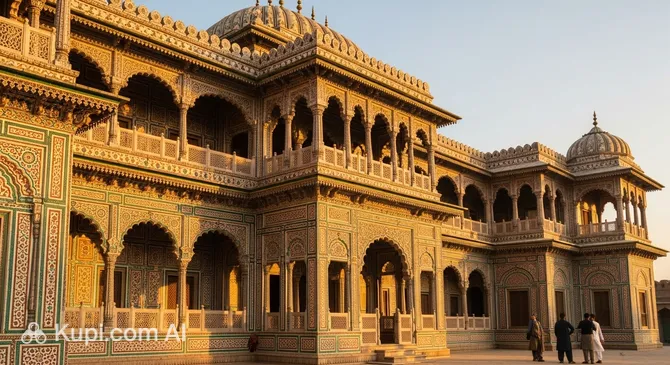
The main attractions of Chiniot are inextricably linked to its architectural past and craft-focused present. The jewel of the city is the majestic Shahi Masjid, built in the 17th century. Its grandiose domes and minarets, executed in the best traditions of the Mughal style, bring to mind the famous Badshahi Mosque in Lahore. The stonework and exquisite finishing make it a must-see for any history lover.
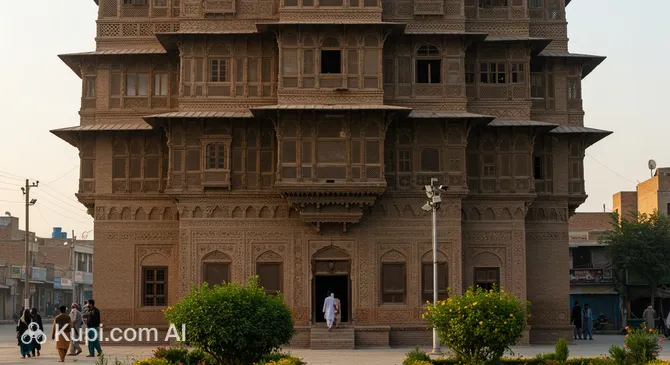
An equally impressive site is the legendary Umar Hayat Palace (also known as Gulzar Manzil). This five-story wooden architectural marvel, adorned with the finest carvings and inlays, serves as a monument to the skill of local woodcarvers. Despite the passage of time, the building retains its grandeur, demonstrating incredible detail in every element of the facade and interior.
Umar Hayat Mahal. Illustration.
Source: Kupi.com AI
Traveler photos:
For those who want to feel the living pulse of the city, the central markets are the ideal place. Here, Chiniot appears in all its glory: hundreds of workshops where furniture masterpieces are created right before the eyes of passersby. Craftsmen work with shisham wood (dalbergia), creating patterns that seem almost weightless. It is also worth seeing the ancient Chiniot Fort, which, despite its ruins, preserves the spirit of bygone eras and allows you to touch the region's military past.
Local Cuisine
The gastronomic scene in Chiniot is a true paradise for lovers of authentic Punjabi cuisine. The city's main signature dish is rightfully Chinioti Karahi—a spicy meat curry prepared in a special deep pan with plenty of spices, ginger, and garlic. Another local pride is Kunna Gosht, meat that is slow-cooked in a clay pot for a long time, acquiring incredible tenderness and a rich aroma.
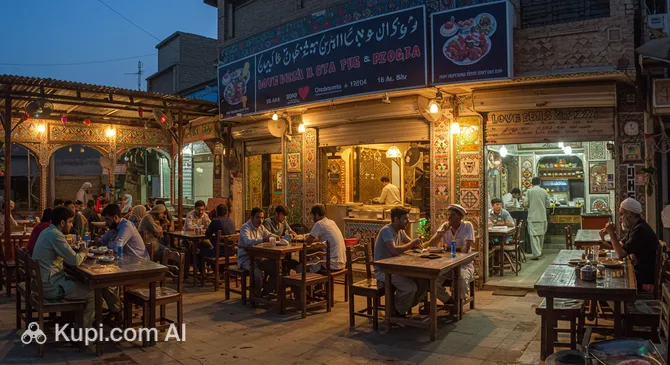
For those looking for familiar flavors in a modern version, there are establishments like Love Bites Grill & Pizza. Here you can find both grilled dishes and pizza, which is convenient for family lunches. Another popular option for a quick bite is Chicken Hut, which serves popular regional chicken dishes. The food culture here is centered around markets and busy roads, where local dhabas (traditional cafes) operate, offering the freshest naan bread, Nihari, and Biryani.
Love Bites Grill & Pizza. Illustration.
Source: Kupi.com AI
Traveler photos:
Among drinks in Chiniot, Lassi leads the way—a refreshing yogurt drink that is especially good on hot days. Strong Chai with milk is also drunk everywhere, as well as freshly squeezed sugarcane juice sold right on the streets. When choosing a place to eat, try to look for establishments with a high flow of customers, which usually guarantees the freshness of the products, as hygiene standards in small street stalls can vary.
Travel Tips
Planning a trip to Chiniot requires considering local characteristics, and these practical tips will help make your journey as comfortable and safe as possible.
Clothing and Dress Code: Choose modest clothing that covers shoulders and knees, as Chiniot is a conservative city. Women are advised to carry a light scarf when visiting mosques. In winter (December-February), warm clothes may be useful as nights can be chilly.
Getting Around: The most convenient way to travel short distances is motorickshaws. For trips between cities, it is better to use the Careem or Uber apps from Lahore or Faisalabad, but be prepared for traffic jams near the bridges over the Chenab River.
Finances: The official currency is the Pakistani Rupee (PKR). Be sure to carry enough cash, as ATMs are rare in the city, and international cards are accepted only at very large outlets.
Health: Drink only bottled water and avoid ice in drinks on the street. Pharmacies can be found in central areas, but it is better to bring specific medications with you.
Communication: The main languages are Punjabi and Urdu. English is understood by employees of large stores and the youth, but learning a few polite phrases in Urdu is very well-received by locals.
Etiquette: Greet people with your right hand and always ask for permission before taking photos of locals or their workshops. Hospitality is highly valued here, so don't be surprised by an invitation for a cup of tea.
What to Avoid: It's best not to plan important business during Friday prayers (Friday afternoon), as most shops and workshops will be closed. Also, avoid walking alone in poorly lit suburban areas after dark.
Environment: Be prepared for the city to be quite dusty during the dry season due to the work of furniture workshops and heavy traffic.
Following these simple rules will allow you to focus on the beauty of the architecture and the skill of the craftsmen, making your visit to Chiniot a truly pleasant experience.
Entertainment & Nightlife
Entertainment in Chiniot is primarily cultural and family-oriented, as the city adheres to conservative traditions. Nightlife here is practically non-existent in the sense familiar to Western tourists—after 10:00 PM, life on the streets quiets down, and establishments close. Most evening activity is concentrated in the markets and small cafes along the main roads, where locals gather for leisurely conversations.
Nonetheless, the city transforms during annual cultural festivals. This is the best time to visit, as the streets fill with the sounds of folk music, and masters perform traditional dances like Bhangra and Giddha. Such events provide a rare opportunity to see authentic Pakistani folk art and purchase unique handcrafted items directly from the creators.
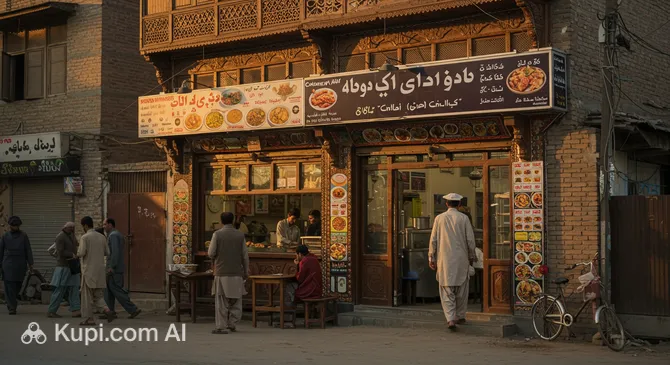
For those who get hungry during an evening stroll, a great option is Love Bites Grill & Pizza, where you can try both local and more familiar dishes. Chicken Hut is also popular, offering hearty options for a quick snack. If you are looking for more vibrant entertainment, cinemas, or large shopping malls, locals usually recommend heading to neighboring Faisalabad or Lahore, a trip that takes between one and three hours.
Chicken Hut. Illustration.
Source: Kupi.com AI
Traveler photos:
Parks & Museums
Chiniot is a city where history lives right on the streets, so there aren't many traditional museums in the classic sense. The old core of the city itself, with its craft workshops, serves as an open-air museum. However, a true treasure and a must-visit site is the Umar Hayat Palace. The building itself is an exhibit: inside, there are magnificent examples of wood carving, paintings, and a unique library reflecting the cultural richness of the region.
As for green zones, Chiniot, like many Punjabi industrial cities, is characterized by dense buildings. Greenery here is limited, and you won't find large parks comparable to Lahore's Shalimar Gardens. The main places for outdoor walks are concentrated near the banks of the Chenab River and in the areas of majestic mosques, such as Shahi Masjid, where inner courtyards create an atmosphere of peace and coolness.
Umar Hayat Mahal. Illustration.
Source: Kupi.com AI
Traveler photos:
For those interested in nature and agriculture, the best option is to head outside the city limits. The surrounding fields of sugarcane and wheat create a natural green belt that is especially pleasing to the eye during the winter period. Locals often use roadside green areas for relaxation, but tourists are recommended to visit historical sites, which in Chiniot replace any art galleries.
Getting Around
The public transport system in Chiniot is typical for medium-sized cities in Pakistan and relies heavily on private carriers. The main and most convenient way to get around the city is rickshaws (both motorized and cycle rickshaws). They maneuver easily through the narrow streets of the old quarters and near markets where congestion often occurs. The cost of a trip is low, but the price should always be agreed upon in advance.
Small buses and vans, called wagons, are used to connect with the outskirts and neighboring settlements. They run on fixed routes and are very cheap, but they are often overcrowded, especially during peak hours—from 7:00 AM to 9:00 AM and in the evening after 5:00 PM. In the city center, many attractions, including mosques and furniture markets, are located fairly compactly, allowing them to be explored on foot.
Alternative local transport options include ride-hailing apps like Careem or Uber, which operate in the region, but due to heavy traffic in the city center, they may take longer to reach you than a regular rickshaw. Payment for municipal and private transport is made exclusively in cash. Tourists are not recommended to rent motorcycles or cars for self-driving due to the chaotic traffic and lack of clear rules on the roads.
Accommodation
Accommodation options in Chiniot are primarily aimed at local business travelers and furniture buyers, so the hospitality infrastructure is basic. The city is dominated by budget guesthouses and small mid-range hotels located near the main markets and along major transport arteries. The cost of a room usually ranges from 2,000 to 5,000 Pakistani rupees per night.
If you plan to visit iconic sites like the Umar Hayat Palace, it is worth considering accommodation in the central part of the city to be able to walk to key workshops. However, keep in mind that during peak seasons and local festivals, vacancies in the best guest houses can fill up quickly, so it is recommended to book accommodation in advance through local services or by phone.
Love Bites Grill & Pizza. Illustration.
Source: Kupi.com AI
Traveler photos:
For tourists accustomed to a high level of service and chain hotels, staying in neighboring Faisalabad is often a more convenient option. The choice of hotels there is significantly wider, including international standards, and the proximity to Chiniot allows for day trips to the "city of craftsmen" without rushing. Long-term house rentals in Chiniot itself are popular among expats and specialists coming to work with furniture manufacturers.
Nearby Cities
Chiniot serves as an excellent starting point for exploring central Punjab, offering easy access to the region's major industrial and historical centers. Just 34 kilometers away is Faisalabad—a massive metropolis and the country's textile capital. A trip there takes about an hour and allows you to swap the quiet atmosphere of craft shops for bustling modern markets and shopping centers.
In the opposite direction, about 47 kilometers away, lies the city of Sargodha, known for its citrus orchards and important trade hubs. For those who want to see the life of smaller Pakistani settlements, trips to Lalian or Bhawana, which can be reached in less than an hour, will be interesting. Each of these destinations reveals its own facets of Punjabi hospitality and lifestyle.
We strongly recommend not limiting yourself to city walks and taking time to explore the surroundings. The region around Chiniot is rich in agricultural landscapes, which are particularly picturesque during the flowering season. A well-developed bus network and the availability of taxis make such day trips easy and full of impressions.
Shopping & Souvenirs
Shopping in Chiniot is primarily a hunt for unique wooden products. The city does not have modern shopping centers with global brands, but it offers something much more valuable—the opportunity to purchase authentic handmade furniture. The main shopping area is Katchery Bazaar and its adjacent streets, where hundreds of shops and woodcarvers' workshops are concentrated.
Tourists should look for interior items that are easy to transport: inlaid trays, jewelry boxes, wall panels, and small coffee tables with exquisite carvings. If you are planning a serious purchase, such as a bed or a suite in the Mughal style, the masters of Chiniot will be happy to take an order, although international shipping will require extra effort. Local furniture is famous for its durability and the use of solid shisham wood.
Chiniot. Illustration.
Source: Kupi.com AI
In addition to wood, quality Punjabi textiles, spices, and traditional clothing can be found in the city's bazaars. Shops usually operate from 10:00 AM until late evening, though many stalls close during Friday prayers. Payment is made primarily in cash in local rupees; bank cards are accepted very rarely and only in very large furniture showrooms. And don't forget to bargain—in the bazaars of Chiniot, it's not just a way to lower the price, but an important part of the communication culture.