Located near the picturesque town of Lonavala, in the heart of India, a true treasure of ancient architecture lies hidden within a basalt rock—the Karla Caves. This impressive complex is one of the oldest and most significant hand-cut Buddhist monasteries. Its creation began as early as the 2nd century BC and continued for several centuries, leaving behind a unique monument of history and spirituality.
The central and most grand structure of the complex is the chaitya-griha—a massive prayer hall. It is considered the largest and best-preserved cave temple of its kind in all of India. Its dimensions are staggering: the hall reaches 45 meters in length and about 14 meters in height. Inside the hall, two rows of majestic columns decorated with sculptures lead to a massive stupa, creating an atmosphere of peace and reverence.
In addition to the main hall, the complex includes another 15 smaller caves known as viharas. Buddhist monks once lived and meditated in these cells. The skill of the ancient builders, who managed to create such complex and geometrically precise structures directly in the monolithic rock without modern technology, evokes genuine admiration. Visiting the Karla Caves is an opportunity to touch centuries of history and appreciate the incredible achievements of the human spirit.
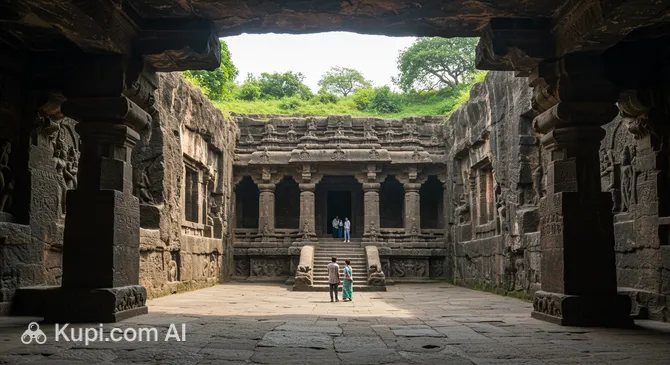
Traveler photos:
Situated on an ancient trade route, the Karla Caves were not only a religious center but also an important stop for travelers and merchants. Today, they attract tourists from all over the world with their unique atmosphere and stunning architecture. This complex is part of a group of caves that also includes the nearby Bhaja and Bedse caves, making it a must-visit for anyone interested in India's history and culture.