Support

Hanging Gardens

About

The Hanging Gardens, also known as Pherozeshah Mehta Gardens, are famous terraced gardens nestled atop Malabar Hill in Mumbai. Established in 1881, they are one of the most beloved green oases in India's bustling metropolis, offering visitors peace and picturesque views. This place is perfect for leisurely walks and a break from the city's hustle and bustle.

The gardens earned their intriguing name, "Hanging," due to their unique location. They are laid out on the roof of a massive underground reservoir that provides drinking water to a significant part of the city, creating the impression that the gardens are floating above the ground. This feature makes them not just a beautiful park but an interesting example of late 19th-century urban engineering.

The main attraction of the gardens, besides the lush greenery and flower beds, is the skillfully trimmed hedges shaped like various animals, which delight both children and adults. The park's observation decks offer breathtaking views of the Arabian Sea and the famous Marine Drive. A walk along the well-kept paths, lined with whimsical sculptures and cozy gazebos, will leave you with plenty of pleasant impressions.
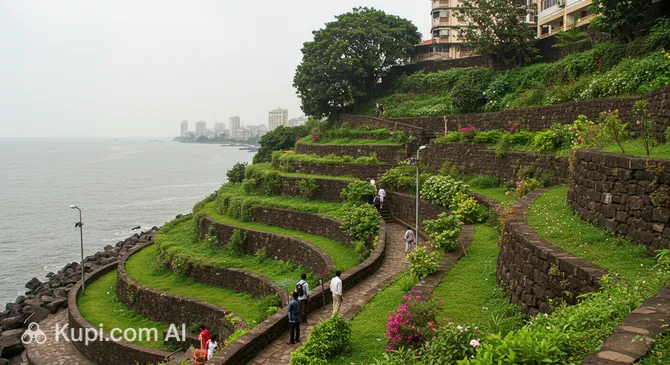
Hanging Gardens. Illustration.
Source: Kupi.com AI

Traveler photos:

Contacts

For more information about the Hanging Gardens or to clarify details, you can contact the Parks and Gardens Department of the Municipal Corporation of Greater Mumbai, which manages the area. The park does not have its own official website, but up-to-date information can often be found on the city's official portal.

How to contactContact
AddressRidge Rd, Simla Nagar, Malabar Hill, Mumbai, Maharashtra 400006, India
Websitehanginggardens.co

What to Do

In the Hanging Gardens, visitors can enjoy a peaceful stroll along manicured paths amidst lush greenery, which is especially precious in noisy and crowded Mumbai. The gardens' main attraction, particularly popular with children, is the numerous topiaries — shrubs skillfully trimmed into the shapes of animals like elephants and giraffes. These green sculptures provide great photo opportunities and give the park a fairytale atmosphere.

Beyond walking, the gardens offer several vantage points with magnificent panoramic views of the city and the Arabian Sea. The view at sunset is especially beautiful when the "Queen's Necklace" — the famous illuminated Marine Drive — begins to sparkle with lights, creating an unforgettable sight. This makes the gardens a popular spot for romantic dates and contemplative relaxation.

Many visitors combine their trip to the Hanging Gardens with a walk through the adjacent Kamala Nehru Park, which features picnic spots and a playground. Nearby is also the Tower of Silence (Dakhma), where Parsis (Zoroastrians) traditionally conducted burial rites, though the tower itself is closed to the public and only visible from a distance. Entry to the gardens is free, making them an accessible getaway for both tourists and locals.

Getting There

Getting to the Hanging Gardens, located on Malabar Hill in the southern part of Mumbai, is quite easy thanks to the city's well-developed transport system. If you prefer public transport, the nearest railway station is Charni Road on the Western Line of the suburban railway. From the station, you can transfer to bus No. 108 or take a taxi directly to the gardens. Additionally, other city bus routes lead to the park and nearby attractions, including Nos. 83, 85, 86, 87, and 9.

One of the most convenient ways to reach the gardens is by taxi or auto-rickshaw, which are widely available throughout the city. To avoid overcharging and ensure a comfortable journey, it is recommended to use popular ride-hailing apps like Ola or Uber. This is especially convenient for tourists, as it allows you to see the cost of the trip and the route in advance.

For those traveling by private or rented car, parking is available near the Hanging Gardens. However, keep in mind that parking spaces can be limited, especially on weekends and holidays when the park is visited by many locals and tourists. Therefore, when planning a visit during peak times, it is better to leave early or consider alternative ways of getting around.

Nearest city: Mumbai

History & Facts

The history of the Hanging Gardens is inextricably linked to the development of Mumbai at the end of the 19th century. They were created in the 1880s based on a design by British architect Ulhas Grugins. Originally, the site was named the Pherozeshah Gardens in honor of the famous philanthropist Pherozeshah Jamsetjee Jeejeebhoy, who provided funds for their construction. From the very beginning, these gardens were more than just a beautiful park, serving an important engineering purpose.

The main reason for creating the gardens was the need to protect the massive drinking water reservoirs, built on Malabar Hill in 1864, from pollution. The greenery served as a natural filter, preventing leaves and other debris from entering the city's vital water source. Thus, what began as a purely practical solution eventually turned into one of the most beloved recreation spots for residents and visitors, harmoniously combining utility and beauty.

Over time, the gardens have been renovated several times to meet modern requirements and maintain their appeal. In 1921, the first major reconstruction of the park took place. Much later, in 2007, the Mumbai municipal authorities initiated another update, during which new landscape design elements were added and infrastructure for visitors was improved. All the while, the historical spirit and unique character of this green corner of India were preserved.

Time Needed

For a complete experience at the Hanging Gardens, an average visitor should set aside 1–2 hours. This time is quite enough to leisurely walk around the entire area, examine the whimsical topiaries, take memorable photos, and enjoy the panoramic views of the city from the observation decks.

If you want to make your trip more fulfilling, you can combine a visit to the Hanging Gardens with a stroll through the neighboring Kamala Nehru Park. In this case, you should add about another hour to your plan. Such a combined route will allow you to fully enjoy the green oasis on Malabar Hill and take a break from the city bustle.

To get the most out of your visit, it is recommended to come to the gardens early in the morning or later in the evening, before sunset. During these hours, it is not as hot, and the soft lighting creates ideal conditions for photography and contemplating the picturesque views of the Arabian Sea and the famous Marine Drive.

Working Hours

The Hanging Gardens are open to visitors year-round, making them an accessible recreation spot at any time. You can visit this green oasis daily from 5:00 AM to 9:00 PM. Entry to the gardens is free for everyone, and no advance booking is required, allowing for spontaneous visits.

The evening hours are considered the most popular time for walking through the gardens. It is at sunset that you can enjoy not only the pleasant coolness but also the breathtaking views of illuminated Mumbai. It's worth noting that it can get quite crowded on weekends and holidays. If you prefer a quieter and more secluded atmosphere, it's better to plan your visit for a weekday.

6:00 – 20:00

Nearby

A visit to the Hanging Gardens is just one part of an exciting journey through the Malabar Hill area of Mumbai. Exploring the surroundings will allow you to dive deeper into the city's atmosphere and discover other iconic landmarks nearby. Each of these attractions has its own unique history and offers new experiences.

A walk through the nearby locations will enrich your visit by showing the contrasts and multifaceted nature of this part of India. From bustling waterfronts to secluded shrines, everything is within walking distance or a short drive from the gardens, creating a great opportunity for a busy day out.

NameDistance
Marine Drive0.8 km
Girgaon Chowpatty1.3 km
Trident Restaurant, Nariman Point3.6 km
Flora Fountain3.9 km
Chhatrapati Shivaji Maharaj Vastu Sangrahalaya4.4 km
AER4.4 km
Gateway of India4.9 km

Have you reached the end of the page?

So the route has been studied inside and out