Support

Sarangpur

About

Sarangpur is a charming and authentic town located in western India, in the state of Gujarat. It attracts travelers with its peaceful atmosphere and the opportunity to immerse themselves in authentic Indian culture, far from the hustle and bustle of major metropolises. The town is famous for its religious significance and is an important center for followers of Hinduism.

Geographically, Sarangpur is located approximately 100 kilometers southwest of the city of Botad, on a fertile plain surrounded by traditional Indian landscapes with green fields. The town's population is about 37,000 people, allowing it to maintain a quiet and measured way of life. Although Sarangpur is not an administrative hub, it plays an important role in the cultural and spiritual life of the region.
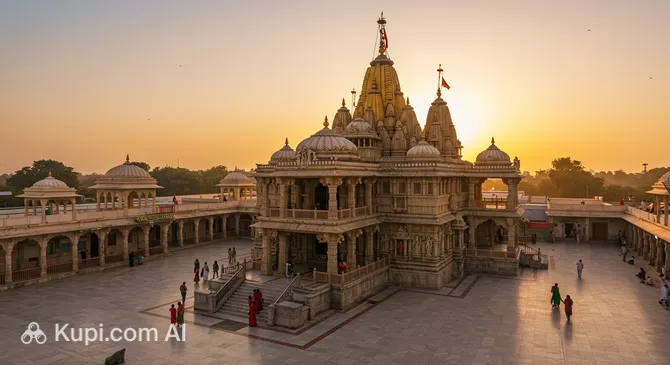
Sarangpur. Illustration.
Source: Kupi.com AI

The main highlight of Sarangpur is its special atmosphere. Tranquility reigns here, and daily life is filled with bright colors, the aromas of spices, and the sounds of traditional music. One of the key attractions is the Shri Hanuman Mandir temple complex, known for its majestic statue of Hanuman and attracting pilgrims from all over the country. The town is also known for its festivals and religious ceremonies, which are held on a grand scale and provide a deeper understanding of local traditions.

Sarangpur is an ideal place for those seeking not just a tourist trip, but a true immersion into culture and spirituality. A visit to this town will give you a unique experience of getting to know ancient customs, enjoying the authentic atmosphere of the Gujarati province, and, perhaps, finding peace of mind. This journey will leave a lasting impression for a lifetime.

You can find more interesting facts on the history of Sarangpur page.

Weather Overview

The weather in Sarangpur is characterized by a hot climate throughout most of the year. The highest temperatures occur in April and May, when average temperatures can reach 32-35°C, and maximums can rise above 40°C. Winter months, such as January and December, are milder, with average temperatures around 20-22°C and minimums around 14-16°C.

The main rainy season occurs from June to September, with July being the wettest month with the most precipitation and rainy days. During the rest of the year, especially from October to May, rainfall is minimal or non-existent. Expect hot summers with monsoon rains and warm, dry winters. For more detailed information, you can check the Sarangpur climate data.

Average monthly temperature

Average monthly precipitation

Interesting Facts

In addition to its main shrines, Sarangpur hides many amazing stories and features that make it a truly unique place. Ready to learn some interesting facts about this town in India?

  • Sarangpur is known throughout India for the Kashtabhanjan Hanuman Mandir—one of the most revered temples dedicated to the god Hanuman. Every year, pilgrims from all corners of the country flock here to worship and ask the deity for deliverance from troubles and suffering.

  • According to local legend, it was in Sarangpur that Hanuman manifested his divine power, freeing the residents from fear and hardship. It is believed that the temple built on this site possesses special energy capable of helping believers overcome inner and outer difficulties.

  • The town is famous for its vibrant religious holidays, especially Hanuman Jayanti—the birthday of the god Hanuman—which is celebrated with great pomp. During this time, Sarangpur is transformed: the streets are filled with music, dancing, colorful processions, and the mouth-watering aromas of street food, creating a truly magical atmosphere.

  • Sarangpur represents a unique blend of cultures, as representatives of various castes and communities live here. This cultural diversity is reflected in the town's multilingualism and the carefully preserved traditions of folk crafts passed down from generation to generation.

How to Get There

When planning a journey to the shrines of Gujarat, it is important to think through the logistics in advance, as the town is located somewhat away from major transport arteries. You can find all ways to get to the city of Sarangpur to choose the most comfortable route. Most often, tourists combine a flight or a train trip with a car transfer.

There is no airport in the town of Sarangpur itself, so it is most convenient to use the air hubs in neighboring large cities. The closest option is Rajkot Hirasar (HSR), located in the city of Rajkot, about 80 km from the destination. The taxi ride from there takes about 2.5 hours. This is an excellent choice for those traveling on domestic flights.

For international travelers and those looking for more connection options, the optimal solution is Ahmedabad Airport (AMD). It is located in the city of Ahmedabad at a distance of about 135 km. This is a major international hub with high passenger traffic. Travel time by taxi or bus from the airport to Sarangpur is approximately 3.5–4 hours.

For clarity, here is a summary of the main airports:

AirportPassenger trafficDistance
Bhavnagar Airport74 50362 km
Rajkot Hirasar1.1 mln80 km
Ahmedabad Airport13.4 mln135 km
Vadodara Airport1.3 mln151 km
Surat Gujarat Airport1.7 mln153 km

Rail travel is also a popular way to reach the region. Although there is no major station in Sarangpur itself, many pilgrims take the train to the junction station in the neighboring town of Botad (Botad Junction), which is very close. From there, you can quickly and inexpensively reach the temple complexes of Sarangpur by local auto-rickshaws or taxis.

Main Attractions

Sarangpur, located in the Indian state of Gujarat, is a major pilgrimage center that attracts believers and tourists with its unique temples and spiritual atmosphere. While the town may not be as widely known as other tourist giants in India, its shrines possess a special allure.

The crown jewel of Sarangpur is undoubtedly the Shri Kashtabhanjan Dev Hanumandji Temple. This temple is dedicated to Lord Hanuman in his form as Kashtabhanjan—the "Deliverer from Suffering." It is famous throughout India, and thousands of pilgrims come here seeking healing and spiritual support. It is believed that the prayers and rituals performed at the temple possess miraculous power. Visiting this place allows you not only to touch deep faith but also to witness impressive religious ceremonies.

Another significant site in Sarangpur is the BAPS Shri Swaminarayan Mandir. This magnificent temple complex, built by the BAPS Swaminarayan Sanstha organization, amazes with its exquisite architecture, intricate carvings, and peaceful atmosphere. The temple grounds are very well-maintained and perfect for quiet walks and meditation. Here, you can learn about the teachings of the Swaminarayan Sampradaya and enjoy the beauty of Hindu architecture.

Near the main BAPS temple is the Yagnapurush Smruti Mandir. This memorial complex is dedicated to Brahmaswarup Shastriji Maharaj, the founder of BAPS. It is a place of deep reverence where you can learn more about the history of the organization and the life of its spiritual leader. The complex includes museum exhibits and is an important site for followers of BAPS and anyone interested in India's spiritual heritage.

Local Cuisine

The cuisine of Sarangpur is a true immersion into the world of aromatic spices and the rich flavors of traditional Gujarati cuisine. The town is famous for its vegetarian dishes, which form the basis of the local diet and attract connoisseurs of healthy and authentic Indian food.

Be sure to try classic dishes such as dal (thick lentil soup), various sabzi (vegetable stews prepared with many spices), and thepla (thin flatbreads made from gram flour with spices). Special attention should be paid to kadhi—a savory yogurt-based sauce with gram flour, often served with rice. Among local delicacies, dhokla—a fluffy snack made from fermented batter—and handvo—a savory vegetable cake with spices—stand out.

Street food in Sarangpur is a gastronomic adventure in itself. On the busy streets and markets, you will find hot samosas with various fillings, crispy croquettes, and fragrant chutneys. Local markets also abound with fresh vegetables, fruits, and, of course, the aromatic spices that are essential to Indian cuisine. Don't miss the stalls with homemade sweets, such as golden-brown jalebi and melt-in-the-mouth laddu.

As for drinks, in Sarangpur, as in all of India, refreshing yogurt-based drinks such as lassi (sweet or salty) are popular, as well as the fragrant masala chai—black tea with milk and warming spices. These drinks perfectly complement any meal and help refresh you on a hot day.

Locals prefer to eat in small family cafes where home-cooked dishes prepared with love are served, or enjoy snacks directly at the street markets. A special atmosphere reigns in the town during religious holidays and festivals, when annadan—the free distribution of traditional food—is often organized on the streets, where everyone can partake in the local culinary traditions.

A gastronomic experience in Sarangpur is not just about food, but an opportunity to touch the culture and traditions of the region, feel its hospitality, and take home unforgettable taste impressions, discovering the true flavor of India.

Travel Tips

Welcome to Sarangpur! To make your journey to this unique corner of India as comfortable and memorable as possible, we have prepared some practical tips. They will help you better navigate the area and avoid potential inconveniences.

  1. Clothing and Essentials: A hot climate prevails in Sarangpur, so choose light, breathable clothing made from natural fabrics like cotton or linen. Given that Sarangpur is a major religious center, be sure to bring modest clothing that covers your shoulders and knees for visiting temples and holy sites. Don't forget comfortable shoes for long walks, sunscreen, a hat, and sunglasses. A universal travel adapter for electronics may also be useful.
  2. Transport: The main means of transport in Sarangpur and its surroundings are auto-rickshaws—the most common and affordable way to get where you need to go. Local buses also run, but their routes and schedules may not always be clear to tourists. Taxis in the traditional sense are less common; always agree on the price of an auto-rickshaw ride in advance. Renting a car for self-driving can be difficult due to local traffic patterns, so it's better to use the services of drivers.
  3. Finances: The local currency is the Indian Rupee (INR). It is recommended to carry enough cash, as bank cards are not accepted everywhere, especially in small shops and eateries. You can exchange currency at banks or authorized exchange offices in larger cities on the way to Sarangpur; exchange options in Sarangpur itself may be limited. ATMs are available, but it's better to withdraw money from ATMs located at banks. International cards may not work at all ATMs. Tipping is welcome but not strictly mandatory; usually, it's 5-10% of the bill in restaurants or a small amount for drivers and service staff.
  4. Health and Safety: There are pharmacies in Sarangpur where you can purchase basic medicines, but for serious medical care, you may have to go to clinics in larger cities in Gujarat. It is recommended to carry a basic first-aid kit. Drink only bottled water. Sarangpur is generally considered a safe place, especially in pilgrimage areas, but always follow general precautions: watch your belongings, especially in crowded places, and avoid walking alone in poorly lit areas at night.
  5. Communication: The main languages are Gujarati and Hindi. English may be spoken in areas frequently visited by tourists and among the staff of major temple complexes, but don't count on it everywhere. Learn a few basic phrases in Hindi or Gujarati, such as "Namaste" (Hello/Goodbye) and "Dhanyavad" (Thank you). A local SIM card can be purchased in major cities by presenting your passport and visa. Wi-Fi access may be limited; check for its availability at your hotel.
  6. Local Etiquette: It is customary to greet people with the word "Namaste" and palms folded at the chest. Show respect for local customs and traditions, especially when visiting religious sites. Remove your shoes before entering temples and homes. Ask permission before taking photos of people. The left hand is considered unclean, so try to use your right hand for eating, passing money, and giving items.
  7. What to Avoid: Categorically avoid showing disrespect to religious shrines, symbols, and rituals. Do not wear overly revealing clothing, especially for women, outside of tourist areas or when visiting temples. Public displays of affection (e.g., hugging and kissing) are not customary and may cause disapproval.
  8. Special Feature of Sarangpur: Temples: Sarangpur is famous as an important pilgrimage center, primarily due to two iconic temples. The main shrine is the Shri Kashtabhanjan Dev Hanumandji Temple, dedicated to Lord Hanuman and attracting a huge number of believers. Also significant is the BAPS Shri Swaminarayan Mandir, dedicated to Bhagwan Swaminarayan. Before visiting any temple, it is recommended to check the opening hours and rules of conduct. Be prepared for large crowds of pilgrims, especially during religious holidays. Many temple complexes have dining halls (bhojanalaya) where you can try simple vegetarian food.

We hope these tips make your stay in Sarangpur pleasant and fulfilling. This town, with its deep spiritual atmosphere, is sure to leave you with vivid impressions!

Entertainment & Nightlife

In the evening, Sarangpur offers guests a very special experience, far removed from the noisy and bright nightlife of major metropolises. As an important spiritual center in India, the town becomes immersed in an atmosphere of peace and tranquility as the sun sets. This in itself becomes a unique form of evening leisure, where instead of neon club signs, you will find silence and the special energy of this place.

If you are looking for traditional nightclubs, lively bars with loud music, or specialized nightlife districts, Sarangpur will likely not meet those expectations. Nightlife here is focused not on dance floors or concert halls, but on the opportunity to spend the evening in a relaxed setting. It is important to note that there is currently no data on specific evening venues such as bars or late-night restaurants with separate pages for direct booking or information, so providing links to such places is not possible. The main evening entertainment revolves around local dining establishments.

In Sarangpur, you will find many small family-run restaurants serving authentic Gujarati cuisine, such as traditional thalis, as well as cozy snack bars with popular local treats. Tea stalls where you can enjoy fragrant masala chai are also common. The atmosphere in such places is usually very welcoming and family-oriented, perfect for a leisurely dinner. The dress code is typically casual and modest, which is especially relevant given the proximity of many establishments to religious sites. The average cost of dinner for one person in a local restaurant can range from 300 to 700 Indian rupees, depending on the choice of dishes and the level of the establishment. There are no specialized night markets here, but some souvenir or grocery stalls may remain open in the evening, especially during festivals.

When planning your evening in Sarangpur, keep in mind that public transport may run less frequently after dark. It is recommended to plan your route in advance or use the services of local auto-rickshaws, agreeing on the fare beforehand. The town is generally considered safe, especially in central areas and near temples. Nevertheless, as with any trip, standard precautions should be observed: keep an eye on your personal belongings and avoid poorly lit or deserted places late at night. You can usually hail a taxi or rickshaw on busy streets or by asking your hotel staff for assistance.

During the day, Sarangpur primarily offers visitors the chance to explore its spiritual shrines. The main one is the famous BAPS Shri Swaminarayan Mandir, which attracts pilgrims and tourists alike. Regarding theaters, large museums, or specialized amusement parks, these are not typical for this town, as its main appeal lies in its religious and cultural heritage. Instead, you can explore small local markets or simply enjoy the unique atmosphere of this spiritual center.

Parks & Museums

Sarangpur, known primarily as an important spiritual center in the state of Gujarat, India, offers visitors not only a deep religious pilgrimage but also the chance to experience local culture and enjoy the tranquility of its surroundings. Although Sarangpur may not boast extensive urban parks in the traditional sense, green spaces and cultural displays are closely intertwined with its rich spiritual heritage here.

The main gem and center of attraction in Sarangpur is the majestic Shri Swaminarayan Mandir temple complex. The grounds of this impressive complex often feature well-kept gardens where pilgrims and tourists can find peace and rest from the hustle and bustle. These gardens, with their neat lawns, bright flower beds, and occasional fountains, serve not only as aesthetic decorations but also create an atmosphere for meditation and quiet walks. In addition to the temple gardens, small public squares or wilder natural corners can be found within the town itself or its immediate vicinity, where locals like to spend their free time, offering tourists a glimpse into the daily life of the town.

Regarding museums and cultural exhibits, the primary experience in Sarangpur is also centered around the Shri Swaminarayan Mandir. Inside the complex itself or in adjacent buildings, there are often exhibitions or small museums dedicated to the life and teachings of Bhagwan Swaminarayan, the history of the BAPS movement (Bochasanwasi Akshar Purushottam Swaminarayan Sanstha), and its extensive humanitarian and social activities. These exhibits may include dioramas, historical artifacts, religious texts, paintings, and interactive displays that tell the story of the spiritual leaders, philosophy, and values of the organization. Visiting such exhibitions allows for a deeper understanding of the cultural and religious significance of Sarangpur for millions of followers worldwide.

The temple itself is an outstanding architectural site, capturing the imagination with its intricate stone carvings, majestic domes, and bright, detailed paintings. It is not just a place of worship, but a living monument to Indian architecture and religious art, reflecting centuries-old traditions. For a more authentic experience, don't limit yourself to just the temple complex. Stroll through the streets around it: here you can observe the daily lives of local residents and perhaps find small craft shops selling religious items, fabrics, or souvenirs, which are also part of the cultural heritage of this unique place.

Getting Around

Public transport in Sarangpur allows tourists and locals to move around the town and its surroundings. The transport system is primarily based on buses and ubiquitous auto-rickshaws. It is important to keep in mind that the organization of traffic may differ from what is usual in major metropolises.

Buses are one of the main ways to get around Sarangpur, connecting various parts of the town and nearby settlements. Routes may not always be clearly marked, and schedules can be flexible. Tickets are usually purchased directly from the conductor inside the bus. It is recommended to have small change with you to pay the fare.

Auto-rickshaws are an extremely popular and flexible mode of transport. They are easy to find almost anywhere in Sarangpur. The key point when using an auto-rickshaw is to agree on the fare with the driver beforehand, as meters may be absent or not used. This mode of transport is convenient for short and medium distances.

Taxis are also available in Sarangpur, although they may be less common for short city trips compared to auto-rickshaws. They can be found at specialized ranks or ordered by phone through local services. Some taxi drivers may offer services for longer trips or excursions.

The fare payment system for public transport in Sarangpur is predominantly cash-based. For both buses and auto-rickshaws, it is better to have cash, preferably in small denominations. Specialized transport cards or mobile apps for fare payment are generally not used or are not widespread in the town.

Tourists planning to use public transport in Sarangpur are advised to check routes and estimated fares with locals or, if possible, with hotel staff in advance. Be prepared for transport, especially during peak hours, to be quite crowded. Buses usually run from morning to evening, but it is better to check the exact end time of service on-site. Always agree on the fare with auto-rickshaw and taxi drivers before the journey begins.

As an alternative to public transport for moving short distances in Sarangpur, you can consider walking, especially if you want to get to know the town better. For long-distance trips or for more comfort, you can use the services of renting a car with a driver. Car-sharing or bike rental systems are usually poorly developed or absent in towns of this scale.

Accommodation

When planning a trip to Sarangpur, you will find various accommodation options to suit travelers' needs and budgets. The town features predominantly guest houses and small local hotels offering basic comfort. Given the religious significance of Sarangpur, pilgrim-style accommodation options such as dharamshalas or rooms at ashrams may also be available, catering to visitors of the temple complexes.

When choosing a place to stay in Sarangpur, most tourists prefer to stay near the main attractions, especially the temple complexes, as this provides easy access to them. Central areas of the town can also offer a convenient location in terms of transport accessibility and proximity to local eateries and shops.

To ensure a comfortable stay, especially if your trip coincides with major religious holidays or the peak pilgrimage season, it is recommended to book accommodation in advance. This will help avoid issues with availability and allow you to choose the most suitable option. Many options can be found and booked through popular online platforms, but it is also worth considering direct booking or checking information on-site, especially for more traditional types of accommodation.

The price range for accommodation in Sarangpur mostly varies from budget to mid-range, making the town accessible to a wide range of travelers. Bookings can be made through well-known international and Indian travel websites, or by contacting the chosen hotel or guest house directly. Some specific types of housing associated with religious organizations may have their own booking channels.

Nearby Cities

For those who want to explore the surrounding area, Sarangpur serves as an excellent starting point for day trips to several interesting nearby places:

Among them, Bhavnagar is worth noting, an important port city 59 km away, which attracts visitors with its history and proximity to the Velavadar National Park, where rare blackbucks can be seen. Also interesting is Khambhat (historically known as Cambay), located 89 km away—it is an ancient trading center famous for its skilled craftsmen in agate processing and carnelian bead production. Approximately 101 km away is Rajkot, a dynamic city in the heart of the Saurashtra region; here you can visit the Kaba Gandhi No Delo, the childhood home of Mahatma Gandhi, and learn about traditional crafts such as silverware and embroidery.

CityPopulationDistance
Sontha10 91727 km
Limbdi42 76946 km
Sihor52 60352 km
Bhavnagar643 36559 km
Jasdan48 48360 km

These nearby destinations provide an insight into the diverse culture and landscapes of the region.

Shopping & Souvenirs

Shopping in Sarangpur offers tourists a chance to dive into the atmosphere of traditional Indian trade rather than a hunt for international brands. The town is not a major commercial center, but here you can find authentic goods reflecting the culture of India and, in particular, the state of Gujarat. The main focus should be on local handicrafts, textiles, and religious items, given the town's significance as a pilgrimage center.

As in many Indian towns, the main commercial life in Sarangpur is likely concentrated around the central streets and bazaar squares. Look for busy lanes near the main temples or the bus station—this is where numerous stalls and small shops offering a variety of goods from daily necessities to souvenirs are usually located.

There are likely no large modern shopping malls in the usual sense in Sarangpur, given its size and character. Shopping here is more traditional, focused on street trade and small family-run shops.

Local markets are the heart of trade in Sarangpur. Here you can find fresh fruits and vegetables, spices, incense, as well as inexpensive clothing and household items. Visiting such a market is not only an opportunity to shop but also to immerse yourself in the colorful local life, observe the daily routines of the residents, and perhaps find unique handmade products.

From Sarangpur, it is worth bringing back souvenirs related to its religious significance, such as images of Hanuman, ritual items, or religious texts. Also, pay attention to traditional Gujarati textiles—these can be brightly colored fabrics, embroidered items, or clothing. Local sweets and spices will also serve as a great reminder of your trip to India.

Shops in Sarangpur are usually open from the morning (around 10:00-11:00) and work until evening (until 20:00-21:00), with some closing for a lunch break in the middle of the day. Cash (Indian Rupees) is preferred in markets and small shops. Larger stores, if any, may accept bank cards or UPI (a local payment system), but it is always better to have enough cash with you.

The Tax-Free system for tourists in small towns like Sarangpur is generally not common for most everyday purchases and souvenirs. If you make a large purchase in a specialized store, it is worth checking the possibility of obtaining tax refund documents, but this is the exception rather than the rule for this region.

Reached the end of the page?

That means the route is fully explored