Support

Palitana

About

Palitana is a true gem of western India, nestled at the foot of the sacred Shatrunjaya Hill. The city is located just 50 kilometers from coastal Bhavnagar, near the Arabian Sea, in the state of Gujarat. A special atmosphere of peace and deep spirituality reigns here, and the city itself seems to envelop its guests in warm sunlight and the subtle aroma of spices.
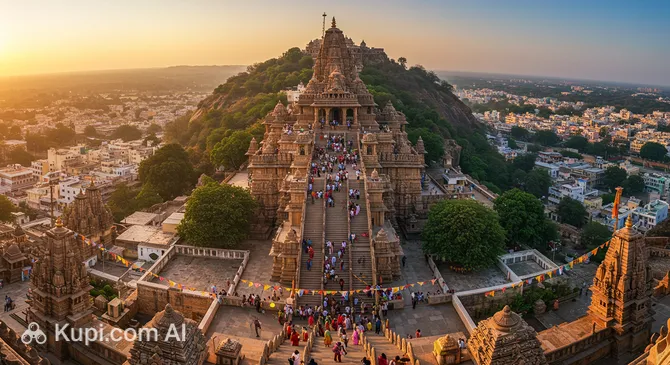
Palitana. Illustration.
Source: Kupi.com AI

With a population of about 64,000 people, Palitana retains the charm of a small town where life flows at a measured pace and ancient traditions are carefully passed down from generation to generation. It is a vital religious center and pilgrimage site for followers of Jainism from all over the world, as it is home to one of the most magnificent and revered temple complexes.

The main pride of Palitana is the unique ensemble of 863 Jain temples, masterfully carved from marble and spread across the summit of Shatrunjaya Hill. Climbing the hill via nearly four thousand steps is a spiritual experience in itself, and the views from the top are breathtaking. This temple city is considered one of the holiest places for Jains, and a visit here leaves an indelible impression.

Palitana invites every traveler to dive into a world of ancient legends, majestic architecture, and authentic Indian identity. It is a place where you can not only learn about the rich history and culture of Jainism but also find that inner harmony that many seek when traveling through this amazing country.

You can find more interesting facts on the Palitana history page.
Weather Overview

The weather in Palitana is characterized by distinct seasons. The hottest months are April and May, when average air temperatures reach 33-34°C, and maximums can rise above 40°C. From June to September, the monsoon dominates the region, bringing the bulk of the rainfall; the wettest months are July and August. The winter period, from December to February, features comfortable warm and dry weather with average temperatures around 21-25°C and minimal precipitation. Overall, expect a very hot pre-monsoon period, a humid summer, and a warm, dry winter. For more detailed climate information and forecasts, please visit the Palitana weather page.

Average monthly temperature

Average monthly precipitation

Interesting Facts

In addition to its world-famous temple complexes, Palitana holds many surprising secrets and little-known facts that add even more charm to this sacred city.

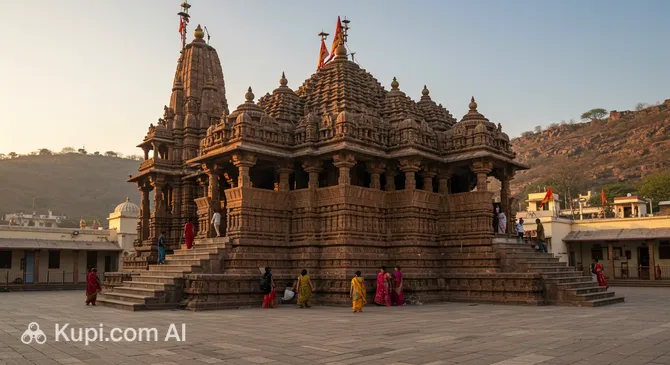
Shree Kal Bhairav Temple. Illustration.
Source: Kupi.com AI

Traveler photos:

  • City of Hundreds of Temples: Although Palitana is often called the "city of a thousand temples," there are actually 863 Jain temples rising on the sacred Shatrunjaya Hill. Their construction spanned over 900 years, starting in the 11th century, and some were meticulously restored after being destroyed in the Middle Ages.

  • Shrine of the First Tirthankara: The main temple complex of Palitana is dedicated to Adinatha (also known as Rishabhanatha), the first of the 24 Tirthankaras (spiritual teachers) of Jainism. This majestic temple, originally built in 960 AD and rebuilt in the 16th century, captures the imagination with its exquisite marble carvings.

  • Stairway to the Soul's Liberation: Legend has it that Shatrunjaya Hill is the place where many Jain saints achieved Moksha (liberation). A pilgrimage here and the ascent of the impressive staircase of 3,950 steps to the summit is considered not just a physical challenge but a powerful spiritual act contributing to purification.

  • Special Rules for Pilgrims: Visiting the temple complexes of Palitana requires strict adherence to certain rules. For example, it is strictly forbidden to bring any leather goods or food into the sacred territory. Photography inside the temples is only allowed with special permission, highlighting the deep respect for the shrines and ancient traditions.

How to Get There

When planning a trip to the sacred Jain temples, it is important to think through your route in advance, as the city is located away from major transport arteries. You can find more details on how to get to Palitana by exploring all available options, but most tourists choose a combination of a flight and a trip by car or train.

There is no airport in the city of Palitana itself, so most travelers arrive in the region via the major air hubs of neighboring cities. The most convenient option for international and long-distance domestic flights is Ahmedabad Airport (IATA: AMD), located in the city of Ahmedabad. It is approximately 190 km from Palitana. This is a major international airport with excellent connections. A journey by taxi or bus from here will take about 5 hours.

An alternative option is to fly into Rajkot Hirasar Airport (IATA: HSR) in Rajkot, which is closer—about 124 km away. The drive by car from there takes about 3.5 hours. You can also consider Vadodara Airport (IATA: BDQ) in Vadodara (about 170 km, with a travel time of approximately 4.5 hours). The choice of airport largely depends on your starting point and connecting flights.

For clarity, here is a summary of the main airports in the region:

AirportPassenger trafficDistance
Bhavnagar Airport74 50344 km
Surat Gujarat Airport1.7 mln106 km
Rajkot Hirasar1.1 mln124 km
Diu Airport104 218131 km
Keshod19 322163 km

Regarding rail connections, Palitana has its own railway station, making the train a convenient and budget-friendly way to reach the city. Palitana Station (code: PIT) has regular connections with the nearest large city, Bhavnagar. There are also direct trains from Ahmedabad and Mumbai, although they may not run every day. If there is no direct train for your chosen date, it is most convenient to travel to the railway station in Bhavnagar or Sihor Junction, which are within an hour's drive of Palitana, and complete the remaining journey by taxi or local bus.

Road transport in the state of Gujarat is quite well-developed. Intercity buses connect Palitana with Ahmedabad, Bhavnagar, Rajkot, and Surat. State buses (GSRTC) and private operators offer various comfort levels, including air-conditioned and sleeper buses, which are particularly convenient for overnight travel.

Main Attractions

Palitana, located in the state of Gujarat, is one of the most important pilgrimage centers for followers of Jainism and attracts tourists with its unique spiritual atmosphere and architecture. The city is primarily famous for its grand complex of temples on Shatrunjaya Hill.

The main jewel of Palitana is undoubtedly Shatrunjaya Hill. This sacred site is crowned with more than 800 intricately carved marble temples, forming an entire "city of temples." The ascent up the hill, which consists of about 3,800 steps, is an essential part of the pilgrimage and rewards visitors not only with access to the shrines but also with breathtaking panoramic views. This place is striking in its beauty and scale, serving as a testament to centuries of faith and craftsmanship.

Among the many shrines on Shatrunjaya Hill, the Adinath Temple (Adishwara) stands out. It is dedicated to the first Jain Tirthankara, Rishabhanatha, and is considered one of the most revered and beautiful temples in the complex. Its complex marble carvings, majestic spires, and interior decor reflect the magnificence of Jain architecture and art. A visit to this temple leaves a deep impression due to its spiritual significance and aesthetic perfection.

At the foot of the sacred hill, before the long climb begins, lies the Sri Kal Bhairav Temple. Many pilgrims visit this temple to receive a blessing for their ascent. It is believed that the deity Kal Bhairav is the protector of this holy area, and appealing to him ensures protection during the pilgrimage. This small but important shrine plays a significant role in the rituals associated with visiting Shatrunjaya.

Shree Kal Bhairav Temple. Illustration.
Source: Kupi.com AI

Traveler photos:

For a deeper understanding of Jain history and culture, a visit to the Shri Vishal Jain Museum is recommended. Located at the foot of Shatrunjaya Hill, it offers a rich collection of ancient manuscripts, icons, sculptures, and other artifacts related to Jainism. The museum's exhibition helps visitors better understand the philosophy and art of this ancient teaching, complementing the experience of visiting the temple complex.

Local Cuisine

The cuisine of Palitana is a true discovery for lovers of vegetarian dishes and a unique gastronomic experience. Due to deep Jain traditions based on the principle of Ahimsa (non-violence), the local gastronomy completely excludes meat and fish. Furthermore, special attention is paid to the choice of plant-based ingredients, avoiding even certain root vegetables to avoid harming living organisms in the soil. This makes Palitana's cuisine not just vegetarian, but largely in line with strict vegan principles.

Among the dishes definitely worth trying in Palitana are traditional Indian meals prepared with a local flair. Enjoy aromatic dal (thick lentil soup), various sabzi (vegetable stews simmered with spices), and fluffy puri flatbreads. Khadhi, a tangy yogurt-based sauce with spices often served with rice or bread, deserves special mention. These dishes reflect the wealth of flavors and aromas typical of Gujarati cuisine, of which Palitana's gastronomy is a part.

Local sweets should not be overlooked. After a hearty lunch or as a dessert with tea, it is common to serve treats like jalebi (crispy spirals in sugar syrup) and basundi (sweet condensed milk with cardamom and nuts). As for drinks, in Palitana, following local traditions, non-alcoholic options are preferred. You can enjoy various types of aromatic Indian tea, especially masala chai, as well as refreshing fruit and yogurt-based drinks like lassi. Alcoholic beverages are not common here, which underscores the city's spiritual atmosphere.

Food culture in Palitana is closely linked to hospitality and community. While there are restaurants catering to pilgrims and tourists, a significant portion of authentic flavors can be discovered at the bustling city markets and from numerous street stalls. Here you will find the freshest fruits, nuts, piles of aromatic spices, and various chutneys. Locals are happy to share food and treat guests, making every meal not just about satisfying hunger but a true cultural exchange.

The culinary scene in Palitana especially comes alive during religious holidays when informal food festivals are held. The streets are filled with the scents of fresh pastries, and locals proudly introduce visitors to the secrets of their unique cuisine. Even if you do not follow Jain principles, exploring Palitana's cuisine is a unique opportunity to immerse yourself in a world of new tastes and Indian culinary traditions, where every dish carries a piece of ancient philosophy.

Travel Tips

Welcome to Palitana, a sacred city and one of the most important pilgrimage sites for Jains! To make your trip to this unique corner of India as comfortable and memorable as possible, we have prepared some practical tips.

  1. Clothing and Essentials: Palitana has a hot climate, especially from March to June. Bring light, breathable cotton clothing. Since Palitana is primarily a religious center, modest clothing is key: shoulders and knees should be covered, especially when visiting the temples on Shatrunjaya Hill. Important: No leather items (shoes, belts, bags) are allowed on the sacred hill. Be sure to bring very comfortable shoes for the climb (you'll need to tackle over 3,000 steps!), sunscreen, a hat, and sunglasses. Don't forget a universal power adapter.
  2. Local Transport: Palitana is a small city, and getting around is easy. The main form of transport is the auto-rickshaw. For the climb up Shatrunjaya Hill, most pilgrims walk, but you can also hire a "doli" (palanquin). Public buses connect Palitana with nearby cities like Bhavnagar. Car rental is not common in Palitana itself but is possible at larger transport hubs.
  3. Financial Matters: The local currency is the Indian Rupee (INR). It is best to exchange currency at banks or authorized exchange offices in larger cities on your way to Palitana or, as a last resort, upon arrival (options may be limited). Credit cards are accepted at some hotels and large shops, but cash is necessary for everyday expenses, paying rickshaws, and market purchases. There are ATMs in the city, but their reliability and cash availability can vary. A rough daily budget (excluding the cost of a doli) might be 1,500-2,500 rupees. Tipping is not always mandatory but is appreciated (usually 10% in restaurants for good service).
  4. Health and Safety: There are pharmacies in Palitana with basic medications. In case of serious health issues, it's better to go to medical facilities in Bhavnagar (about 50 km away). The city is generally safe, especially during the day. Be careful during the hill climb: drink enough water (but remember the rules for carrying water on the hill, see below), and watch out for monkeys that might grab food or belongings. Always drink only bottled water.
  5. Language and Communication: The official language in Gujarat is Gujarati; Hindi is also widely spoken. English is understood in tourist spots and hotels but not everywhere. Learn a few simple phrases in Hindi or Gujarati: "Namaste" (Hello), "Dhanyavad" / "Aabhar" (Thank you). A local SIM card can be purchased with your passport and visa. Wi-Fi is available in some hotels, but don't count on ubiquitous free access.
  6. Local Etiquette and Traditions: Palitana is a holy place, so respect for Jain traditions is extremely important. Strict vegetarianism is observed throughout the temple complexes and in most city establishments. Shoes must be removed before entering temples. Photography inside sanctuaries may be restricted or prohibited. Show respect to pilgrims, monks, and locals. Always ask for permission before taking photos of people.
  7. What to Avoid:
    • It is strictly forbidden to bring or consume non-vegetarian food, alcohol, or tobacco products on Shatrunjaya Hill or near the temples.
    • Wearing leather items (shoes, belts, bags) while climbing Shatrunjaya Hill. This is a strict rule.
    • Talking loudly, laughing, or behaving inappropriately in holy places.
  8. Special Tip: It is best to start the climb up Shatrunjaya Hill very early in the morning, before dawn. This will allow you to avoid the midday heat and enjoy the sunrise from the summit. Remember that according to Jain traditions, pilgrims should not carry food or water with them up the hill (though there may be water stalls at the base or partway up—check current rules). The temples on the hill close by evening, and staying there overnight is forbidden.

We hope these tips help you better prepare for your trip to amazing Palitana and get the most out of its spiritual atmosphere and unique beauty!

Entertainment & Nightlife

Palitana, being one of the world's most important centers of Jainism, offers a unique experience, including in the evening. However, it should be understood that you will not find the boisterous nightlife with noisy clubs and bars typical of major tourist metropolises here. The city's atmosphere is permeated with spirituality and tranquility, which is reflected in the nature of evening entertainment.

Evenings in Palitana are usually peaceful. Instead of the neon signs of nightclubs, you will see pilgrims performing evening rituals or locals enjoying the silence. The main entertainment after sunset consists of leisurely strolls through the city, visiting temples that may be open for evening services, and dinner at one of the local restaurants. Most establishments here offer traditional vegetarian cuisine in accordance with Jain principles. There are no specialized nightlife districts in Palitana, as the city lives at a different pace.

When planning an evening in Palitana, keep in mind that most shops and establishments close quite early. Public transport may be limited late at night, so it is better to arrange for a taxi or auto-rickshaw in advance. The city is generally considered safe, especially in pilgrimage areas, but standard precautions, as in any other place, are still wise. The atmosphere is conducive to quiet relaxation rather than seeking club entertainment until morning.

As for specific nightclubs, bars, or lively concert venues, such establishments are not a characteristic feature of Palitana. The city is entirely oriented toward pilgrimage tourism and spiritual practices. Therefore, if your primary goal is an active nightlife, you might want to consider other cities in India. Here, evening leisure has a completely different focus, offering peace and an opportunity for reflection.

Daytime entertainment in Palitana is entirely centered around its main sanctuary—the grand complex of temples on Shatrunjaya Hill. Thousands of pilgrims make the climb daily to visit these unique architectural and spiritual monuments. In addition to the main temple complex, there are other significant religious sites in and around the city, such as the Sri Kal Bhairav Temple. There are few museums in the classical sense or large amusement parks here, as the primary focus is on the rich religious heritage.

Shree Kal Bhairav Temple. Illustration.
Source: Kupi.com AI

Traveler photos:

Thus, evening in Palitana offers an immersion into an atmosphere of serenity and spirituality rather than secular entertainment. It is a time for contemplation, quiet walks, and getting to know the unique culture of Jainism, which in itself can be an unforgettable and profound experience for a traveler.

Parks & Museums

Palitana, one of the most sacred cities for followers of Jainism, offers its guests not only a deep spiritual immersion but also the chance to enjoy a unique combination of cultural heritage and natural beauty. The main attractions here are the majestic temple complexes, seamlessly integrated into the surrounding landscape.

There are no traditional city parks in Palitana in the usual sense; however, the entire area around the sacred Shatrunjaya Hill serves as an extensive natural zone. The ascent of the hill, which houses over 800 temples, is a journey through picturesque landscapes, offering breathtaking views and moments of peace. At the foot of the hill and in its surroundings, one can also find quiet spots for contemplation and a break from the hustle and bustle.

While Palitana may not have many large museums in the classical sense, each temple on Shatrunjaya Hill is an invaluable open-air museum in itself. These sanctuaries preserve centuries of history, showcase exquisite stone-carving art, and reflect the deep philosophical traditions of Jainism. For those wishing to further organize their impressions of the temple complexes and gain a more complete understanding of Jainism, the Shri Vishal Jain Museum at the foot of Shatrunjaya Hill is a valuable addition. It provides context and detail for the rich heritage that pilgrims and tourists observe on the sacred mountain, helping to better understand what they see. In addition to this significant museum, small private galleries or shops featuring Jain religious art and crafts can be found in the city and at the foot of the hill, allowing for a deeper dive into local traditions.

The crowning jewel of Palitana is, of course, the grand temple complex on Shatrunjaya Hill. This is a true city of temples built over many centuries, each featuring unique architecture and the finest marble carvings. Central among them is the temple dedicated to the first Tirthankara, Adinatha. Another significant pilgrimage site is the Sri Kal Bhairav Temple, located at the foot of the hill and playing an important role in rituals before the ascent.

Shree Kal Bhairav Temple. Illustration.
Source: Kupi.com AI

Traveler photos:

Beyond the main complex, other smaller but equally interesting temples and shrines, each with its own story, can be found in the vicinity of Palitana.

For the most complete and authentic experience, it is recommended to start the climb up Shatrunjaya Hill early in the morning to avoid the midday heat and catch the special atmosphere of the morning rituals. Don't be afraid to explore less busy paths and smaller temples—that's where you can find solitude and feel the true spirit of this holy place.

Getting Around

Public transport in Palitana is primarily focused on serving the numerous pilgrims arriving at the holy sites. The city is small, so the transport system is quite simple and straightforward. The main methods of transportation are auto-rickshaws and buses; walking is also popular, especially in the central part and on the way to the temples.

Auto-rickshaws are the most common form of transport for short and medium distances across Palitana and for trips to the base of Shatrunjaya Hill. These are three-wheeled motorized vehicles easily recognized on the streets. It is customary to agree on the fare with the driver in advance, before boarding, as meters are rarely used. The cost depends on the distance and time of day. Don't hesitate to haggle; it's common practice.

Buses in Palitana connect the city with surrounding settlements and can also be used for moving within the city, although their routes might not always be convenient for tourists focused on specific attractions. Tickets are usually purchased from the conductor directly on the bus. Schedules can be flexible, so it's best to check departure times with locals or at makeshift bus stands.

A special type of "transport" in Palitana is the doli (palanquin). These are used to ascend Shatrunjaya Hill by those who find it difficult to climb the several thousand steps on foot. This is a paid service, and the cost depends on the passenger's weight and the season. Dolis can be arranged at the foot of the hill.

The payment system in Palitana is predominantly cash-based. There are no specialized transport cards or mobile apps for fare payment like in major metropolises. It is recommended to carry small bills for payments to auto-rickshaw drivers and bus conductors. Public transport operating hours may vary, but auto-rickshaws are available almost around the clock, especially during peak pilgrimage season. Buses usually run from early morning until evening.

As an alternative to public transport, for longer distances or greater comfort, you can use taxi services, which are best booked in advance through a hotel or local travel agencies. For short walks around the city itself, many tourists prefer to get around on foot, which allows for a better sense of the atmosphere of this unique place. Bicycle rentals and car-sharing are not developed in Palitana.

Accommodation

In Palitana, travelers will find various accommodation options to suit different budgets and preferences. The city offers modest choices, such as guest houses (Dharamshalas), as well as more comfortable hotels. Luxury resorts are generally scarce here, as the city primarily caters to pilgrims.

For convenience, it is recommended to choose accommodation in areas close to the main attractions, especially near the foot of Shatrunjaya Hill, where the ascent to the famous temples begins. Staying in this part of town will save travel time and allow for a deeper immersion into the atmosphere of this holy place. You might also consider options along the main roads leading to the temple complex, where more infrastructure is concentrated.

In Palitana, you will find various hotels, mostly mid-range, as well as many budget options, including the aforementioned Dharamshalas, which offer basic amenities at affordable prices. The choice will depend on your personal preferences for comfort level and cost.

Booking Tip: Given Palitana's popularity as a pilgrimage center, especially during major religious festivals and holidays, it is strongly recommended to book your accommodation in advance. This will help ensure the best selection, avoid availability issues, and potentially secure better rates.

Prices in Palitana range from very budget-friendly (in Dharamshalas and simple guest houses) to mid-range (in hotels with more services). Accommodation can be booked through popular international and Indian online travel platforms, or directly by contacting the hotel or guest house via phone or email, which is especially relevant for smaller local establishments.

Nearby Cities

For those looking to explore the surrounding area, Palitana serves as an excellent starting point for day trips to several interesting nearby locations:

CityPopulationDistance
Sihor52 60325 km
Talaja26 66729 km
Bhavnagar643 36542 km
Rajula38 48967 km
Sarangpur37 43569 km

The nearest city, Bhavnagar, attracts travelers with its rich cultural heritage, including the Nilambag Palace and the Gandhi Smriti Memorial, and also serves as an important port. Another interesting option is Surat, known as the "diamond capital of India" and a textile industry hub, where you can visit the historic fort and enjoy the lively atmosphere of local markets.

These nearby destinations provide insight into the region's diverse culture and landscapes.

Shopping & Souvenirs

Palitana, being primarily a sacred city and pilgrimage site, offers a special shopping experience that is closely intertwined with its spiritual atmosphere. You won't find the huge shopping malls common in metropolises here, but you can purchase unique items reflecting the culture and religious significance of this place. The city is famous for goods related to Jainism as well as traditional Gujarati crafts.

Main shopping spots in Palitana are concentrated on the streets leading to the foot of Shatrunjaya Hill, where the famous temple complexes are located, and in the central market area. Here, you can find many small shops and stalls offering a variety of goods. Strolling through these busy streets is an interesting experience in itself, allowing you to immerse yourself in local life.

There are no large modern shopping centers in Palitana. Shopping here is more traditional, catering to pilgrims and tourists interested in the local culture. Instead of malls, you will find rows of family-run shops and craft workshops.

Local markets are an essential part of trade in Palitana. You can find fresh fruits, vegetables, spices, and everyday items there. Of particular interest are the shops selling religious paraphernalia needed for performing puja (religious rituals), as well as small souvenir kiosks.

As souvenirs from Palitana, it is worth bringing back items related to Jainism: small figurines of deities, images of Tirthankaras, prayer beads (malas), and books about Jainism. Also popular are items made by local artisans: traditional embroidered Gujarati fabrics, clothing, and small handmade decorative pieces. Look out for metal and wood crafts.

Shops in Palitana are usually open from morning (around 9:00-10:00) until evening (19:00-20:00), and some may close for a lunch break. Cash is preferred at markets and in small shops. Some larger stores may accept bank cards, but it is always best to have a sufficient amount of rupees on hand.

Information on Tax-Free shopping for tourists in small towns like Palitana is usually limited. The Tax-Free system in India is most commonly available at major international airports upon departure for goods purchased at authorized stores. It is recommended to clarify this point directly when making large purchases.

Reached the end of the page?

That means the route is fully explored