Support

Ibu Fatmawati Soekarno's House

About

A journey into the history of the archipelago's struggle for independence often leads travelers to Bengkulu, home to a unique memorial site — Fatmawati Soekarno's House. This building is an exact replica of the residence where the future first president lived in exile from 1938 to 1942, when Indonesia was still under Dutch administration.
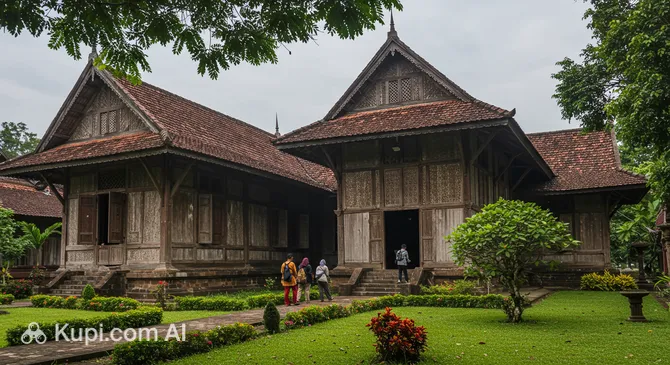
House of Fatmawati Soekarno
House of Fatmawati Soekarno. Иллюстрация. Источник: Kupi.com AI

The house is a classic wooden structure of its time, located in the Ratu Samban district. Inside, the daily life of the Soekarno family has been recreated: you can see original furniture, household items, and personal belongings of Indonesia's first lady, Ibu Fatmawati. The museum's atmosphere allows you to literally touch history and see the modest conditions in which one of the country's most influential families lived during their period of political isolation.

Today, this museum is considered one of the city's most revered cultural attractions. Visitors come here not only for the architecture but also to pay tribute to the national heritage, as it was here that personal drama and the great history of the republic's formation became intertwined.

Contacts

For those planning a visit to this historical site, contact information is provided below. The site is located in the central part of the city and is easily accessible for tourists.

How to contactContact
AddressJl. Fatmawati No.10, Penurunan, Kec. Ratu Samban, Kota Bengkulu, Bengkulu 38222, Indonesia

What to Do

Inside the house, a journey through time awaits: you can explore the bedrooms, kitchen, and living room in detail, all recreated with striking accuracy. Of particular interest are the authentic wardrobe items, including the famous traditional kebaya dresses favored by Fatmawati. Many tourists take atmospheric photos here, trying to capture the spirit of the 1930s.

Be sure to pay attention to the exhibits detailing the creation of the first national flag. You can learn about how Fatmawati sewed it by hand from the information boards and guide stories. The peaceful grounds around the house are also ideal for short walks, allowing you to enjoy the quiet of provincial Bengkulu.

In addition to touring the main exhibition in Indonesia, a visit here is often combined with exploring the nearby streets of the Ratu Samban district, where the charm of old buildings has been preserved. This is an excellent spot for an educational tour, interesting for both adults and children interested in Sumatran culture.

Getting There

The historical site is located in the heart of Bengkulu at Jl. Fatmawati No.10. If you arrive in Indonesia via the local Fatmawati Soekarno Airport (BKS), the journey to the house will take about 30–45 minutes (a distance of approximately 15–20 km). The easiest way is to use a taxi or services like Grab and Gojek; the fare usually ranges between 50,000 and 100,000 Indonesian rupiahs.

For a more budget-friendly option, you can choose local minibuses — angkots — that travel to the Ratu Samban district, after which you'll have about a 10-minute walk. If you are in the city center, a motorcycle taxi ride from the central market, Terminal Pasar Minggu, will take no more than 15 minutes.

For independent travelers on a car or bike, there is a small parking area at the house. Navigation coordinates: -3.7983027, 102.2654478. A walk from the popular Panjang Beach is also possible, but consider the tropical heat, as you'll have to walk about 4–5 kilometers.

Ближайший город: Bengkulu

History & Facts

The history of this place is inextricably linked to the years of exile of the future first president, who stayed in Bengkulu from 1938 to 1942. It was here that Soekarno met his student, Fatmawati, who later became his wife and the "Mother of the Nation." This modest house in Indonesia became their family home, where many ideas that influenced the country's future were born.

One of the most significant facts is that it was Fatmawati who hand-sewed the first national flag of Indonesia (Bendera Pusaka). She prepared it from simple pieces of fabric right in this house, and this very flag was raised on the day of the proclamation of independence in 1945. For many Indonesians, this makes the house a true shrine of patriotism.

Fatmawati was also famous for her commitment to the traditional kebaya dress. Soekarno admired her look so much that he later established this garment as the national standard for women's attire. Today, the house-museum carefully preserves the memory of the daily lives of this great couple, reminding visitors of the era when the foundation of modern Indonesian statehood was being laid.

Time Needed

Visitors typically need 1 to 2 hours to explore the exhibition. This is plenty of time to leisurely examine all the rooms, read the information boards, and soak in the authentic mid-20th-century atmosphere.

About 40 minutes is usually spent viewing the interior and personal belongings of the Soekarno family, while the remaining time is often spent taking photos and walking around the grounds. If you plan a detailed guided tour, it's worth allowing a bit more time.

Working Hours

The museum welcomes visitors daily, making it a convenient stop on any travel itinerary. The operating schedule is consistent throughout the week:

Monday — Sunday: from 08:00 to 17:00. There are usually no lunch breaks, so you can plan your visit for any convenient time during daylight hours.

8:00 – 17:00

Nearby

Exploring the surroundings of this historical district will help you dive deeper into the city's atmosphere and see local life from the inside. Several other memorial sites and park areas for relaxation are located nearby.

NameDistance
Soekarno's Exile House0.5 km
Mega Mall Bengkulu0.5 km
Jamik Mosque of Bengkulu0.7 km
Pantai Panjang Sport Center1 km
Bengkulu City1.2 km
Pantai Panjang Beach1.2 km
Berkas Beach Park1.2 km

Reached the end of the page?

That means the route is fully explored