Support

Soekarno's exile house in Bengkulu

About

In a quiet neighborhood of Bengkulu lies one of the country's most significant historical sites — Sukarno's Exile House (Rumah Pengasingan Soekarno). This modest yet stately building served as the place of forced residence for the first president, who spearheaded the path Indonesia took toward its independence.
Soekarno
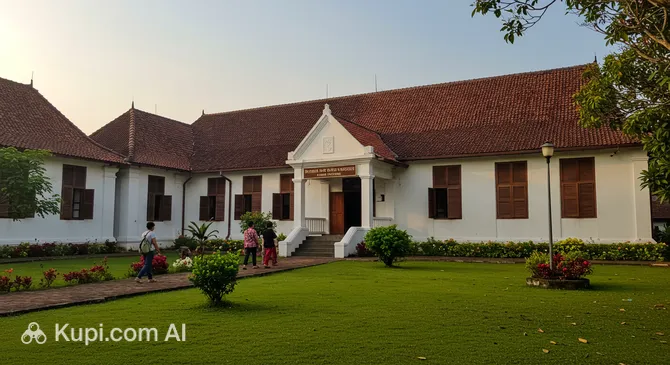
Soekarno's Exile House. Иллюстрация. Источник: Kupi.com AI

The building is a classic single-story colonial-era house with its characteristic spacious veranda and well-tended garden. It was here, between 1938 and 1942, that the leader of the national liberation movement lived and worked while under the supervision of Dutch authorities. Today, it is a historical museum that preserves the spirit of that time.

For travelers, this house is valuable primarily for its atmosphere. It offers a glimpse into the everyday life of the prominent politician and provides insight into the conditions where the ideas of freedom were forged. It is not just a museum, but a symbol of resilience and unwavering faith in the bright future of his people.

Contacts

To help you plan your itinerary, we have provided accurate contact information for this historical site. The building is located in the Anggut Atas district and is one of the most well-known landmarks on the city map.

How to contactContact
AddressJl. Soekarno Hatta No.8, Anggut Atas, Kec. Gading Cemp., Kota Bengkulu, Bengkulu 38222, Indonesia

What to Do

Inside the museum, visitors can take a unique journey through time, exploring the original rooms where the future president lived and worked. The interiors have been recreated with great accuracy, allowing you to feel the modest but active lifestyle of the great leader.

Of particular interest are Sukarno's personal belongings: his books, letters, historical photographs, and even pieces of furniture are on display. Every detail of the exhibition adds to the portrait of a man who did not abandon the fight for his ideals even in exile.

It is recommended to join one of the guided tours. Local guides share passionate stories about Sukarno's role in the state's history, his philosophical views, and his contribution to the national movement. This is an excellent opportunity to learn about lesser-known facts of his biography and his creative pursuits during the years of exile.

Getting There

Sukarno's Exile House is located in the central part of Bengkulu, making it easily accessible for most tourists. Thanks to its convenient location, you will have no trouble finding the building in the Gading Cempaka district.

The museum can be reached by taxi or by using the popular local motorcycle taxi (ojek), which will get you there in a matter of minutes. If you prefer organized travel, many local tour operators include the house in their city sightseeing programs.

For those arriving from further away, it is worth noting that the city is served by its own airport, which receives regular domestic flights from Jakarta. The car journey from the airport to the museum usually takes about 20–30 minutes, depending on traffic conditions.

Ближайший город: Bengkulu

History & Facts

This remarkable building was constructed in the early 20th century and was originally used by the Dutch colonial administration to house political exiles. In 1938, Sukarno — one of the primary ideologues of the struggle for freedom, whose voice inspired thousands — was sent here.

Despite his forced isolation, the future president did not cease his activities. Within the walls of this house, he continued an active correspondence with like-minded people and wrote several significant works that later formed the basis for the independent state's ideology. Bengkulu became a place of concentration and spiritual growth for him.

It was during this period of exile that a major personal event took place: Sukarno met Fatmawati. She later became his wife and the country's first lady, and is remembered in history as the woman who sewed the first national flag of Indonesia. Thus, the house witnessed not only political changes but also the birth of a strong union.

Today, the building is a key monument of the national liberation movement era. It has retained its original historical appearance, allowing modern visitors to literally touch the past and better understand the origins of Indonesian statehood.

Time Needed

To leisurely explore all the rooms and view the museum's exhibition, it usually takes about 1–1.5 hours. This is sufficient time to read the information boards and examine the first president's personal belongings.

If you are a history enthusiast and plan to study the letters in detail or use the services of a guide, your visit may last up to two hours. Don't forget to leave some time for a stroll through the garden surrounding the house, which is also part of the museum complex.

Working Hours

The museum welcomes visitors daily, following a convenient and stable operating schedule throughout the week. You can plan your visit for either weekdays or weekends.

Opening hours: daily from 08:00 to 17:00. Please note that this is the standard schedule for all days of the week, including Saturday and Sunday.

8:00 – 17:00

Nearby

A stroll around the museum's surroundings will allow you to dive deeper into the city's atmosphere and see other interesting locations. Many of them are within walking distance or a few minutes' drive away.

Exploring the central streets of Bengkulu will reveal both modern monuments and cozy park areas where you can relax after your tour. Below is a list of nearby sites to include in your itinerary.

NameDistance
House of Fatmawati Soekarno0.5 km
Berkas Beach Park0.7 km
Mega Mall Bengkulu0.8 km
Jamik Mosque of Bengkulu0.8 km
Pantai Panjang Sport Center1 km
Bengkulu City1.1 km
Pantai Panjang Beach1.1 km

Reached the end of the page?

That means the route is fully explored