Support

Kampung Wisata " Hadrami " Al Munawar

About

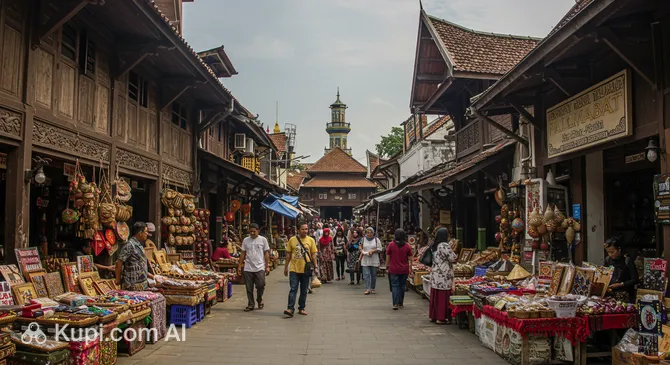
Al-Munawar Hadrami Village is a fascinating historical settlement located in Palembang. As one of the oldest Arab quarters in Indonesia, this location transports visitors back to the 18th century. Founded by immigrants from Yemen, the village still retains its unique appearance and serves as a living monument to the trade links between Arabia and Southeast Asia.
\n
Hadrami Village Al Munawar
Hadrami Village Al Munawar. Иллюстрация. Источник: Kupi.com AI
\n

This architectural ensemble on the banks of the Musi River is famous for its unique stilt houses, which combine Middle Eastern motifs with traditional Sumatran architectural elements. A stroll here allows you to see carved wooden facades and cozy courtyards that have protected the peace of local residents for centuries.

\n

Today, Al-Munawar is not just an open-air museum, but an active community where ancestral traditions are carefully honored. The village attracts tourists with its authenticity, the opportunity to try rare dishes, and the chance to get acquainted with the unique culture of "Kampung Arab", which has become an integral part of the history of the Indonesian archipelago.

Contacts

For your convenience, we have gathered the current contact information for the village and the city tourism office. This data will help you better plan your itinerary and quickly clarify any visit details.

\n

For organizing special tours or group excursions, it is recommended to contact the representatives of the tourism community in advance.

\n
How to contactContact
AddressMunawar, Lrg. Al Haddad No.13, 13 Ulu, Kec. Seberang Ulu II, Kota Palembang, Sumatera Selatan 30115, Indonesia

What to Do

The main pleasure when visiting the village is a walking tour through its winding streets. Here, every house has its own story, and the carved doors and windows are true works of art. Be sure to stop by the Al-Munawar House—the former residence of the founder, now a private museum housing old photographs, furniture, and documents that shed light on the lives of Arab merchants from past centuries.

\n

Foodies should pay attention to the local gastronomy. Small establishments in the village serve authentic dishes such as kebab, hummus, and aromatic rice, prepared according to family recipes passed down through generations. This combination of Arabic spices and local ingredients creates a unique flavor that is hard to find in other parts of the city.

\n

Photography enthusiasts will find an endless number of subjects here: from colorful everyday scenes against the backdrop of ancient buildings to panoramic views of the Musi River. If you are lucky enough to be here during Islamic holidays, you can see traditional dances and listen to music, which will make your immersion into the culture of Al-Munawar Hadrami Village truly complete.

Getting There

Al-Munawar Hadrami Village is located in the scenic 13 Ilir area of Palembang, right on the banks of the majestic Musi River. You can reach it from the city center by taxi or through popular mobile apps like Grab or Gojek, which takes about 15–20 minutes. The cost of such a trip usually ranges from 25,000 to 40,000 Indonesian rupiahs.

\n

If you want to make your journey more memorable, take a traditional "perahu" boat. Boats depart from the Benteng Kuto Besak pier and other central docks. The river trip lasts about 30 minutes and offers panoramic views of the city from the water. This is not just transportation, but a real adventure, costing about 20,000–30,000 rupiahs per person.

\n

For budget travelers, public transport is available: city buses regularly run toward the 13 Ilir district. After getting off at the right stop, it is about a 10-minute walk to the main entrance of the village. However, for a first visit, tourists are often recommended to use a taxi or the services of local guides to avoid getting lost in the maze of city streets.

Ближайший город: Palembang

History & Facts

The history of this remarkable place dates back to the 18th century, when Arab traders from the Hadhramaut region (modern-day Yemen) began establishing settlements in Sumatra. A key figure in the creation of the village was Habib Abdurrahman bin Muhammad Al-Munawar, who arrived here around 1728. His direct descendants still live in these houses, carefully preserving the way of life of their ancestors.

\n

Arab immigrants made a huge contribution to the development of the region, serving as a link between the Middle East and Southeast Asia. They brought with them not only goods but also deep knowledge of Islam and unique architectural traditions. Even during the era of Dutch colonial rule, the community maintained internal autonomy and close ties with its historical homeland, allowing the architectural ensemble to survive to this day almost unchanged.

\n

At the end of the 20th century, the village needed renovation, and a large-scale revival program began in the 1990s. The efforts of local residents and authorities were successful: in 2012, Al-Munawar Village was officially recognized as a cultural heritage site. This event gave a powerful boost to the restoration of old buildings and made the village an important point on the tourist map of Indonesia.

Time Needed

To explore Al-Munawar Hadrami Village at a leisurely pace, 2–3 hours is usually enough. During this time, you will have time to walk through the authentic alleys, take beautiful photos of the traditional architecture, and visit small exhibitions in the historical houses.

\n

If you are planning more than just a quick tour and want to immerse yourself in local life—trying Arabic cuisine in local cafes or waiting for a traditional ceremony—it is better to set aside half a day. For cultural researchers interested in talking with local elders and studying family genealogy, the visit may last until evening.

Working Hours

According to official data, Al-Munawar Hadrami Village is open for visits daily. The schedule on Google Places indicates hours from 4:30 AM to 4:30 PM, which corresponds to the rhythm of life of the religious community, starting the day with dawn prayer. However, the main tourist activity here is usually observed from 8:00 AM to 6:00 PM.

\n

Since this is a residential neighborhood, it is important to be mindful of Muslim prayer times, when access to the mosque may be limited and life in the village temporarily quietens down. The optimal time for a visit is in the morning before noon or the pre-sunset hours after 3:00 PM, when the tropical heat subsides and the soft light is ideal for viewing architectural details.

4:30 – 16:30

Nearby

Exploring the surroundings of Al-Munawar Hadrami Village will allow you to deeper experience the flavor of South Sumatra and see how modern life intertwines with centuries-old traditions. Palembang offers many interesting locations within a radius of several kilometers, from cozy parks to cultural centers.

\n

Many of these sites are within walking distance or a few minutes' drive by taxi, allowing you to create a packed itinerary for the whole day.

\n
NameDistance
Lawang Kidul Mosque0.8 km
Sultan Mahmud Badaruddin II Museum1.3 km
Palembang Fountain Circle1.3 km
Monpera (Monument of the People's Struggle)1.4 km
Great Mosque of Palembang1.4 km
Kuto Besak Fortress1.6 km
Palembang Indah Mall2.2 km

Reached the end of the page?

That means the route is fully explored