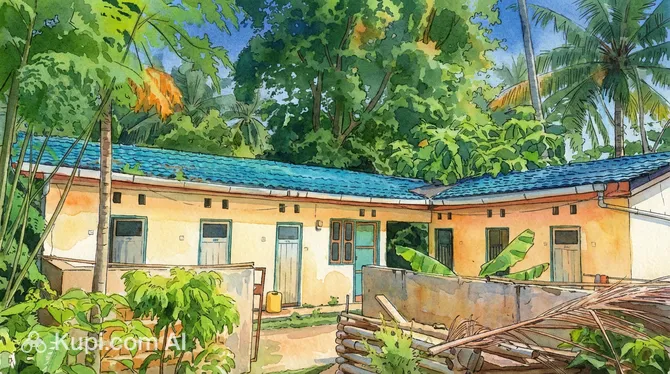
Majene is a cozy coastal city stretching along the shores of the Makassar Strait in the province of West Sulawesi. As the administrative center of the regency of the same name, it embodies the spirit of traditional Indonesia, where a relaxed pace of life blends with the rich cultural heritage of the Bugis people. The city is not a typical tourist resort, making it an ideal destination for those seeking an authentic atmosphere and wanting to see the everyday life of Sulawesi island in its natural form.
The city's geographical location defines its close connection to the sea. Majene is situated in a picturesque landscape where hills meet the ocean, and the city's population, according to current data, is approximately 272,377 people. Majene. Illustration.
Source: Kupi.com AI
The region's unique historical heritage is evident in its architecture and traditional crafts, which have been carefully preserved by locals for centuries.
For travelers, Majene is primarily attractive for its pristine beaches, such as Pantai Datuk, and the opportunity to learn about cocoa production, which is a vital part of the local economy. This location serves as an excellent transit point for exploring the wilderness and tropical forests of West Sulawesi. Visiting this city is an invitation to immerse yourself in the tranquility of a coastal settlement and enjoy the hospitality of local communities.
Weather Overview
The climate in Majene is classified as tropical, typical of the tropical rainforest zone. This means the city experiences warm and humid weather year-round. The average monthly air temperature remains stable, ranging from 24°C to 29°C. High humidity is tempered by fresh sea breezes that bring relief during the hot daylight hours.
The region has clearly defined periods of increased humidity. The rainiest months are December, January, and May, when rainfall can exceed 200 mm. During this time, expect short but intense tropical downpours. A drier period usually falls in August and September, making this the most favorable time for beach holidays and long walks. A detailed weather forecast for the city will help you better plan your visit dates.
Due to its coastal location and the absence of large industrial plants, the air quality in the city remains at an acceptable level. When planning your trip, be prepared for weather conditions to change quickly, so a light raincoat or an umbrella in your bag will never be superfluous.
Average monthly temperature
Average monthly precipitation
Interesting Facts
The name of the city Majene has deep roots in the Bugis language: it comes from the words "maja" (sea) and "ene" (place), which literally translates to "place of the sea".
About 99.74% of the population practices Islam, which leaves a significant mark on daily life, architecture, and local traditions of hospitality.
In recent years, Majene has become one of the key centers for cocoa production and export in the region, making this product an important element of local identity.
The city is considered the unofficial "gateway" to the untouched tropical forests of West Sulawesi, offering access to the island's unique flora and fauna.
In Majene, you can still see residential houses built in the classic Bugis style, characterized by a special roof construction and the use of stilts.
How to Get There
The city of Majene is located in a relatively remote part of Sulawesi island, making a trip here a true adventure. The main way to reach this coastal region is by air through the nearest airport, Tampa Padang, located in the city of Mamuju. Detailed route information can be found on the page how to get to the city.
After landing in Mamuju, travelers will need to cover a distance of about 100–150 kilometers by road. A trip by taxi or rental car takes between 3 and 5 hours. The road passes through scenic areas, and traffic in this region is usually light, allowing you to enjoy the views of West Sulawesi without exhausting traffic jams.
Intercity buses and shuttle taxis (travel) that run between Mamuju and Majene serve as an alternative to private transport. Although the regularity of such trips may be limited, it is the most budget-friendly way to travel. Sea transport is primarily used for freight, so tourists are recommended to rely on land routes.
Station
Passenger traffic
Distance
Mandai railway station
2
178 km
Main Attractions
Although Majene is not a hub for mass tourism, it offers travelers several picturesque locations to enjoy the region's natural beauty. The city's coastal areas are its main pride. Pantai Datuk is one of the most popular beaches, where you can enjoy ocean views and meet local fishermen. It is also worth visiting Munu Beach and Mampie Beach, which are perfect for a quiet getaway by the water and snorkeling on clear days.
For those who prefer a more active encounter with nature, Gonda Mangrove Park is open to visitors. This mangrove park allows for walks through unique forest ecosystems that play a crucial role in protecting the shoreline. It is an excellent spot for photography enthusiasts and for observing rare bird species and marine life in their natural habitat.
In the city itself, you can soak up the local cultural atmosphere by strolling through the central districts, where elements of traditional Bugis architecture have been preserved. An interesting place to visit is Puncak Raja Bunga, a water park popular with local families. While the city lacks large-scale architectural complexes, its charm lies in the details: bustling markets and the genuine smiles of the residents.
Local Cuisine
The gastronomic culture of Majene is inextricably linked to the sea. The main highlights of the local menu are fresh seafood: fish, shrimp, and shellfish, which are most often grilled with aromatic spices or stewed in delicate coconut milk. The traditions of the Bugis people have brought their own unique features to the local cuisine, including adapted versions of the famous Coto Makassar—a hearty soup made from beef and offal.
Another important component of the local diet is rice and seafood-based dishes, reminiscent of risotto but with a vibrant Indonesian flair. It is definitely worth trying the snacks sold at the markets—they are often made from local varieties of bananas and coconut. The character of the food scene is generally very simple and soul-stirring, without pretension or haute cuisine.
As for drinks, fresh tropical fruit juices and, of course, local coffee are popular in Majene. Since the region is famous for cocoa production, chocolate drinks are also highly regarded. The main places to eat are small warungs (street cafes) by the beaches and bustling city markets, where you can experience the true taste of Sulawesi at very democratic prices.
Travel Tips
Visiting Majene will be an unforgettable experience if you prepare in advance for the specifics of this authentic region. These practical tips will help you feel confident and enjoy your vacation.
Clothing and Essentials: Choose lightweight clothing made of natural fabrics suitable for tropical humidity. Given that most residents are Muslim, a modest dress code covering shoulders and knees is recommended for walking around the city and visiting religious sites. Don't forget insect repellent and sunscreen.
Transport: For trips within the city, use angkots or motorcycle taxis (ojek). If you plan to rent a motorbike, be sure to have an international driving permit with you and always wear a helmet.
Finances: The main currency is the Indonesian Rupiah (IDR). In Majene, cash is required almost everywhere, so exchange money in advance at major airports. There are ATMs in the city, but international cards may not work in all machines.
Health and Safety: The city is generally safe, but avoid walking alone in unlit outskirts at night. Drink only bottled water and use hand sanitizers.
Communication: The main language is Indonesian. English is not widely spoken, so it is useful to learn a few basic phrases (greetings, numbers) or have an offline translator.
Local Etiquette: Greet people with a slight nod of the head or a smile. Try to use only your right hand for passing money, food, or handshakes, as the left hand is considered unclean in local culture.
What to Avoid: Do not show intense emotions or public displays of affection. Also, avoid consuming alcohol in public places outside of specifically designated areas.
Specific Tip: Try the local cocoa right at the market—it is the pride of the region and is of the highest quality here.
May your journey to this cozy corner of Sulawesi be filled only with pleasant discoveries and warm encounters!
Entertainment & Nightlife
The entertainment scene in Majene is distinctly local. You won't find noisy nightclubs or large concert halls here, as the city lives according to conservative traditions and family values. The evening life of the locals is usually centered around the waterfronts and markets, where people gather to socialize and enjoy informal outdoor get-togethers once the daytime heat subsides.
The city beaches are the most popular leisure spots. During the warmer months, spontaneous evenings with live music are sometimes organized, with young people playing guitars. The atmosphere of these gatherings is very friendly and relaxed. If you are looking for more familiar Western-style entertainment, such as bars with dance floors, locals usually recommend heading to Mamuju—the provincial capital—which is several hours away.
Daytime entertainment in the city involves visiting nature parks and exploring the markets. Gonda Mangrove Park offers a peaceful retreat surrounded by mangroves, providing a great alternative to urban noise. Overall, a holiday in Majene is geared towards those who appreciate peace, nature contemplation, and a break from the hustle and bustle of major metropolises.
Parks & Museums
The natural areas around Majene are the region's main value for ecotourism enthusiasts. One of the most significant sites is Gonda Mangrove Park. This is a vast territory of mangrove forests with walking trails laid through them. The park serves as an important natural filter and a sanctuary for many species of fish and birds. Visiting this place allows you to appreciate the delicate balance between the ocean and the land, typical of coastal regions in Indonesia.
There are virtually no specialized historical or art museums in the classical sense in the city. The urban environment itself plays the role of a museum: walking through the old quarters, you can study the architectural features of Bugis houses and observe traditional crafts. The lack of major cultural institutions is compensated by the natural beauty of the landscape and the authenticity of local life.
For outdoor recreation, residents and visitors also use the coastal zones, which function as public parks. Greenery within the city itself is moderate, and Majene's main "green lungs" are located outside its limits—in the hills and mangrove thickets. These are ideal places for those who want to spend time in silence and observe the wildlife of Sulawesi.
Getting Around
The transportation system in Majene is simple and efficient for such a compact coastal city. The main form of public transport here is the angkot—small minibuses that run on specific routes. This is the most affordable way to move between different districts of the city and nearby beaches. Payment is made in cash to the driver, and the fare is fixed and very low.
For faster and more individual trips, residents and tourists use motorcycle taxis (ojek). Motorbike drivers wait at markets, hotels, and key intersections. This is an ideal option if you need to quickly reach a specific point in the city, bypassing narrow streets. Motorbike rentals are also popular, giving travelers complete freedom to explore the surroundings and hard-to-reach beaches.
There are virtually no traffic problems or jams in Majene due to the low traffic density. Moving between key points in the city usually takes no more than 10–20 minutes. Tourists should keep in mind that public transport activity decreases in the evening, so for trips after sunset, it is better to arrange with a taxi driver in advance or have the contacts of a local carrier at hand.
Accommodation
The choice of accommodation in Majene is quite modest and primarily aimed at budget travelers or those passing through the city. The hotel stock consists mainly of small private hotels and guesthouses that offer basic amenities. There are virtually no luxury resort complexes here, which is compensated for by affordable prices and the homelike comfort of local establishments.
The most convenient options for staying are properties located in the central part of the city or in the immediate vicinity of the beaches. Such a location provides easy access to markets, pharmacies, and local cafes. For those planning to stay in the region for a long period—for example, to study nature or conduct business—rental apartments or rooms in guesthouses are available.
When planning your trip, it is recommended to book accommodation in advance, especially if your visit coincides with local holidays or religious events. Main booking methods include international online platforms; however, keep in mind that not all small properties in Majene are listed on them, so sometimes you have to arrange check-in on the spot or via social media.
Nearby Cities
Majene is an excellent starting point for those who want to explore West Sulawesi province and neighboring regions more deeply. The city's surroundings offer diverse landscapes—from picturesque coastlines to dense forests and traditional settlements where life has remained unchanged for decades.
One of the most interesting destinations is Tana Toraja, located about 100 kilometers away. This unique cultural region is famous for its extraordinary burial rituals and tongkonan houses with boat-shaped roofs. It is also worth visiting the city of Parepare, located 89 kilometers to the south, which offers developed urban infrastructure and beautiful views of the bay.
If you have a free day, you can stop by Pinrang or explore the provincial capital, Mamuju. Exploring the areas around Majene will allow you to see the full diversity of Sulawesi island, combining seaside relaxation with immersion in the unique ethnic traditions of Indonesian peoples.
Shopping & Souvenirs
Shopping in Majene is primarily about visiting the colorful local markets where the city's life pulses. There are no huge shopping malls with global brands here, but locally produced goods are presented in abundance. In the city center and near popular beaches like Pantai Datuk, there are market stalls where you can find everything from fresh tropical fruits to handmade crafts.
The main souvenir to bring back from this trip is undoubtedly local cocoa and products based on it, as the region is a major producer of these beans. It is also worth paying attention to traditional fabrics and handmade woven items created by local artisans. These items will serve as a great reminder of the unique Bugis culture.
Shops and markets usually open early in the morning and close at dusk. The main method of payment in Majene remains cash (Indonesian Rupiah), so tourists are recommended to always carry the necessary amount in small bills. Cards are accepted only in some hotels and rare large pharmacies, and there is no Tax Free system in this small city.