Support

Great Mosque of the Yogyakarta Palace

About

The Great Mosque of Kraton Yogyakarta, also known as Masjid Gedhe Kauman, is the primary religious center of the Sultan's Palace in Yogyakarta, Indonesia. Located in the heart of the historic district, in close proximity to the Sultan's residence, it is considered one of the most important spiritual and cultural symbols of the region. It is not just a place for prayer, but a living heart of Javanese culture and history, built back in 1773 during the reign of the first Sultan.
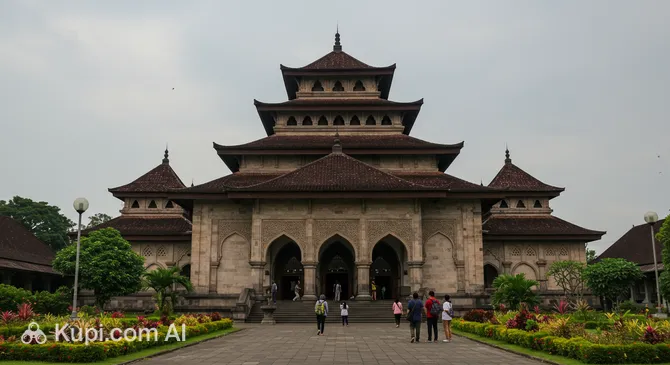
Great Mosque of the Yogyakarta Palace. Illustration.
Source: Kupi.com AI

Traveller photos:

The mosque's architecture is a striking example of the unique Javanese style inherited from the island's ancient mosques. It is distinguished by a traditional multi-tiered "tajug" style roof rather than a conventional dome, which is a characteristic feature of Javanese architecture. Spacious inner halls with massive wooden columns and walls decorated with intricate carvings create a special atmosphere of peace and grandeur, reflecting rich cultural traditions.

As an integral part of the Kraton palace complex, the mosque serves as a center not only for religious services but also for many community events related to the life of the sultanate. Visiting this site allows for a deeper understanding of the spiritual life of the city and its residents, as the mosque is often called the heart of Yogyakarta. Surrounding the mosque is the historic Kauman quarter, where Islamic scholars and religious figures traditionally reside.

Contacts

For the most accurate and up-to-date information regarding opening hours, visiting rules, and events at the Great Mosque of Kraton Yogyakarta, it is recommended to use the official contact details. Below are the available ways to reach the mosque administration.

How to contactContact
AddressAlun-Alun Keraton, Jl. Kauman, Ngupasan, Kec. Gondomanan, Kota Yogyakarta, Daerah Istimewa Yogyakarta 55132, Indonesia
Phone+62 274 373622
Websitemesjidgedhe.or.id

What to Do

A visit to the Great Mosque of Kraton Yogyakarta is an opportunity to touch the spiritual and cultural life of Yogyakarta. For tourists, it is a unique chance to observe the daily life of the congregation and experience traditional Javanese architecture from the inside. You can walk through the spacious outer courtyard and its adjacent pavilions, enjoying the atmosphere of tranquility and taking commemorative photos. This site allows for a deeper understanding of the religious rituals and customs that are an integral part of the sultanate's history and modern identity.

Special impressions can be gained by witnessing congregational prayers. The mosque is particularly crowded and solemn on Fridays and during major religious holidays, when many believers gather here. Visitors can witness these significant events and absorb their atmosphere. Occasionally, cultural events related to the Sultan's court, such as traditional music and dance performances, are held on the mosque grounds, making the visit even more memorable.

In addition to exploring the mosque itself, it is worth paying attention to its surroundings. Near the complex, there are numerous shops where you can purchase traditional handmade souvenirs and try local treats. A stroll through these streets will be an excellent addition to your visit, allowing you to fully immerse yourself in the authentic atmosphere of the old city and take home a piece of Javanese culture.

Getting There

The Great Mosque of Kraton is located in the very heart of Yogyakarta, making it very convenient for tourists to visit. The mosque is situated in close proximity to the main attraction—the Sultan's Palace (Kraton)—and is part of this vast historical complex. Due to its central location, reaching the mosque is easy from almost any part of the city.

For those who prefer walking, the route from the famous Malioboro Street will take only 10–15 minutes. Simply follow the signs towards the Kraton palace complex. This is a wonderful opportunity to combine a visit to the mosque with a leisurely stroll through the colorful central streets, soaking up the city's unique atmosphere.

If you prefer to use transport, several options are available. You can take a taxi or use a city bus, as there are public transport stops nearby. For a more authentic experience, you can hire a local cycle rickshaw, known as a "becak," which is a small adventure in itself. For travelers with their own or rented transport, parking for cars and bicycles is provided nearby.

Nearest city: Yogyakarta

History & Facts

The history of the Great Mosque of Kraton Yogyakarta is inextricably linked to the founding of the sultanate itself. Its construction began in the 18th century at the initiative of the first Sultan of Yogyakarta, Hamengkubuwono I. In 1755, he laid the foundations of the Kraton palace complex, and the mosque was intended from the very beginning to be its spiritual center. The construction of the mosque shortly after the palace's founding emphasized the paramount role of Islam in the life of the new state on the island of Java in Indonesia.

One of the most notable facts is that the mosque became a symbol of the peaceful Islamization of the region. Unlike many other places, Islam spread across Java primarily through trade and cultural exchange rather than conquest. The architecture of the mosque, combining traditional Javanese motifs with Islamic canons, serves as a visual embodiment of this harmonious synthesis of cultures. This makes it not just a religious building, but an important historical monument reflecting the unique development path of the local society.

Since its founding in the 18th century, the mosque has consistently served as the main mosque of the sultanate. It is here that all the most important ceremonies take place, related both to the life of the sultan's court and to key religious holidays. Throughout its long history, the building has been rebuilt and expanded several times. These changes reflected not only the growth of the community but also the evolution of Javanese architectural and religious traditions, making the mosque a living chronicle captured in stone and wood.

Time Needed

When planning a visit to the Great Mosque of Kraton Yogyakarta, you should allow for a duration of one to one and a half hours. This time is generally sufficient for a basic introduction to the landmark: you will have time to see the unique interiors, stroll through the spacious courtyard, and fully appreciate the distinctive Javanese architecture of this iconic site in Yogyakarta. Such a visit will allow you to get a general impression of the mosque and take memorable photos.

If you wish to immerse yourself deeper in the atmosphere of this spiritual center of Indonesia and explore it without rushing, it is better to set aside 2 to 3 hours. The extra time will allow you not only to study the details of the palace complex in depth but also, perhaps, to catch one of the cultural or religious events held here. This will provide an opportunity to truly feel the rhythm of life in this place and see it not just as a tourist site, but as the living heart of Javanese culture.

Working Hours

The Great Mosque of Kraton Yogyakarta is open to visitors year-round and is generally accessible every day. According to some sources, the opening hours for tourists are from 08:00 to 20:00. However, as this is an active religious site, the schedule may change, especially during major Islamic holidays. Access for tourists may be temporarily restricted during congregational prayers, particularly during the Friday service (Jumu'ah). Therefore, to avoid inconvenience, it is recommended to visit the mosque outside of prayer times.

Special advance booking or ticket purchases are usually not required for visiting the mosque; entry is free. For the most current information on opening hours and possible restrictions, it is recommended to check details on-site, at Yogyakarta tourist information centers, or on the mosque's official website, if available. Remember to follow the dress code: clothing should be modest, covering shoulders and knees, and women may be required to cover their heads.

3:30 – 6:00, 11:00 – 22:00

Nearby

Visiting the Great Mosque of Kraton Yogyakarta is just the starting point for exploring the city's rich cultural heritage. As the mosque is part of a vast palace complex, it is surrounded by numerous historical and cultural sites located within walking distance. Exploring these places will allow you to dive deeper into the history and atmosphere of the sultanate's ancient capital.

A walk around the surrounding area will enrich your experience and help you form a complete picture of the life and traditions of Yogyakarta. Just a few minutes' walk away, you will find palaces, museums, and colorful squares, each holding its own unique story. Below is a list of nearby attractions worth including in your itinerary.

NameDistance
Yogyakarta Palace0.2 km
Sonobudoyo Museum Unit I0.2 km
Sonobudoyo Museum New Building0.2 km
Yogyakarta Palace0.4 km
Vredeburg Museum0.6 km
Taman Pintar Yogyakarta0.7 km
Taman Sari Water Castle0.8 km

Reached the bottom of the page?

Looks like you know this route inside out