Support

Hamadan Airport

About the Airport

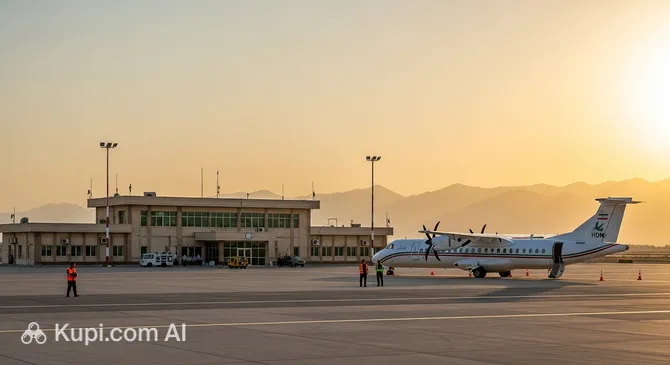
Hamadan Airport. Source: Kupi.com Binoculars

Hamadan Airport is not merely a transport hub, but a true gateway to the history of ancient Persia, situated at the foot of the picturesque Zagros mountain range. This compact air terminal welcomes travellers with a cosy and calm atmosphere that differs strikingly from the hustle and bustle of major capital hubs. Thanks to its location, it serves as an ideal starting point for those planning to explore the cultural treasures of one of the world's oldest cities and enjoy the region's mountain landscapes.

IATA Code HDM
ICAO Code OIHH
City Hamadan
Distance to Centre About 11 km
Status International (predominantly charter) and domestic
Annual Passengers Low passenger flow (varies depending on seasonal programmes)
Schedule Recommended to check on official resources

Features and Advantages of the Airport:

Despite its modest size, Hamadan Airport possesses a number of advantages that tourists appreciate:

  • Quick Navigation: Thanks to having just one terminal, all procedures — from check-in to boarding — take minimum time. There are practically no queues here.
  • High-Altitude Location: The airport is situated at a significant elevation above sea level, providing breathtaking views of mountain peaks during take-off and landing.
  • Proximity to Attractions: Its convenient location allows you to reach key historical sites of the city, such as the Avicenna Mausoleum or the Ganjnameh inscriptions, in less than half an hour.

Contact Information

  • Official Website: hamadan.airport.ir (the site may be available predominantly in Persian).
  • Information Desk Phone: +98 81 3256 9011. When calling, be prepared to communicate in Persian or possibly English.
  • Address: Hamadan Airport, Hamadan-Tehran Road, Hamadan, Iran. The airport is located approximately 11 km northeast of the city centre of Hamadan.
  • Email: hamadan.info@airport.ir. It is recommended to compose enquiries in English or Persian for a faster response.
  • Social Media: Dedicated pages for an international audience on popular social networks are generally absent. It is best to look for up-to-date information on the official website.
  • Lost Luggage Information: For all questions related to lost or damaged luggage, you should contact the representative of the airline you flew with directly.
  • Passenger Support Contacts: For general information and enquiries, it is recommended to use the airport's main telephone number.

How to Get to the Airport

Hamadan Airport (HDM) is located very close to the city, so the journey to the centre usually takes no more than 15–20 minutes depending on traffic. This makes the trip from the terminal to your hotel quick and untiring.

Taxi and Transfer — the most popular and convenient way to get to the city. You can find an official taxi at the stand outside the terminal exit or book a transfer through your hotel. The cost of a trip to the centre of Hamadan is comparatively low and usually amounts to 200,000–400,000 Iranian Rials. It is extremely important to agree on the price with the driver before starting the journey. This is the optimal choice for travellers with luggage or those who value comfort.

Shared Taxis (savari) are the most budget-friendly option. Direct public transport routes into the airport may be absent, but "savaris" frequently ply the main roads in its direction. The fare will be significantly lower than a private taxi, however, this method is less comfortable if you have large luggage and requires a basic understanding of local routes.

Car Rental — an excellent option for those planning to explore the surroundings of Hamadan and other regions of Iran on their own. Rental offices can be found in the city, and some companies offer a car delivery service to the airport. There is a parking lot near the terminal where you can leave a vehicle.

Many travellers also consider alternative airports, especially for international flights. The largest of these are Imam Khomeini International Airport in Tehran and Kermanshah Airport. From Tehran, you can reach Hamadan by bus or car in about 4–5 hours, and from Kermanshah in 2.5–3 hours, making them convenient arrival points for the region.

Terminals and Map

Hamadan Airport (HDM) is a regional airport serving the eponymous city and its surroundings in Iran. Its structure is simple and intuitive, making navigation for passengers fast and convenient.

Structure and Terminals

Hamadan Airport operates one passenger terminal, which handles all flights — both domestic and international. Thanks to this, you do not need to worry about transfers between different buildings: all procedures, from check-in to boarding, take place in one location.

Map and Navigation

The terminal has a simple and logical layout. Departure and arrival zones are clearly separated but are situated within the same building. Navigation will not cause difficulties: signs are generally duplicated in English, and staff are ready to help you orient yourself. The passenger flow is standard:

  • Departure Zone: Upon entering the terminal, you find yourself in a general hall with several check-in counters. After receiving a boarding pass and checking in luggage, passengers pass through security control, beyond which there is a small waiting hall with a boarding gate.
  • Arrival Zone: Passengers arriving in Hamadan enter the baggage claim hall with several conveyor belts. After retrieving their belongings, they pass customs control (if necessary) and exit into the general hall where they can be met.

Processing Times and Recommendations

Due to the airport's compact size and moderate passenger flow, check-in and screening usually proceed quite quickly. Nevertheless, it is recommended to arrive at the airport in advance:

  • For domestic flights — 1.5-2 hours before departure.
  • For international flights — 2.5-3 hours before departure.

This time buffer will be more than sufficient to calmly complete all formalities without rushing. The airport is not overcrowded, so getting lost or spending a lot of time searching for the right zone is practically impossible.

Airport History

Hamadan Airport (HDM), serving the eponymous ancient city and province in Iran, has a long history closely tied to the region's development. Although the exact founding date of the original airfield dates back to the mid-20th century, the modern history of the airport as a major civil hub began with large-scale transformations. Initially, the facility had more than just a civil purpose, which influenced its infrastructure and location.

A key stage in the airport's development for passenger transport was the opening of a new modern terminal in 2005. This modernisation significantly increased capacity and improved the quality of passenger service. In subsequent years, infrastructure continued to improve: the runway was reconstructed, and new navigation equipment was installed, allowing for the reception of larger aircraft types and ensuring flights in complex weather conditions.

Hamadan Airport plays an important role in the transport system of western Iran. It not only connects the province with Tehran and other major cities in the country but also serves international flights, particularly charter programmes for pilgrims heading to Saudi Arabia for Hajj. This highlights its significance as an aerial gateway for millions of believers.

One interesting fact from the airport's history lies in its strategic location. It is situated in immediate proximity to iconic historical landmarks, such as the Tomb of Avicenna and the ancient Ganjnameh inscriptions. This makes it a convenient starting point for tourists wishing to explore the rich cultural heritage of this ancient Persian region, which was once the capital of the Median Empire.

Services and Amenities

Hamadan Airport (HDM) is a regional transport hub providing passengers with all necessary services for a comfortable wait before departure. Despite its compact dimensions, the airport strives to satisfy the basic needs of travellers.

Before your flight, you can have a snack in small cafes located in the terminal, or purchase local souvenirs and travel goods in several shops. General waiting halls are equipped for passenger rest. Information regarding the availability and access conditions for VIP lounges should be clarified directly with airline representatives or at the airport information desk.

To stay connected, you can find mobile device charging stations in the terminal. Wi-Fi access may be limited, so using mobile data is recommended for a stable internet connection. The airport building also houses currency exchange points and bank branches for financial transactions.

A mother and child room is equipped for passengers with children. Travellers with reduced mobility are provided with necessary assistance during boarding and disembarking; for this, it is recommended to contact the airline in advance and inform them of your needs. There is also a medical post on the premises for first aid.

There are no specialised business centres or hotels directly within the airport building. However, a wide selection of hotels, as well as conference halls for business meetings, can be found in the city of Hamadan, which is easily accessible by taxi. This is an excellent opportunity to get acquainted with one of the oldest cities in Iran and the world.

Where to Eat

When planning a flight through Hamadan Airport (HDM), it is important to consider that this is a small regional airport, and dining options here are limited. Unlike major international hubs, you will not find a wide variety of restaurants and cafes here. Nevertheless, passengers have the opportunity to have a snack before departure or after arrival.

In the main airport building, usually in the public area (landside), a small cafe or buffet operates. Here you can purchase basic beverages, such as tea, coffee, and soft drinks, as well as light snacks. The assortment typically includes sandwiches, pastries, chips, and sweets. This is sufficient for a quick bite, but for a full lunch or dinner, it is better to choose an establishment in the city of Hamadan itself.

Regarding special dietary requirements, it is worth noting that all food in Iran is Halal by default. Vegetarians will be able to find simple options, for example, pastries with cheese or vegetable snacks, however, the choice will be small. Passengers with stricter restrictions, such as a vegan or gluten-free diet, are strongly advised to bring food with them, as specialised offerings at the airport will likely be unavailable. Prices in the airport cafe are usually moderate, and its opening hours are generally tied to the flight schedule.

Travel Tips

When planning a journey through the airport of Hamadan, there are several points to consider to make your trip more comfortable. As with most airports, it is recommended to arrive early: approximately 2–2.5 hours before a domestic flight and no less than 3 hours before an international one. This time will be sufficient to check in for the flight, drop off luggage, and pass security control without rushing, which can be quite thorough in airports in Iran.

When choosing a seat on the plane, be guided by personal preferences: a window seat offers beautiful views during take-off and landing, while an aisle seat allows you to stand up freely. Regarding hand luggage, standard international rules apply for liquid restrictions and the prohibition of sharp objects. However, remember the strict local laws: bringing alcohol and certain types of printed publications into the country is prohibited. Always check the current rules with your airline before departure.

Hamadan Airport predominantly serves domestic flights, so long layovers here are rare. If you do have a connecting flight, clarify in advance whether you need to collect and re-check your luggage. In case of a flight delay, the first thing to do is contact your airline representative for information on the new departure time and possible compensation (water, meals).

Pay special attention to customs control upon arrival. Be prepared for luggage inspection and declaring imported currency if the rules require it. To save time and money, check in for your flight online if the airline offers such an option. A crucial tip for travellers to Iran: international bank cards do not work in the country. Ensure you have sufficient cash for the entire duration of your trip. It is better to book a transfer from the airport in advance or use official taxi services to avoid inflated prices.

Reached the end of the page?

That means the route is fully explored