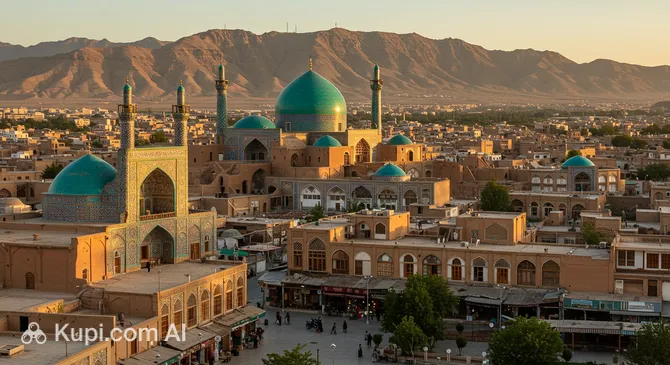
Welcome to Kashan, a captivating oasis city located on the edge of the massive Dasht-e Kavir desert. Often considered the pearl of the desert, this city in the Isfahan Province offers a perfect introduction to the rich culture and architectural ingenuity of Iran. With its winding lanes, mud-brick walls, and serene atmosphere, Kashan provides a peaceful retreat and a fascinating glimpse into traditional Persian life, serving as a vital bridge between the capital and other major historical hubs.
Kashan. Illustration.
Source: Kupi.com AI
The climate here is typical of the desert region, characterized by hot summers and cool winters, which has deeply influenced the city's unique urban design featuring iconic windcatchers and sunken courtyards. Exploring the history of Kashan reveals a settlement that dates back thousands of years, with the nearby Tepe Sialk archeological site suggesting it is one of the oldest primary centers of civilization in the region.
Travelers are particularly drawn to Kashan for its stunning traditional merchant houses, such as the Borujerdi and Tabatabaei houses, which showcase exquisite 19th-century craftsmanship and intricate stucco work. Another absolute highlight is the UNESCO-listed Fin Garden, a masterpiece of Persian gardening that creates a stark, beautiful contrast of lush greenery and flowing water against the arid backdrop. The city is also world-renowned for its aromatic rose water production, making a visit here an unforgettable journey through time, scent, and beauty.
Weather Overview
The climate in Kashan is typical of a desert region, characterized by significant temperature variations between seasons. Summers are hot and arid, particularly from June to August, when the average temperature hovers around 28°C to 30°C and daytime highs can reach nearly 36°C. During these months, rainfall is virtually non-existent, ensuring clear, sunny skies for visitors.
Winters, spanning from December to February, bring a noticeable chill to the city. January is generally the coldest month, with average temperatures dropping to 4.2°C and nighttime lows occasionally falling below freezing. While the overall volume of precipitation is low year-round, the spring season, especially May, experiences a higher frequency of wet days compared to the dry summer months.
Travelers should expect hot summers with clear skies and cold winters with occasional cloudy days. For a more comprehensive forecast and monthly breakdowns to help plan your trip, you can consult the detailed guide to the weather in Kashan.
Average monthly temperature
Average monthly precipitation
Interesting Facts
Beyond the famous historic houses and gardens, Kashan holds many fascinating secrets that reveal the depth of its ancient heritage. Here are some unique insights into this desert jewel that often surprise visitors.
Sultan Amir Ahmad Bathhouse. Illustration.
Source: Kupi.com AI
Traveler photos:
The Legend of the Magi: According to local tradition and the writings of the Venetian explorer Marco Polo, the Three Wise Men (Magi) who traveled to Bethlehem to visit the infant Jesus began their journey from Kashan. This legend highlights the city's historical importance as a center of astronomy and wisdom.
A City Beneath the Earth: Just a short drive away lies the Noushabad Underground City, a complex three-story subterranean network carved entirely by hand. Historically used as a shelter against invaders like the Mongols, this hidden labyrinth features intricate ventilation systems and wells that allowed people to survive underground for days.
Sacred Rose Water: The rose water produced in Kashan and the nearby town of Qamsar is renowned for its exceptional purity. It is considered so high in quality that it is officially exported to Saudi Arabia to wash the holy Kaaba in Mecca twice a year during ceremonial rituals.
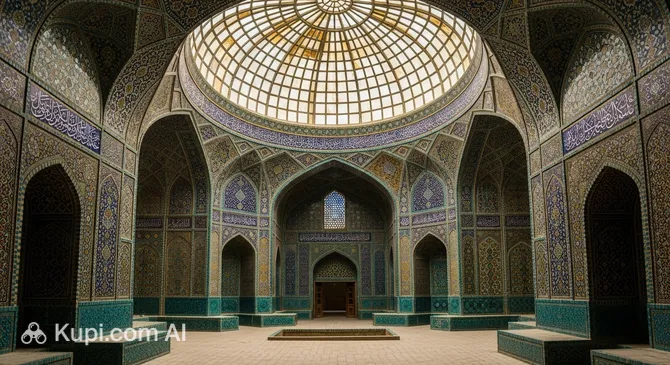
A Surreal Rooftop: The roof of the Sultan Amir Ahmad Bathhouse is one of the most photogenic spots in the city. It features multiple domes embedded with convex glass lenses, known as "goljam," which were designed to provide lighting to the bathhouse while concealing the interior, creating an almost alien-looking landscape against the desert sky.
How to Get There
Kashan is strategically located along the main north-south transit corridor of Iran, making it easily accessible from major cities like Tehran and Isfahan. Whether you prefer the speed of a taxi or the comfort of a train, the journey offers scenic views of the desert landscape. For a detailed breakdown of routes and schedules, you can read more about how to get to Kashan.
The city of Kashan does not have its own active commercial airport for scheduled passenger flights. Most international travelers arrive via Imam Khomeini International Airport (IKA), located near Tehran, approximately 160 km north of Kashan. It is a major hub with high passenger traffic. From here, you can take a taxi directly to Kashan, a journey that typically takes about 2 to 2.5 hours. Alternatively, you can fly into Isfahan International Airport (IFN), situated in Isfahan, roughly 145 km south of Kashan. This airport also serves international and domestic routes, and a transfer to Kashan by road takes approximately 2 hours.
For clarity, here is a summary of the main airports in the region:
Traveling by train is another convenient and safe option for reaching the city. Kashan is situated on the country's main railway line, which connects the capital, Tehran, with southern cities such as Isfahan, Yazd, and Bandar Abbas. Regular trains operate daily, providing a comfortable ride. The railway station is located within the city limits, allowing for easy access to the historic center and hotels upon arrival.
Main Attractions
Kashan is a treasure trove of traditional Persian architecture, historical engineering, and ancient archeology. The city is best explored by wandering through its magnificent merchant houses and lush gardens, which offer a stark and beautiful contrast to the surrounding desert landscape. Below are some of the most significant sites that define the character of this historic city.
Fin Garden. Illustration.
Source: Kupi.com AI
Traveler photos:
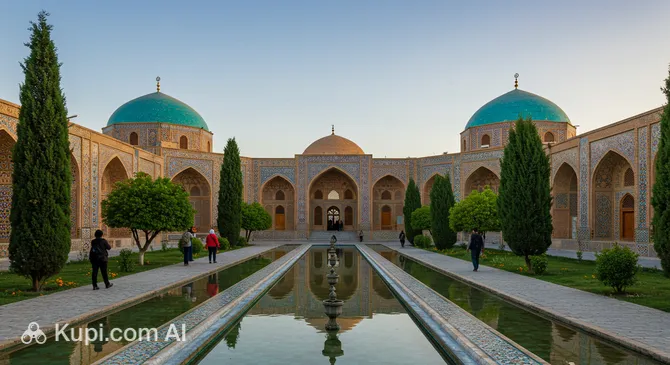
One of the most celebrated landmarks in Iran is the Fin Garden (Bagh-e Fin). Recognized as a UNESCO World Heritage site, it is arguably the finest surviving example of a traditional Persian garden. Completed in 1590, the garden is a masterpiece of water engineering, utilizing natural spring water to feed its numerous turquoise pools and fountains without the need for mechanical pumps. Historically, it is also known as the site where Amir Kabir, a revered Qajarid chancellor, was tragically assassinated in its bathhouse, adding a layer of somber history to its serene beauty.
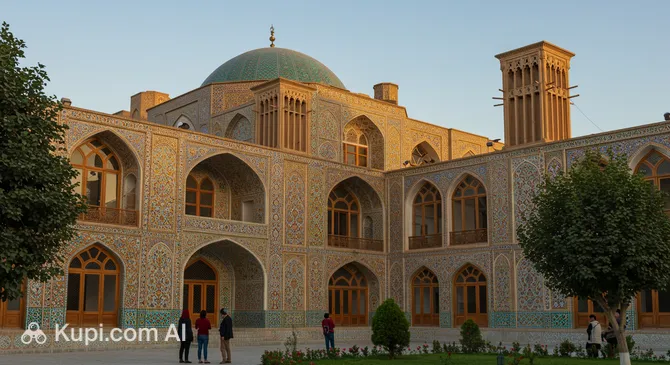
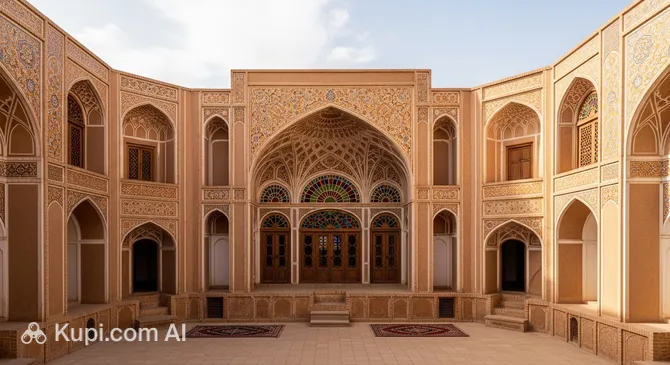
For admirers of intricate architecture, the Tabatabaei House is an essential stop. Often referred to as the "Bride of Persia's Historic Houses," this 19th-century residence was built for a wealthy carpet merchant. It is renowned for its elaborate stone reliefs, delicate stucco work, and stunning stained-glass windows that catch the sunlight in mesmerizing patterns. The sprawling complex includes four courtyards and forty rooms, perfectly showcasing the lifestyle of Kashan's elite during the Qajar era.
Tabatabaei House. Illustration.
Source: Kupi.com AI
Traveler photos:
Travelers interested in ancient history should visit Tepe Sialk, an archeological site that predates much of recorded history. This ancient ziggurat offers a glimpse into a civilization that thrived here over 7,000 years ago. Excavations have revealed pottery, metal tools, and skeletal remains that suggest this was one of the earliest settlements in the region. Walking among the mud-brick ruins provides a profound sense of connection to the dawn of human urbanization on the Iranian plateau.
Another architectural gem is the Abbasian House, famous for its symmetrical design and multi-layered structure. Built in the late 18th century, it was designed with a sunken courtyard to maintain cool temperatures during the hot desert summers. The house features secret passageways, intricate plaster carvings, and a design philosophy that emphasizes privacy and modesty, making it one of the most intellectually fascinating residential structures in the city.
Abbasian House. Illustration.
Source: Kupi.com AI
Traveler photos:
Finally, visitors can explore the grandeur of the Ameriha House, which stands as the largest traditional house in Kashan. Now restored as a boutique hotel, it allows visitors to walk through its seven courtyards and admire the tallest windcatchers (badgirs) in the city. Even if you are not staying there, the sheer scale and restoration quality of the complex make it a testament to the enduring legacy of Persian desert architecture.
Local Cuisine
The culinary landscape of Kashan is as rich and distinct as its architecture, offering a delightful exploration of traditional Persian flavors with a unique local twist. The city's location on the edge of the desert has influenced its cuisine, which often features hearty, nutritious ingredients designed to sustain people through the extreme climate. One of the absolute must-try dishes here is Gousht-e Loobia (Meat and Bean Stew). Unlike typical Persian stews, this local specialty is prepared with lamb and white kidney beans, often cooked in copper pots to enhance the flavor, and is typically served with dill rice or fresh flatbread.
Another signature dish that defines the local gastronomy is Shefteh, a type of Kashani meatball. While meatballs are common across Iran, Kashan's version is unique due to its sauces. You might encounter Shefteh-ye Somagh (flavored with tangy sumac) or Shefteh-ye Bademjan (cooked with eggplants). These dishes are savory, aromatic, and deeply satisfying, representing the home-cooked comfort food of the region. For dessert, the city is famous for its coconut and almond cookies, which are often bought as souvenirs.
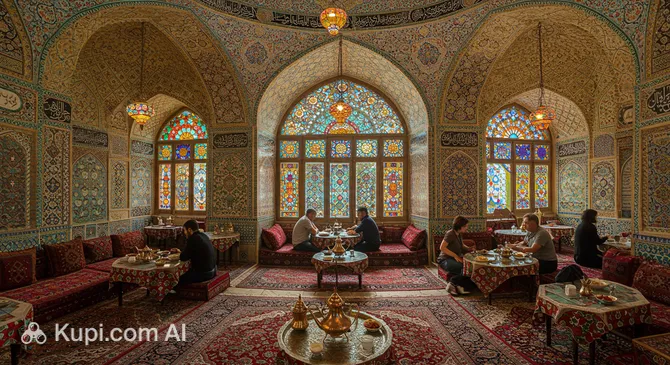
Mozaffari Traditional Restaurant. Illustration.
Source: Kupi.com AI
Traveler photos:
No culinary journey in Kashan is complete without tasting its world-famous rose water (Golab). As the hub of rose production in Iran, the city infuses this fragrant ingredient into many treats. The most popular way to enjoy it is in Sharbat-e Golab, a refreshing drink made from rose water, saffron, and sugar seeds, perfect for cooling down after a walk in the desert heat. Since alcohol is prohibited in Iran, these traditional herbal distillates and tea serve as the primary social beverages, alongside Doogh, a savory yogurt-based drink often flavored with mint or rose petals.
Dining in Kashan is an atmospheric experience, as many of the best eateries are housed within restored historical buildings. A prime example is the Mozaffari Traditional Restaurant, where guests can enjoy their meals on traditional carpeted beds (takhts) set around a beautiful central courtyard. This setting allows travelers to immerse themselves in the classic Persian lifestyle while enjoying authentic local recipes. For those looking for a slightly different setting, the Atrina Farm Restaurant offers another excellent venue to sample high-quality regional cuisine in a welcoming environment.
The food culture here is leisurely and hospitable. Locals often take their time with meals, enjoying the ambiance of the courtyards and the company of family. Whether you are grabbing a quick bite at the bazaar or sitting down for a full banquet in a converted merchant house, the flavors of Kashan—scented with rose, saffron, and cardamom—leave a lasting impression on every visitor.
Travel Tips
Preparing for your adventure in Kashan involves more than just booking a hotel; understanding the local rhythm and customs will truly enhance your experience. These practical tips are designed to help you navigate the city with ease and respect for its rich traditions.
Clothing and Gear: Since Kashan is located in a desert region of Iran, lightweight, breathable fabrics are essential for summer, while warm layers are necessary for winter nights. Adhere to the local dress code: women must wear a headscarf and loose-fitting clothes that cover the arms and hips, while men should wear long trousers and avoid shorts. Comfortable slip-on shoes are highly recommended, as you will frequently need to remove them when entering traditional houses and mosques.
Transportation: The historical center is compact and best explored on foot, allowing you to discover hidden alleyways. For longer distances, taxis are plentiful and affordable. The most convenient way to get around is by using Snapp, a local ride-hailing app similar to Uber, which overcomes language barriers by allowing you to set your destination on a map.
Finances: The official currency is the Iranian Rial (IRR), but locals almost exclusively quote prices in Toman (1 Toman equals 10 Rials). Always clarify which unit is being used to avoid confusion. International credit cards generally do not work here due to banking systems, so you must bring sufficient cash (USD or EUR) to exchange at authorized exchange offices (Sarafi) or purchase a local tourist debit card upon arrival.
Health and Safety: Kashan is a very safe city for tourists with low crime rates. Pharmacies are widely available and marked with a green cross; many pharmacists speak some English. Due to the arid climate, dehydration is a common issue, so carry bottled water at all times and use sun protection, especially during midday sightseeing.
Communication: The primary language is Persian (Farsi). While younger people and hotel staff often speak English, it is less common among taxi drivers and shopkeepers. Buying a local SIM card (e.g., Irancell or MCI) is crucial for internet access and navigation. Downloading an offline translation app and learning basic words like Salam (Hello) and Mamnoon (Thank you) goes a long way.
Local Etiquette: Iranians are famous for Taarof, a complex system of politeness where people may initially refuse payment or offer things they don't genuinely mean to give. If a shopkeeper or driver refuses your money, politely insist on paying; it is usually a gesture of respect rather than a free offer. Also, always greet people when entering a shop or room.
What to Avoid: Avoid public displays of affection, such as kissing or hugging, as this is culturally frowned upon in public spaces. Additionally, never photograph government buildings, military sites, or local residents (especially women) without their explicit permission.
Timing Your Visits: Be aware that Kashan follows a traditional midday break. Many bazaars and shops close between 1:00 PM and 4:00 PM to escape the afternoon heat. Plan your shopping and city walks for the morning or late afternoon and evening when the city comes alive again.
With these tips in hand, you are ready to immerse yourself in the timeless beauty of Kashan. Embracing the local customs will not only make your trip smoother but also open doors to the incredible hospitality for which this desert city is renowned.
Entertainment & Nightlife
Entertainment and nightlife in Kashan offer a distinct and serene experience compared to Western cities. Instead of loud nightclubs or bars serving alcohol, which are not part of the culture in {country_name}, the city comes alive in the evenings through atmospheric tea houses, traditional courtyard restaurants, and vibrant social gatherings. The nightlife here is defined by long, leisurely dinners under the stars, poetry readings, and the soothing sound of water fountains in ancient courtyards.
The heart of the evening activity is concentrated around Alavi Street and the surrounding historical district. As the sun sets and the heat of the day dissipates, both locals and tourists flock to this area to stroll along the illuminated mud-brick alleyways. The atmosphere is relaxed and family-friendly, with shops and cafes staying open late into the night. It is the perfect time to immerse yourself in the local culture, sipping on aromatic tea or enjoying a refreshing glass of pomegranate juice while admiring the beautifully lit architecture.
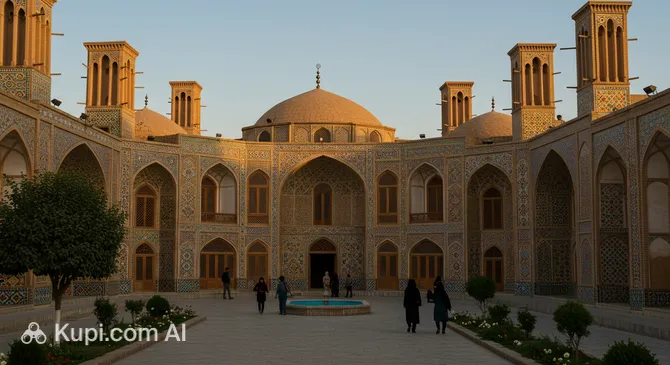
For a truly magical evening, visitors should head to Ameriha House. This magnificent historical complex, which functions as a boutique hotel and restaurant, offers one of the most enchanting settings in the city. Guests can dine in the Mirror Hall or the open courtyards, enjoying high-quality local cuisine in an ambiance that transports you back to the Qajar era. The play of light on the intricate stucco work and the tranquil environment make it a top choice for a sophisticated night out.
Ameriha House. Illustration.
Source: Kupi.com AI
Traveler photos:
Another excellent venue for experiencing the local evening vibe is the Mozaffari Traditional Restaurant. Popular for its expansive outdoor seating on traditional daybeds (takhts), it is a bustling spot where you can mingle with locals and enjoy live traditional music on select nights. For those seeking a slightly different setting, the Atrina Farm Restaurant offers a delightful escape with a focus on organic ingredients and a rustic, welcoming atmosphere, perfect for a relaxed dinner away from the city center's crowds.
Practical advice for enjoying Kashan at night includes planning your outings after 8:00 PM, when the city is most lively. Dress codes remain conservative in the evenings; casual but modest attire is appropriate for all venues. Prices for dining and tea are generally very affordable by international standards. Getting around is easy and safe; the historical center is walkable, but if you venture further, taxis and ride-hailing apps like Snapp are readily available and inexpensive. The city is very safe for night walks, even for solo travelers, though it is always wise to stay in well-lit areas.
While the nights are for relaxation and dining, daytime entertainment in Kashan focuses on cultural exploration. The city is an open-air museum, with its famous historical houses functioning as the primary "museums" of the region. Visitors spend their days exploring these architectural marvels, visiting the ancient bazaar, or taking excursions to nearby sites like the Noushabad Underground City. Although you won't find large amusement parks, the historical depth and artistic beauty of the city provide ample entertainment for the culturally curious traveler.
Parks & Museums
While Kashan is predominantly known for its arid desert landscape and historical architecture, the city offers distinct pockets of greenery and a fascinating array of museums that delve deeper into its cultural fabric. Beyond the famous merchant houses, visitors can explore lush gardens that defy the desert climate and specialized museums that showcase everything from ancient pottery to traditional performing arts.
The most prominent green space in the city is the UNESCO-listed Fin Garden. While it is primarily a historical attraction, it also serves as the city's most vital park, offering a cool retreat with its towering cypress trees and spring-fed channels. Within the garden complex, you will find the Kashan National Museum. This small but significant museum displays a collection of archaeological finds from the region, including pottery from Tepe Sialk, exquisite calligraphy, and ethnological items that provide context to the city's long history.
For a different perspective on local culture, the Puppet and Toy Museum is a hidden gem housed in a restored Qajar-era guesthouse. This delightful museum houses a vast collection of traditional puppets and toys from Iran and around the world. It is not just a display but a cultural center that preserves the art of storytelling and puppetry, often hosting live shows that are entertaining for both children and adults. It offers a colorful and playful contrast to the solemnity of the historical mansions.
Although Kashan does not have many large public parks in the modern sense, Bame Shahr (Roof of the City) is a popular natural area located on the heights overlooking the city. It is a favorite spot for locals to hike, picnic, and enjoy panoramic views of Kashan's skyline against the backdrop of the desert, especially during sunset when the weather cools down.
Several historical sites function effectively as museums, preserving specific aspects of daily life. The Sultan Amir Ahmad Bathhouse is a prime example. As one of the most beautiful preserved bathhouses in Iran, it acts as a museum of traditional hygiene and social culture. Visitors can walk through the dressing halls (Sarbineh) and hot bathing halls (Garmkhaneh), admiring the turquoise tiles and intricate gold and blue plasterwork that decorated these communal spaces.
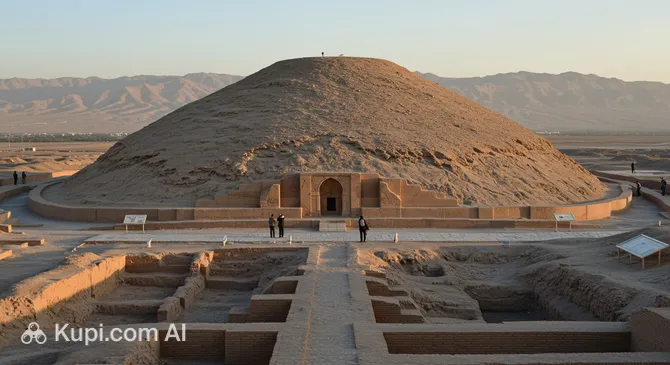
Tepe Sialk. Illustration.
Source: Kupi.com AI
Traveler photos:
For those interested in archaeology, the site of Tepe Sialk serves as an invaluable open-air museum. While the structures are ancient ruins, the site allows visitors to see the layers of civilization dating back over 7,000 years. Recent walkways and information boards help interpret the mounds, explaining the evolution of architecture and pottery in the region long before the Persian Empire rose.
Another unique site that offers a museum-like experience is the Noushabad Underground City. Located just a few kilometers north of Kashan, this engineering marvel allows tourists to descend into a hand-carved subterranean network. Walking through its corridors, chambers, and air ducts provides a visceral understanding of how ancient Persians used ingenuity to survive harsh wars and desert climates.
Insider Tip: If you visit the Fin Garden, take a moment to visit the Cheshmeh-ye Soleimani, the spring that feeds the garden. It is located just behind the garden walls and is often quieter, offering a glimpse into the natural water source that has sustained this oasis for millennia.
Getting Around
The public transport system in Kashan is relatively simple and straightforward, reflecting the city's compact and historic nature. Unlike larger metropolises, the city does not have a metro, tram, or light rail system. Instead, the local transportation network relies primarily on buses and an abundance of taxis to move residents and visitors between neighborhoods. For tourists, navigating the area is generally easy, as most major attractions are concentrated within the historical center or located just a short drive away.
City buses operate on main routes connecting key hubs, such as Kamal-ol-Molk Square, to outlying areas like the railway station and the famous Fin Garden. These buses are an extremely economical way to travel, though they can be slower than taxis due to frequent stops. The service is functional rather than luxurious, and operating hours typically run from early morning, around 6:00 AM, until early evening, often winding down by 8:00 PM or 9:00 PM. It is important to note that buses may be segregated by gender, with separate sections for men and women.
For most travelers, taxis are the most convenient and popular mode of transport. There are two main types to be aware of: "Savari" (shared) and "Darbast" (private). Shared taxis run along fixed routes and pick up multiple passengers, making them very cheap but sometimes crowded. If you prefer a private ride, you should ask for "Darbast," which indicates you want to hire the entire car for yourself. Official taxis are usually yellow or green, and while some have meters, it is common practice to negotiate the fare before starting your journey to avoid misunderstandings.
A highly recommended alternative for tourists is the use of ride-hailing apps, specifically Snapp, which functions similarly to Uber. This service is widely available in the city and significantly eases the travel experience by removing language barriers and the need for bargaining. You can simply set your pickup and drop-off locations on the map and see the fixed price in advance. It is generally very affordable and safe, making it the preferred choice for international visitors who may not speak the local language.
Regarding the payment system, cash is the standard method for almost all public transport transactions. While there are electronic card systems for locals, tourists are advised to carry small denominations of cash. Fares are usually paid directly to the driver. Prices are almost always quoted in Toman rather than the official currency unit (Rials), so always double-check the amount. Bus fares are negligible, and taxi rides within the city are also quite inexpensive by international standards.
Finally, the best way to explore the heart of Kashan is simply by walking. The historical district, home to the traditional merchant houses and the grand bazaar, is a maze of narrow, winding alleyways that are often inaccessible to cars. Walking allows you to soak in the atmosphere of the mud-brick architecture and discover hidden gems that you would miss in a vehicle. For destinations further afield, combining a short walk with a taxi or Snapp ride is the most practical solution.
Accommodation
Finding accommodation in Kashan is often a highlight of the trip, as the city offers a unique lodging experience that is rare to find elsewhere. Unlike modern metropolises dominated by high-rise glass hotels, Kashan’s hospitality scene is centered around traditional merchant houses that have been lovingly restored and converted into boutique hotels and guesthouses. These properties allow visitors to sleep in rooms surrounding peaceful courtyards, complete with fountains, pomegranate trees, and intricate plasterwork, effectively letting you stay inside a living museum.
The general range of accommodation is quite diverse, catering to various budgets while maintaining a distinct local charm. Backpackers and budget travelers can find numerous affordable hostels and guesthouses (often called "traditional houses") that offer dormitory beds or simple private rooms. For those seeking more comfort and style, the mid-range and luxury options are spectacular. These "boutique hotels" provide modern amenities like air conditioning and private bathrooms while preserving the authentic Persian architecture and atmosphere of the Qajar era.
The best area to stay is undoubtedly the historical center. This district is a compact maze of mud-brick alleyways where most of the city's main attractions, including the bazaar and the famous historic mansions, are located. Staying here means you can easily walk to almost all major sights, soaking in the ambiance of the old city day and night. There are also some modern hotels located in the newer parts of the city, but they generally lack the atmospheric appeal of the old town.
One of the finest examples of this transformation is the Ameriha House. While it is a major historical attraction in its own right, it also functions as a premier hotel, offering guests the chance to experience the grandeur of 19th-century aristocratic life with high-end service. Staying in such a property provides an immersive cultural experience that goes far beyond a standard hotel stay.
Booking Tips: Kashan is a major destination on the tourist trail, and the best traditional houses have a limited number of rooms. It is highly recommended to book in advance, especially during the peak spring season (April and May) when the famous Rose Water Festival takes place. During this time, the city is bustling with visitors, and finding a vacancy on arrival can be difficult.
Regarding prices and payment, accommodation in Kashan is generally very good value for money compared to international standards. Budget options are extremely affordable, while even the most luxurious traditional hotels are reasonably priced for the level of beauty and service they offer. Most bookings can be made through online travel platforms specializing in Iran or by contacting the hotels directly via WhatsApp or email. Remember that due to limited international banking connectivity, you will likely need to pay in cash (Euros or US Dollars) upon arrival, even if you have a reservation confirmation.
Nearby Cities
For those looking to explore the surroundings, Kashan serves as an excellent base for day trips to several interesting nearby locations:
One of the most accessible destinations is Aran va Bidgol, located just a few kilometers away. This city acts as the gateway to the stunning Maranjab Desert and its vast salt lake, offering travelers a chance to experience the serene beauty of the dunes and visit historic desert caravanserais. To the north lies Qom, a major spiritual center and the second holiest city in the country. It is renowned for its magnificent shrines, including the golden-domed Shrine of Fatima Masumeh, which showcases breathtaking Persian architectural styles and intricate tile work.
City
Population
Distance
Aran va Bidgol
65 404
9 km
Delijan
40 902
68 km
Natanz
14 122
70 km
Qom
1 201 158
88 km
Mahallat
43 245
90 km
These nearby destinations offer a glimpse into the diverse culture and landscapes of the region.
Shopping & Souvenirs
Shopping in Kashan offers a delightful immersion into traditional Persian culture rather than a tour of high-end fashion boutiques. The city is renowned for its rich heritage of craftsmanship, making it an excellent destination for travelers seeking authentic handicrafts, high-quality textiles, and unique local products. The shopping experience here is deeply intertwined with history, as the main commercial hubs are often located within centuries-old architectural masterpieces.
The beating heart of the city's commerce is the Historic Bazaar of Kashan. This sprawling complex is not only a place to buy goods but also one of the most stunning examples of covered market architecture in the region. Visitors can wander through its labyrinthine alleyways, passing by caravanserais and mosques. While exploring the city center, you may also find various shops lining Baba Afzal Street and Beheshti Street, which offer a mix of everyday items and local specialties.
While Kashan is primarily known for its traditional markets, it has seen the development of modern shopping centers in recent years. Places like the Kashan Mall and the Safaviyeh Passage provide a more contemporary retail environment. These malls feature stores selling clothing, electronics, and accessories, offering a cool, air-conditioned contrast to the bustling historic streets, though they are generally smaller than the mega-malls found in larger metropolitan areas.
The most interesting market experience is undoubtedly found within the Historic Bazaar. Here, the famous Timcheh-ye Amin od-Dowleh section stands out with its soaring dome and intricate brickwork. In this atmospheric setting, you can find vendors selling everything from aromatic spices and dried fruits to copperware. It is a vibrant space where locals shop for their daily needs, allowing tourists to observe authentic daily life while browsing for treasures.
When it comes to souvenirs, Kashan is world-famous for its rose water (Golab) and herbal distillates. You will find countless shops dedicated to these fragrant products, often sold in beautiful glass bottles. The city is also a historic center for carpet weaving; a genuine Kashan rug is a high-value item known for its exquisite quality and design. Other popular keepsakes include hand-woven textiles like velvet and silk, as well as traditional pottery that reflects the region's ancient artistic roots.
Store hours in Kashan typically follow a split schedule to accommodate the afternoon heat. Shops usually open around 9:00 AM to 1:00 PM, close for a midday break, and reopen from 4:00 PM until 9:00 PM or later. The bazaar is generally closed on Fridays and public holidays. Payment is almost exclusively made in cash (Iranian Rials or Toman). While some larger carpet shops may have arrangements for foreign currencies, it is essential to carry enough local cash for smaller purchases. Tax-free shopping or VAT refunds are not typically available for tourists in local shops.