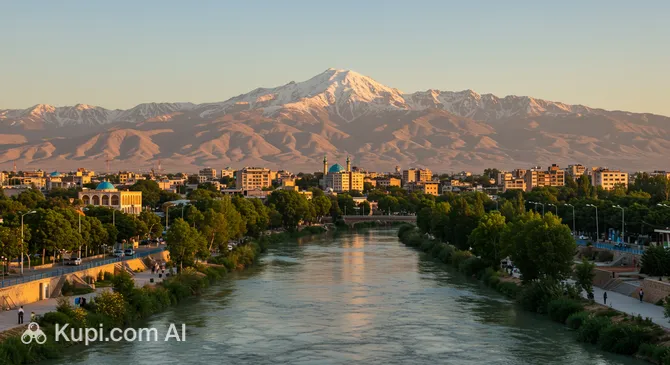
Qaem Shahr is a vibrant and rapidly developing city located in the picturesque Mazandaran Province in northern Iran. As one of the region's most important transport hubs, the city is permeated with an atmosphere of constant movement and transit. Its streets are filled with the energy of daily life, while its dense buildings and active traffic create the image of a typical modern Iranian center where tradition intertwines with urbanization.
Geographically, the city is nestled at the foot of the northern slopes of the Alborz Mountains, just a few dozen kilometers from the coast of the Caspian Sea. With a population of over 200,000, Qaem Shahr is considered the most densely populated city in Mazandaran Province. Interestingly, until the 1979 Islamic Revolution, it bore the name Shahi, and today the history of the city reflects a journey of rapid transformation from a small settlement into a major industrial and logistics center.
Qaem Shahr. Illustration.
Source: Kupi.com AI
Although Qaem Shahr rarely makes it onto the lists of the country's top tourist destinations, it possesses its own unique charm. Travelers are drawn here by the authentic way of life, colorful local markets, and the hospitality of the residents. The city serves as an ideal base for those who want to explore the northern regions of the country while staying at the epicenter of local activity. We invite you to feel the rhythm of this northern heart, where every intersection tells its own story.
Weather Overview
Qaem Shahr is under the influence of a moderate subtropical climate, which is greatly affected by its proximity to the Caspian Sea and the Alborz mountain range. This region is characterized by high humidity throughout the year and abundant precipitation, making the surrounding nature incredibly green and lush. You can find more detailed information about current conditions by checking the weather in Qaem Shahr section.
Summer in the city is warm and sometimes quite hot: the average July temperature is about 26°C, while maximum values can exceed 30°C. Winters here are mild and humid; in January, the thermometer usually stays around 7-8°C, rarely dropping to light frosts. The rainiest months are considered to be October and November, when prolonged but refreshing downpours cover the city.
Travelers should expect frequent weather changes and high humidity, especially during the spring and autumn periods. If you are planning a visit, be sure to bring light waterproof clothing and an umbrella. Spring is especially beautiful here—during this time, the city is literally immersed in the fragrance of blooming citrus orchards, and the air temperature is ideal for long walks.
Average monthly temperature
Average monthly precipitation
Interesting Facts
Until 1979, Qaem Shahr was officially called Shahi, highlighting its connection to the Pahlavi period of Iranian history.
The city demonstrates an incredible pace of urbanization: while only about 18,000 people lived here in 1951, by 2016 the population exceeded 204,000 residents.
Qaem Shahr holds the status of the most densely populated city not only in Mazandaran Province but in all of northern Iran.
The city is located at an altitude of about 58 meters above sea level, which, combined with its proximity to the mountains and the sea, creates a unique microclimate.
Thanks to its location, the city is the "gateway" to the north, where the most important roads and railways leading to the capital intersect.
How to Get There
Qaem Shahr is rightfully considered one of the most accessible cities in northern Iran due to its status as a key transport hub. The city is located at the intersection of major highways and railway lines connecting the Caspian Sea coast with Tehran. Detailed information on routes and schedules can be found in the how to get to the city section.
The city does not have its own airport. It is most convenient for travelers to use the air gate in the neighboring city of Sari or the airports of Tehran. Modern buses regularly run from the capital to Qaem Shahr (the journey takes 3–5 hours), as do taxis. A private car is also an excellent option, as the roads in this region feature good surfaces and scenic views of mountain passes.
A special place in the transport system is held by the Qaem Shahr Railway Station. The railway passing through the Alborz Mountains is considered one of the most beautiful in the world. The train from Tehran takes about 4–6 hours, passing through numerous tunnels and bridges. The station is located quite conveniently, and from there it is easy to reach any point in the city by taxi or local bus.
Station
Passenger traffic
Distance
Sari Railway Station
2
21 km
Gorgan Railway Station
3
146 km
Tehran Railway Station
12
159 km
Tepe Sefid Railway Station
5
169 km
Qom Railway Station
7
270 km
Main Attractions
Qaem Shahr is primarily known as an important transport and residential center, so you won't find grand historical palaces or ancient world-class ruins here. However, the city offers an authentic experience of immersion into the daily life of northern Iran. The centers of attraction here are the city squares and busy transport hubs that set the rhythm for the entire settlement.
The Central Bazaar is perhaps the most colorful place in the city. Here, you can see the full variety of Mazandaran Province's agricultural products: from aromatic herbs to freshly caught Caspian fish. A stroll through the trading rows allows you to feel the true spirit of the city, observe the trade, and purchase locally produced goods that are rarely found in the tourist shops of the capital.
For those who appreciate industrial-era architecture, the Railway Station may be of interest. It is not just a transport facility but an important symbol of the city, connecting the northern regions with Tehran. The station building and surrounding infrastructure reflect an important milestone in the city's development as a key logistics hub for the country.
Since Qaem Shahr is located at the foot of the Alborz Mountains, many tourists use it as a starting point for short excursions to natural sites. Dense Hyrcanian forests begin very nearby, and small park areas within the city limits serve as a place of rest for locals after a hot workday.
Local Cuisine
The gastronomy of Qaem Shahr is a real feast for lovers of northern Iranian cuisine. Culinary traditions here are closely linked to the fertility of Mazandaran Province, where rice, citrus fruits, and a variety of herbs grow in abundance. The local menu is based on dishes made from the fresh catch of the Caspian Sea and fragrant long-grain rice.
Be sure to try the signature dish Kabuli Polo—a hearty pilaf with meat and plenty of herbs. Another delicacy is Mahi-ab-ghoureh—tender fish cooked in a sweet and sour sauce based on pomegranate juice or unripe grapes. Local cuisine is characterized by the use of large amounts of walnuts, garlic, and wild berries, which gives the dishes a unique, slightly tart taste.
A traditional meal is not complete without refreshing drinks. Try the local Doogh (a fermented milk drink with mint) or freshly squeezed juices from Mazandaran oranges. The food culture in the city is centered around the central markets and stations, where you can find both budget snack bars with kebabs and cozy restaurants offering home-cooked food in an authentic setting.
Travel Tips
Visiting Qaem Shahr will be a pleasant adventure for you if you take advantage of these practical tips, compiled specifically to make your stay in northern Iran comfortable.
Clothing and Dress Code: Strict clothing regulations apply in Iran. Women must wear a headscarf and loose clothing that covers the arms and legs (a manteau or long shirt). Men are advised against wearing shorts. Choose light natural fabrics, as humidity in Mazandaran can be high.
Transport: For moving around the city, it is most convenient to use taxis. Agree on the price in advance or use official services at the station. Intercity buses are a great way to reach neighboring cities quickly and affordably.
Finance: Only local currency (Rial/Toman) is in use. International bank cards (Visa, Mastercard) do not work, so bring cash in dollars or euros for exchange. Tipping culture is welcomed in restaurants but is not mandatory.
Health: Pharmacies (Darookhaneh) are easy to find in the city center. It is better to buy bottled water, although tap water in most areas is considered suitable for domestic needs.
Communication: The primary language is Persian. English is not widely spoken, so learn a few phrases: "Salam" (Hello), "Mamnun" (Thank you), and "Khoda Hafez" (Goodbye). This goes a long way with the locals.
Local Etiquette: Remember Taarof—the complex system of Iranian polite behavior. If you are offered something for free, politely refuse a couple of times before accepting if the offer is truly serious.
What to Avoid: Do not photograph government buildings, military sites, or police officers. Also, avoid public displays of affection.
Connectivity: A local operator's SIM card (Irancell or Hamrah-e-Avval) can be purchased with a passport. Wi-Fi is available in many cafes, but mobile internet is usually more reliable.
May your introduction to this hospitable city leave only the warmest memories. Have a pleasant trip!
Entertainment & Nightlife
The entertainment scene in Qaem Shahr is predominantly calm and traditional. As in many other cities in Iran, there are no noisy nightclubs or bars in the Western sense. Evening life is centered in cozy teahouses and cafes, where locals gather for leisurely conversations over a cup of strong tea with dates and a hookah.
For daytime leisure, the city offers modern cinemas where you can watch the latest releases of Iranian cinematography. Central districts also house sports grounds and small entertainment centers that are popular with young people. The atmosphere in these establishments is friendly and relaxed, and opening hours are most often limited to midnight.
If you crave more active entertainment or cultural events, many city residents prefer to take short trips to neighboring Sari or Babol. There, the choice of restaurants with live music and exhibition spaces is significantly wider. In Qaem Shahr itself, it is worth focusing on leisurely strolls and observing the local way of life, which manifests most vividly during the pre-sunset hours in the city squares.
Parks & Museums
While Qaem Shahr cannot boast an abundance of world-renowned museums, it offers pleasant opportunities for outdoor recreation. Small, cozy parks are laid out in the central areas of the city, serving as the main gathering points for citizens. Here, in the shade of trees, you can take shelter from the summer heat, watch local children play, and simply enjoy the leisurely rhythm of provincial life.
The city's greenery, despite the dense development, allows residents to maintain a connection with nature. Well-maintained squares are often found along the main streets, and the proximity to the Alborz Mountains provides the city with fresh air. There are few specialized art galleries or local history museums within the city limits, so tourists often satisfy their cultural hunger in neighboring Sari.
For those seeking more extensive natural areas, Qaem Shahr opens the way to the forests of Mazandaran. In just 20-30 minutes, you can reach forest massifs where locals hold family picnics on weekends. This combination of urban bustle and proximity to wilderness makes a stay in the city balanced and pleasant.
Getting Around
The transport system of Qaem Shahr is designed to efficiently handle a huge flow of transit passengers. The backbone of city transport consists of buses and minibuses that connect central districts with the outskirts and key transport hubs. Routes cover all significant points of the city, including markets and stations.
A very popular and affordable way to get around is by taxi. You can use traditional yellow taxis as well as ride-sharing services (savari) that run along fixed routes. The fare is low, making taxis the primary choice for tourists. You can also use local mobile apps to call a car, which successfully replace familiar international equivalents.
A special role is played by the railway, which serves not only for long-distance trips but also for travel between neighboring cities in the province. Public transport operating hours usually cover the period from early morning until 9-10 PM. Travelers should take into account that serious traffic jams are possible on the city's roads during peak hours due to high population density and active transit traffic.
Accommodation
Accommodation options in Qaem Shahr are primarily oriented toward transit travelers and business people. Small hotels and guesthouses predominate here, located near the railway station and major bus terminals. These are convenient and budget-friendly options for those planning to stay in the city for one or two nights before continuing their journey.
For a longer stay in the city, renting apartments in residential areas is popular. This allows tourists to feel like part of the local community and is often cheaper than a standard hotel room. There are virtually no luxury five-star complexes in the city itself, but the quality mid-range is quite well represented.
When choosing accommodation, it is worth looking at central districts, as that is where all the necessary infrastructure is concentrated: shops, cafes, and transport interchanges. It is recommended to book in advance, especially during Iranian holidays when the north of the country becomes a popular vacation spot for Tehran residents. Prices for accommodation in Qaem Shahr remain very democratic compared to the major tourist centers of Iran.
Nearby Cities
Thanks to its central location in Mazandaran Province, Qaem Shahr is an excellent starting point for exploring the northern region of Iran. Just a 15–20 minute drive away is the city of Babol, known for its historical buildings and status as a major industrial center. This place is worth visiting for strolls along its lively shopping streets and getting to know the architecture of the last century.
Another essential destination for a day trip is Sari—the administrative capital of the province. The distance to it is only about 21 kilometers, making it easy to reach by train or taxi. In Sari, travelers will find beautiful parks, museums, and more developed entertainment infrastructure. For those who miss the sea, Babolsar, located on the Caspian coast, is ideal for enjoying the sea breeze and walks along the embankment.
Exploring the surroundings of Qaem Shahr allows you to see multifaceted Iran: from dense forests and mountain ranges to modern coastal resorts. Good transport links make such excursions simple and untiring, enriching your journey with new impressions.
Shopping & Souvenirs
Shopping in Qaem Shahr is primarily an introduction to the local traditions and products of the fertile north of Iran. The city does not abound with huge futuristic shopping malls, but trade flourishes in traditional bazaars instead. The main commercial activity is concentrated around the central square and near the railway station, where you can find everything from modern clothing to essential goods.
The most interesting things for a tourist are hidden in the food markets. It is worth purchasing the famous Mazandaran rice, which is considered one of the best in the country, as well as fragrant local tea. Among souvenirs, sweets like fruit leather (lavashak) made from sour berries deserve special attention, as do traditional handicrafts, including small rugs and woven accessories.
Shops usually operate from morning until late evening with a lunch break during the hottest hours. Payment is most often made in cash in the local currency (rials), as international bank cards are not accepted in the region. Do not hesitate to bargain at the markets—it is not only a way to save money but also an important part of local communication, allowing you to get to know the hospitable residents of the city better.