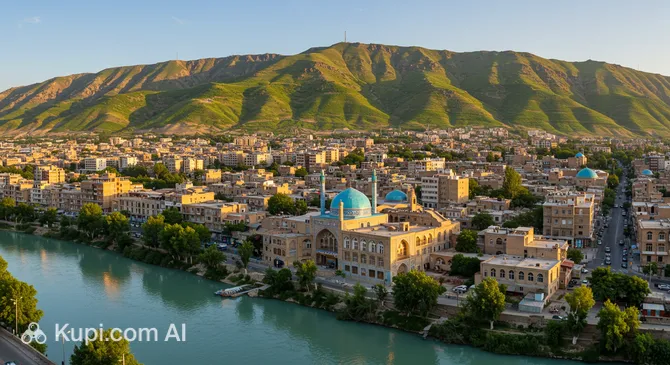
Amol is one of the oldest and most significant historical centers in northern Iran, nestled in the foothills of the majestic Alborz mountain range. The city is located in Mazandaran Province, just 15 kilometers from the Caspian Sea coast, and is divided into two parts by the picturesque Haraz River. With a population of over 238,000, it serves as an important administrative and commercial hub for the region while maintaining the atmosphere of an authentic Iranian provincial town.
Amol. Illustration.
Source: Kupi.com AI
The city is famous for its rich heritage: at various times, it served as the capital of Tabaristan and a stronghold of the Alavid dynasty. You can learn more about how this ancient cultural layer was formed by exploring the history of Amol. Today, travelers are drawn here by a combination of ancient architecture, bustling markets, and the lush greenery of the plains surrounding the urban districts.
Although Amol is not a mass-market tourist hub, it charms visitors with its sincerity. It is well worth visiting the unique tower-mausoleums and strolling along the riverbank while breathing in the scent of citrus orchards. This destination is ideal for those who want to see the real northern Iran, far from standard tour routes.
Weather Overview
The climate in Amol is shaped by its proximity to the Caspian Sea and the protective wall of the Alborz Mountains, making it temperate and quite humid. Extreme temperatures are rare here: summers are usually warm and humid, while winters are mild without severe frosts. To plan your wardrobe better, check the detailed weather forecast for Amol.
Average temperatures in the summer months hover around +25°C, though high humidity can make the heat feel more intense. Autumn is the rainiest period, especially October and November, when rainfall reaches its peak, filling the Haraz River and turning the foothills a vibrant green. In winter, temperatures rarely drop below +3°C, with averages staying around +7...+9°C.
Thanks to the abundant rainfall and mild climate, the city's surroundings remain lush and green year-round. Travelers should take into account that fog often occurs in the foothill areas, which adds a certain mystical atmosphere to the local landscapes but can affect visibility on the roads.
Average monthly temperature
Average monthly precipitation
Interesting Facts
Amol is considered one of the oldest cities in Iran: settlements existed on this site long before the arrival of Aryan tribes.
In 864, the city became the first capital of the Shiite Alavid dynasty, establishing its status as an important religious center.
The city's economy has been built on a unique combination of resources for centuries: citrus trade flourishes here alongside iron ore and coal mining.
The Nasir al-Haqq Mausoleum has a tower-like shape unusual for its time, standing out against the modern urban landscape.
The city is located in one of the country's most fertile regions thanks to its proximity to the Haraz River and the humid climate of the Caspian coast.
How to Get There
Amol is a major transport hub in the north of the country, linking the coast with mountain areas. Most travelers arrive here via the scenic highway from the provincial capital, Sari, or from neighboring Babol. If you are planning a trip, be sure to read the detailed recommendations on how to get to Amol to choose the best route.
The city does not have its own airport. The nearest air harbors are located in Sari and Rasht, from where you can reach central Amol by car or bus in 1–2 hours. From Tehran, the journey takes about 3–4 hours through the Alborz mountain passes via the famous Haraz Road, which is an attraction in itself due to its views.
There is no railway service in the city itself; however, the nearest major rail hub is located in neighboring Babol. Regular bus services connect Amol's central bus station with all key cities in northern Iran and the capital.
Station
Passenger traffic
Distance
Sari Railway Station
2
64 km
Tehran Railway Station
12
124 km
Tepe Sefid Railway Station
5
134 km
Gorgan Railway Station
3
190 km
Qom Railway Station
7
242 km
Main Attractions
The main attractions of Amol are centered around its rich historical past. One of the most notable sites is the Mir Bozorg Mausoleum (Qavam al-Din Marashi), built in the 14th century. This architectural complex, with its unique forms and monumentality, serves as a vivid reminder of the time when the city was the region's political center.
Equally interesting is the Nasir al-Haqq Mausoleum, dating back to the 16th century. This tower-shaped structure is located right within the city limits and is a classic example of medieval Islamic architecture in Mazandaran. A walk to the mausoleum allows you to feel the continuity of generations, as it is still revered by local residents.
The Haraz River is the natural landmark of the city. Its banks are a favorite place for relaxation, where you can observe the daily life of the townspeople. Although the famous Damavand volcano is located at some distance, it is inextricably linked with the image of Amol, rising majestically on the horizon and catching the eyes of mountain landscape lovers.
Local Cuisine
Local cuisine in Amol is a true feast for gourmets, incorporating the best traditions of Mazandaran Province. The main ingredients here are fresh Caspian fish, rice, and, of course, the citrus fruits the region is so famous for. Be sure to try kabab mahi (fish kebab) and kebabs marinated in thick pomegranate sauce, which have a unique sweet and sour flavor.
The city's gastronomic scene is mainly represented by traditional restaurants and small cafes by the Haraz River. Simplicity and product quality are valued here: tuna in a fragrant marinade, boiled corn with local herbs, and freshly squeezed tangerine and orange juices are what the townspeople eat every day. Among drinks, strong tea is particularly popular, usually served with local honey.
To experience the real taste of the city, head to the central markets. There you can find homemade preserves, spices, and fresh fruit straight from the orchards. Street food in Amol is an excellent opportunity to try local snacks in an authentic setting, surrounded by hospitable locals.
Travel Tips
A trip to Amol will be a wonderful immersion into the culture of northern Iran, and these practical tips will help make your journey as comfortable as possible.
Clothing and Essentials: Choose light clothing made from natural fabrics for summer and don't forget an umbrella—it often rains in Mazandaran. Remember the dress code: women need to wear a headscarf and modest clothing; shorts are not recommended for men.
Transport: It is most convenient to move around the city center on foot or by taxi. For trips to neighboring cities, use buses from the central bus station.
Finance: Only cash Iranian rials (or tomans) are in use. International cards do not work, so exchange currency at the airport or official exchange offices in advance.
Health and Safety: The city is safe, but keep an eye on your bags in markets. Drink only bottled water, as tap and river water are not intended for drinking.
Communication: The main language is Persian. Few people know English, so download an offline translator or learn a few polite phrases.
Local Etiquette: Always remove your shoes when entering a mosque or a private home. Be prepared for taarof—the Iranian system of complex etiquette and politeness.
What to Avoid: Do not photograph government buildings or sensitive sites. Also, try to avoid visiting remote industrial zones on the outskirts unnecessarily.
Additional Tip: Be sure to visit the local market in the morning—it's the best time to buy the freshest fruit and feel the pulse of the city.
May your acquaintance with this ancient city be filled with only pleasant discoveries and warm hospitality!
Entertainment & Nightlife
The entertainment industry in Amol is of a quiet, family-oriented nature. You won't find noisy nightclubs or bars here, as the city's social life follows traditional norms. The main evening leisure spots for locals and tourists are cozy chai-khaneh (teahouses) and walking areas along the Haraz River, where you can enjoy the cool air and leisurely conversation.
The city's central squares and markets remain lively until late evening, offering an immersion into the colorful atmosphere of an Oriental bazaar. For those seeking a more active cultural program, theaters and concert halls are available in neighboring Sari or Babol, which can be reached in less than an hour. In Amol itself, quiet walks through historical quarters and getting to know the local way of life are most valued.
Safety in the city is high, allowing for worry-free evening promenades. If you need transport to return to your hotel after a late dinner, it is best to use official taxi services, which can be easily called through any establishment's reception or by phone.
Parks & Museums
Amol's park infrastructure is closely linked to its natural landscape. The main recreation areas are concentrated along the banks of the Haraz River, where embankments and small green corners have been established, popular with locals for family picnics. While the city does not boast large landscaped parks, the natural vegetation of the Alborz foothills provides a pleasant backdrop for walks.
The city's outstanding historical monuments serve the role of museums. The Mir Bozorg Mausoleum and Nasir al-Haqq Mausoleum are essentially open-air museums. Their 14th–16th century architecture and ancient interiors tell the story of the city's religious and political significance better than any exhibition stand. Here you can see unique brickwork and decorative elements characteristic of the medieval Caspian region.
For a deeper acquaintance with the art and history of the province, tourists often visit galleries in neighboring Sari; however, Amol remains an ideal place for those who appreciate genuine antiquity woven into a modern urban environment. The silence of ancient mausoleums and the sound of the river create a unique cultural landscape here.
Getting Around
Amol's public transport system consists mainly of a network of buses and minibuses that run along the main streets and connect the center with the outskirts. This is a budget-friendly way to get around, though routes can be difficult for tourists to understand without knowing the local language. The main traffic load falls on the central highways leading toward Sari and Babol.
Taxi remains the most popular and convenient mode of transport for guests. Both official taxis and private drivers operate here. Prices for trips within the city are quite affordable, but it is better to agree on the fare in advance or watch the meter if there is one. During peak hours, especially around the markets, congestion can occur, so plan your travel time with a margin.
The central part of the city is quite compact and perfectly suited for walking. Most historical attractions and markets are within walking distance of each other. Bicycle rental is not developed in the city due to the terrain and heavy traffic, so walking remains the best way to explore the authentic backstreets of Amol.
Accommodation
The hotel sector in Amol is primarily geared toward transit travelers, pilgrims, and business people. In the city center, particularly in areas adjacent to the Haraz River and historical mausoleums, you can find several 2-star and 3-star hotels offering basic comfort and traditional hospitality.
For those who prefer a more secluded or budget-friendly stay, small guesthouses are available. There are almost no luxury five-star resorts within the city limits—travelers usually head closer to the Caspian coast or into the mountains for high-end accommodation. Nevertheless, accommodation in Amol offers affordable prices and proximity to authentic markets.
When planning a trip during peak seasons (such as the Iranian New Year — Nowruz), it is recommended to book in advance. At other times, finding a room is usually not a problem. Many travelers also consider renting apartments in residential neighborhoods, which allows for a deeper immersion into the daily life of northern Iran.
Nearby Cities
Amol serves as an excellent starting point for exploring Iran's northern region, offering travelers easy access to the coast and mountain trails. Just 19 kilometers away is the city of Mahmudabad, popular for its Caspian Sea beaches, making it an ideal spot for a quick getaway by the water.
For those interested in culture and shopping, a visit to Babol is a must. This large city is located just 30 minutes away and is famous for its lively markets and historical monuments. Also worth noting is Babolsar, which attracts tourists with its resort atmosphere and picturesque embankments.
Exploring the surroundings of Amol will allow you to see the full diversity of Mazandaran's nature—from dense forests and rice fields to modern seaside towns. Each of these destinations is easily accessible by taxi or suburban bus within a single day.
Shopping & Souvenirs
Shopping in Amol primarily means visiting traditional bazaars where trade has been active for centuries. Central markets located near the Haraz River are the heart of city life. This is the place to buy famous Mazandaran citrus fruits, fresh spices, and local rice, which is considered some of the best in the country.
The city is famous for goods made from the region's natural resources: you can find products related to local crafts in the markets. If you are looking for a memorable gift, look for handmade carpets and traditional textiles. There are few Western-style large shopping malls in the city; the main focus is on small shops and specialized stores in the center.
Shops usually operate from morning until late evening with a lunch break during the hottest hours. Payment is made in cash in the local currency (rials or tomans), as international cards are practically not accepted. Don't forget that moderate bargaining is not only appropriate at an Oriental bazaar but is also part of the communication culture.