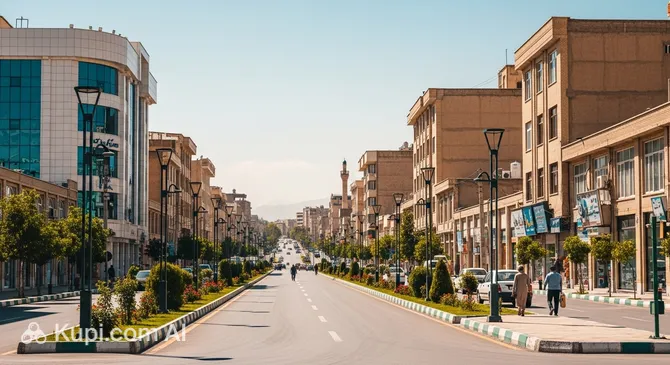
Pakdasht is a rapidly developing city in Iran, located in the Tehran Province. Situated just 35 kilometers east of the capital, it plays a vital role as an industrial and residential hub for the region. The city has the atmosphere of a typical Iranian suburb, where modern industrial life is closely intertwined with the daily traditions of the local residents.
Pakdasht. Illustration.
Source: Kupi.com AI
Geographically, the city is situated at an altitude of about 1,200 meters above sea level, which gives it a temperate continental climate. With a population of over 236,000 people, Pakdasht is among the country's largest cities. Its history and heritage are linked to the merger of several rural settlements, such as Mamazan and Kuheh, which in the late 20th century triggered the transformation of an agrarian area into a significant urban center.
For the traveler, Pakdasht is primarily interesting as a place where one can see the "real" Iran without the tourist gloss. Active commercial life thrives here, with colorful markets and small workshops in full swing. Although the city is not overflowing with historical monuments, its proximity to Tehran and its authentic environment make it an intriguing spot for those who want to study the life of Iranian metropolises from the inside. A visit to Pakdasht will allow you to feel the rhythm of the modern East and the hospitality of the local people.
Weather Overview
The city of Pakdasht is characterized by a continental climate typical of the Tehran Province. Due to its location at an altitude of about 1,200 meters, the air here is drier than on the coast, and the seasonal changes are very distinct. Summers in the city are usually hot and dry: in July and August, the thermometer often reaches marks of +35°C to +37°C. However, due to low humidity, the heat is more easily tolerated, and the evenings bring long-awaited coolness from the mountains.
Winter in Pakdasht is cool, and sometimes truly cold. In January, the average temperature hovers around +4°C, but night frosts down to -2°C are a common occurrence. The majority of precipitation falls during the winter period and early spring. For tourists, it is important to know that on windless winter days, the city may suffer from smog accumulation due to its proximity to industrial zones and the capital. You can find current data and study the detailed climate of the city in the special section.
The best time to visit is considered to be April, May, and October. During these months, the weather in Pakdasht is most comfortable for walking: average temperatures stay in the range of +18°C to +25°C, and nature delights with greenery or autumn colors. If you plan a trip for the winter, be sure to bring warm clothes, and for summer visits, don't forget sunscreen and hats.
Average monthly temperature
Average monthly precipitation
Interesting Facts
The territory of modern Pakdasht has deep historical roots: as early as the 8th century, large settlements flourished here, with populations exceeding 10,000 people.
The city demonstrated one of the fastest growth rates in Iran at the beginning of the 21st century, when its population increased by nearly 16,000 people annually.
Pakdasht officially gained its status in 1989 as a result of the administrative merger of the village of Pakdasht with the neighboring villages of Mamazan and Kuheh.
The city is located at a strategic altitude of 1,200 meters, which makes its climate somewhat milder compared to the lower-lying areas of the province.
Today, Pakdasht is not only an industrial hub but also an important "bedroom community" for Tehran, providing housing for thousands of people working in the capital.
How to Get There
The city of Pakdasht enjoys good transport accessibility thanks to its proximity to the capital of Iran. The main transport flow follows high-speed expressways connecting the city with the eastern districts of Tehran. This makes Pakdasht a convenient point for those who want to explore the province while avoiding the excessive bustle of the metropolis itself. You can find more about logistics in the section describing how to get to the city.
There are no direct flights to Pakdasht, as the city uses the aviation infrastructure of the capital. The nearest major international airports are in Tehran, from where Pakdasht can be reached by taxi or transfer. The trip from the capital's air hubs usually takes about an hour, depending on the traffic situation.
The city currently has no railway connection of its own. Travelers who prefer trains should head to Tehran’s central station. From the station to Pakdasht, it is most convenient to travel by taxi or suburban buses. For comfortable movement, tourists are recommended to use official taxi services or rent a car with a driver, as public transport may require knowledge of the local language.
Station
Passenger traffic
Distance
Tehran Railway Station
12
34 km
Tepe Sefid Railway Station
5
38 km
Qom Railway Station
7
117 km
Kashan railway station
3
165 km
Sari Railway Station
2
173 km
Main Attractions
The city of Pakdasht is not a classic tourist destination with an abundance of historical monuments; however, it offers travelers a unique chance to witness the everyday life of modern Iran. The main center of attraction here is the local bazaar, where life never subsides from morning until late evening. This is an ideal place for those looking for authentic goods and spices, and who wish to observe traditional trade away from the well-trodden tourist paths.
Although the city itself is dominated by dense modern buildings, its surroundings hide many interesting things. For tourists, Pakdasht serves as a convenient base for exploring the cultural sites of the Tehran Province. Within walking distance are traditional agricultural areas where ancient farming methods are still preserved, and the suburban landscapes allow one to appreciate the contrast between the industrial center and the rural hinterland.
If you are interested in architecture and history, it is worth paying attention to the mosques and administrative buildings built in the characteristic style of the region. Pakdasht is a city for the thoughtful observer who appreciates the atmosphere of a living, constantly changing Eastern suburb. Just a thirty-minute drive from here, all the treasures of the capital unfold, making a stay here a practical choice for budget-conscious travelers.
Local Cuisine
The culinary identity of Pakdasht is a triumph of traditional Persian flavors, where fresh products and aromatic spices play the lead role. Walking through the city, you will surely catch the inviting scent of grilled meat wafting from numerous kebab shops. Be sure to try kebab koobideh—tender grilled meat served with a mountain of fluffy saffron-garnished rice and roasted tomatoes. This dish is the hallmark of the local gastronomy.
In addition to meat dishes, the region's cuisine is famous for its rich stews (khoresh). Local restaurants often offer fesenjoon—an exquisite poultry dish with a pomegranate and walnut sauce—as well as hearty khash. Pakdasht is surrounded by farmland, so the local markets always offer the freshest seasonal fruits, vegetables, and homemade dairy products, which form the basis of the townspeople's daily diet.
It is customary to end a meal in Pakdasht in a cozy teahouse. Tea here is not just a drink, but an important ritual. It is served in small "armudu" glass cups with pieces of lump sugar or traditional sweets. Street food also deserves attention: hot flatbreads, baked right in front of you in a tandoor, are a great addition to any lunch. For a true introduction to the city's flavor, it is best to choose small family-run establishments where recipes are passed down from generation to generation.
Travel Tips
Welcome to Pakdasht! This city will give you a unique experience of immersion in everyday Iranian life. To ensure your trip goes smoothly and comfortably, take advantage of our practical tips.
Clothing and Dress Code: Remember to observe local norms. Women must wear a headscarf (rusari) and clothing that covers the arms and legs down to the ankles (such as a manto or long shirt). Men are advised not to wear shorts. Comfortable closed shoes are mandatory, as sidewalks can be uneven.
Transport: To move around the city and for trips to Tehran, it is best to use taxis via the Snapp app—it is safe and eliminates the language barrier when discussing the price. Renting a car without a driver is not recommended due to chaotic traffic.
Finance: International Visa and Mastercard cards do not work in Iran. Bring cash in Euros or Dollars and exchange them at official points (Saraf). Cash rials are the primary method of payment, although a local "Tourist Card" can be issued upon arrival at the airport.
Health and Safety: Pakdasht is a safe city, but standard precautions are advisable. Avoid walking in industrial outskirts after dark. It is better to buy bottled water, although tap water in the region is considered technically clean.
Communication: The primary language is Persian (Farsi). Few people here know English, so download an offline translator. Learn a few phrases: "Salam" (hello) and "Kheyli mamnoon" (thank you very much). An Irancell SIM card can be purchased at the Tehran airport.
Local Etiquette: Iranians are extremely hospitable. Be prepared for "Taarof"—a complex system of politeness where you might be offered something for free several times. Politely decline until the offer becomes persistent.
What to Avoid: Never take photos of government institutions, military facilities, or people in uniform. Also, avoid public displays of affection—this is not customary in conservative areas.
Extra Tip: Visit the local bazaar in the first half of the day when the goods are freshest and the atmosphere is most lively, but before the evening traffic jams start.
Pakdasht is a city of open people and sincere smiles. Be polite, respect local traditions, and this journey will become one of your warmest memories of the East!
Entertainment & Nightlife
The entertainment scene in Pakdasht is primarily oriented toward family recreation and traditional leisure. Due to the observance of Islamic norms, nightlife in the usual Western sense—with clubs and bars—is absent here. However, the evening city has its own life: as the coolness sets in, the streets fill with people, and numerous chaikhanas (traditional tea houses) become centers of social interaction. Here, you can spend time over a cup of aromatic Persian tea and a hookah, immersing yourself in leisurely conversations with the locals.
For daytime activities, modern cinemas showing the latest Iranian films and small play areas for children are available in the city. Walks through shopping arcades and central squares, where makeshift markets or street performances are often organized, are also popular. The audience in these establishments is mostly local, the atmosphere is very friendly and calm, and the dress code follows the generally accepted norms in Iran (modest clothing for both men and women).
If you crave more active entertainment or world-class cultural events, most residents and visitors head to neighboring Tehran. There, the choice of restaurants, concert halls, and entertainment centers is significantly wider. The capital is easily accessible by taxi, which operates 24/7, allowing you to enjoy the city's offerings and return to the quieter Pakdasht for the night.
Parks & Museums
In terms of green zones, Pakdasht is a city of cozy squares and small municipal parks. Although there are no vast forested areas, the city authorities pay attention to landscaping residential neighborhoods. Small parks in the city center serve as a resting place for families with children and elderly people. In the evenings, these areas come alive: locals come here to enjoy the coolness, have a small picnic, or simply chat in the fresh air.
The museum infrastructure in the city itself is still under development, so for classic exhibitions and art galleries, tourists usually head to nearby cultural centers. However, the very appearance of Pakdasht can be called a kind of "open-air museum," reflecting the rapid urbanization of Iran. An observant traveler will find interesting examples of modern mosaics and architectural details characteristic of this region here.
For those looking for more large-scale natural landscapes, Pakdasht offers proximity to the foothills of the Alborz. Just a few kilometers north of the city limits, picturesque hills begin, which are perfect for light walks. This direction is chosen by those who want to trade the noisy industrial landscape for silence and panoramic views of the Tehran Province.
Getting Around
The transport system of Pakdasht is maximally adapted to the needs of local residents who actively move between the city and the capital. The main types of public transport here are buses and minibuses. They run along the main highways and connect Pakdasht with Tehran's key transit hubs. The payment system is quite simple: most often the fare is paid in cash to the driver or at the entrance, and the cost of the trip is very affordable by international standards.
There is no metro in Pakdasht itself yet, but many residents take buses to the nearest Tehran metro stations to avoid traffic jams at the entrance to the metropolis. For tourists, the most convenient and predictable way to get around remains the taxi. Both official services and popular Iranian ride-hailing apps (such as Snapp) operate in the city, allowing you to see the fare and route in advance, which eliminates the need to haggle.
For getting around inside Pakdasht, savari—shared taxis that run on specific routes and depart as they fill with passengers—are also popular. It is worth considering that during peak hours, traffic in the city can be extremely heavy, so it is better to plan trips with time to spare. Cycling infrastructure is practically non-existent here, and dense traffic makes long-distance walking not very comfortable, so a car or taxi remains the best choice.
Accommodation
The hotel infrastructure in Pakdasht is primarily geared toward business travelers and specialists visiting local industrial enterprises. Here, you will find a small number of mid-range hotels offering a basic set of amenities for a comfortable night's sleep and rest. Luxury five-star complexes are absent in the city itself, as the main demand is for budget and functional housing.
Most available accommodation options are concentrated along the main roads or in the central part of the city, which is convenient for quick access to transport hubs. There is also a developed segment of short-term rental apartments in Pakdasht, often chosen by those planning to stay in the region for several days. When choosing accommodation, keep in mind that English-speaking staff are not found in all establishments, so basic phrases in Persian or an online translator will be useful.
If you are looking for a wider selection of international-level hotels or tourist hostels, experienced travelers suggest considering staying in the eastern part of Tehran. Thanks to the proximity of the cities, you can easily visit Pakdasht during the day and return to the capital in the evening. Nevertheless, booking accommodation directly in Pakdasht can significantly save your travel budget, especially if done in advance through specialized services.
Nearby Cities
The city of Pakdasht is a convenient starting point for exploring the eastern part of the Tehran Province. Its location at the crossroads of important routes allows for easy planning of day trips to neighboring historical and modern centers, each with its own unique character.
Very close by is the city of Karchak, known for its industrial activity and lively commercial zones. A bit further away lies the historic Varamin, where you can see the magnificent Friday Mosque and ancient bazaars that have preserved the spirit of old Persia. It is also worth noting the city of Bagershahr, which attracts travelers with its calm pace of life.
In addition, within an hour's drive is the majestic Tehran with its museums and palaces, as well as the ancient city of Rey, considered one of the oldest settlements in the region. To the north of Pakdasht, the foothills of the Alborz range begin, offering scenic routes for those who prefer outdoor recreation. Such a variety of destinations makes Pakdasht an excellent place for those who want to see Iran in all its diversity.
Shopping & Souvenirs
Shopping in Pakdasht is primarily an opportunity to dive into the atmosphere of traditional Eastern trade. The main place for shopping remains the central city bazaar. There are no pretentious storefronts here, but there is an abundance of high-quality Iranian textiles, glassware, locally produced carpets, and a huge selection of spices. It is an ideal place for those who want to bring home something truly authentic at very attractive prices.
In addition to traditional markets, there are medium-sized modern shopping centers in the city. In them, you can find Iranian brand clothing, electronics, and household goods. Prices in such centers are usually fixed, unlike the bazaar, where the ability to bargain is considered a sign of good taste and respect for the seller. Most shops are open from morning until late evening with a lunch break during the hottest hours.
As souvenirs from Pakdasht, it is worth bringing back local sweets, nuts, or ceramics. Also, pay attention to leather goods, for which the region is famous. It is worth remembering that most retail outlets only accept local bank cards or cash (rials), so travelers are recommended to always have a sufficient supply of banknotes. For large-scale brand shopping, city residents most often travel to Tehran, but for color and good deals, you should head specifically to the local markets.