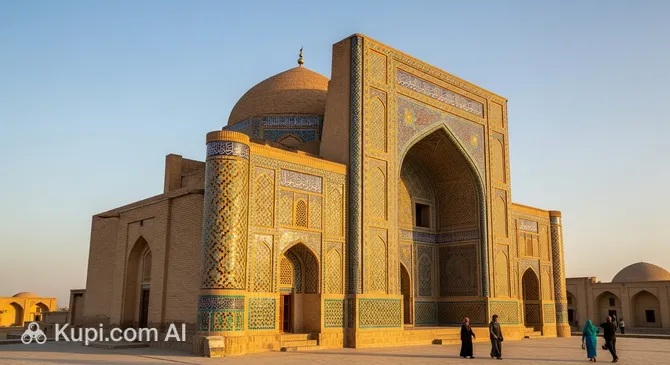
Located on the fertile plains of northern Iran, Varamin is a striking blend of industrial dynamism and ancient tranquility. Situated just 35 kilometers southeast of Tehran, this city has long served as a vital administrative and agricultural hub for the region. Its modern face is defined by the rhythm of life of its more than 225,000 residents, yet centuries of history are hidden behind the facades of its residential quarters.
Varamin. Illustration.
Source: Kupi.com AI
The city's importance soared in the 13th century when, following the destruction of neighboring Ray by the Mongols, Varamin's history took a sharp turn—it became a key center under the Ilkhanid dynasty. Today, this location attracts travelers seeking to see authentic Iran without the hustle and bustle of the capital. The city is famous for its crafts and traditional way of life while remaining a functional and important economic center of the province.
A visit to this corner of the Tehran province allows you to touch a unique architectural heritage and experience the atmosphere of a true Persian suburb. We invite you to explore its ancient mosques and stroll through its lively streets, where history and modernity intertwine in the most natural way.
Weather Overview
The region is characterized by a semi-arid climate, typical of central Iran. Weather in Varamin is determined by its location on the plain: here, you can expect hot, dry summers and fairly cool winters. Summer temperatures in July and August often reach +38°C... +40°C, so it is better to choose morning or evening hours for excursions.
Winter months bring a significant cooling, with the thermometer potentially dropping to -5°C at night, although average daytime temperatures in January hover around +10°C. Precipitation is rare here, mostly occurring between November and March. If you want to know more about temperature patterns, a detailed city climate summary will help you choose the ideal time for your trip.
The most favorable times for a visit are considered to be spring (March–May) and autumn (October–November). During these periods, comfortable warm weather sets in without exhausting heat, which is perfect for viewing historical monuments outdoors. It should be noted that due to the proximity of desert zones, dust winds are possible during dry periods.
Average monthly temperature
Average monthly precipitation
Interesting Facts
Varamin is a city that holds many surprising details, often unnoticed at first glance. Here are some curious facts about this place:
Heir to Great Ray: After the Mongols destroyed the ancient city of Ray in the 13th century, it was Varamin that took over its functions as the administrative and political center of the region.
Architectural Standard: The local Jameh Mosque is considered one of the best examples of Ilkhanid-era architecture in all of Iran, inspiring researchers of Islamic architecture from around the world.
Transit Hub: The city's railway station is an important point on the famous Tehran–Mashhad line, connecting the capital with the country's main pilgrimage center.
Agricultural Paradise: The Varamin plain is considered one of the most fertile in the country, providing the capital region with fresh vegetables and fruits for many decades.
Carpet Heritage: Local artisans are famous for their unique carpet weaving techniques, which feature distinct geometric patterns characteristic only of this shahrestan.
How to Get There
The city's transport accessibility is due to its strategic position near the Iranian capital. For travelers planning a visit, there are several convenient ways, and it is important to research in advance how to get to Varamin by the most comfortable route. The city is integrated into the province's general transport network, making a visit easy and accessible even for a short one-day trip.
The nearest major air hub is Tehran Imam Khomeini International Airport (IKA). From there, you can reach the city by taxi in about an hour, depending on traffic conditions. Although the city itself does not have its own airport, its proximity to the capital's terminals fully compensates for this.
One of the most reliable and fastest ways to travel remains the railway. Varamin Railway Station is located on a busy line connecting Tehran with Mashhad. Trains run regularly, and the travel time from the capital's central station is between 30 and 45 minutes. This is an excellent alternative to car travel, allowing you to avoid Tehran's famous traffic jams.
Station
Passenger traffic
Distance
Tehran Railway Station
12
43 km
Tepe Sefid Railway Station
5
44 km
Qom Railway Station
7
103 km
Kashan railway station
3
149 km
Sari Railway Station
2
186 km
For those who prefer road transport, modern highways lead from Tehran. A trip by taxi or regular bus usually takes about an hour; however, during peak hours, travel time can increase to two hours due to congestion on suburban routes. When planning your visit, try to avoid the morning and evening periods of maximum traffic.
Main Attractions
The crown jewel of the city's architectural heritage is the Friday Jameh Mosque, erected in the 14th century during the reign of Sultan Abu Sa'id. This majestic monument of Ilkhanid architecture captivates the imagination with its filigree brickwork and elegant ornaments. For history buffs, the mosque is interesting as one of the oldest and best-preserved religious sites in the country, showcasing the pinnacle of Persian architecture.
Another testament to the ancient past of these lands is the Bahram Fire Temple. This site serves as a reminder of the pre-Islamic era and the Zoroastrian traditions that once dominated the region. Although the structure has been partially destroyed by time, it retains a special energy and attracts researchers of antiquity with its monumentality.
No less significant for pilgrims and tourists is the Mausoleum of Shah Abdul Azim, located in close proximity to the city. Varamin is also known for its historical tomb towers, such as the Alaeddin Tower, which stands out for its unique conical roof and intricate geometric decor. These sites turn a simple walk through the suburb into a fascinating immersion into the world of medieval Persian aesthetics.
Local Cuisine
A culinary journey to Varamin is, first and foremost, an introduction to classic Persian cuisine in its most soulful, homemade form. Since the city is surrounded by fertile lands, you can always find dishes made from the freshest vegetables and fruits. The main hit of the local cuisine is Chelo-kebab—tender meat grilled and served with aromatic long-grain rice and a piece of butter.
It is definitely worth trying Abgoosht (or Dizi)—a rich meat soup with chickpeas and potatoes, traditionally simmered in clay pots. Also popular in local cafes is the Ghormeh Sabzi stew, based on an abundance of herbs and beans. These dishes reflect the agricultural character of the region, where the quality of ingredients is valued above all else.
As for drinks, there is a cult of tea in the city, served with traditional sweets or nabat (rock sugar). Freshly squeezed juices from seasonal fruits, especially pomegranate or melon, make an excellent addition to lunch. It is important to remember that, in accordance with the country's laws, alcohol is completely prohibited here. The most delicious and authentic dishes can usually be found in small family-run establishments near the Friday Mosque or at the central bazaar.
Travel Tips
Your visit to this historical corner of the Tehran province will be much more pleasant and easier if you follow our practical recommendations for organizing your trip.
Clothing and Dress Code: Strict rules regarding clothing apply in Iran. Women must wear a headscarf and clothing that covers their arms and legs; men are advised not to wear shorts. When visiting the Jameh Mosque, show special respect and choose the most modest clothing possible.
Transport Links: The best way to get from the capital is by train. It is faster and cheaper than a taxi and allows you to avoid highway congestion. For moving around within the city, use official yellow taxis or the Snapp app.
Financial Matters: The local currency is the Iranian Rial (though the term "Toman" is often used in daily life). International Visa and Mastercard cards do not work here, so be sure to carry a sufficient supply of cash currency (Euros or Dollars) for exchange.
Communication and Internet: Buy a local SIM card (e.g., Irancell) immediately upon arrival at the airport. This will give you access to maps and translators. Wi-Fi in hotels can be unstable, and many Western services are only accessible via VPN.
Etiquette and Communication: Locals are extremely hospitable. Remember the concept of "taarof"—a system of polite refusals and offers. Always greet with your right hand and try to learn a few basic phrases in Persian.
Safety: The city is generally safe, but due to the lack of developed tourist infrastructure, it is better to plan visits for daylight hours. Avoid walking in industrial zones on the outskirts.
What to Avoid: Do not photograph government buildings, military sites, or people in uniform. Also, refrain from public displays of affection, as this does not align with local behavioral norms.
Health: Drink only bottled water and try to choose food establishments with high turnover to be sure of the freshness of the products.
Following these simple rules will help you focus on the beauty of ancient architecture and the hospitality of the locals. Have a pleasant trip!
Entertainment & Nightlife
Unlike bustling Tehran, Varamin offers a more relaxed and traditional leisure format. Nightlife in the classic Western sense—with clubs and bars—is absent here, dictated by both local customs and the general character of the city as a quiet residential suburb. The center of evening activity usually revolves around the main squares and traditional teahouses, where locals gather for leisurely conversations.
For those seeking entertainment in the evening, the most suitable option would be visiting restaurants near historical landmarks or walking along the illuminated central streets. The atmosphere here is friendly and safe, and the primary crowd consists of families and young people who prefer relaxing in cafes with hookahs and traditional tea.
If you crave bright lights, modern cinemas, or large-scale cultural events, most residents and visitors prefer to take short trips to the capital. Thanks to good transport links, the entertainment centers of Tehran can be reached quite quickly, making the city a convenient and quiet base for resting after an active day in the metropolis.
Parks & Museums
Cultural leisure in the city is mainly focused on its majestic ancient monuments, which are themselves open-air museums. There are no large-scale museum complexes here typical of the capital; however, each historical site, such as the Friday Jameh Mosque, represents a unique exposition of Persian art and calligraphy. Architectural details from the 14th century take the place of gallery halls, telling the story of the Ilkhanid era better than any tour guide.
As for green zones, Varamin is surrounded by vast agricultural lands that create a natural green belt around the city. Within the city itself, you can find small municipal parks where locals relax in the shade of trees. These places are perfect for observing the daily life of the townspeople and taking a short break between sightseeing.
For those seeking classic museums with rich collections of artifacts or extensive landscaped parks, a trip to neighboring Tehran would be the ideal option. However, the charm of this suburb lies precisely in the absence of excessive "museumification": here history lives within the walls of ancient buildings and in the rhythm of traditional quarters, offering a more direct encounter with the past.
Getting Around
The city's transport system is oriented toward efficient communication with the capital and ease of movement within the compact center. The main form of public transport consists of buses and shared taxis, which connect the main residential areas with commercial zones and the railway station. The route network is quite simple, making navigation understandable even for tourists.
The most important element of infrastructure is the railway. Trains are the most popular and budget-friendly way to reach Tehran and other cities in the province. Commuter trains run regularly, and fares remain very affordable. Within the city, many prefer using taxi services, which can be called through apps (such as Snapp) or hailed directly on the street.
Unlike megacities, there is no metro or tram here, but due to the small size of the central part of the city, many attractions can be seen on a walking tour. Tourists are recommended to use official taxis for trips to outlying areas or historical sites outside the center. When planning trips, keep in mind that traffic jams often occur on the roads leading to Tehran during peak hours.
Accommodation
The hospitality sector in the city is primarily oriented toward those who value authenticity and practicality. There are not many large hotel chains here; however, travelers can find cozy guesthouses and apartments. The main housing stock consists of budget options, which are popular with those in the city for business or transit.
For tourists seeking maximum comfort and a high level of service, it is often recommended to consider accommodation options in the southern districts of Tehran. Thanks to excellent transport links, you can easily visit Varamin's attractions by day and return to capital hotels in the evening. In the city itself, it is best to look for housing in the central part, closer to the railway station and the main squares.
It is worth booking accommodation in this region in advance, especially if your visit coincides with major national or religious holidays. Prices for accommodation here are significantly lower than in the capital, making the city an attractive option for budget-conscious travelers wanting to immerse themselves in the everyday life of modern Iran.
Nearby Cities
The city serves as an excellent starting point for exploring the surroundings and experiencing the culture of central Iran. Its proximity to the capital and other historical centers allows tourists to easily plan short one-day trips, expanding their travel impressions.
Just 14 kilometers away is the city of Qarchak, which is closely linked to the region's history and is today an important industrial satellite. Also of interest for a visit is Pakdasht, known for its agricultural traditions and flower plantations that supply plants to the entire capital region.
Undoubtedly, the main destination for trips from the city remains Tehran. The capital offers an endless variety of museums, palace complexes, and parks. Exploring these nearby locations will help you better understand the multifaceted character of the province and see how different cities complement each other in this dynamically developing region.
Shopping & Souvenirs
Shopping in this region is primarily an immersion into the atmosphere of traditional Iranian markets. The main place for shopping is the old bazaar, located near the Friday Mosque. There are no huge shopping malls with global brands here, but you can find authentic goods that reflect the spirit of this agricultural and craft-oriented land.
Particular attention should be paid to local textiles and fabrics. The city has long been famous for its craftsmen, and you can purchase items with unique embroidery at the market. Varamin is also known for producing high-quality carpets with patterns characteristic of this area. Handmade ceramics and copper products make wonderful souvenirs that will long remind you of your trip.
For purchasing fresh produce, spices, and local sweets, it is best to come to the market in the first half of the day. Shops usually open from morning until late evening with a lunch break, and payment in most stalls is accepted in cash in the local currency. For larger-scale modern shopping, tourists traditionally head to Tehran's shopping malls, leaving the local market for finding unique authentic items.