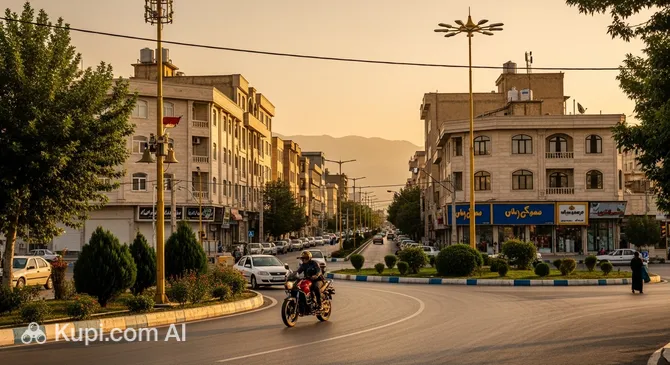
Nasimshahr is a dynamically developing city in the Tehran Province, located in the central part of Iran. Serving as an important administrative center of the Baharestan County, the city is a classic example of a modern Iranian suburb. Home to approximately 200,393 people, most of the population is closely connected to the capital, making Nasimshahr a bustling commuter town with its own unique atmosphere of everyday Persian life.
Nasimshahr. Illustration.
Source: Kupi.com AI
Geographically, the city sits at an altitude of about 1,072 meters above sea level, occupying a flat area south of the metropolis. Although the history of this settlement in its current urban status is relatively young, Nasimshahr reflects the rapid urbanization of the region. The city is characterized by dense residential development and a well-developed network of local markets, which are the heart of the residents' social life.
Despite the absence of world-famous architectural monuments, Nasimshahr attracts visitors with its authenticity. It is a place where you can see the real Iran without the tourist polish: bustling shopping streets, traditional bakeries, and the hospitality of ordinary citizens. We invite you to take a look at Nasimshahr to feel the rhythm of life in a modern Iranian province and appreciate the scale of the capital's metropolitan area.
Weather Overview
The climate in Nasimshahr is classified as semi-arid, which is characteristic of the entire Tehran metropolitan region. There is a clear change of seasons here: summers are usually very hot and dry, while winters are moderately cold. You can check the detailed forecast and weather in the city on our website to better plan your visit.
The summer months, especially July and August, are characterized by daytime temperatures reaching +35...+40°C. Precipitation during this period is practically non-existent. In winter, during January, temperatures can drop to -3°C at night, although they usually stay around +7...+10°C during the day. Spring and autumn are the most comfortable periods to visit, when mild warmth prevails with temperatures between +15...+25°C and occasional rain.
An important feature is the influence of urban development and the proximity to Tehran, which sometimes contributes to smog lingering in windless weather. The city's terrain is flat, so there are no significant temperature differences between districts, but the lack of dense greenery makes the summer heat more palpable in the central part of Nasimshahr.
Average monthly temperature
Average monthly precipitation
Interesting Facts
Nasimshahr is officially the capital of the Bostan District and shares the role of the administrative center of Baharestan County with the neighboring city of Golestan.
The city is located at a strategic altitude of 1,072 meters above sea level, typical for the plains of the Tehran Plateau.
According to the 2016 census, the city's population exceeded 200,000, making it one of the most populous suburbs of the capital.
Nasimshahr is actively integrating into the digital economy: it has its own registered IP providers, ensuring connectivity for this large residential area to the global network.
How to Get There
Nasimshahr enjoys good transport accessibility due to its proximity to the Iranian capital. The city is located approximately 20–30 kilometers from central Tehran, allowing for a 30–60 minute car ride if there are no major traffic jams. You can learn more about transport routes and how to get to Nasimshahr on the specialized pages of our guide.
The city does not have its own airport. The nearest major aviation hub is Imam Khomeini International Airport (IKA), located about 40–50 kilometers to the south. From there, it is most convenient to reach the city by taxi or by booking a transfer; the trip takes about an hour depending on traffic conditions.
There is no direct rail connection to Nasimshahr; however, residents actively use Tehran's extensive railway and metro network. The main passenger flow is served by buses and minibuses (shuttle taxis) that depart regularly from the capital's southern terminals. This is a budget-friendly and reliable way to travel, though you should allow extra time during peak hours due to traffic congestion.
Station
Passenger traffic
Distance
Tepe Sefid Railway Station
5
14 km
Tehran Railway Station
12
24 km
Qom Railway Station
7
105 km
Kashan railway station
3
177 km
Sari Railway Station
2
203 km
Main Attractions
Nasimshahr is primarily a residential and administrative center, so you won't find ancient ruins or world-renowned palaces here. The main life of the city is concentrated in its central squares and lively streets, which serve as the primary landmarks for walking and getting to know the local way of life.
One of the key points of attraction is the local bazaars. These are not just trading floors but real cultural hubs where you can observe the trade of spices, fabrics, and household items. A walk through such a market allows for a deeper understanding of the daily rhythm of life in a capital suburb and a feel for the colorful essence of Oriental trade.
For those seeking tranquility, the city features small public squares where families gather in the evenings. Although the city is oriented towards functionality, these green islands amidst the dense buildings create a cozy atmosphere for a short break before heading off to explore the nearby attractions of majestic Tehran.
Local Cuisine
The gastronomic scene of Nasimshahr is a celebration of traditional Persian cuisine. The core of local menus consists of classic meat dishes, led by kebabs in various forms: from tender chicken "joojeh" to juicy "koofteh." Dishes are invariably served with fragrant long-grain rice, often garnished with saffron and barberries.
Special attention should be paid to local soups, such as ash—a thick and hearty dish made with herbs, legumes, and noodles. For breakfast or as a side dish, you can always find freshly baked barbari bread in Nasimshahr, produced in small bakeries literally on every corner. Street food is also popular: falafel and small portions of meat stews with vegetables (khoresh) are in high demand among residents.
The beverage culture is primarily represented by strong black tea, which is drunk here at any time of day. It is also worth trying the traditional yogurt-based drink doogh with added mint—it is perfectly refreshing on hot summer days. Most establishments in the city are casual cafes and family-run restaurants where the focus is on home-style taste and affordable prices, creating an atmosphere of genuine Oriental hospitality.
Travel Tips
Planning a trip to Nasimshahr requires an understanding of the peculiarities of life in a large Iranian suburb. These tips will help you feel confident and get the most out of your visit.
Clothing and Dress Code: Remember to observe the Islamic dress code. For women, wearing a headscarf (rusari) and loose clothing that covers the arms and legs is mandatory. Men are advised not to wear shorts or sleeveless shirts.
Transport and Navigation: Install the Snapp app—it's the local equivalent of Uber, which will significantly simplify your movements. Be prepared for serious traffic jams on the way to Tehran in the morning hours.
Finance: Visa and Mastercard do not work in Iran. Bring cash (US dollars or Euros) and exchange them at official exchange offices (sarafi). Keep an adequate supply of local Rials for small purchases.
Connectivity: Buy a local SIM card (Irancell or Hamrah-e Aval) at the airport or specialized offices. Wi-Fi in Nasimshahr cafes is rare, so mobile internet will be your main helper.
Safety: The city is generally safe, but try to avoid walking in unlit outlying areas at night. Keep valuables in a hotel safe or in internal clothing pockets.
Etiquette: Learn about the concept of "Taarof"—a complex system of Iranian etiquette. If something is offered to you for free, it may just be a polite gesture; politely decline a couple of times before accepting.
What to Avoid: Do not photograph government buildings, military sites, or the police—this can lead to serious legal problems.
Environment: On windless days, smog can occur in the region. If you are sensitive to air quality, carry a protective mask with you.
May your introduction to Nasimshahr be an interesting experience of immersion into the real, non-tourist life of modern Iran!
Entertainment & Nightlife
Entertainment in Nasimshahr is calm and family-oriented, which is typical for the conservative suburbs of Tehran. There are no noisy nightclubs or bars here, and the main activity after sunset moves to cozy tea houses (chaikhanehs) and small cafes, where locals spend time chatting over traditional tea.
For those looking for a more intensive cultural program or nightlife, the best option is a trip to the center of Tehran, located just 20–30 kilometers away. The capital offers a wide selection of cinemas, concert halls, and modern restaurants that stay open until late in the evening. In Nasimshahr itself, life quiets down closer to 10:00 PM, giving way to the silence of a residential district.
Daytime leisure in the city often involves visiting local parks or shopping areas. For safe travel in the evening, it is recommended to use official taxi apps like Snapp, which are fast and reliable. Walking along the central illuminated streets is quite safe; however, for vibrant impressions and cultural diversity, it is better to plan trips to the neighboring metropolises.
Parks & Museums
In Nasimshahr, park zones play the vital role of the city's "green lungs." Despite the dense construction, there are several municipal parks and squares that serve as primary recreational spots for families with children. These parks are usually equipped with playgrounds and walking paths, and in the evening, they become centers for social interaction among locals escaping the daytime heat.
The city's cultural component is mainly represented by local art centers, as there are no large specialized museums in Nasimshahr. To visit art galleries or historical exhibitions, tourists usually head to nearby Tehran. Nonetheless, a walk through the local squares allows you to see modern urban sculpture and appreciate the authorities' efforts in urban landscaping.
The shortage of large forest parks is compensated by the proximity to rural areas where city residents go for picnics. The environmental situation in the city largely depends on the level of greenery, so small gardens at mosques and administrative buildings are carefully maintained, creating a pleasant visual contrast with the industrial suburban landscape.
Getting Around
The public transport system in Nasimshahr is mainly represented by a network of buses and shuttle taxis. They connect different areas of the city and provide regular service to the nearest Tehran metro stations and major transport hubs of the capital. For a tourist, this is the most affordable, though not always the most comfortable way to travel due to the crowds.
Within the city, taxis are the most popular and convenient means of transportation. In addition to regular cars that can be hailed on the street, online ride-hailing services like Snapp or Tap30 work excellently in Nasimshahr. This allows you to see the cost of the trip in advance and avoid translation difficulties when communicating with the driver. Taxi prices remain very low by the standards of European travelers.
There is currently no metro of its own in Nasimshahr; however, its proximity to Tehran allows for the use of its developed infrastructure. Bicycles are rarely seen in the city due to intense and chaotic traffic, as well as the lack of dedicated lanes. When planning trips, it is important to consider peak hours: in the morning toward Tehran and in the evening back, significant traffic jams form on the roads, which can double or triple travel time.
Accommodation
The choice of accommodation directly in Nasimshahr is quite limited, as the city is primarily geared toward permanent residents rather than mass tourism. The bulk of the offerings consist of budget guesthouses and apartments, which are often rented by professionals working in the metropolitan area.
For short visits, travelers often choose mini-hotels located along the main transport arteries leading to Tehran. This is a convenient option for those who need a place to stay overnight on the way to the airport or to the southern provinces of the country. Accommodation prices here are significantly lower than in the capital center, which is a definite plus for budget-conscious tourists.
If you plan to visit Nasimshahr for business purposes, it is recommended to book accommodation in advance through local services or by phone, as major international booking systems may offer a limited selection. For those seeking high levels of service and luxury, it is better to consider staying in Tehran and using Nasimshahr as a destination for day visits.
Nearby Cities
Nasimshahr is an excellent starting point for exploring the southern part of the Tehran Province, where many interesting cities and settlements are located. Its proximity to major transport arteries makes it easy to plan short trips around the surrounding areas, discovering the diversity of the region's industrial and residential districts.
Just a few kilometers away is Eslamshahr, one of the capital's largest satellite cities, known for its commercial zones and active pace of life. It is also worth visiting Shahriar, famous for its gardens and a milder microclimate, which makes it a popular weekend retreat for city dwellers. No less interesting is a visit to Robat Karim, a city with a rich history through which trade routes have passed for centuries.
Exploring these cities will help you better understand the structure of the capital region and see how closely the interests of residents from different parts of the metropolis are intertwined. Each of these destinations is accessible for a day trip by taxi or suburban bus.
Shopping & Souvenirs
Shopping in Nasimshahr is utilitarian and focused on the needs of local residents, making it particularly interesting for those seeking authentic goods at low prices. The main shopping venue is the central city bazaar. Here you can find everything from high-quality Iranian knitwear and footwear to the freshest spices, nuts, and dried fruits for which the region is so famous.
There are few large Western-style shopping and entertainment centers in the city; they are replaced by shopping streets where stores are lined up in dense rows. Here, it is worth paying attention to home textiles and kitchenware—Iranian products in this segment are known for their durability and traditional design. Payment in most shops is made in cash using the local currency (Rials), as international bank cards are practically not accepted in Iran.
For souvenirs from Nasimshahr, you can bring back traditional sweets like gaz or sohan, as well as local saffron. Shops usually operate from morning until late evening with a lunch break during the hottest hours. Remember that polite bargaining is appropriate and even encouraged in the markets, helping you not only save money but also strike up a pleasant conversation with local vendors.