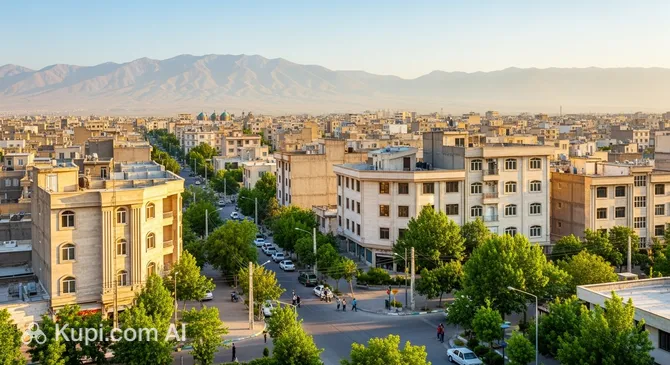
Malard is a vibrant and fast-growing city in Tehran Province, located approximately 45 kilometers north of the capital of Iran. As a major residential hub in the region, it attracts those who want to experience the authentic rhythm of a modern Iranian suburb. The city is home to more than 280,000 people, creating an atmosphere of an energetic and hardworking community.
Malard. Illustration.
Source: Kupi.com AI
The rich history of Malard is rooted in the distant past, though its current appearance was shaped by the active urbanization of the 20th century. Originally developing as an agricultural area, the city is now an important "bedroom community" for the capital, where traditions are closely intertwined with modern urban infrastructure.
For travelers, Malard is primarily interesting for its genuineness: there are no crowds of tourists here, allowing you to fully experience local hospitality, stroll through colorful markets, and witness the daily life of Iranians. It is an excellent place for those seeking a quiet base not far from bustling Tehran.
Weather Overview
Climate conditions in Malard are typical for the foothills of northern Iran. Expect truly hot summers, with daytime temperatures in July and August potentially reaching +35°C to +36°C, and mild but sometimes cool winters with rare night frosts. The most comfortable times to visit the city are spring (April-May) and mid-autumn, when there is pleasant warmth without sweltering heat.
Precipitation is distributed unevenly: most rain falls in the winter and spring months, while the summer remains practically dry. It is worth noting that due to its location in a basin, air quality can decrease on windless days, which is typical for the entire Tehran metropolitan area. If you are planning a trip, studying the detailed weather in Malard will help you choose the right wardrobe.
Average monthly temperature
Average monthly precipitation
Interesting Facts
Rapid Growth: The population of Malard has more than tripled in just 25 years, turning it from a small settlement into one of the largest cities in Tehran Province.
Global Scale: The city ranks approximately 1,591st in the world city rankings by population.
Strategic Position: Despite its ancient roots, Malard's modern face is the result of its development as a key residential hub for workers in the metropolitan region.
Regional Giant: Malard is among the five most populous cities in the Tehran region.
How to Get There
Transport accessibility is one of the city's strengths, given its proximity to the capital metropolis. Malard is located about 45 kilometers from the center of Tehran, making it easily reachable for travelers. The most popular way to get here is by taxi or private car via the highway network. Travel time can vary from 45 minutes to 2 hours, depending on Tehran's famous traffic jams. Detailed information on routes can be found in the section on how to get to Malard.
The city does not have its own airport, so international and domestic flights are handled by the capital's airports. The main hubs are Imam Khomeini International Airport (IKA) and Mehrabad Airport. From there, you can reach Malard by transfer or taxi.
Railway communication in the region is fairly well-developed, and nearby stations connect Malard with other important cities in the province. Trains are a reliable and budget-friendly way to travel, especially if you are planning trips over longer distances.
Station
Passenger traffic
Distance
Tepe Sefid Railway Station
5
30 km
Tehran Railway Station
12
38 km
Qom Railway Station
7
114 km
Kashan railway station
3
192 km
Sari Railway Station
2
211 km
Main Attractions
As a typical suburban center, Malard does not strive to impress travelers with grandiose historical ensembles. The main value of the city lies in its authenticity and the opportunity to see the real Iran without the tourist polish. The main points of interest here are the local bazaars, where daily trade is in full swing and you can find everything from the freshest fruits to traditional textiles.
While walking through the city, it is worth paying attention to the modern residential architecture and cozy public areas that reflect the lifestyle of the middle class in Tehran Province. Unlike in the capital, life in Malard flows a bit slower, allowing you to observe local customs and traditions without the rush.
For those seeking cultural experiences, Malard serves as a convenient starting point for trips to the mountain slopes or toward the capital. In the city itself, the appeal lies in the details: the aroma of freshly baked bread on a street corner, the hospitable smiles of shop owners, and the unhurried pace of evening strolls by local residents.
Local Cuisine
The culinary scene in Malard is a paradise for lovers of authentic Persian cuisine. The menus of local establishments are based on traditional Iranian dishes prepared according to time-tested recipes. Be sure to try various types of kebabs served with aromatic saffron rice, and classic pilaf, which is prepared here with exceptional skill.
Small family eateries and street food stalls hold a special place in the food culture. Here you can taste hearty khash or fresh flatbreads straight from the oven. Malard is dominated by establishments for locals, which guarantees fair prices and a truly homemade taste.
Among beverages, traditional Iranian tea is the most popular in the city, often served with rock sugar or sweets. It is also worth trying doshab—a thick and healthy syrup made from grapes or pomegranates—and refreshing cultured milk drinks. The food culture here is closely tied to family values, so lunch or dinner in Malard is always held in a hospitable and warm atmosphere.
Travel Tips
A trip to Malard will allow you to see the real Iran beyond the beaten tourist paths. To make your trip comfortable and pleasant, use these practical tips.
Dress Code and Clothing: Remember to observe the Islamic dress code: women must wear a headscarf and loose clothing covering their arms and legs; men are not recommended to wear shorts. Choose comfortable shoes for walking through local markets.
Transport Nuances: Try to avoid traveling toward Tehran during rush hours (7:00–9:00 AM and 5:00–8:00 PM), when the roads are most congested. It is best to use taxi apps for getting around.
Finances: International payment system cards practically do not work in Iran. Carry a sufficient supply of cash in US Dollars or Euros, which can be exchanged for local Rials at exchange offices (sarafi) in Tehran or at the airport.
Health and Safety: Pharmacies in Malard are easy to find by the signs "Pharmacy" or "Darookhaneh". It is better to use tap water for domestic needs and buy bottled water for drinking.
Language Barrier: The main language is Persian (Farsi). English is less common than in the center of the capital, so download an offline translator or learn a few basic greeting phrases.
Local Etiquette: Familiarize yourself with the concept of "Ta'arof"—a system of polite behavior where hosts may refuse payment several times. In such cases, you should politely insist.
Connectivity: Buy a local SIM card (e.g., Irancell or Hamrah-e Aval) at the airport upon arrival, as Wi-Fi in public places in the city may be limited.
What to Avoid: Do not take photos of government buildings, military sites, or people in uniform—this can cause unnecessary questions from local authorities.
Malard will welcome you with sincere hospitality if you show respect for local traditions and the way of life. Have a pleasant journey!
Entertainment & Nightlife
Entertainment in Malard is primarily family-oriented and relaxed. Since the city is a residential suburb, there is no vibrant nightlife in the traditional Western sense—meaning no clubs or bars serving alcohol. Instead, locals prefer to spend their evenings in cozy cafes and teahouses, where the latest news is discussed over a cup of aromatic tea.
The main centers of attraction in the evening are small parks and shopping areas. For those looking for larger-scale entertainment, such as modern cinemas, concert halls, or large amusement parks, the best solution is a trip to neighboring Tehran. Its transport proximity allows residents and visitors to easily reach the country's main cultural venues.
Daytime leisure in Malard often involves strolling through local shopping centers or visiting sports grounds. Safety in the city is maintained at a good level, so evening walks along the main streets are quite comfortable. For calling a taxi late at night, it is recommended to use popular local apps, which guarantee a fixed price and convenience.
Parks & Museums
The greenery in Malard is represented by a network of small urban parks and cozy squares that serve as the main leisure spots for local residents. In these green zones, it is pleasant to spend time in the shade of trees, watching children play or resting on benches after a long walk. Despite the dense construction, the city strives to preserve islands of nature for the comfort of its citizens.
There are not many specialized museums in Malard itself, as the city is primarily a residential area. However, its streets can serve as an "open-air museum," showcasing the evolution of Iranian suburban architecture. For connoisseurs of classical art and history, the best choice would be the major national museums of Tehran, which are within easy reach.
Residents of Malard often spend their weekends in the foothills or larger park complexes of neighboring cities. If you are looking for a quiet spot for a local-style picnic, the city's small squares are an excellent choice to feel the friendly atmosphere and see how ordinary Iranian families spend their leisure time.
Getting Around
The transport system of Malard is focused on providing links to the capital and convenient movement within residential neighborhoods. The backbone of public transport consists of buses and shuttle taxis that regularly run between the city and Tehran. This is the most budget-friendly way to travel, used by thousands of people daily.
Within the city, the most popular and comfortable mode of transport is the taxi. You can use both traditional "yellow" taxis and online booking services via smartphones, which are very well-developed in Iran. This eliminates the need to negotiate the price and allows you to accurately plan your trip budget.
Special contactless cards are often used for bus fare, and these also work on the Tehran metro. Tourists are advised to always carry a small amount of cash for paying in shuttle taxis. Transport operating hours generally cover the period from early morning to late evening, adjusting to the working rhythm of the suburb.
Accommodation
Since Malard is not a traditional tourist destination, the choice of classic hotels here is limited. The main accommodation stock consists of modern residential complexes and private apartments. Most offers are geared toward long-term rentals, but travelers can find daily rental options through local real estate agencies or specialized online platforms.
For those who prefer a high level of service and a wide range of additional amenities, the best solution would be staying in hotels in Tehran or neighboring Karaj. Thanks to good transport links, you can quickly reach Malard while enjoying the infrastructure of a large city.
If you decide to stay specifically in Malard, we recommend booking accommodation in advance, especially during holidays. The price range here is significantly lower than in the city center, making the city attractive for budget travelers seeking comfortable and affordable suburban accommodation.
Nearby Cities
Malard serves as an excellent starting point for exploring the surroundings of Tehran Province, offering travelers convenient access to neighboring cities. Just a few kilometers away are lively centers, each with its own character and infrastructure.
The nearest interesting destinations are Fardis and Shahriar. In Shahriar, you can find the green gardens and agricultural lands for which this area is famous, while Fardis offers a modern urban environment with many shops. It is also worth paying attention to Meshkin Dasht and Mohammadshahr, which are within a short drive. For deeper cultural immersion, you can head to Mohammadabad.
Don't forget the main gem of the region—Tehran, which can be reached in less than an hour. Exploring these nearby cities will allow you to form a complete picture of life in central Iran, seeing both modern metropolises and cozy provincial corners.
Shopping & Souvenirs
Shopping in Malard is primarily about getting to know the colorful local markets and traditional bazaars. You shouldn't look for global brand boutiques here, but you can find high-quality local products: from textiles and clothing to household items. The city's markets are oriented toward the daily needs of residents, so prices remain very affordable.
The main shopping areas are concentrated along the main streets, where small shops and shopping centers are located. You can buy fresh spices, Iranian sweets, and dried fruits there, which make excellent gifts. Malard's food markets deserve special attention for their huge selection of seasonal vegetables and fruits grown in Tehran Province.
Typical store hours include a break in the middle of the day, with the busiest trading starting closer to the evening. Payment in most stalls is made in cash (Iranian Rials), although larger retail outlets accept local bank cards. Remember that international cards rarely work in Iran, so a cash reserve is essential for comfortable shopping.