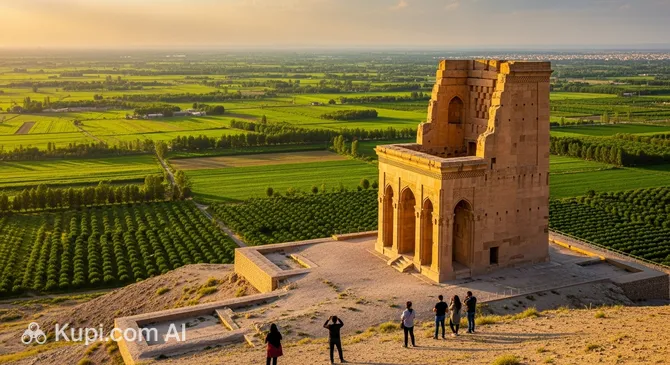
Located just 33 kilometers west of Iran's capital, Shahriar is a dynamically developing city that serves as an important administrative and residential center of the Tehran Province. Although the city largely functions as a "bedroom" suburb of the metropolis, it possesses its own unique atmosphere, blending the everyday bustle of the Iranian province with rapid urbanization.
Shahriar. Illustration.
Source: Kupi.com AI
The city's geographical location makes it a strategic hub connecting the capital with the country's western regions. The population of Shahriar is growing rapidly and already exceeds 300,000 people, which contributes to the active development of urban infrastructure, the emergence of new shopping areas, and modern residential quarters. Those who want to see the real, non-touristic Iran will find it interesting to dive into the study of the heritage and history of this region.
While there are no world-famous architectural masterpieces here, Shahriar attracts visitors with its authenticity. It is a place where you can observe the lives of ordinary Iranian families, visit bustling local bazaars, and experience the hospitality of locals who have not yet been spoiled by mass tourism. We recommend visiting this city to see the modern face of the Iranian suburbs and enjoy its slower pace compared to Tehran.
Weather Overview
The climate in Shahriar is distinctly continental, with hot, dry summers and fairly cool winters. In summer, especially in July and August, temperatures often rise to +35–40°C, and rain during this period is very rare. If you are planning a trip at this time, be prepared for bright sun and dry air.
In winter, the city becomes significantly colder: in January, the average temperature is about +1.8°C, and night frosts down to -5°C are not uncommon. Most precipitation falls in the winter and spring months, which sometimes leads to fog. You can study the city climate by month in more detail to choose the ideal time for your visit.
One of the region's features is the influence of the metropolis: in winter, due to temperature inversion in Shahriar, as in the entire Tehran province, smog can sometimes be observed. The best times to visit are considered April and May, as well as September and October, when the most comfortable temperatures for walking are established.
Average monthly temperature
Average monthly precipitation
Interesting Facts
Rapid population growth: Over the last decades, Shahriar has transformed from a small settlement into a major city; if less than 3,000 people lived here in 1950, growth to 427,000 is expected by 2026.
Geographical precision: The city is located exactly 33 kilometers from the center of Tehran, making it one of the most conveniently located satellite cities of the capital.
Naming features: Despite its beautiful Persian name (شهریار), the city has no direct historical connection to the famous Azerbaijani poet Mohammad-Hossein Shahriar, who was born in Tabriz.
Administrative status: The city is not just a suburb, but the official capital of the Shahriar County (Shahrestan) within the Tehran Province.
Time zone: Time in the city follows Iran Standard Time (IRST) — UTC+3:30, which should be taken into account when planning trips from other countries.
How to Get There
Thanks to its location near the capital, Shahriar has good transport accessibility. The main way to get here is by car or taxi from Tehran. A trip via Highway 5 usually takes about 40 minutes; however, during peak hours, heavy traffic at the exits from the metropolis can increase travel time to an hour and a half.
For budget travel, it is convenient to use buses that regularly depart from Tehran terminals, such as Azadi Terminal. Tickets are very cheap, and the journey takes about an hour. If you are planning a complex route, it is useful to study general information about transport links in Shahriar.
The nearest major international air hub is Imam Khomeini Airport (IKA), located about 50 kilometers away. You can reach Shahriar from there by taxi or pre-booked transfer in about an hour. There is currently no railway station in the city, so travelers are recommended to rely on road transport.
Station
Passenger traffic
Distance
Tepe Sefid Railway Station
5
23 km
Tehran Railway Station
12
31 km
Qom Railway Station
7
113 km
Kashan railway station
3
189 km
Sari Railway Station
2
206 km
Main Attractions
Since Shahriar is primarily a residential and industrial suburb, there are few classic tourist attractions, but the city offers interesting locations to get acquainted with the local way of life. The central point of attraction is Shahriar Square (Meydan-e Shahriar), around which the main urban activity, administrative buildings, and small squares are concentrated.
For fans of shopping and modern infrastructure, Shahriar Mall might be of interest. This is a small but modern shopping center where locals prefer to spend their time. Here you can find departments with Iranian clothing brands and cozy cafes that allow you to feel the rhythm of life of the modern Iranian middle class.
Despite the lack of major historical monuments, tourists should pay attention to the local markets and bazaars. They are not focused on souvenirs, making them ideal places to buy fresh fruit, spices, and household items at real prices. For more large-scale cultural sites, travelers usually head to neighboring Tehran, using Shahriar as a convenient base for relaxation.
Local Cuisine
The gastronomic experience in Shahriar is, first and foremost, an introduction to classic Persian cuisine in its most authentic form. The main dish here is, undoubtedly, a variety of kebabs. Be sure to try joojeh kebab (tender chicken) or kofta, served with a mound of fragrant saffron-flavored rice.
A special place in the diet is occupied by thick ash soups and traditional meat stew abgoosht, served in clay pots. The food here is simple, hearty, and very affordable. It is customary to accompany the meal with freshly baked bread (lavash or sangak) and plenty of fresh herbs.
Among drinks, the local favorite is doogh — a refreshing yogurt-based drink with added mint. After lunch, traditional tea houses serve black tea with sugar cubes or dates. Street food in the city center is represented by small stalls selling falafel and hot corn, perfect for a quick snack during a walk.
Travel Tips
A trip to Shahriar is a great chance to see the real Iran, and to ensure your trip goes smoothly, we have prepared some practical recommendations.
Clothing and dress code: Remember to observe Iranian rules of modesty. Women must wear a headscarf (rousari) and clothing that covers the arms and legs. Men should avoid wearing shorts. Choose light natural fabrics, as the summer here can be very hot.
Getting around the city: The best way to move around is using the Snapp or Tapsi apps. It is safe, convenient, and eliminates the need to haggle with drivers.
Financial matters: International cards are not accepted in Iran. Exchange currency (dollars or euros) only at official exchange offices (Sarraffi) in Tehran or the airport. Always have a supply of cash Rials on hand.
Health: It is not recommended to drink tap water. Always buy bottled water, which is sold everywhere. In the summer, be sure to use sunscreen.
Connectivity: Buying a local SIM card (Irancell or Hamrah-e Aval) is easiest at Imam Khomeini Airport. In Shahriar itself, this may take more time due to the language barrier.
Local etiquette: Be prepared for Taarof — the Iranian system of politeness, where a seller or driver may initially refuse to take money. Politely insist on paying — it is part of the cultural game.
Safety: The city is generally safe, but try to avoid walking in remote industrial areas after dark, as lighting there may be insufficient.
Language: English is not widely spoken. We recommend downloading an offline translator or learning basic phrases in Farsi.
Observing these simple rules will help you feel confident and enjoy the hospitality of this region!
Entertainment & Nightlife
The entertainment scene in Shahriar is quiet and family-oriented. You won't find noisy nightclubs or bars here, as the city's public life follows local traditions and rules. Residents prefer to spend their evenings in cozy tea houses (chaikhaneh) or small cafes, where they discuss the latest news over a cup of traditional tea.
The main activity after sunset is concentrated on the central streets and markets, which remain lively until about 10:00 PM. For young people and families, a popular form of leisure is visiting local cinemas, which screen the latest Iranian films. On weekends, townspeople often gather in city parks for evening picnics, which are an integral part of the local leisure culture.
If you are looking for a more vibrant nightlife or large-scale entertainment complexes, it is best to head to neighboring Tehran. A taxi ride takes 30 to 60 minutes, allowing Shahriar residents to easily attend capital concerts, festivals, and major amusement parks before returning to the quieter suburb for the night.
Parks & Museums
Despite the dense urban development, there are places in Shahriar for quiet walks in the fresh air. The most popular is Central Park (Park-e Shahriar), where locals relax from the urban bustle. There are walking paths, playgrounds, and rest areas, although overall the city feels a lack of large green spaces.
Regarding cultural institutions, there are practically no classic museums with historical exhibits in the city. Shahriar is a relatively young city in terms of large-scale development, so for a rich museum program, tourists most often go to Tehran, where the National Museum of Iran and the Treasury of National Jewels are located.
Nevertheless, walking through the city's residential areas can become a kind of "open-air museum," allowing you to observe modern Iranian architecture and daily life. The absence of crowds in the local squares creates a special atmosphere of seclusion that is hard to find in the noisy metropolis.
Getting Around
The public transport system in Shahriar consists mainly of buses and shared taxis, which locals call "savari." These small minibuses and cars run on fixed routes and are the fastest way to get to the nearest Tehran metro stations or shopping districts. Payment is usually made in cash to the driver.
For trips within the city and towards the capital, ride-hailing apps such as Snapp or Tapsi (analogous to Uber) are extremely popular. They allow you to see the trip cost and route in advance, which is very convenient for tourists. Taxi prices by international standards remain extremely low, making this mode of transport the primary choice for comfortable travel.
Although regional development plans include extending the metro line from Tehran directly to Shahriar, there is currently no rail transport in the city. Walking is possible in the central part, but due to chaotic traffic and summer dust, tourists often prefer to travel by car. Cycling infrastructure is practically non-existent here, so renting a car or using a taxi would be the best choice.
Accommodation
The choice of accommodation directly in Shahriar is quite limited, as the city is oriented more towards locals and expats working in the capital. The main accommodation stock consists of small guesthouses and budget 2-3 star hotels. These options are great for short-term business trips or those looking for the most affordable accommodation.
Many travelers prefer to rent apartments from locals, which allows for a deeper immersion into the daily atmosphere of Iranian life. When booking, it's worth considering that during peak periods (such as the Nowruz celebrations), there may be fewer vacancies, so it's better to plan your stay in advance.
If you are accustomed to high-class chain hotels and a full range of tourist services, it makes sense to stay in Tehran. Given the proximity of the cities, you can easily reach Shahriar by taxi while enjoying all the benefits of the capital's hotel industry.
Nearby Cities
Shahriar serves as an excellent starting point for exploring the surroundings, allowing you to quickly reach key cities in the province. The most obvious and popular destination for a trip is majestic Tehran, which is only about half an hour's drive away. The country's main museums, palaces, and markets are concentrated there.
Just a few kilometers from the city is Mohammadabad, which effectively merges with Shahriar to form a single residential space. Also worth noting are Qods and Malard — large neighboring cities where you can see modern Iranian life without embellishment. Fans of quiet walks can head to Shahedshahr or Sabashahr.
Exploring these nearby settlements will help you better understand the structure of the capital region and see how different layers of Iranian society live. All these cities are connected by a network of shared taxis and buses, making travel between them simple and inexpensive.
Shopping & Souvenirs
Shopping in Shahriar is primarily focused on practical needs, making it extremely interesting for those looking for authentic goods at local prices. The main shopping destination is the Grand Bazaar Shahriar. This is a traditional market where you can purchase high-quality Iranian spices, dried fruits, nuts, and household items.
For fans of a more modern shopping format, there are shopping centers such as Shahriar Hypermarket. Here you can find departments with clothing, footwear, and electronics. Prices in such places are often lower than in the central districts of Tehran, and the selection of Iranian brands allows you to find unique items rarely found in international chains.
As souvenirs from the city, it is worth bringing back traditional Iranian sweets or textiles. Shops usually operate from 9:00 AM until late evening with a lunch break during the hottest time. Remember that international Visa and Mastercard cards do not work in Iran, so you will need cash rials or a local bank card for any purchases.