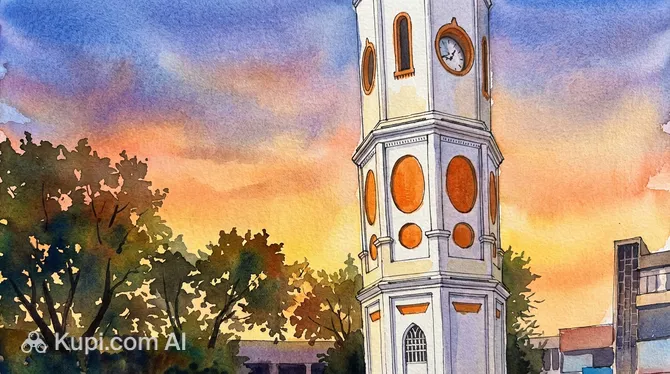
Sari is a charming and vibrant city in northern Iran and the administrative center of Mazandaran Province. Situated on a picturesque plain between the Alborz foothills and the Caspian Sea coast, it envelops guests in an atmosphere of freshness and lush greenery. With a population of over 270,000, Sari harmoniously combines the dynamics of a regional center with the tranquility of provincial comfort.
The city's rich history dates back to ancient times, as far as the 6th century BC. Sari played an important role on trade routes and has always been famous for its agriculture: even today, it produces the region's best rice, fragrant tea, tobacco, and cotton. Walking through its streets, you can feel the breath of centuries intertwined with the modern rhythm of life.
Sari. Illustration.
Source: Kupi.com AI
The city attracts tourists with its proximity to natural wonders and unique Safavid-era architectural monuments. Among its key features are ancient mosques, bridges over the Tajan River, and hospitable markets where life never stops for a minute. Sari is an ideal starting point for those who want to discover the real, non-touristy northern Iran, full of sincere smiles and natural beauty.
Weather Overview
The climate of Sari is characterized as moderate and humid, which is typical for the southern coast of the Caspian Sea. Due to this location, the city is protected by mountains from dry winds, which ensures abundant precipitation and lush vegetation throughout the year. Summers here are warm, and winters are mild, without extreme frosts.
In the summer months, especially in July and August, the average maximum temperature reaches 29-30°C. High humidity is observed during this period, which can create a feeling of stuffiness. In winter, in January and February, the temperature fluctuates around 5-11°C, and frosts happen very rarely. October is traditionally considered the rainiest month, when precipitation exceeds 110 mm.
Expect warm summers with occasional short rains and cool, humid winters. For comfortable walks, it is best to choose the spring months or early autumn, when the air temperature is most pleasant for sightseeing and nature delights with vibrant colors.
Average monthly temperature
Average monthly precipitation
Interesting Facts
Ancient Roots: A settlement on the site of modern Sari existed as far back as the 6th century BC, making it one of the oldest cities in the region.
A Russian Traveler's Trace: In 1469, the city was visited by the famous Afanasy Nikitin, who mentioned Sari in his travel notes "The Journey Beyond Three Seas."
Legacy of the Great Shah: The city's heyday occurred during the reign of Shah Abbas I, who not only improved Sari but also erected monumental administrative buildings and an important bridge over the Tajan River.
Unique Mosque: The Shiteh Ashraf Mosque, built around 1600, is the only surviving fragment of Shah Abbas's magnificent palace complex.
How to Get There
The transport accessibility of Sari makes it a convenient point for traveling through northern Iran. The city is connected to the capital not only by a modern highway but also by the famous Trans-Iranian Railway. A train journey from Tehran is considered one of the most scenic routes, passing through mountain tunnels and the dense forests of Mazandaran.
For those who prefer air travel, Sari Airport (IATA: SRY) operates in the city, handling regular domestic flights. This significantly simplifies access to the region for tourists arriving from remote parts of the country. From the airport, the city center can be easily reached by official taxi in 15-20 minutes.
Sari Railway Station is an important transport hub. The station building and the infrastructure itself are well-maintained, offering passengers the necessary comfort. Regular trains connect the city with key points in the country, while a car trip along the Firuzkuh or Haraz roads offers unforgettable views of northern landscapes.
Main Attractions
One of the most notable gems in the city's vicinity is the Shiteh Ashraf Mosque. This majestic Safavid-era structure was once part of an extensive palace complex. Today, the mosque, located just a couple of kilometers from the Caspian Sea, attracts connoisseurs of Islamic architecture with its austere beauty and historical significance.
Sari itself offers travelers a chance to immerse themselves in the past through its architectural monuments. Special attention should be paid to the administrative buildings and residential houses preserved from the Safavid dynasty. A stroll through the historical center allows you to see how skillfully ancient builders combined functionality and aesthetics in the humid northern climate.
The region's natural beauty is just as impressive as its man-made wonders. The Tajan River, flowing through the city, is a favorite spot for walks. Ancient bridges spanning its waters create a romantic backdrop for evening promenades, and the proximity to the sea promises a cool breeze even on the warmest days. Sari is a place where history is literally written into the surrounding landscape.
Local Cuisine
The cuisine of Sari is a real feast for gourmets, dominated by fresh products from fertile Mazandaran. The basis of most dishes is local rice, which is considered some of the best in Iran. Be sure to try Kebab-e Torsh — tender meat marinated in a paste of walnuts and pomegranate juice with local herbs, giving the dish a unique sweet and sour taste.
The proximity of the Caspian Sea dictates an abundance of fish on the menu. A signature dish is stuffed fish prepared with herbs and sour berries. The city's gastronomic scene is also famous for its appetizers, such as Zeytoon Parvardeh (olives in pomegranate sauce with walnuts) and various types of local yogurt with garlic and herbs.
Dining culture in Sari is closely linked to tea traditions. Local tea houses serve strong, aromatic tea grown on the province's plantations, usually accompanied by sweets or dates. To discover authentic flavors, it's worth checking out the city markets, where you can buy the freshest fruits, homemade cheeses, and unique spices, and then head to one of the family restaurants in the city center.
Travel Tips
Planning a trip to Sari is a great idea for those looking for authentic Iran. These practical tips will help make your journey as comfortable and enjoyable as possible.
Clothing and Dress Code: Choose light fabrics made of cotton or linen, as the humidity here is high. Remember to follow the Iranian dress code: women need a headscarf and loose clothing covering arms and legs; for men, it is inadvisable to wear shorts in public places.
Transport: To move around the city, it is most convenient to use official taxis or apps like Snapp. If you are planning a trip from Tehran, choose the train — the views from the window will be stunning.
Finances: International cards (Visa/Mastercard) do not work in Iran, so bring cash in US dollars or euros. You can exchange them at banks or official "Sarrafi" exchange offices.
Connectivity: Buy a local SIM card (e.g., Irancell or Hamrah-e Aval) at the airport or mobile shops — this will provide you with inexpensive internet for navigation.
Health: Drink only bottled water. Pharmacies are easy to find in the city center; they are marked with a red cross sign or the word "Pharmacy."
Etiquette: Iranians are very hospitable. Be prepared for "Ta'arof" — a complex system of politeness where you might be offered something for free several times. Politely refuse twice and agree only on the third time if the offer is sincere.
What to Avoid: Do not photograph government buildings, military sites, or police officers — this can cause serious issues with the authorities.
Best Time to Visit: Ideal seasons are spring (April-May) and early autumn (September-October), when there is no exhausting summer heat and high humidity.
Sari will welcome you with the open hearts of locals and incredible landscapes. Respect local traditions, and this northern city will reveal its best side to you.
Entertainment & Nightlife
Entertainment in Sari is of a calm and contemplative nature, typical of northern Iranian cities. You won't find noisy nightclubs in the Western sense here, but the city's nightlife has its own charm. The main attraction for locals and tourists after sunset is the numerous traditional tea houses and cozy cafes, where leisurely conversations take place over a cup of fragrant Mazandaran tea.
City embankments and parks are perfect for evening walks, where improvised picnics are often held. During the warmer months, life in the markets and central squares continues late into the night — this is the best time to soak up the local flavor, try street food, and observe the daily life of the townspeople. Safety in the city is high, making even late walks through the well-lit central districts quite comfortable.
Daytime leisure can be diversified by visiting local cultural centers or walking along the Tajan River. For those looking for more active pastimes, the proximity of the Caspian coast is always available, where you can find water activities or simply enjoy the sea air. Taxis are the most convenient way to get around in the evening; they can be easily called via local apps or hailed on the main streets.
Parks & Museums
Thanks to its mild climate, Sari is literally buried in greenery, and its natural zones serve as natural places for relaxation. City parks along the Tajan River are beautiful oases where locals love to have picnics and evening walks. Lush vegetation and the cool water create ideal conditions here to escape the city bustle and enjoy the silence.
The city's historical heritage is represented by unique architectural monuments that can be viewed as open-air museums. The Shiteh Ashraf Mosque and the preserved ruins of Safavid-era palace complexes allow you to touch the region's great past. Here you can see the brickwork and decorative elements characteristic of northern Iran, reflecting the aesthetics of the 17th century.
For a deeper acquaintance with the culture of Mazandaran, it is worth visiting local historical mansions converted into museums, where household items, traditional clothing, and handicrafts are on display. These small but meaningful exhibitions help to understand how the unique way of life was formed in this humid, fertile land, so different from the arid central regions of the country.
Getting Around
The public transport system in Sari is mainly represented by buses and numerous taxis. Bus routes connect central areas with the outskirts and suburbs, offering a budget-friendly way to get around. Fares on buses are most often paid using local electronic cards or in cash to the driver on certain routes.
The most popular and convenient means of transportation for tourists is the taxi. Both regular city taxis (yellow) and shared ride services called "savari," which run on fixed routes, operate in Sari. For individual trips, it is convenient to use ride-hailing apps (such as Snapp), which allow you to see the cost of the trip and the route in advance.
Railway communication is a special pride of the city. Sari station provides regular links with Tehran and other cities along the Trans-Iranian Railway. Trains run on schedule, and it is better to purchase tickets in advance through ticket offices or online services. To explore nearby natural attractions or trips to the sea, many tourists prefer renting a car with a driver, which allows for flexible route planning.
Accommodation
Sari offers a variety of accommodation options focused on a comfortable stay. Most hotels are concentrated in the central districts, which is convenient for those who want to be within walking distance of administrative buildings and local markets. Hotels here are known for their hospitality and often offer rooms overlooking lush gardens or city panoramas.
For nature lovers and those seeking sea air, hotels and resorts located closer to the Caspian Sea coast are an excellent option. These establishments are often chosen by families with children and those planning to spend several days in the region enjoying the peace and freshness. In such places, you can find both budget rooms and more comfortable apartments.
During peak tourist seasons — spring (during the Iranian New Year) and early autumn — it is recommended to book accommodation in advance, as demand for hotels in Mazandaran is traditionally high. The cost of living varies from very affordable options in small guesthouses to mid-range prices in chain hotels, providing a choice for any budget.
Nearby Cities
Sari is an ideal starting point for exploring the northern coast. Very nearby is the small town of Surak, which allows you to experience the tranquility of Mazandaran rural life. Just 22 kilometers away is the industrial and cultural center of Neka, known for its industrial landscapes and proximity to nature reserves.
For history buffs, a trip to Behshahr is a must. This city is famous for its Safavid-era palace and park complexes, such as the Abbas Abad Garden, which is included in the UNESCO World Heritage List. The distance to it is about 34 kilometers, making it an excellent destination for a day trip.
Traveling around the surrounding area, you will encounter an incredible variety of landscapes: from dense subtropical forests to the azure shores of the Caspian. Each of these directions reveals its own facet of the Iranian North, offering travelers new experiences and unique photo opportunities.
Shopping & Souvenirs
Shopping in Sari is primarily about visiting colorful local markets, which are the heart of city life. The main city market is impressive with its abundance of agricultural products: bags of snow-white aromatic rice, bundles of tobacco, and freshly picked tea are the region's main commodities. You can also find rows of fresh Caspian fish brought to the city early in the morning.
As souvenirs from Sari, it is worth bringing back local fabrics with traditional embroidery and woodwork, for which northern craftsmen are famous. Mazandaran spices and homemade pickles, especially pickled garlic and pomegranate paste, are also popular. Modern-style shopping centers are also present in the city, offering a familiar range of clothing and household goods, but for the true spirit of Iran, it's better to head to the trading rows of the old city.
Shops usually operate from morning until late evening with a siesta break during the hottest hours (roughly from 1:00 PM to 4:00 PM). In most market stalls, cash is preferred, although large stores accept local bank cards. Don't hesitate to politely haggle at the market — it's part of the local communication culture that will help you not only save money but also strike up a pleasant conversation with the seller.