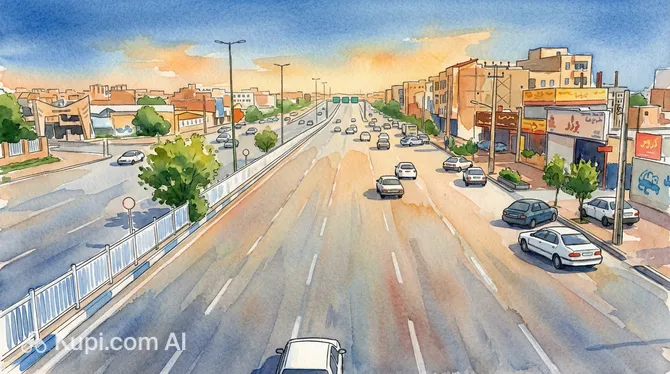
Saveh is an important industrial and administrative center in the central part of Iran. It is not a typical tourist city, but rather a place where you can feel the authentic rhythm of life in a modern Iranian region. It is located in the Markazi Province and serves as a key transport hub connecting the north and south of the country.
Situated at an altitude of about a thousand meters above sea level, Saveh is home to more than 220,000 residents. Saveh. Illustration.
Source: Kupi.com AI
Utilitarian architecture and a calm, business-like atmosphere characteristic of regional centers prevail here. The city lives at its own steady pace, where industrial zones harmoniously coexist with traditional neighborhoods.
Despite its modern industrial status, the city possesses a rich heritage rooted in deep antiquity. Among the key features are the ancient bazaar and mosques, which have served as centers of attraction for centuries. Saveh is worth a visit for those seeking authenticity away from the beaten tourist tracks and who want to see the country's life as it is in everyday reality.
Weather Overview
The climate in Saveh is typical of the Iranian plateau: summers are hot and dry, while winters are quite cool. If you are planning a trip, keep in mind that in July and August, daytime temperatures often exceed +35°C, and rain is very rare during this period. The dry air and lack of humidity make the heat slightly more bearable, but solar activity remains very high.
In winter, the weather becomes significantly harsher: in January, the average air temperature is about +3°C, and frosts down to -2°C are possible at night. Most precipitation falls between November and March. To better prepare for your trip and choose the right wardrobe, we recommend checking the detailed city's weather by month in advance.
Average monthly temperature
Average monthly precipitation
Interesting Facts
Ancient roots: The city of Saveh was founded in deep antiquity and for centuries occupied a strategic position on the East's most important trade routes.
Scale: In the global ranking of cities by population, Saveh ranks approximately 2054th, being the second most important city in its region.
Highlands: The city is situated at an altitude of nearly a thousand meters above sea level on the central Iranian plateau, which significantly affects its climatic features.
Communication and time: For those planning business contacts, it is useful to know the city's telephone code is 255, and local time corresponds to the UTC+3:30 time zone.
How to Get There
Saveh is a major transport hub connecting the capital with the central regions. Although the city does not have its own airport, its proximity to major highways makes a trip here quite accessible for independent travelers. More detailed information can be found in the how to get there section.
The main way to reach the city remains bus services and taxis from Tehran, located 120 kilometers to the northeast. The journey along modern highways usually takes from 2 to 4 hours, depending on traffic density when leaving the capital and the time of day.
Air travel is available through the nearest major aviation hubs in Tehran or Arak. Travelers most often arrive at the capital's international airport, from where they continue their journey by land transport. A railway line passes near the city, but passenger trains rarely stop here.
Station
Passenger traffic
Distance
Qom Railway Station
7
63 km
Tepe Sefid Railway Station
5
108 km
Tehran Railway Station
12
118 km
Kashan railway station
3
154 km
Hamadan Railway Station
2
159 km
For traveling between cities in the Markazi region, it is most convenient to use the extensive network of intercity buses that depart from the local bus station. This is the most affordable and popular way to get around among the local population.
Main Attractions
Saveh is not a classic tourist destination, so you won't find bustling crowds of travelers here. The city's main pride is its historic center, where monuments of Islamic architecture have been preserved, reflecting the centuries-old history of this important trading hub.
A visit to the traditional Saveh Bazaar is a must. It is the living, pulsing heart of the city, where you can observe the daily life of locals and appreciate the authentic atmosphere of an Eastern market. Fabrics, spices, and everyday goods are sold here, while the architecture of the shopping stalls themselves preserves the spirit of past centuries.
Among the architectural sites, local religious complexes and ancient mosques stand out. Although they may be smaller in scale than the masterpieces of the great cities, their restrained beauty and ancient brickwork allow for a deeper feel of central Iran's character. Visiting such places offers a rare opportunity to touch history without the usual tourist polish.
Local Cuisine
Saveh's culinary scene offers guests classic flavors of central Iran. The local diet is based on hearty rice dishes, fresh vegetable sides, and tender lamb. A culture of honest home cooking prevails here, which can be found in small restaurants near the central bazaar.
Be sure to try chelo-kebab—fragrant long-grain rice with succulent grilled meat, or abgoosht, a thick and rich meat stew with chickpeas and beans. Also, koofteh—appetizing beef meatballs with aromatic herbs and spices—is frequently found on local menus.
As a traditional drink, locals prefer strong black tea or refreshing doshab—a sweet syrup made from grapes. Fine dining restaurants are a rarity in the city, but cozy teahouses and eateries offering authentic Persian-style street food are everywhere.
Travel Tips
Saveh offers a rare opportunity to see the everyday life of central Iran without embellishment. To make your trip as comfortable as possible, use these practical tips.
Clothing and belongings: Observe the local dress code: clothing should be modest, covering shoulders and knees. In summer, wear light natural fabrics, and in winter, bring warm clothes, as nights in the desert region can be cold.
Transport: To get around the city, it is best to use official taxis. This is inexpensive, safe, and saves you from having to figure out bus routes.
Finance: Be sure to carry a sufficient supply of cash rials. International Visa and Mastercard banking cards do not work here due to international banking restrictions, and ATMs only service local cards.
Health and safety: The city is generally safe, but it is better to avoid walking through industrial outskirts after dark. Pharmacies are concentrated in the city center and near markets.
Communication: The main language is Persian (Farsi). English is very limited, so it is recommended to learn basic phrases or install an offline translator.
Local etiquette: Iranians are very hospitable, but remember the rules of politeness. Greet the locals and always ask for permission before taking a photo of a person.
What to avoid: It is strictly forbidden to photograph any government, military, or important industrial sites. This can lead to serious trouble with the police.
Connectivity: Buy a local SIM card in advance, for example, at Tehran airport upon arrival. In Saveh itself, the registration process for a foreign tourist can be more complicated and time-consuming.
May your introduction to this city be a true discovery and provide only pleasant and sincere impressions of your trip!
Entertainment & Nightlife
Nightlife in Saveh is practically non-existent in the sense familiar to European tourists. It is a conservative provincial city where activity quiets down as twilight falls; there are simply no entertainment clubs or bars here due to local traditions and regulations.
The main form of evening leisure for local residents remains leisurely strolls in small city squares or meetings in traditional teahouses. If you are looking for a rich cultural program, modern cinemas, or stylish cafes, it is better to plan a trip to Tehran, which is only a few hours' drive away.
Daytime entertainment in the city is also limited to visiting the local bazaar and family gatherings in parks. The atmosphere in Saveh is as calm as possible, which is ideal for those travelers who want to take a break from the hustle and bustle of megacities and immerse themselves in a steady and authentic rhythm of life.
Parks & Museums
Due to the arid climate and dense urban development, Saveh cannot boast an abundance of vast green spaces. Nevertheless, there are several squares and small parks in the city center that serve as important recreation spots for residents during the hot afternoon hours. These are typical regional zones with basic landscaping, where people spend time in the shade of trees.
The cultural program in terms of museums is minimally developed in the city. There are no large state galleries with world masterpieces, so travelers should focus their attention on exploring historical buildings and mosques. These ancient structures are essentially open-air museums, preserving the spirit of the past and the secrets of Persian architecture.
For more active outdoor recreation, locals often choose the surrounding rural areas. Traditional picnics in the picturesque foothills outside the city limits are a popular way to spend the weekend, and guests seeking solitude and quiet can join in if they wish.
Getting Around
Saveh's public transport system is primarily oriented toward the needs of locals and includes a network of buses and minibuses. They connect major residential neighborhoods with the center and shopping areas. Fare is usually paid in cash or using local transport cards.
The most convenient and popular way to get around for a visitor remains the taxi. Trips within the city are inexpensive, and you can catch a car on almost any busy street. Be prepared for moderate traffic jams on Saveh's main thoroughfares during rush hours, which can increase travel time by 15–30 minutes.
The city's historic center is quite suitable for walking—the main mosques and the bazaar are located within walking distance of each other. The pedestrian infrastructure here is basic; there are sidewalks on all central streets, but comfortable closed shoes are recommended for pleasant walks.
Accommodation
The choice of accommodation in Saveh is quite limited and primarily aimed at business professionals or transit passengers. You won't find luxury five-star complexes here, but the city offers decent options in the 2 and 3-star segments.
Most hotels and guesthouses are concentrated in the central part of the city or in the immediate vicinity of the bus station, which is convenient for those arriving in the city for a short stay. Prices for accommodation remain affordable compared to major tourist centers, allowing for significant budget savings.
If you plan to visit Saveh, it is recommended to book a room in advance through local agencies or by phone, as the number of hotel rooms is small. In residential neighborhoods, you can also find apartments for short-term rent, which are in demand for those planning to stay in the city for more than a couple of days.
Nearby Cities
Saveh serves as an excellent starting point for exploring the central part of Iran. The city's surroundings offer several interesting destinations that allow tourists to better understand the culture and religious traditions of the Markazi region and neighboring provinces.
One of the most significant places nearby is the holy city of Qom, located just 64 kilometers away. It is famous for its majestic architectural complexes and is the country's second most important religious center. It is also worth visiting small authentic towns such as Jafariyeh or Tafresh, where life flows even more steadily.
For those who want to see the region's administrative center, a trip to Arak is ideal. Exploring such nearby cities will allow you to see Iran from a new perspective, uncovering hidden gems beyond the main tourist routes.
Shopping & Souvenirs
Shopping in Saveh is traditional and utilitarian, centered around the Central Bazaar. This is a place where you can find literally everything: from fresh produce and spices to textiles and household items. Walking through the bazaar's trade rows is not just about shopping, but a deep immersion into the flavor of daily life in provincial Iran.
If you want to bring something back as a souvenir, pay attention to the products of local artisans. Saveh is known for its high-quality textiles and hand-knotted carpets. Also, be sure to visit the sweet shops to purchase fresh nougat or other traditional desserts, which make excellent gifts for loved ones.
There are practically no modern large shopping malls with international brands in the city. Shops usually operate from morning until lunch and, after a siesta break, continue trading until late evening. Payments are mostly accepted in cash rials, as international payment systems do not operate in the region.